King Tut’s tomb stunned the world in 1923 — see the newspaper coverage, golden treasures and drama behind archaeology’s biggest discovery.

King Tut’s tomb stunned the world in 1923 — see the newspaper coverage, golden treasures and drama behind archaeology’s biggest discovery.

Marilyn Monroe’s death: What the coroner found, what the investigation concluded, and why questions about that August 1962 night never fully went away.

Juneteenth is a celebration of Black freedom, marking the day enslaved people in Texas at long last learned of their emancipation. But if you aren’t very aware of this Federal holiday, you’re not alone. Find out more here!

A D-Day diary from a 508th paratrooper captain — the broader story of June 6, 1944, with a grandfather’s firsthand account of his first hours in Normandy.

Haight-Ashbury in 1967 drew 100,000 people to 25 San Francisco blocks — and collapsed under the weight of its own mythology by October. Here’s the full story.

The flight of the Space Shuttle Columbia marked the first time a vehicle would be flown into space, returned — and refurbished and used again.

Lizzie Borden, a double murder, and a verdict that stunned the nation. See original 1892 news coverage and decades of follow-up on America’s most infamous case.

President Kennedy’s assassination shocked the nation in 1963. See the original news reports, photos and reflections that followed.

See what it took to get the Golden Gate Bridge built, plus see dozens of pictures of the construction, and the celebration when it finally opened in 1937.
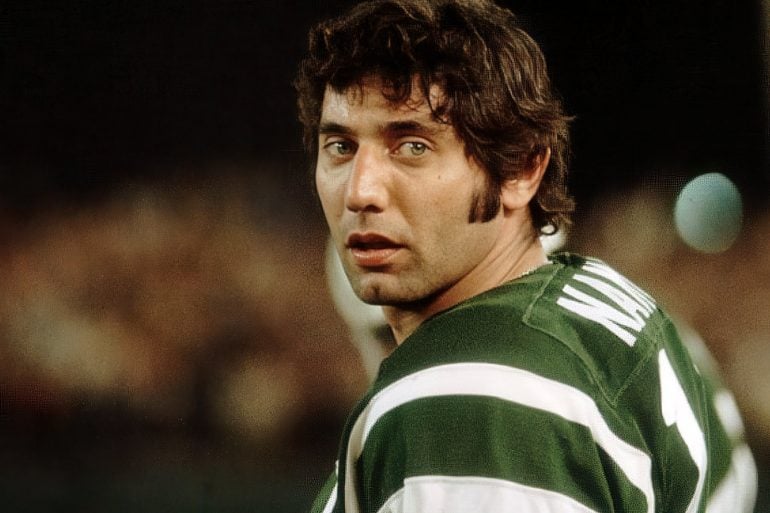
Joe Namath’s guarantee before Super Bowl III became one of the most famous moments in football history after the Jets upset the Colts in 1969.

In 1922, Washington DC had their biggest blizzard in 34 years, and in many ways, it brought the city to a halt. Here’s a look at the nation’s capital covered in snow so long ago.

How Charles Manson rose to cult leadership in 1969, shaped by a troubled past and a turbulent era in American history.
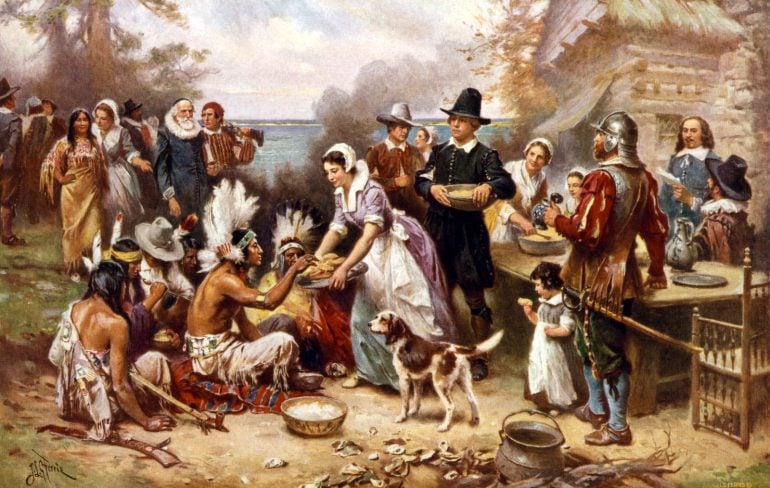
Thanksgiving, now held each year on the fourth Thursday in November, has long been a controversial holiday, Here, look back at Thanksgiving history as it played out over more than three centuries.

Charles Lindbergh’s daring solo flight across the Atlantic in 1927 turned him into a global hero and helped define an era of aviation.

Amelia Earhart’s daring 1937 world flight ended in mystery. Explore her life, her last journey and the historic search that followed.

The American flag has changed shape many times since 1777. See how it evolved, and what each version said about the country that flew it.

How did the Kentucky Derby get started? Now, the famous Louisville horse race is the first part of the American Triple Crown of Thoroughbred Racing, but when it started, people didn’t know how important and iconic the Derby would eventually become. Here’s a look back at its history.

In 1906, a short film called ‘A Trip Down Market Street’ ended up being a valuable record of old San Francisco just before the huge earthquake and fire destroyed much of the city.

Over 100 years have passed since the shocking Titanic tragedy in 1912. Here we’ve assembled some essential Titanic facts and stats about the ship, as well as those who traveled on her doomed maiden voyage.

Green Day started as a Bay Area punk band before skyrocketing to fame. Here’s how they went from underground rebels to rock icons.

The Brooklyn Bridge has been a part of New York’s skyline since 1883, but the history of its construction reveals an incredible story of determination

Here’s a look back at snow removal 100 years ago, so you can see how much work went into clearing cities after blizzards and other big winter storms.

These are some of the very first reports of the Loma Prieta quake back on October 17, 1989 that devastated so much of the San Francisco Bay Area.

Relive the magic of Quantum Leap, the iconic time-travel series that took viewers on unforgettable adventures and made history in ’90s sci-fi television.

When the newspapers first reported on the 1929 stock market crash, nobody knew what was coming. See these Great Depression newspaper headlines for how it began.

Before air conditioning and refrigerators existed, see some of the ways people managed to stay cool in summer during the great New York heat wave of 1911!

How was vintage July 4th celebrated in the past? It varied a lot over the decades, but early on, there was cannon fire, great communal feasts in the village green, and all kinds of noisemakers and thundering sounds.

Get the true story behind ‘The Assassination of Jesse James by the Coward Robert Ford’ from 1882 — when, Jesse James, the Missouri outlaw, was killed by a boy twenty years old at his temporary residence on Thirteenth and Lafayette streets, in this city.

Many well-known serial killers don’t quite compare to the exploits of Herman Webster Mudgett, alias Dr H H Holmes, perhaps one of the most fiendish mass murderers in American history. See diagrams of his infamous murder house, and images of his victims.

See what it looked like inside the Titanic – the interiors of fancy lounges, dining rooms, first-class cabins and other luxurious delights – before the ship sunk to the ocean floor on her maiden voyage in 1912.

The Zodiac Killer letters & cryptograms turned the case into an intricate puzzle that has confounded investigators for over half a century.

Gain insights into the struggles and aspirations of the signers of the Declaration of Independence.

Drafted in secret during the summer of 1787, the Constitution of the United States established the government of the United States. Here, the original US Constitution text.

The story of the Titanic sinking is a tragedy that has captivated audiences for over a century. Despite the passage of time, our fascination with the event and its aftermath has hardly diminished.

Discover the history behind Martin Luther King Jr.’s iconic “I Have a Dream” speech — words that inspired a nation and reshaped the civil rights movement.

Since “loose lips sink ships,” keeping people from oversharing during WWII was a huge deal. These posters were created specifically to remind people to keep quiet about what the military was doing.

When Florence Nightingale died, tributes poured in from around the world — including ones from American sources like this one.

What did the Titanic ship look like inside? Check out several different Titanic cross-section views, and get an idea of the size and the layout of the doomed vessel.

Look back at the biggest news in the universe on July 20, 1969 – the day we first landed on the lunar surface, walked on the moon, then went for a drive.

Tales of courage about people who died on the Titanic fascinate us to this day. Here are stories about some of the ship’s most prominent passengers.

Look back at these D-Day pictures and remember that a German nation with super-race delusions once actually planned to conquer the world.

Charlotte Collyer lived through the tragic disaster the world remembers more than 100 years later. Here, read about what happened in this dramatic and compelling first-person account from a Titanic survivor.

April 22, 1970, was set as the first Earth Day across America – the culmination of demonstrations and teach-ins protesting the deteriorating state of the country’s environment.

Below are a few photos of actor/assassin John Wilkes Booth, along with some theater advertisements that appeared in newspapers during the years leading up to President’s Lincoln’s murder.

Here are some accounts from Titanic survivors of the mid-ocean disaster, who managed to be rescued from the doomed ship back in 1912.

Here are some front pages of newspapers around the country, showing very first breaking Titanic news on the night she sank. There was very little information available at the time, and some news reports were, sadly, completely inaccurate.

Here’s a look back at Abraham Lincoln’s funeral and the entire funeral procession, where millions of people came out to see the President’s hearse pass by on the way from Washington DC to Chicago.

Below are several chapters from a book that was issued the same year as the Titanic disaster, and was called simply Titanic. While many aspects

When the infamous zeppelin airship Hindenburg caught fire and crashed as it was landing in New Jersey back in 1937, the spectacular disaster was caught on film and audio. Here’s how it went down.

To this day, the Triangle Shirtwaist Factory fire in New York on March 25, 1911, remains the deadliest industrial disaster in the city’s history,

On July 16, 1969, Apollo 11 took off for the moon – a historic mission for Americans, and for people all around the globe. See vintage newspaper headlines from that day here!

In June 1919, a peace treaty with Germany was signed in France, and formally brought an end to the Great War, which we now call World War I.

From the middle of the destruction after the 1906 San Francisco earthquake, these detailed accounts of the damage were published in the city’s newspaper the very next morning.

Ad Astra… to the stars! John Glenn was the first American to orbit the earth, and he did it on the Mercury spacecraft named Friendship 7, on February 20, 1962. Here’s how it went.

The Civil War wasn’t going well for the Union in the early weeks of December 1861 – and it was going still worse for William Tecumseh Sherman. Find out why here.

Although it was an incredibly close race, Richard Milhous Nixon conceded victory to President-elect John Fitzgerald Kennedy in the early hours of the morning on the day after the election.

There have been tales of what happened at Wounded Knee Creek in South Dakota in 1890. Here, see original vintage news reports of the battle, plus a historical review of the events from 1976.;

When the Titanic sank, it was the biggest ship in the world – and although the movie industry was still young, many cameras were able to cover the disaster. Here’s a look.

Back in 1871, The Great Chicago Fire killed an estimated 200 to 300 people, destroyed more than three square miles of the city, and left 100,000 people homeless.

Question: Did any feminist ever burn a bra in protest? Find out more about the history of this often-mentioned protest move here!

The Galveston Hurricane of 1900 – the deadliest natural disaster in United States history – after which floods swept thousands of people to their death, and many more left homeless as millions of dollars worth of property was destroyed.

Even astronomers were wondering if Halley Comet in 1910 would live up to the spectacular sky shows it had given on its previous 75-year cycles. They weren’t disappointed.

What is VJ Day? It means “Victory in Japan” day – the celebration that marked the end of WWII when Japan finally announced its surrender to Allied forces in the summer of 1945. Here’s a look back.

In August of 1969, actress Sharon Tate and four others were found dead in what police said resembled a ritualistic mass murder. Four months later, Charles Manson and the Manson ‘family’ would be charged with the crime. Here’s how it all happened.

Take a few minutes to reflect on the awesome and terrifying power unleashed on the world in the summer of 1945 during the atomic bombing of Nagasaki while remembering the lives lost – and those possibly saved.

Below are terrifying and telling sketches of the Titanic’s last moments, drawn by Lewis P Skidmore, who was a passenger on the rescue ship Carpathia

Back in 1961, a little 37-pound chimpanzee named Ham helped pave the way for human astronauts to launch into space.

Take a look at the original WANTED poster that was distributed far and wide to help catch President Lincoln’s killer – John Wilkes Booth, and two of his accomplices.

Here’s the true story of Abraham Lincoln’s assassination, as reported at the time of his murder at the hand of actor John Wilkes Booth.

In 1883, the volcano of Krakatoa erupted in cataclysmic fashion. Considered the single largest natural explosion in recorded history, the eruption killed upwards of 36,000 people.

In 1967, a flash fire killed the prime crew of the Apollo 1/Saturn 204 mission. Astronauts Virgil I. Grissom, Edward H. White II, and Roger B. Chaffee lost their lives.

On May 18, 1980, an earthquake shook beneath Mount St. Helens in Washington, and triggered an enormous volcanic eruption. Here’s a look back.

With a blinding flash of light, 100,000 people or more were killed instantly when the United States dropped a bomb on Hiroshima, Japan on August 6, 1945.

The great loss of the Titanic: It is now practically certain that 1,492 human beings went to their death in the sinking of the giant ship on the ice banks of Newfoundland.

In the early morning hours of July 23, 1967, police in Detroit raided an unlicensed, after-hours bar in what they assumed was just another routine

Two planes collidced over Arizona in 1956, resulting in the deaths of all 128 people aboard. The Grand Canyon airplane crash was the worst air disaster until that time, and changed the history of airline safety.

Richard Nixon’s final presidential crisis truly began with the ruling that he could no longer withhold 64 disputed White House tapes from the Watergate prosecutors. Here is the story of the last days before Nixon’s resignation.

Find out what set in motion the deadly chain of events that led to General Custer’s troops being overwhelmed by Sitting Bull’s force of 8,000 Lakota & Cheyenne during The Battle of Little Bighorn.

The most dramatic and best-known story of railroading in the United States is the connecting of the Atlantic and the Pacific by railroad in 1869, tying of the oceans together by rail across the heart of the United States

Dr. Martin Luther King, Nobel Peace Prize winner who made nonviolence his chief weapon in the fight for civil rights, was shot to death in 1968. His assassination triggered violence across the nation. Find out more here.

See scenes from the San Diego’s World’s Fair – a venue with gorgeous scenic beauty in a matchless climate – that took place from 1915 to 1917.

Up in Wyoming, the Cheyenne’s Frontier Days festival featured bronco riding, a wild horse race, stage hold-up, hanging bee, cow-pony races, etc. and other rodeo events.

Woodstock was supposed to be ‘3 days of peace and music’ – but as these stories from right after the concert describe, it didn’t exactly end up that way.

How did the great Gold Rush of 1849 get started? Find out its history, how it made people rich and poor – and helped make California what it is today.

See damage caused by the St Louis tornado in May 1896 – considered one of the deadliest on record with at least 255 lives lost – and get the whole story.

Find out more about World War II’s important military offensive, the Battle of the Bulge, and see several pictures from the snowy scene.

The Titanic was one of the most luxurious, well-appointed cruise liners ever, with seemingly no expense spared… except when it came to passenger safety in the event of an emergency. Artists had a lot to say about safety and Titanic lifeboats.

In 1912, people offered a generous and spontaneous outpouring of aid and encouragement to Mrs Collyer and her daughter, who were saved from the Titanic.

Speaking from his experience in ice fields both in the North and South Atlantic oceans, a former ocean liner officer said of the deadly iceberg: I fully believe that the Titanic struck what is known as a ‘growler.’

In 1917, President Woodrow Wilson went before a joint session of Congress, and the United States formally declared war – The Great War, which became known as World War 1 – on April 6, 1917.

Fleeing the sinking ship in lifeboats, many Titanic survivors were saved by the first rescue ship on the scene. See how it happened, and what it was like when they finally made it to New York.

After a lengthy crime spree, Bonnie & Clyde were finally caught and killed in 1934: Clyde Barrow, the Southwest’s No. 1 outlaw, and his gunwoman companion, Bonnie Parker, were trapped and shot dead by Texas and Louisiana officers.

The Great Blizzard of 1888 lasted from March 11 through March 14, 1888, and is considered to be one of the most severe recorded blizzards in American history.

A confused and stunned nation searched for answers to what caused the catastrophic explosion of the space shuttle Challenger that sent schoolteacher Christa McAuliffe and six other astronauts to a fiery death 74 seconds after liftoff Tuesday.

Repeated, desperate SOS calls were heard by at least 10 ships, which rushed to the scene as the Titanic sank to the bottom of the Atlantic Ocean.

At the start of the Watts Riots, rumors of police brutality during an arrest quickly spread, and a crowd began to form. It was the flashpoint for rioting and rebellion that had been simmering under the surface of Los Angeles that summer.

WAR DECLARED: See 31 consecutive front page headlines from DC from those tumultuous weeks leading to the outbreak of hostilities in WWI back in 1914.

The Allies today sent their invading forces against Adolf Hitler’s occupied Europe. The long-awaited invasion was announced by General Dwight Eisenhower with the promise that the high command would accept nothing short of victory.