Drop a nickel (later a dime, later a quarter), punch a button, and the room had a soundtrack. It sounds simple, but the machine behind that transaction was both a feat of mechanical engineering and industrial design (as well perfectly-aligned cultural timing!) that no other device quite matched.
The story starts in 1889, when Louis Glass installed a coin-operated Edison phonograph at the Palais Royale Saloon in San Francisco — four listening tubes, one nickel per tube and no amplification. Crowds formed anyway. The concept was clearly onto something, but the early machines were limited to only one song and no selection, with a sound level suited more for a library than a bar.
What changed everything was electrification. By 1927, the Automatic Musical Instrument Company had introduced the first electrically amplified multi-selection phonograph — suddenly a single machine could fill a room, and customers could choose what they heard. The modern jukebox was essentially born.
By the mid-1930s, four manufacturers had staked out the market: Wurlitzer, Seeburg, Rock-Ola and AMI — collectively known as the Big Four. David Rockola founded his company in Chicago in 1927 building gumball machines and penny scales before entering the jukebox business in 1935; Wurlitzer came in around the same time, pivoting from theater organs when talking pictures gutted that market.
The early machines were housed in heavy walnut cabinets and looked a lot like the radios of the day. That changed fast. Through the late 1930s and into the 1940s, designers started introducing colored plastics, bubble tubes, rotating lights and chrome, turning what had been a functional appliance into something you’d want to stand next to.
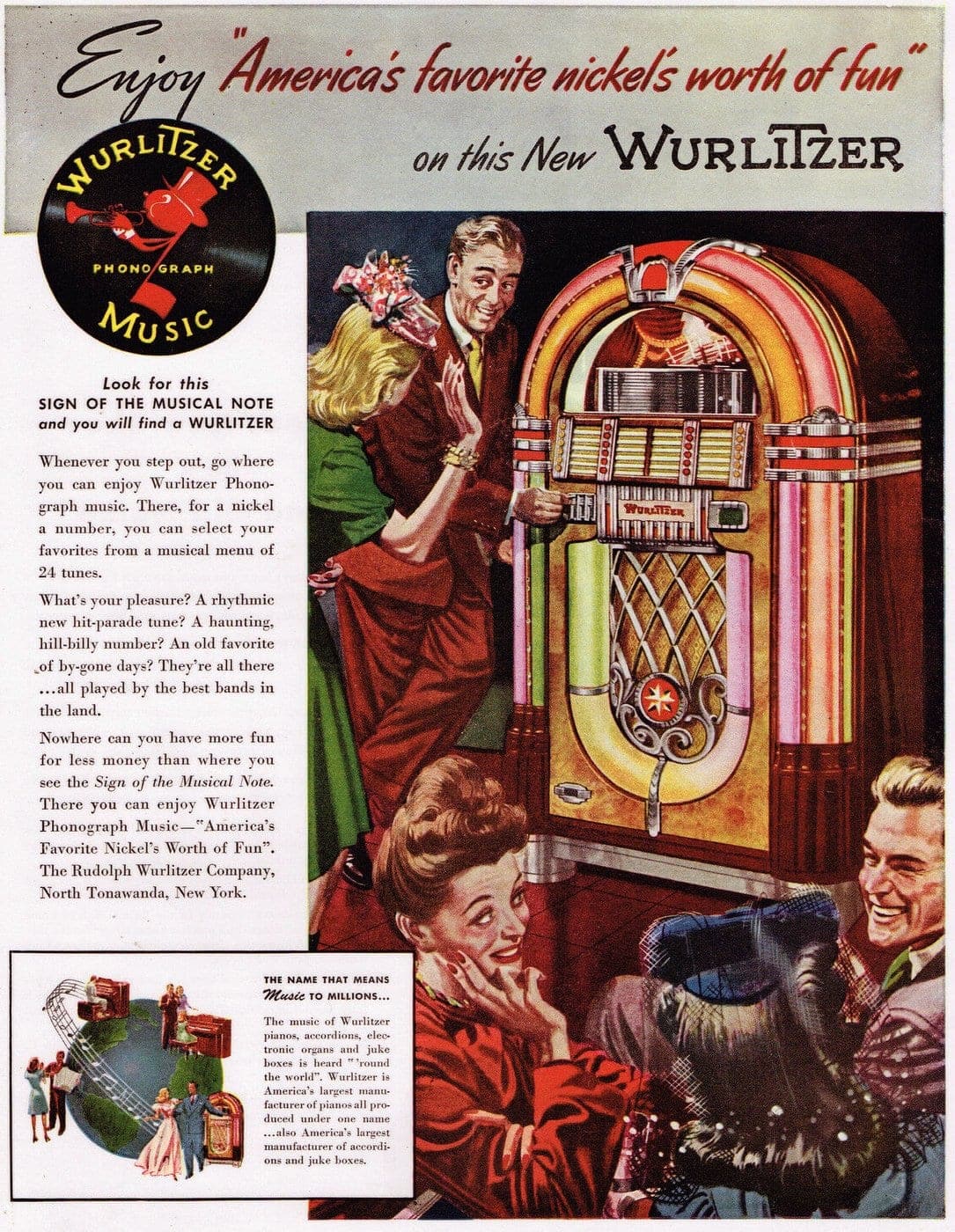
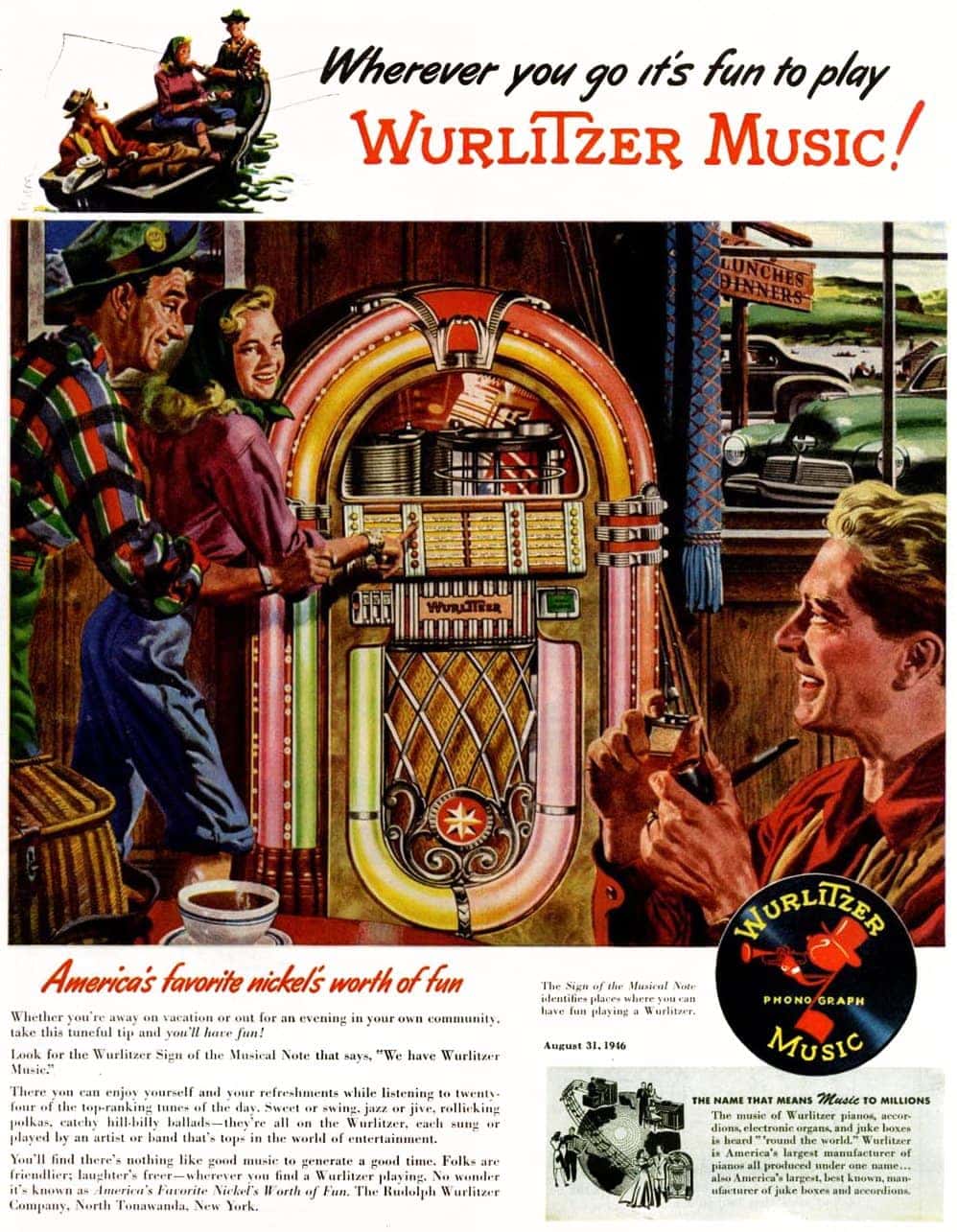
The most celebrated result was the Wurlitzer 1015, designed by Paul Fuller and released in 1946 — arched cabinet, swirling color tubes, bubbling columns, art deco details. It sold 56,246 units in its original run and has never really fallen out of fashion since.
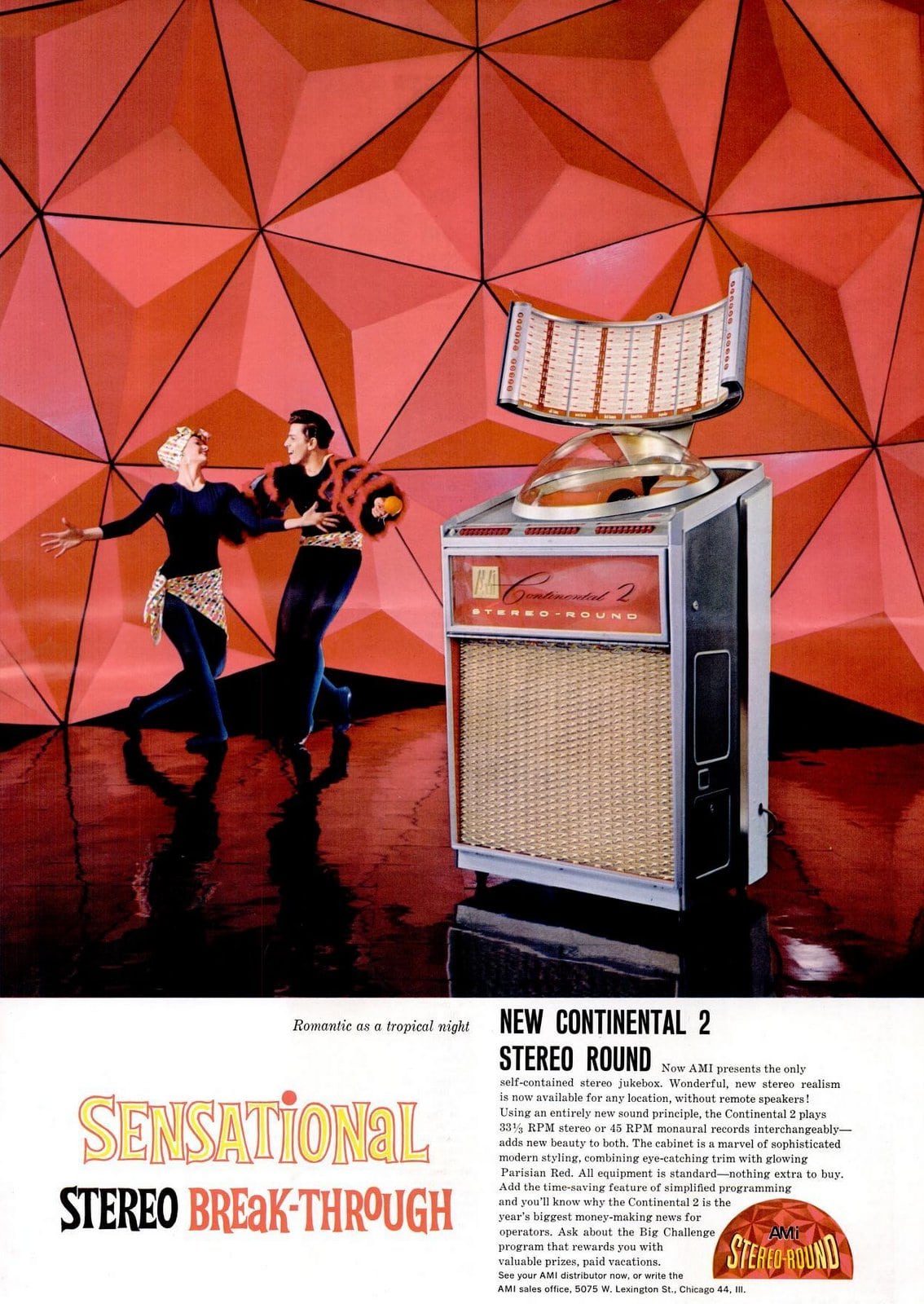
The postwar years were the peak. By the mid-1940s, roughly three-quarters of all records produced in America were going into jukeboxes, and at the height of the boom there were an estimated 750,000 machines in operation across the country. Seeburg pushed the technology forward in 1948 with the Select-O-Matic 100, the first jukebox to offer 100 selections — a significant leap at a time when competitors were offering 24.
A year later, Seeburg introduced the first 45-rpm jukebox, and the whole record industry shifted to accommodate the new format. Billboard tracked jukebox play data throughout the 1950s as a chart component; it was, for a time, the closest thing the music business had to a national popularity meter. The disc jockey eventually took over that role, and by 1959 Billboard had stopped collecting jukebox play data entirely.

The decline came from several directions at once. Television kept people home. Urban renewal tore down the roadhouses and neighborhood bars where jukeboxes had lived. Portable radios and home stereo systems got cheaper. Rock-Ola and Seeburg adapted by diversifying into other coin-operated equipment; Wurlitzer held on until 1974, then shut down its North Tonawanda jukebox plant and redirected to organs and pianos. Seeburg and Rowe/AMI followed in the 1980s, leaving Rock-Ola as the only American manufacturer still in the business — a distinction it still holds today, now operating out of Torrance, California.
The number of operating jukeboxes in the US fell from that peak of roughly 700,000 in the 1950s to around 225,000 by the late 1980s, before digital technology partially revived the commercial market. By the late 1990s, companies like TouchTunes were putting internet-connected, touchscreen systems into bars — a different animal entirely, but recognizably a descendant.
Meanwhile, the vintage machines found a second life as collectibles. Restored Wurlitzer 1015s, which originally sold for around $750, now routinely fetch $12,000 to $18,000 at auction. One jukebox — an original Wurlitzer sold to Freddie Mercury in the 1980s for around $6,500 — sold at auction a few years ago for over half a million dollars.
Rock-Ola has shifted primarily to the home market, producing retro-styled machines for collectors and enthusiasts. The bubble tubes and chrome trim that once lit up a diner booth in 1947 are still being manufactured, which says something about the hold these machines have on the American imagination.
The photos and archival materials on this page — drawn largely from Smitty’s Jukebox Museum in Pharr, Texas, and preserved in the Carol M. Highsmith Archive at the Library of Congress — offer a close look at the designs that defined the era, from Wurlitzer and Rock-Ola models to AMI and United machines spanning the 1940s through the late 1960s.
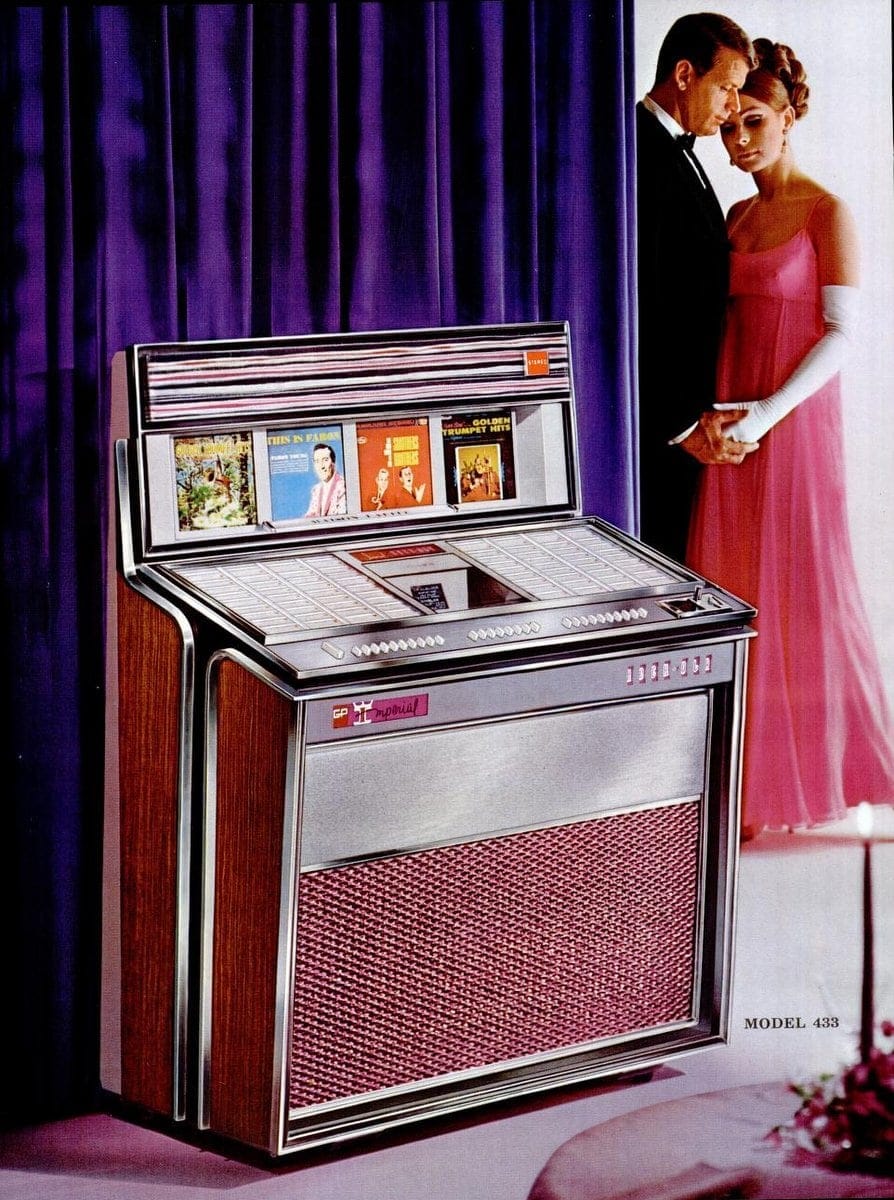
Several of the Rock-Ola models shown here, including the 1966 Grand Prix Imperial and its companion models, were written up in Billboard at the time as among the best the industry had produced. That reaction held up.
Vintage-inspired jukeboxes you can buy today

- BLUETOOTH RECEIVER: This jukebox has a built in bluetooth receiver, allowing you to stream your favorite playlists and music to the four (4) built-in stereo speakers from any bluetooth audio device
- ADDITIONAL SPEAKERS: Add a pair of wired stereo speakers too for additional sound
- AM/FM RADIO W/ CD PLAYER: Tune into your favorite stations with its AM/FM radio feature. Or play your favorite CD's with its built in CD player system

- Iconic Design: Saturn V As the renowned flagship model of Arkrocket jukebox, infusing it with the timeless essence of Elvis Presley, creating a stunning fusion of retro elegance and musical heritage...
- Versatile Playback Options: From the warmth of vinyl records to the convenience of Bluetooth streaming, this jukebox offers a diverse array of playback modes including CD, FM radio, USB, and SD card...
- Dynamic Lighting System: Elevate any space with the mesmerizing RCC rainbow lighting system, reminiscent of the vibrant energy of Elvis Presley's performances, creating an immersive and visually...

- Built-in Bluetooth receiver allows you to stream your favorite playlists and songs to the four built-in stereo speakers
- Add a set of external speakers if you need additional sound to fill almost any room
- Tune in to your favorite stations with the digital AM/FM radio tuner, play your favorite CDs, or plug into the Aux input
Looking back at the end of an era: Jukebox production axed by Wurlitzer (1974)
By Herb Weber, The Shreveport Journal (Shreveport, Louisiana) April 3, 1974
It wasn’t so long ago — or maybe it’s longer than some of us like to admit — that young folks gathered after school and on Saturday nights in drugstores in small towns across America and listened to the jukebox.
There was even a song about it “Mopping up soda pop rickeys, To our heart’s delight, Dancin’ to swingeroo quickies, Juke Box Saturday night.” That was in 1942, and it was a hit.
IT DIDN’T have to be in a small town. It didn’t have to be Saturday night. It didn’t even have to be young people. Anywhere in America where people gathered, you could be sure there’d be a jukebox.
Chances are it had the name “Wurlitzer” written on it. Wurlitzer was first, one of the largest and perhaps the most famous manufacturer of the jukebox. After 40 years in the business, Wurlitzer will quit manufacturing the machine April 30 [1974] to spend more time on their organ and piano business. It’s the end of an era.
NOT THAT it means music is going out of style. Many businesses have Muzak. Many homes—and cars—have their own sound systems. And other jukebox manufacturers say there’s still a market. But it’s different. Seeburg, for example, has just launched a quadraphonic sound program and is making installations across the nation. it’s costing more than $100 million, a spokesman said.
The jukebox era began in 1933. A.D. Palmer, an executive of Wurlitzer, told how it started. “Homer Capehart came here in 1933 with a simple mechanism for playing 10 records,” Palmer said. “His idea was that it could be coin-operated. He came to talk to Varney Wurlitzer, who was receptive because he needed a new product. They had some pilot models made in St. Louis.”
The pilot models, called the Debutante, were not marketed under the Wurlitzer name. But when it was determined that the product would sell, Wurlitzer brought out its first machine under its own name, the P-10, in 1934.
“ONLY A few hundred were produced the first year,” Palmer said. “But the next year, there were 3,500 produced, and that was a tremendous thing.” Despite the depression at the time Wurlitzer entered the jukebox business, one factor helped sell the product.
“Prohibition ended here,” Palmer said. “The saloon opened. So this was the ideal time for jukeboxes and jukeboxes went up beautifully until the war. Everything was a climb. It was a total climb. It was magnificent.”
ALSO SEE: How Bill Haley & His Comets rocked around the clock when rock ‘n’ roll was brand new
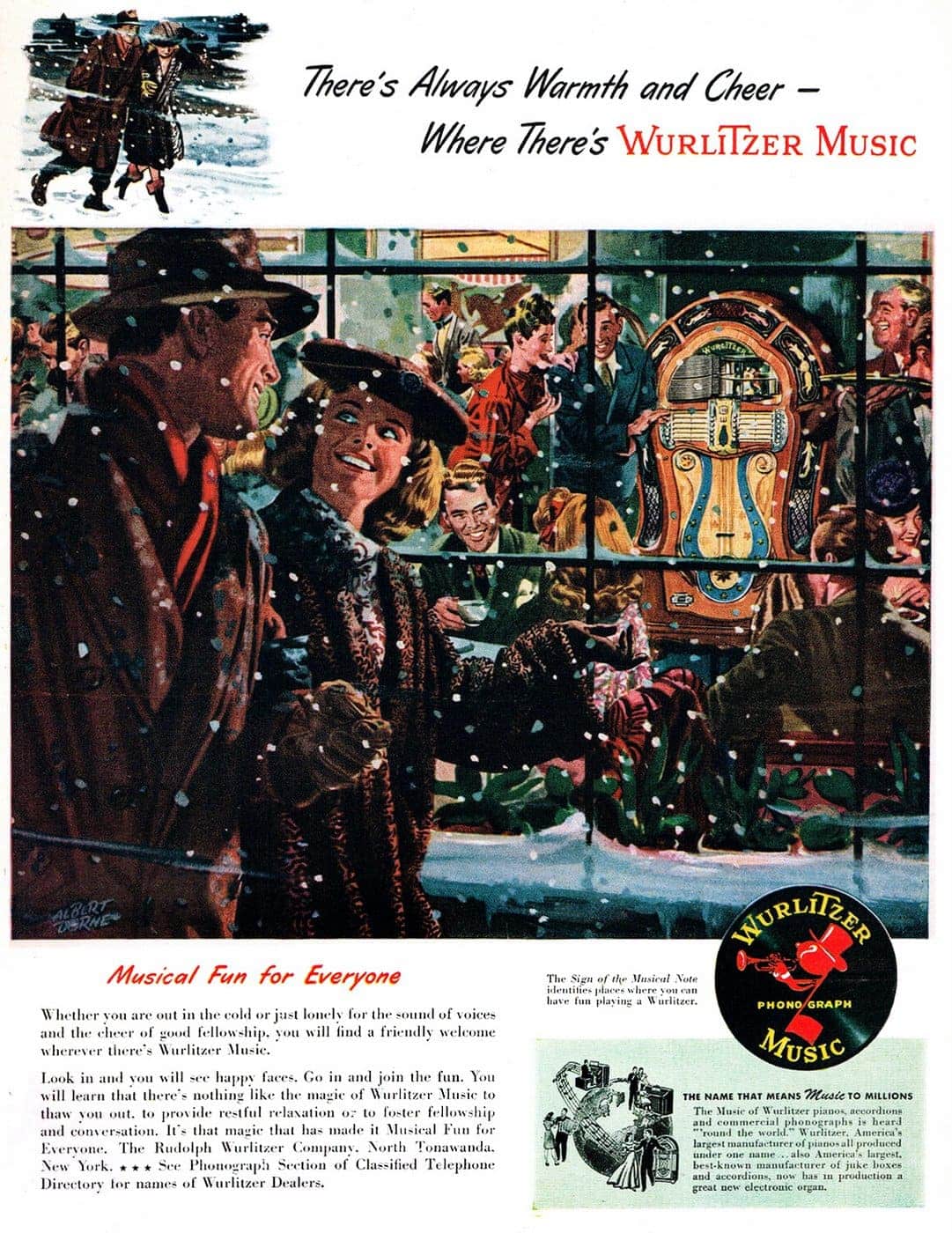
WURLITZER IMPROVED its machine to play 12 records, then 14 “and finally they were in to 24 records,” Palmer said. “They thought this was all they would need, but we moved up to 38, 39 and 40, then the jukebox production was shut off for the war effort, and no more phonographs were produced until the end of the war.”
Urban renewal, computerized coin-operated games, television, fast-food restaurants and other factors have resulted in a decrease in demand for jukeboxes, and from Wurlitzer’s point, of view, it is no longer a profitable business.
“The peak time for jukeboxes was 1946-1947,” said A. D. Palmer Jr., advertising and sales director for the North Tonawanda Division. “We produced 37,000 in 1946 and 42,000 in 1947, and the planned production was in the neighborhood of 12,000 last year, but we produced less.
“EVERYBODY CUT back a third of their production, and when something like that happens, it is the death knell for somebody,” he said. “And we were the only one that could no way live through this situation of cutting down on a single product.”
However, Palmer does not see the “death knell” of all jukeboxes yet. “I’m certain the other three manufacturers plan to continue,” he said. “I’d be very happy if I were in their position and somebody that was responsible for 25 percent of the business relinquished their amount of the business. That should make everybody that much healthier.”

THE LIQUIDATION of the jukebox line will eliminate about 400 employees at the North Tonawanda plant, the only plant where the jukeboxes are made. Palmer said the company will try to absorb as many employees as possible into keyboard instrument assembly “where there is a backlog of orders.”
Jukebox manufacturing was “highly profitable” for Wurlitzer at one time, but times have changed, and Palmer blames urban renewal for being largely responsible for the decline.
“Before urban renewal, there were two saloons on every block, but now there is high rise housing — high cost or low cost, I don’t care what kind — and a parking lot for a thousand cars and one restaurant that has Muzak,” he said. “I see a continuing market, without question, but 500,000 locations that existed in this country for jukeboxes have probably been reduced to 350,000.”

WURLITZER GOT into the jukebox line in the early 1930s when talking pictures resulted in a decline in demand for their theater organs, “absolutely the pattern that is being followed now.”
Wurlitzer’s most famous jukebox was produced in 1946, Palmer said, and a “nostalgia model” built for home use last year was patterned a great deal after that model. Like the phonograph, the jukebox was adapted to meet changing record sizes and innovations in sound — high fidelity, stereo, and quadraphonic.
THE FIRST Wurlitzer jukebox played only the top sides of 10 records, Palmer said, and the company’s final model “will play 33s and 45s, intermixed automatically in stereo” and the listener has a choice of 200 selections.
Wurlitzer developed a machine in 1949 that played both sides of the record, using two tone arms, that not only helped the jukebox industry, but affected the record industry.
Before that time, Palmer said, an artist recorded a song on one side for the jukebox, and “the second side was a dog. Now they had to put good tunes on both sides because jukeboxes could play both sides.”
ANOTHER THING came along in the 1950s which may have contributed to the diminishing demand for the jukebox — the radio disc jockey. “The jukebox was a trendsetter for record sales, not the disc jockeys, before the 1950s,” Palmer said.
“Jukebox operators around the country sent in the report on the number of plays of various records. Each record on a jukebox has a play meter that can be read.” From these reports, Billboard Magazine compiled its top tunes.

WURLITZER EACH year picked a “hot male or female singer” to appear on the cover of Cashbox Magazine next to a Wurlitzer Jukebox, “singers like Dinah Shore, Maggie Whiting and bandleaders like Sammy Kaye and Benny Goodman.” Then rock-n-roll came along in the 1950s which was “very important to jukeboxes,” Palmer said. “We came out with nonstop records — three on a side — for dancing.”
Despite the end of production, Wurlitzer jukeboxes will still be around a while. The company offers a six-year guarantee, which means that a maintenance staff and parts department must be kept on until six years after the final machine is turned out, and many older models can still be found in small bars and country locations, Palmer said. And he feels the jukebox itself will be around for a while.
THE OTHER manufacturers — Seeburg, Rockola and RoweAMI — also make other coin-operated machines and production can be changed according to the market, Palmer said. “What they could do and we could not do — this has to do with our decision to discontinue the jukebox — is build cigarette machines and other vending machines. We can’t do that. We couldn’t do that.

“But what’s unprofitable to Wurlitzer might not be unprofitable to other people,” Palmer said. “We do not have any cigarette machines. We do not have candy machines.” Wurlitzer will continue manufacturing coin-operated phonographs at its German plant, Deutsche Wurlitzer, but it is unlikely that they will be imported into the United States, Palmer said.
LIKE THE old theater organ, killed by talking pictures, the Wurlitzer jukebox has become a victim of changing times. “We have come to the end of the usability from our point,” Palmer said, saying that the company expects to lose $7 million by its decision to end jukebox production.
The decision means the “Wurlitzer Jukebox” will soon be in the same category as the DeSoto, the steam engine, trolley cars, convertibles and two-bit beer.
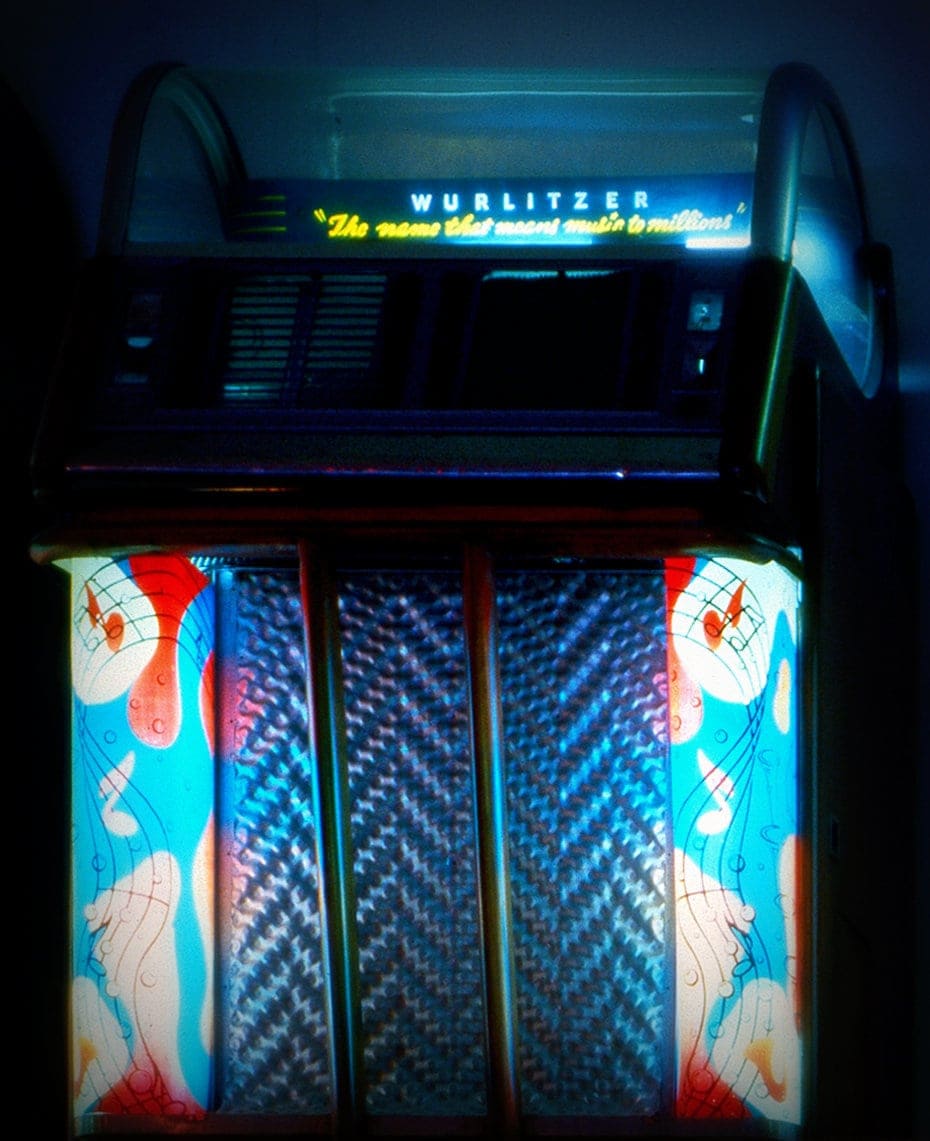
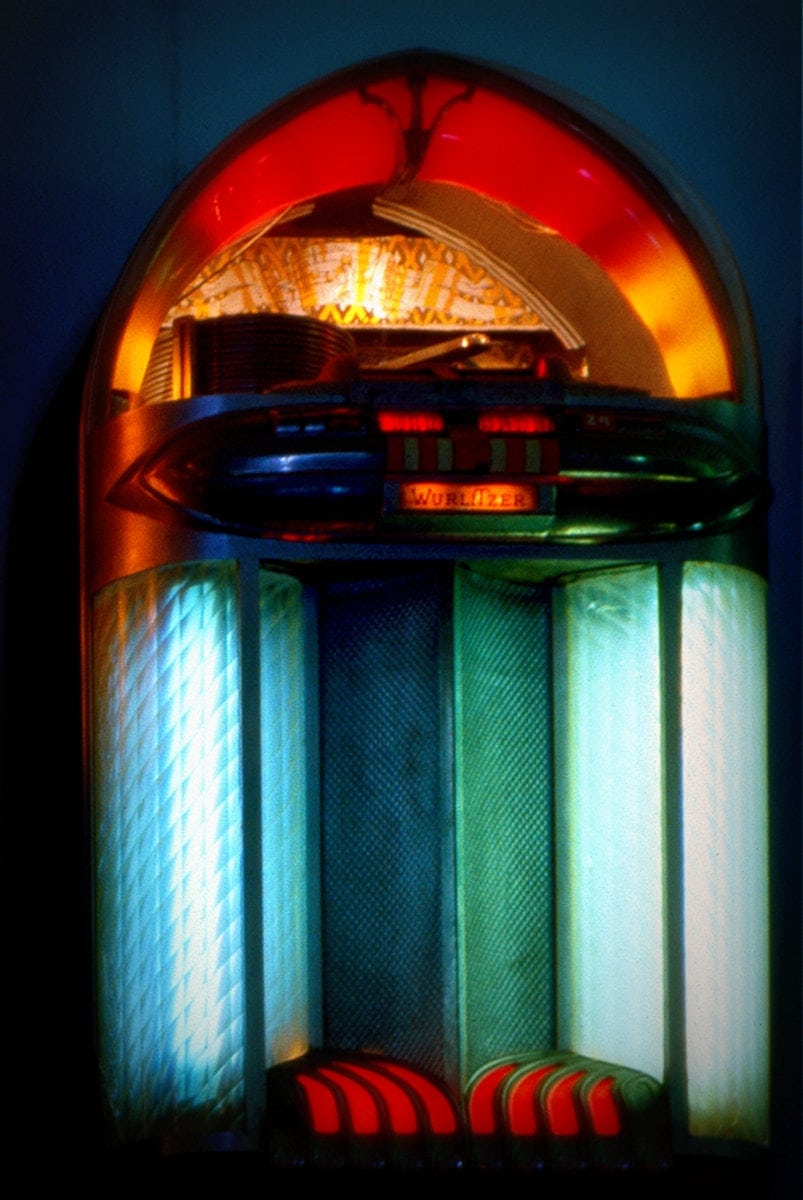
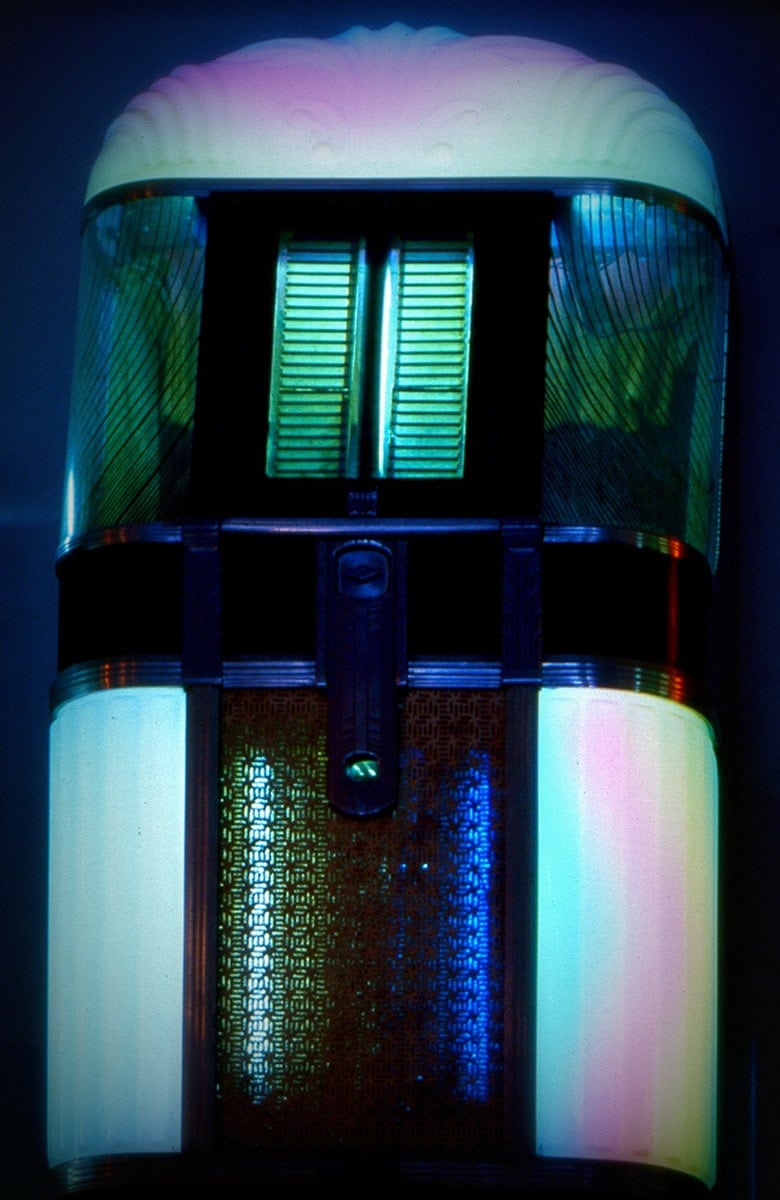
Some beautiful old Wurlitzer jukeboxes

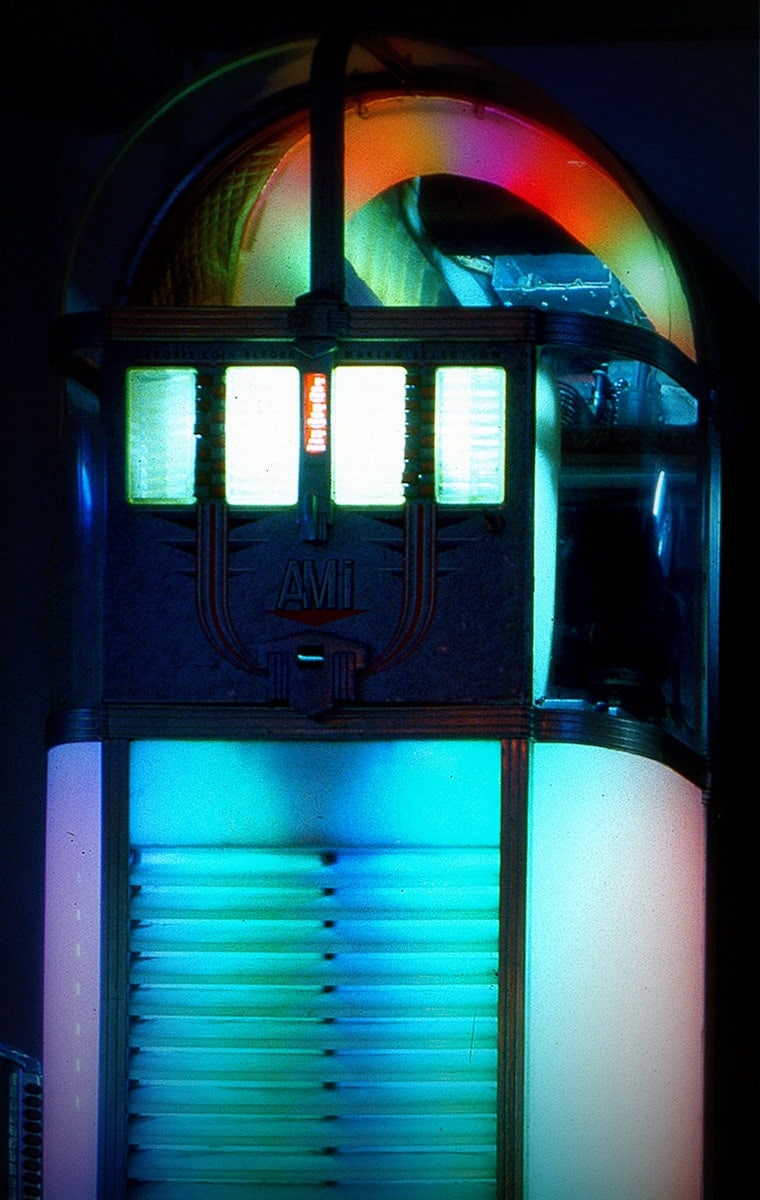
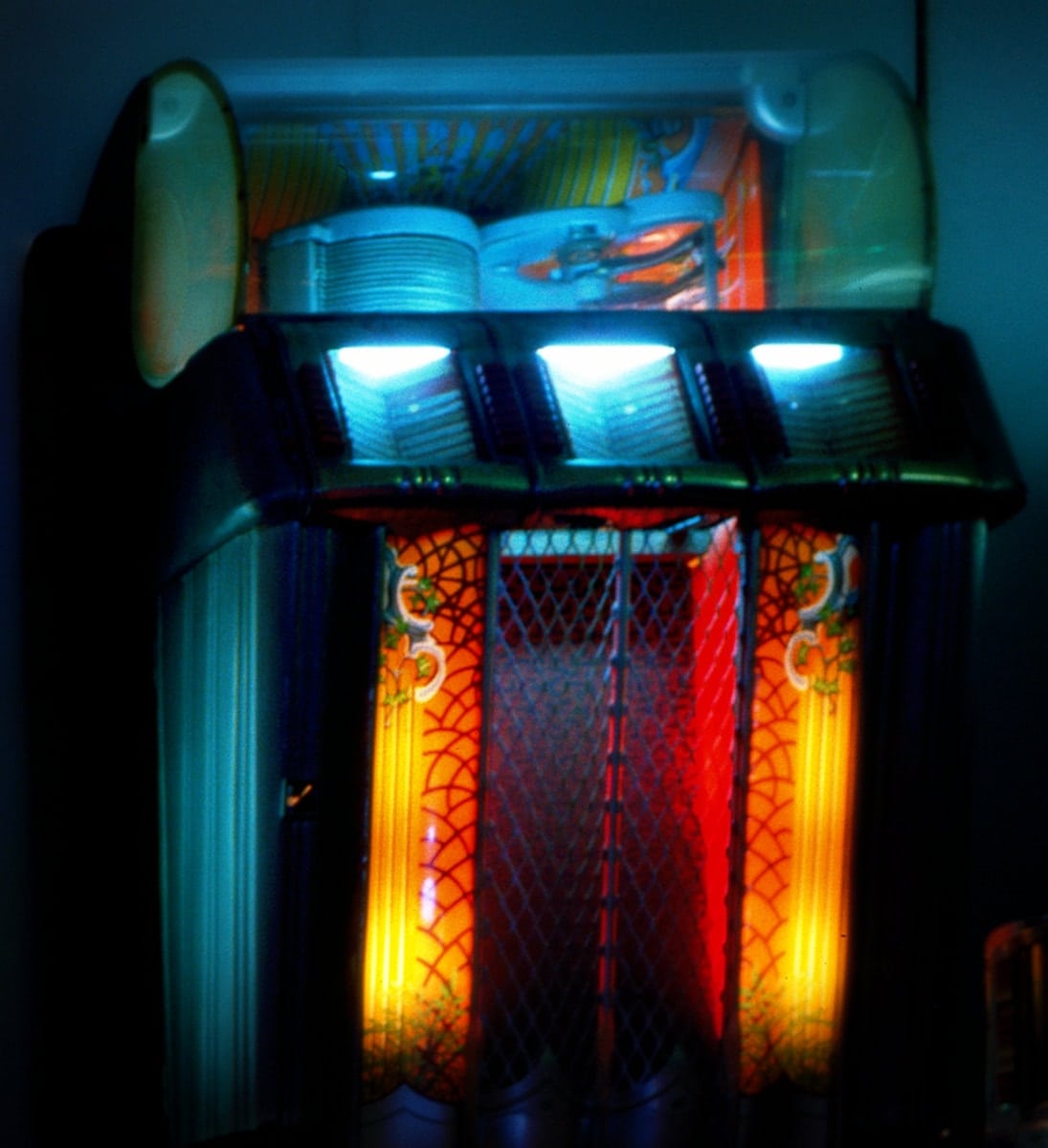
A vintage AMI jukebox
Other vintage jukeboxes with colored lights
Stupendous! Rock-Ola jukeboxes (1966)
CHICAGO — A reporter usually gets two answers when asking distributors — and even operators — what they think of a new jukebox. One answer will be for publication, and will usually be an innocuous, complimentary comment. The other has to go unquoted. It’s that honest criticism “that’s not for publication.”
However, in surveying Rock-Ola distributors last week for their reaction– on and off the record — to the now completely introduced Rock-Ola jukebox line, we found unanimous and apparently genuine enthusiasm.
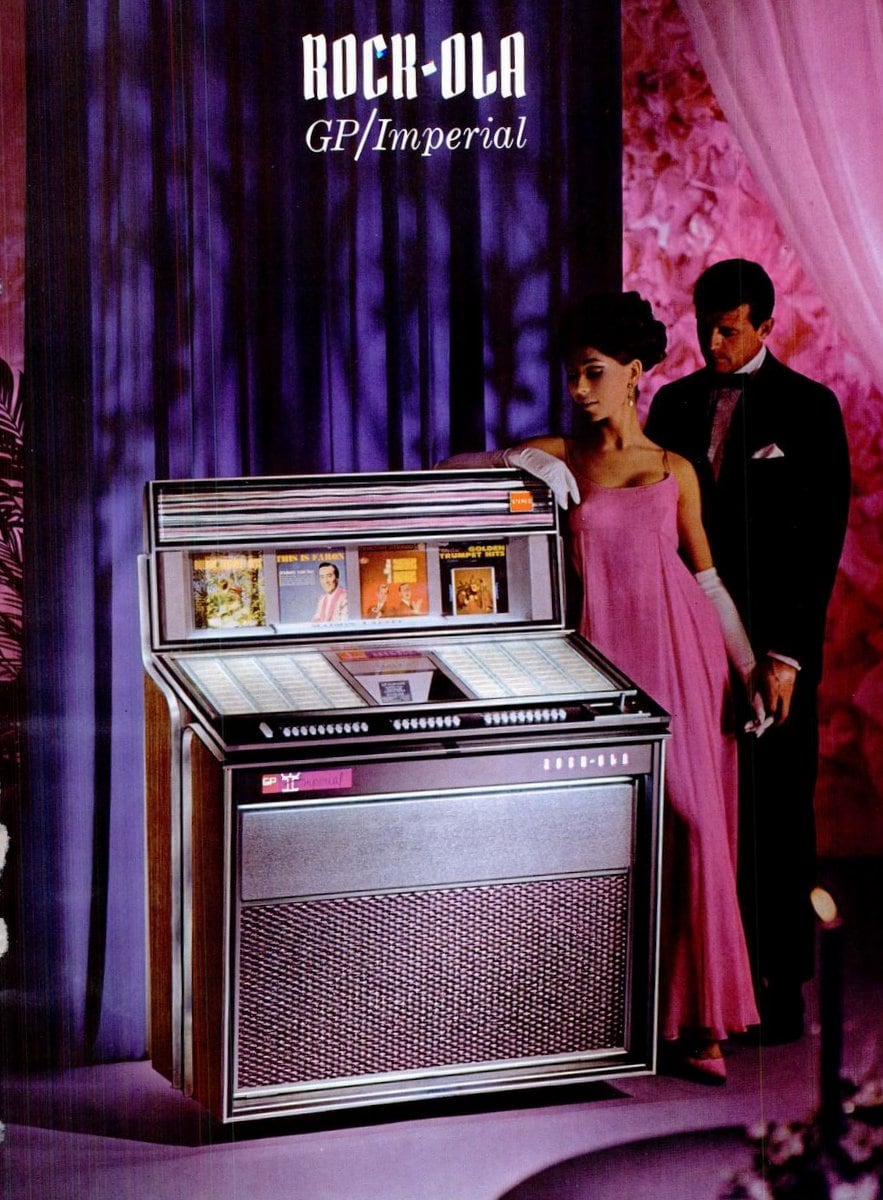
Since June, Rock-Ola has introduced the phonographs in three sizes and price ranges. The three-model introduction follows what company executive vice-president Ed Doris calls the “full-line” concept. The first model was the line leader, the Model 43 Grand Prix Imperial, 160- selection unit, premiered in New York and New Orleans distributor showings in late May and introduced formally to the industry in early June.
The second model, also a 160-selection phonograph, was officially introduced last week. It is designated GP/160, Model 432, size and price smaller than the Imperial. he third model, the Coronado, compact 100-selection model 431, rounds out the line. The most common comment gathered from Rock-Ola distributors is related to the model 432, how it now enables them to compete in the middle price.

“We can now compete with anybody,” said A. L. Ptacek, Manhattan, Kan., distributor and Music Operators of America vice-president. “We have always been in a good position on the high and low ends; now we are covered in the middle. We now have the most complete line that we have had the privilege of handling.”
Ptacek is convinced that it is important to have a 160-selection jukebox in two price and size ranges, for operators demand it. Ptacek added that the units are selling well.
Declared Eli Ross, Ross Distributing, Inc., Miami: “We have the first two models and are eagerly awaiting the third. In this market, operators tell us that this Rock-Ola line ‘is the best thing going.'” Ross said he’ll probably schedule a full-line showing in late fall or early winter.
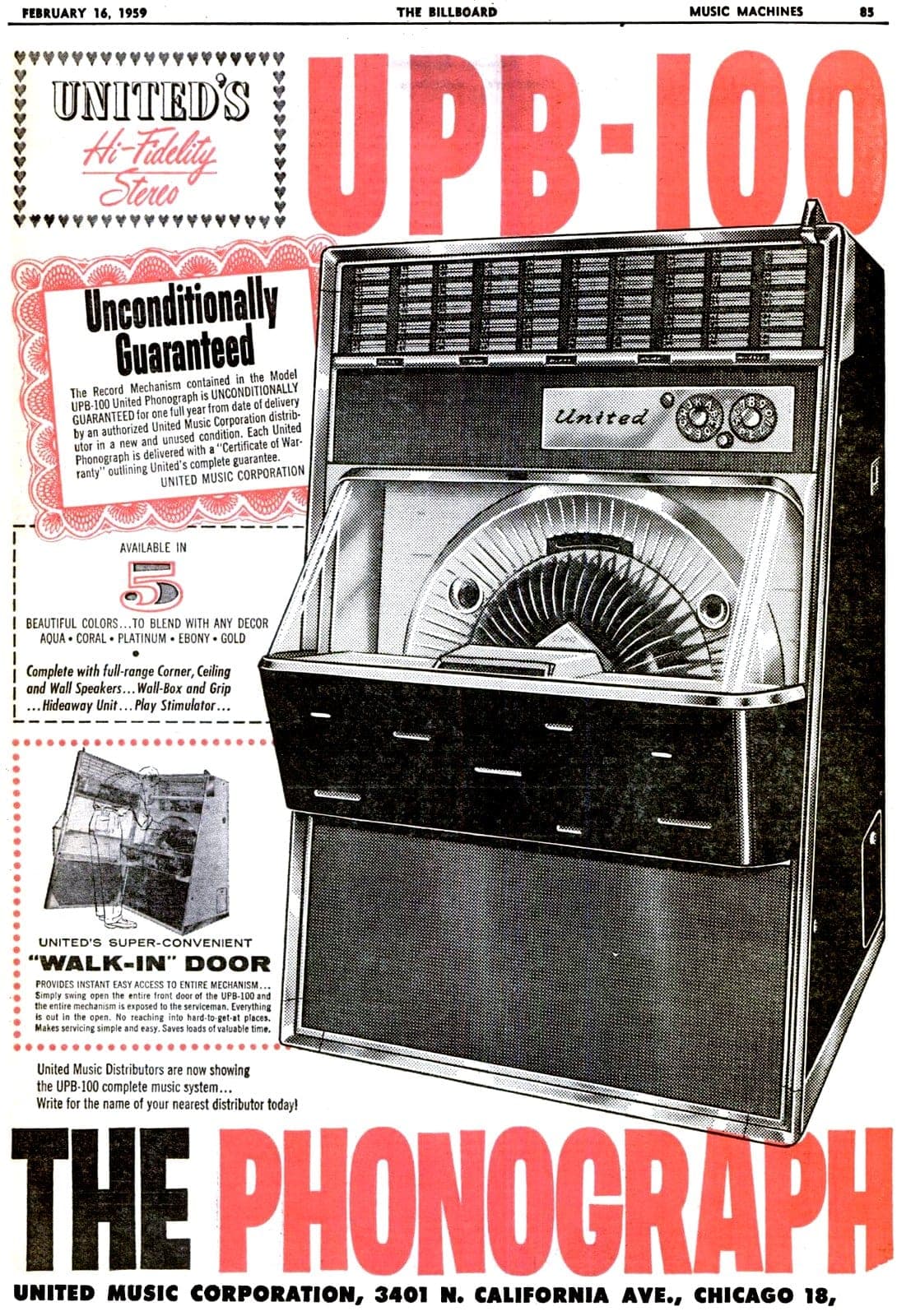
United UPB-100 vintage jukebox from 1959
1961 AMI Continental 2 Stereo-Round jukebox
1963 Wurlitzer 2700 jukebox
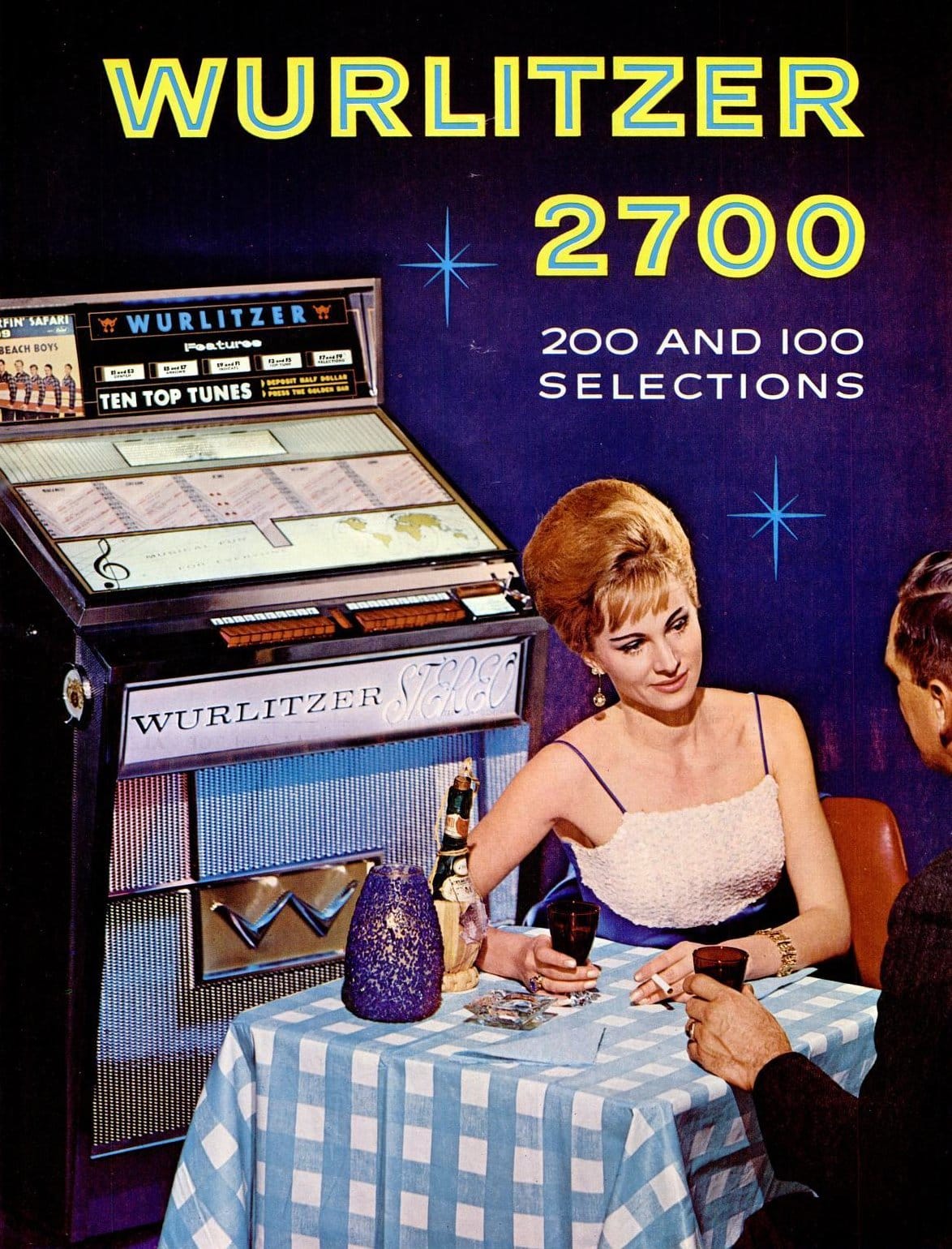
1963 Wurlitzer jukebox

1966 – Wurlitzer 5000 stereo console juke box
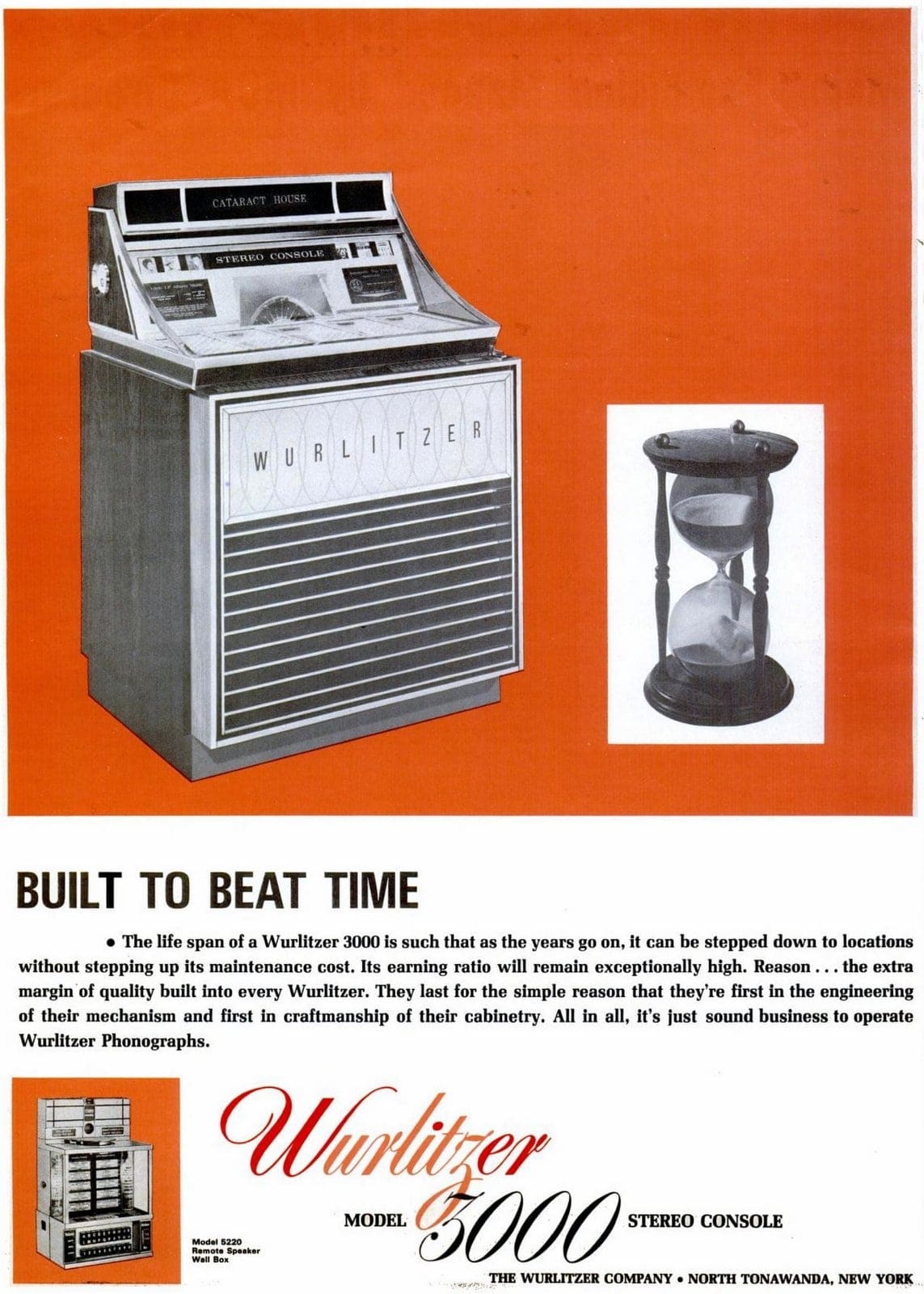
Jukebox music selection – 1967
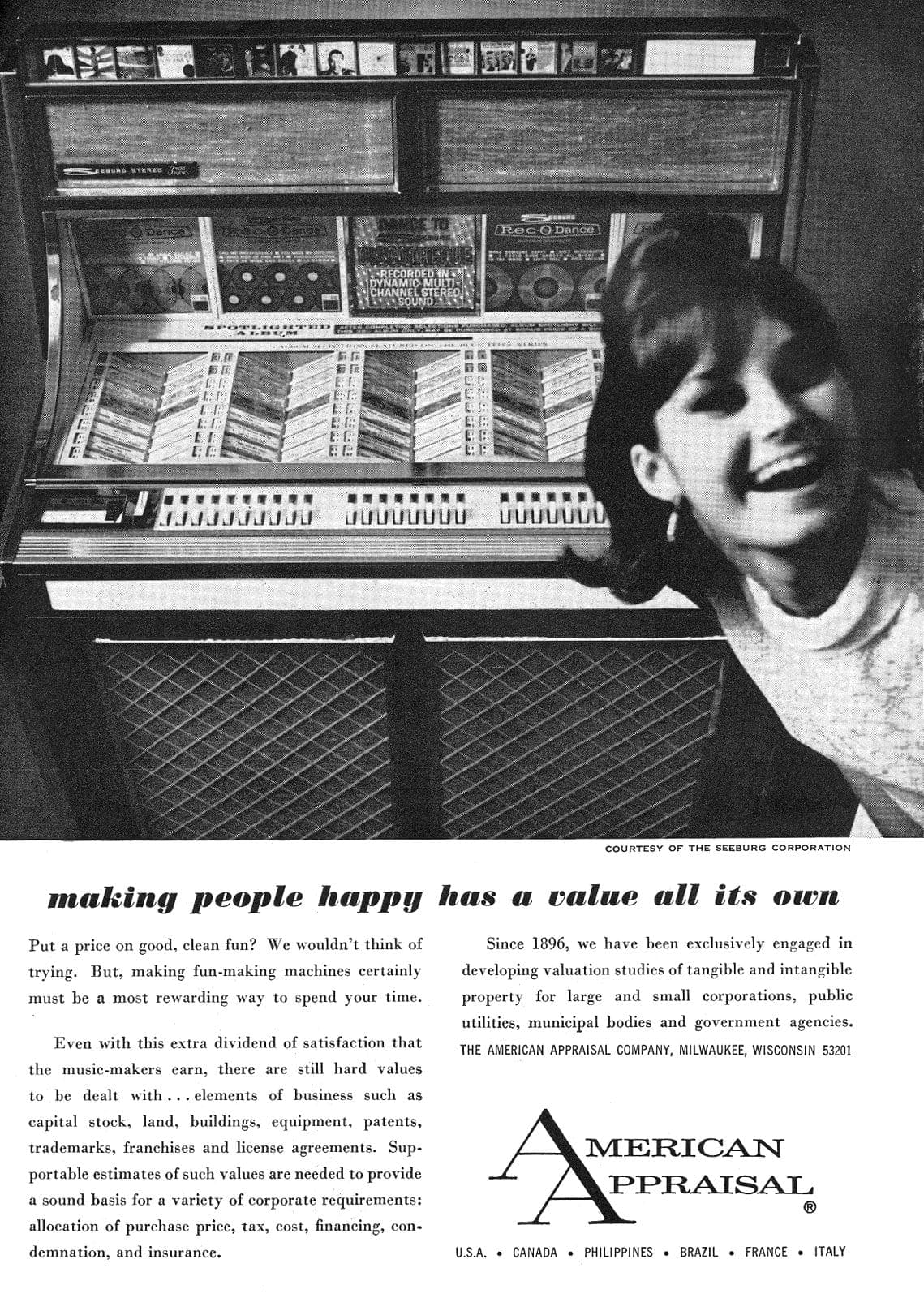
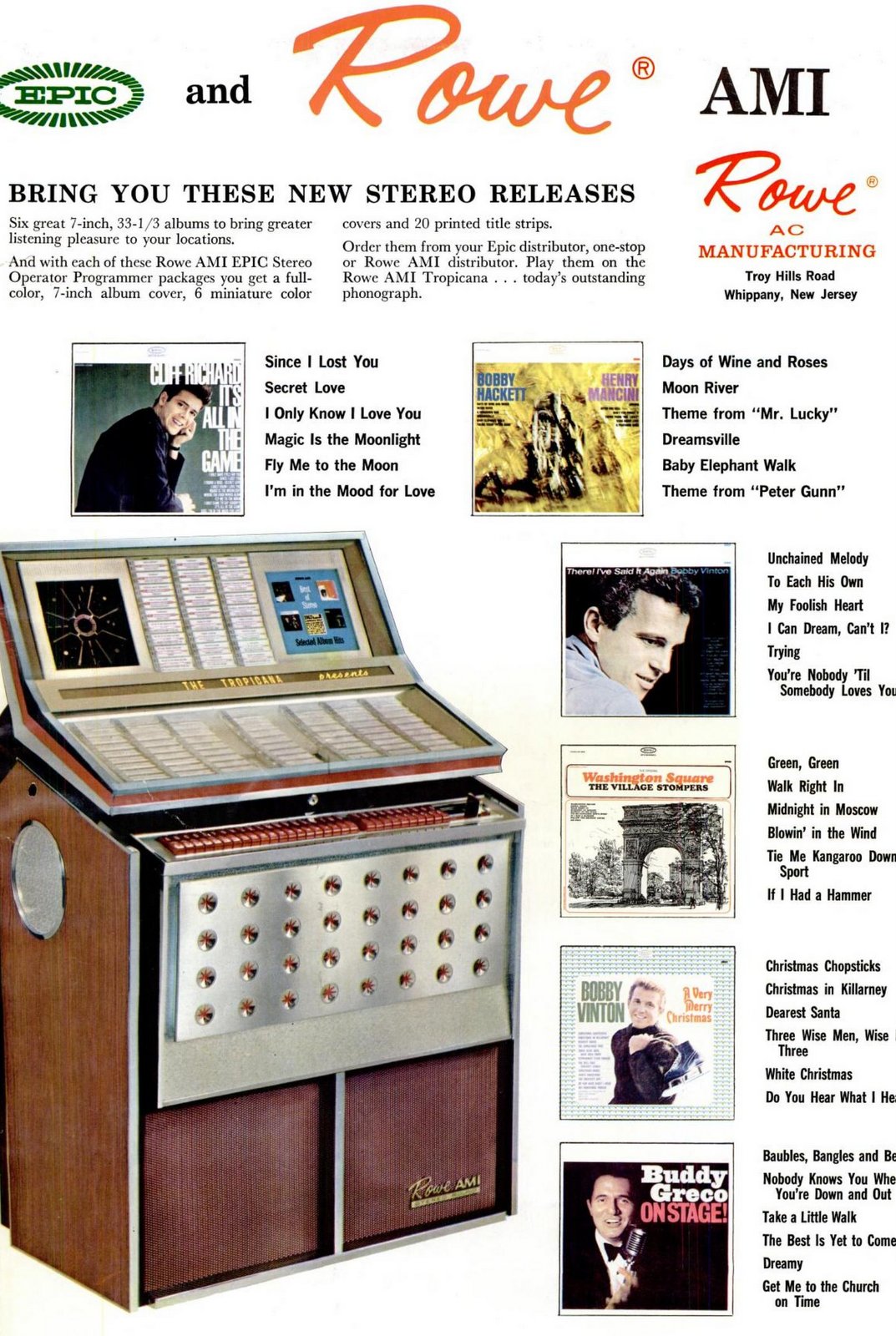
Rowe jukeboxes and Epic records 1964