

The REO Motor Car Company was founded in 1904 by Ransom Eli Olds, who had earlier started Oldsmobile but left after a dispute with the board. Using his initials for the new venture, Olds focused on building reliable, moderately priced vehicles. While Oldsmobile stayed under the control of General Motors, REO remained independent. The two companies were often confused, but REO quickly carved out its own identity — especially with its early success in both passenger cars and commercial trucks.
REO’s commercial vehicles caught on quickly, especially in rural areas. In newspaper ads from the 1920s, the Speedwagon was promoted as the smart way to get grain to market or to keep delivery routes on schedule. It had a sturdy frame, a powerful engine for the time and was built for roads that were often little more than dirt tracks. The company leaned hard on its engineering, but also on its reputation. By then, REO had already spent 30 years making cars and trucks, and wasn’t shy about reminding customers of it.
As truck design evolved in the 1930s, REO kept pace. The brand introduced more aerodynamic lines and offered trucks in a range of sizes and configurations, including their well-known Flying Cloud models. Some were fitted for ice cream delivery, others for heavier commercial loads. The focus stayed on strength, economy and serviceability — traits that mattered to operators who depended on their trucks to earn a living.
Video: The Truck War Between Oldsmobile and Ford

Even as larger automakers started to dominate the market, REO trucks held onto a loyal following. Fleet operators were encouraged to “standardize on REO,” and ads made it clear that every part of the truck — from the cold-riveted frames to the heavy-duty axles — was built with long-term use in mind. They weren’t flashy, but they were dependable, and for many businesses, that mattered more.
REO continued building trucks into the 1950s, but by then the company was struggling to compete with larger manufacturers. Passenger car production had already stopped in the 1930s. In 1954, REO merged with Diamond T to form Diamond-Reo Trucks, which kept the name alive for a while longer. The brand eventually faded out in the 1970s, but by then, the original REO Speedwagon had already earned its place in both automotive history and pop culture — just not in the way the company might have expected.
Below, we’ve gathered vintage ads and original photos of REO’s trucks and cars from the 1920s and 1930s, including the original REO Speedwagon that gave the later rock band its name. These machines weren’t meant to be iconic — they were built to last, and they did.
REO Speedwagon truck, 1920s-style
July 23, 1920: From The Alliance Herald (Alliance, Box Butte County, Neb.)

Haul your grain to market!
July 5, 1921: From The Alliance Herald (Alliance, Box Butte County, Neb.)

See the famous Reo Speedwagon in the truck show…
January 21, 1920: From the Evening Public Ledger (Philadelphia, Pennsylvania)

DON’T MISS: Classic Cars Adult Coloring Book: Vintage 1920s Automobiles
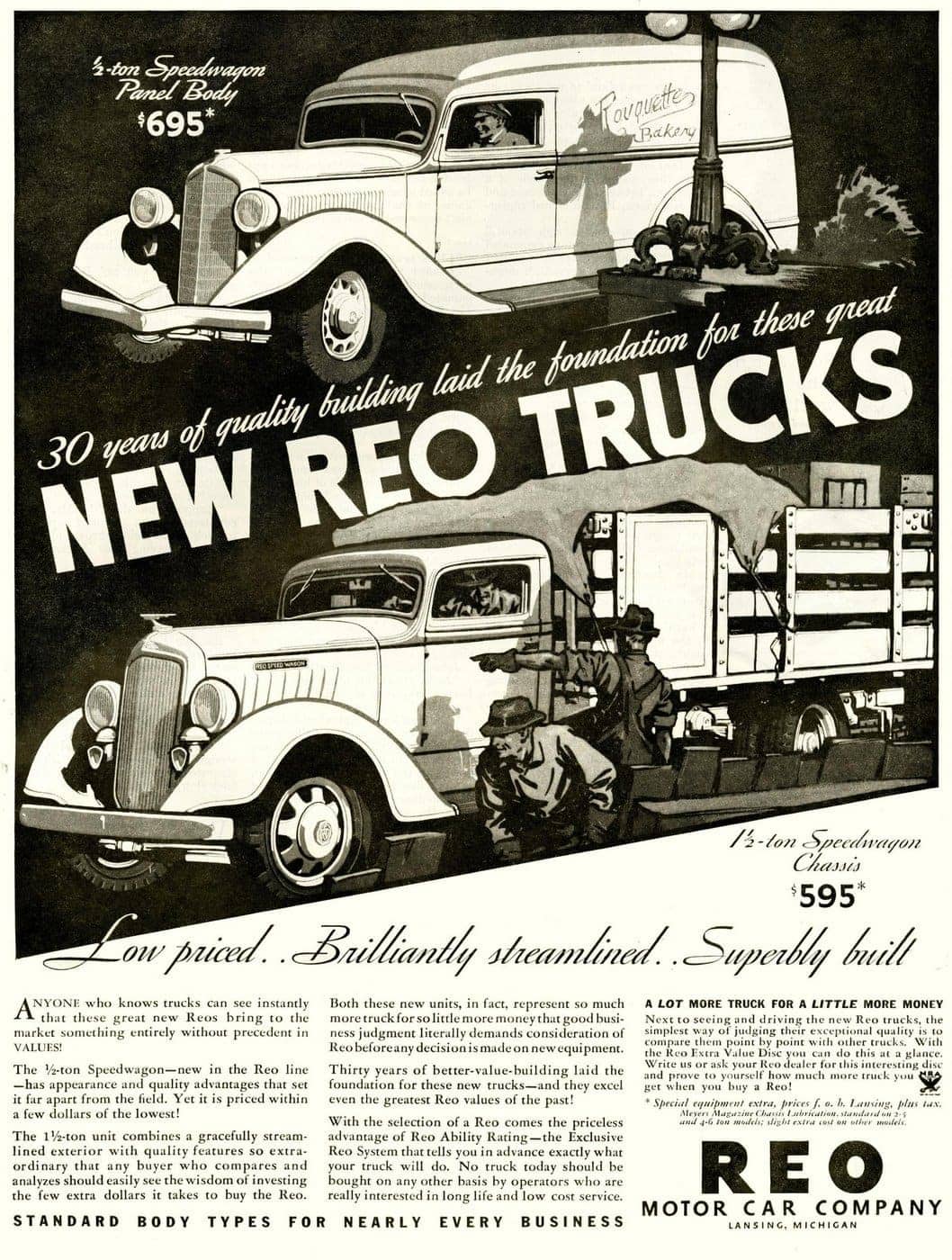
30 years of quality building…
… laid the foundation for these great new Reo Trucks. Low priced, brilliantly streamlined, superbly built.
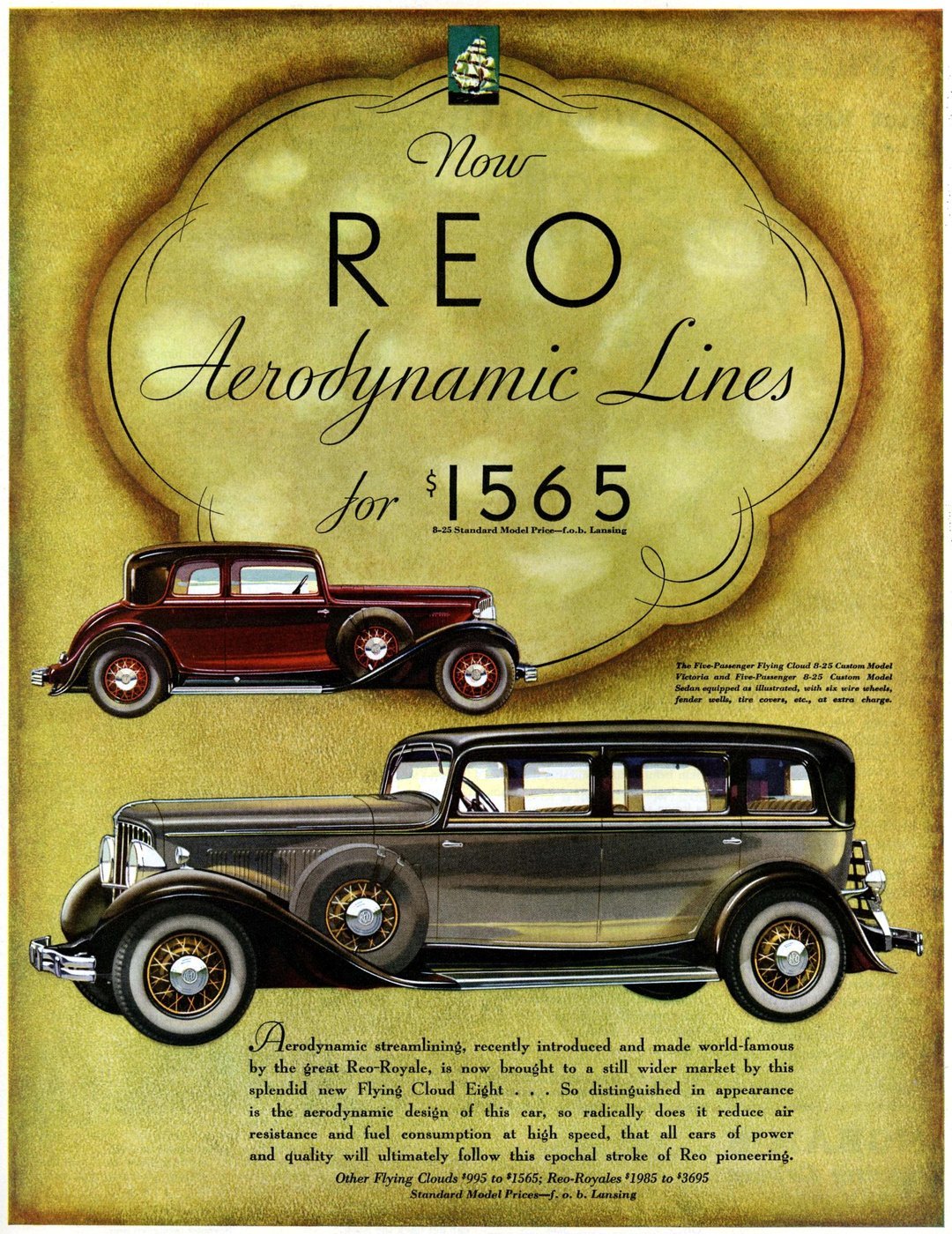
Now Reo Aerodynamic lines
Aerodynamic steamlining, recently introduced and made world-famous by the great Reo-Royale, is now brought to a still wider market by this splendid new Flying Cloud Eight.
Video: History of REO Trucks

He must have replaced every truck in his fleet with a Reo!
Your Reo dealer can prove you’ll put up to $2160.00 MORE per year in our own pocket for every truck you replace with Reo.

MORE: How dancer Isadora Duncan was killed in a bizarre accident (1927)
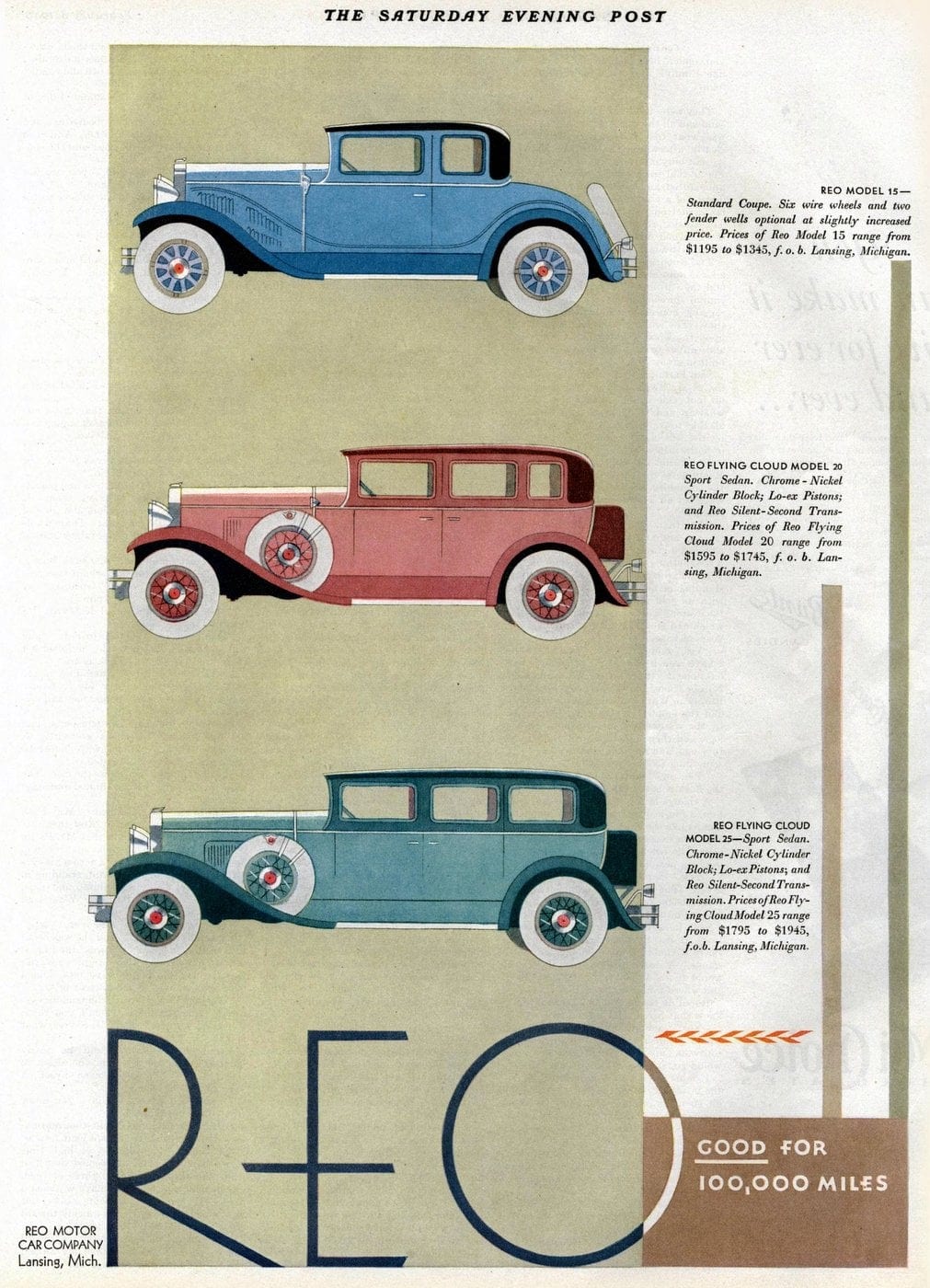
Reo — good for 100,000 miles
Featuring the Reo model 15 (Blue — Standard Coupe), Reo Flying Cloud model 20 (Red — Sport Sedan), and the Reo Flying Cloud model 25 (Teal — Sport Sedan).
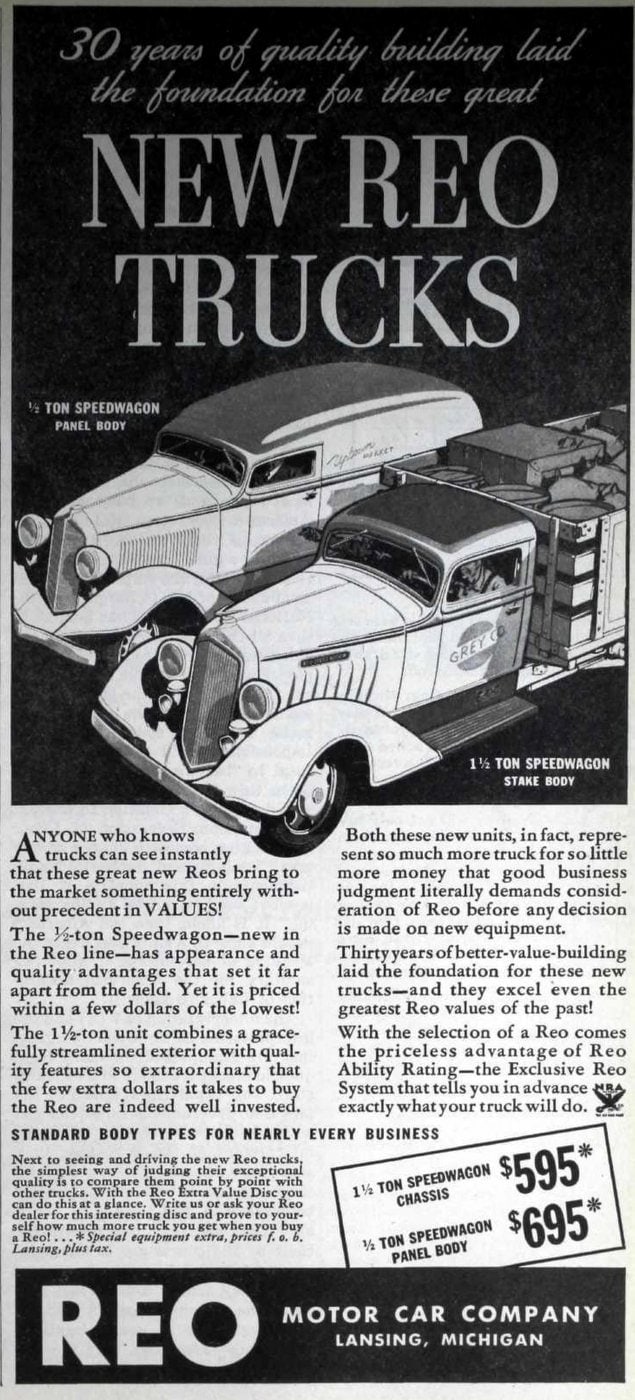
New Reo Trucks
30 years of quality building laid the foundation for these great new Reo Trucks!
Anyone who knows trucks can see instantly that these great new Reos bring to the market something entirely without precedent in values!
MORE: See some of the earliest classic Cadillac cars from before the Great Depression
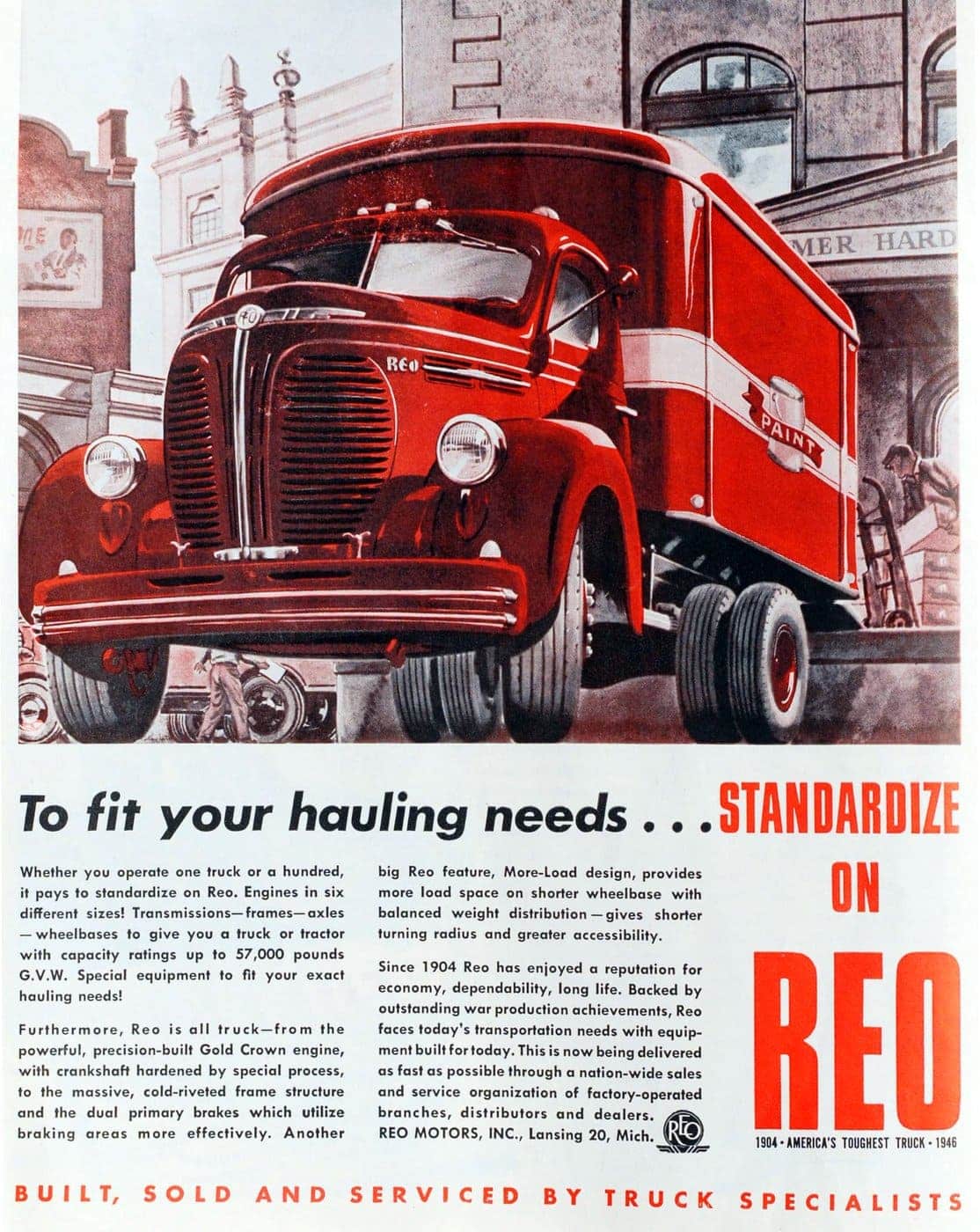
To fit your hauling needs…
Standardize on Reo.
Whether you operate one truck or a hundred, it pays to standardize on Reo.
Engines in six different sizes! Transmissions — frames — axles — wheelbases to give you a truck or tractor with capacity ratings up to 57,000 pounds G.V.W. Special equipment to fit your exact hauling needs!
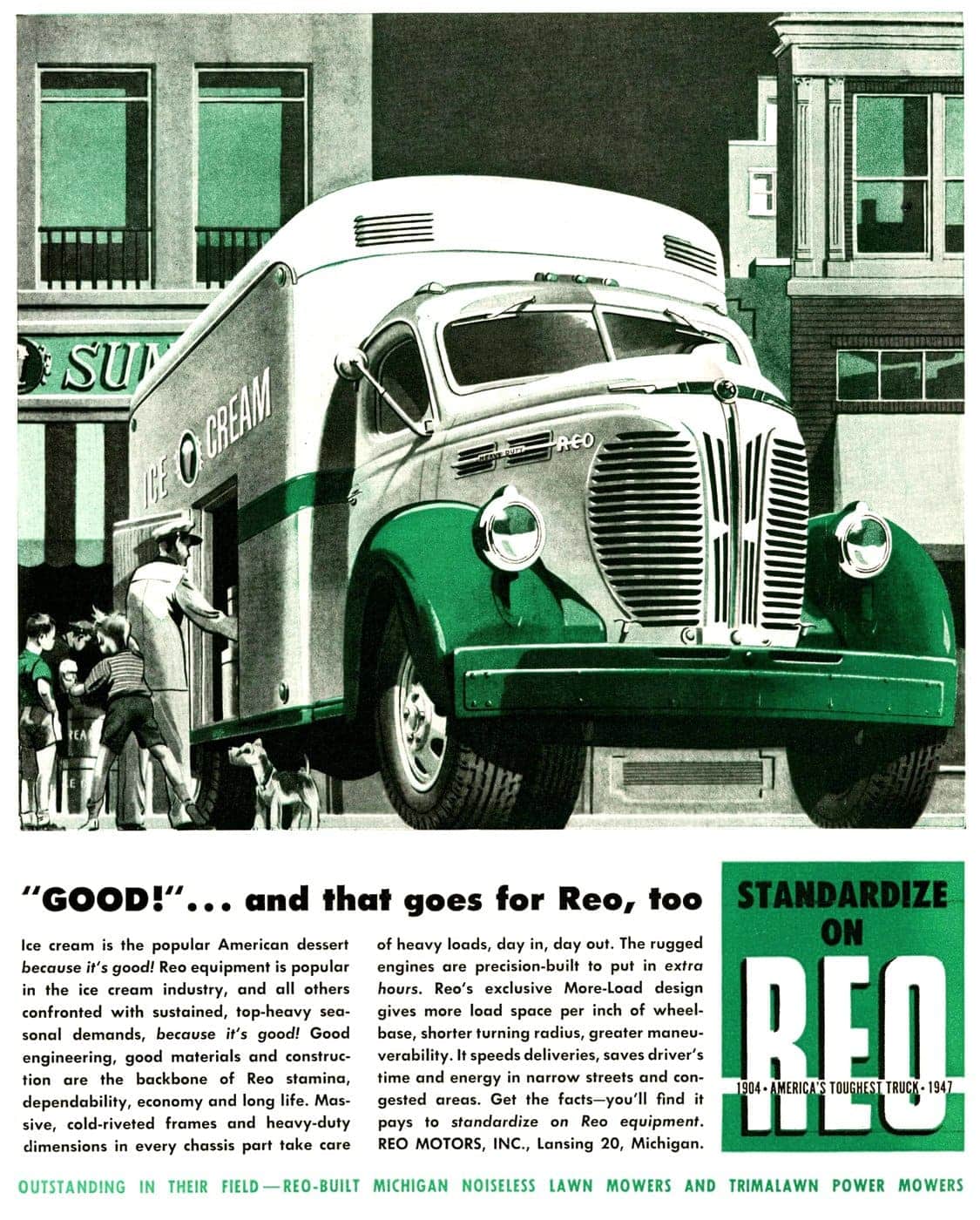
“GOOD!” and that goes for Reo, too.
Ice cream is the popular American dessert because it’s good!
Reo equipment is popular in the ice cream industry, and all others confronted with sustained, top-heavy seasonal demands, because it’s good! Good engineering, good materials and construction are the backbone of Reo stamina, dependability, economy and long life.
MORE: Classic Cars Adult Coloring Book #3: Vintage Automobiles (1930-1939)
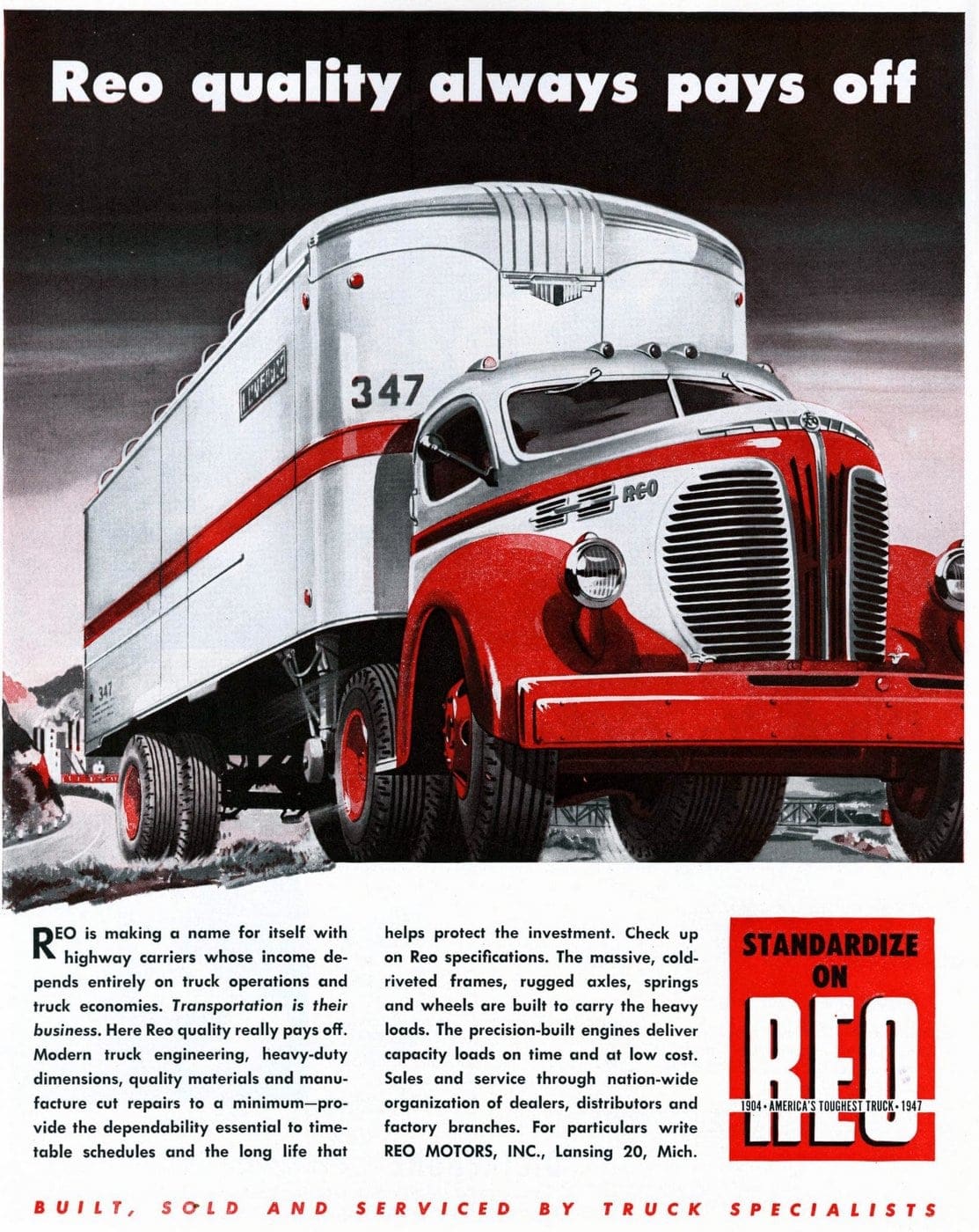
Reo quality always pays off (1930s)
Reois making a name for itself with highway carriers whose income depends entirely on truck operations and truck economies.
Transportation is their business. Here Reo quality really pays off. Modern truck engineering, heavy-duty dimensions, quality materials and manufacture cut repairs to a minimum — provide the dependability essential to timetable schedules and the long life that helps protect the investment.
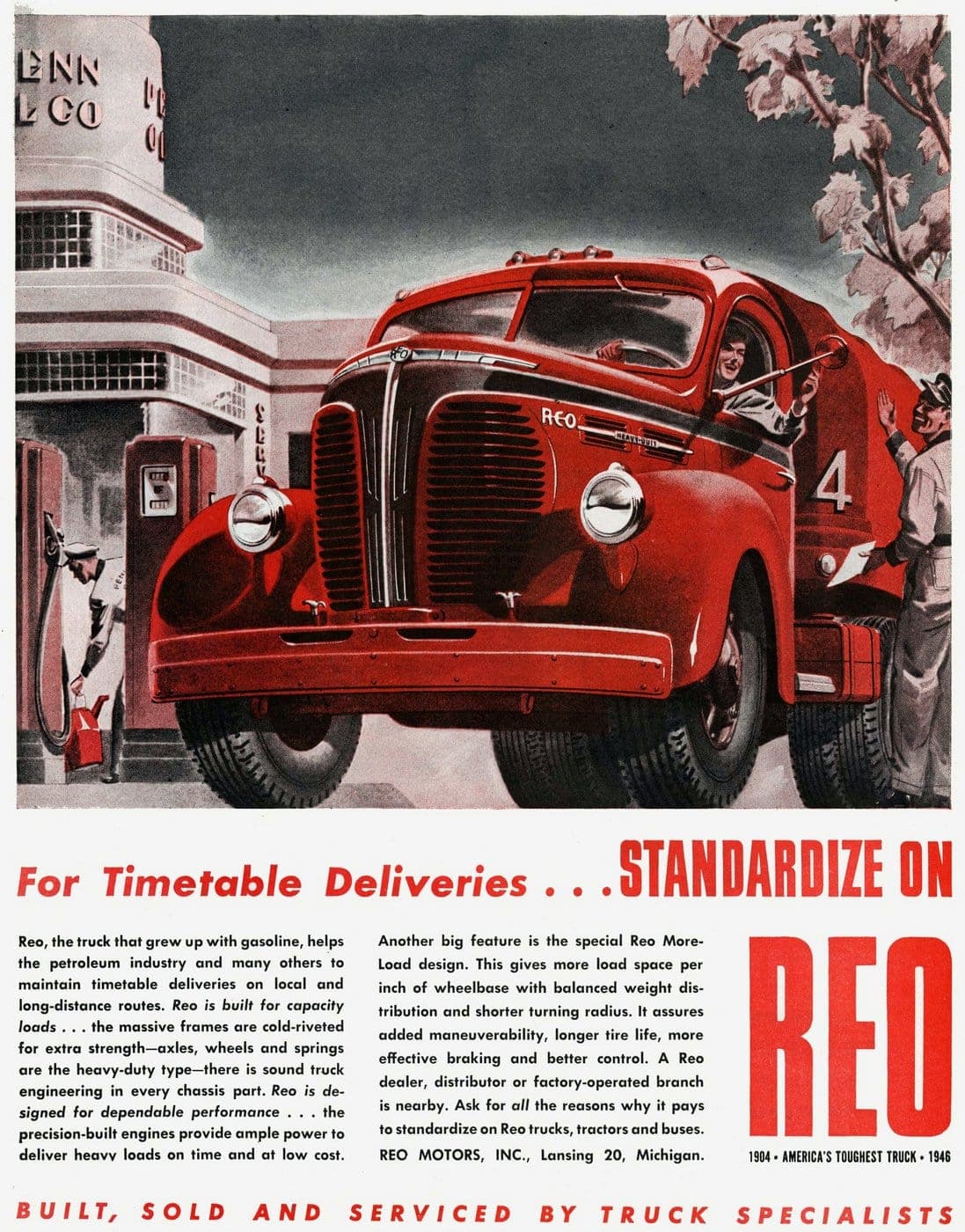
For timetable deliveries… standardize on Reo (1930s)
Reo, the truck that grew up with gasoline, helps the petroleum industry and many others to maintain timetable deliveries on local and long-distance routes.
Reo is built for capacity loads… the massive frames are cold-riveted for extra strength — axles, wheels and springs are the heavy-duty type — there is sound truck engineering in every chassis part.
Reo is designed for dependable performance… the precision-built engines provide ample power to deliver heavy loads on time and at low cost.
DON’T MISS: REO Speedwagon: How the ’80s power ballad band hit the road to success






One Response
Please let me know when you have a picture of the original REO Speedwagon like unto a motor home with wonderful woodwork…. especially impressed with inside!
Thank you for your efforts,
Mary Wood (picture of Ephesians Armor of God picture with Peace Dove!)
Facebook