Young Bob Barker
He was born in Darrington, Washington, on December 12, 1923, and spent much of his childhood on the Rosebud Indian Reservation in Mission, South Dakota, where his mother taught school. The family later moved to Springfield, Missouri, and Barker attended Drury College there on a basketball scholarship. He trained as a Navy fighter pilot during World War II (the war ended before he saw combat), and in January 1945 he married his high school sweetheart, Dorothy Jo Gideon.

Radio came next. Barker worked at a Springfield station while finishing college, then at one in Florida, and in 1950 the couple moved to California, where he got his own program, The Bob Barker Show.

Producer Ralph Edwards heard him on the air and hired him to host Truth or Consequences, the stunt-driven game show Edwards had created. Barker started on December 31, 1956, and stayed with it until 1975. Photos from this stretch show the young Bob Barker with dark hair, which is not how most viewers remember him.

The Price is Right era
The Price is Right already had a history by the time he arrived. The original version, hosted by Bill Cullen, ran from 1956 to 1965. Goodson-Todman rebuilt it for CBS in 1972 as The New Price is Right, with contestants pulled straight out of the studio audience and a rotating set of pricing games.
Barker hosted the daytime edition (Dennis James handled a nighttime version), and for a few years he did both this show and Truth or Consequences.

The program expanded from 30 minutes to an hour in 1975, which made room for the Showcase Showdown and its big wheel.
As for the catchphrase, “Come on down!” belonged to announcer Johnny Olson, who called each contestant’s name from 1972 until shortly before his death in 1985. Rod Roddy took over the job after that.
The show changed little through the 1970s and 80s, though Barker did. He became a vegetarian in 1979, and in 1982 he began closing each episode with a reminder to have pets spayed or neutered.
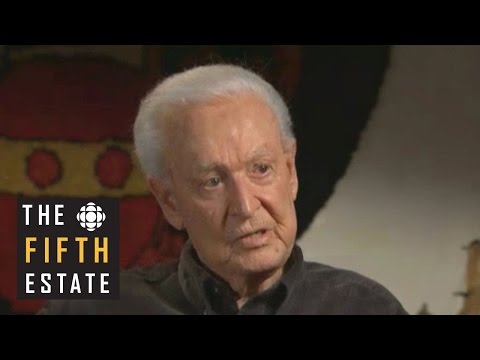
In 1987, he stopped dyeing his hair and went gray on the air, and he soon gave up his long-running job hosting the Miss USA and Miss Universe pageants because the prizes included fur coats.

He later put millions of his own money into the DJ&T Foundation, named for his late wife and his mother, Tilly, to fund spay and neuter clinics.
Younger audiences got to know him in the 1990s through a fistfight with Adam Sandler in the 1996 movie Happy Gilmore, and in 1998 CBS renamed Studio 33 at Television City the Bob Barker Studio to mark the show’s 5,000th episode.

Barker retired in 2007 with 19 Daytime Emmy Awards, and Drew Carey took over as host that fall. He came back for a few guest appearances, including one in 2013 for his 90th birthday. He died at his Hollywood Hills home on August 26, 2023, at age 99. The show is still on CBS.
Here you’ll find photos of Barker from the 1950s through his Price is Right years, including shots at home with Dorothy Jo and on the Truth or Consequences set.
Bob Barker, TVs prototype emcee (1976)
By Vernon Scott — Democrat and Chronicle (Rochester, New York), March 4, 1976
Television host Bob Barker reckons he’s interviewed 50,000 persons on the air, and concludes very few Americans are smart alecks.
“When people are picked from a studio audience, they invariably display good taste,” said Barker, the prototype for all the clean-cut game- show emcees on the air.
“After 18 years and more than 4,000 ‘Truth or Consequences’ shows, plus 1,000 ‘Price is Right’ segments, I find it’s difficult to make generalities about human behavior in front of the television camera except that people put their best foot forward.”

For a man who finds it difficult to generalize, Barker had no trouble reeling off a list of predictable patterns.
“There are certain things you can count on. Texans are more proud of their state than most. And people from Brooklyn are more apt to mention where they’re from. It’s rare anyone tries to top me with a gag. And I can remember only two occasions when a participant tried to slip by a double entendre.

“Women are more relaxed on television than men. At least they’re less inhibited. And they react more emotionally when they win a big prize.
“I’ve noticed exceptionally pretty girls rarely make good contestants. They’re accustomed to relying on their beauty to carry them along. But it takes more than a gorgeous face to be a good television subject.”

The Price is Right and sizing up contestants
Barker thinks of himself as an instant psychoanalyst. He has but a few seconds to size up a contestant, put him at ease, and come up with an observation or a quip to provoke an interesting response.
If the participant’s knees are quaking, he unobtrusively puts a steadying hand on a shoulder and the nervousness subsides.
“I have a choice of directions on how to go with each contestant,” he explained. “Sometimes it’s current events, sports, marital relationships or a joke. I warm up the audiences on ‘T or C’ and pick the contestants before we go on the air, which makes it easier for me. On ‘Price is Right,’ I see them for the first time on camera and have to make quick decisions.

“The audience has to be taken into consideration too. Each crowd has a personality of its own. I lay a few lines on them to see what they respond to. Some audiences will howl over a joke on booze, others don’t react at all.
“It helps a contestant to know a little bit about me in the minute or so that we chat before starting the game. If they figure I’m on their side, they immediately feel secure. It’s important that contestants know I’m there to help and not to make fun of them.

“And I steer them away from coming on too strong. Audiences in the studio and at home don’t appreciate parlor comics. But they like it if the contestant makes me a fall guy. I earn a living making other people funny.”
Barker makes an exceptional living at what he does. According to his agent, he is the highest salaried master of ceremonies on the air.
His take for “The Price is Right” brings him $3.5 million for six years. On top of that is the “Truth or Consequences” salary, plus playing host on beauty pageants, parades and other special events.

Barker is a low-key man. His personality is precisely the same on camera and off. Unlike many an emcee, he doesn’t shift from his easy-going self into a glib gagster.
“I couldn’t do that,” he said. “It would be unnatural for me. I think a forced attitude makes the contestants uneasy. There’s enough pressure on them when they stand a chance of winning $15,000 in prizes.”

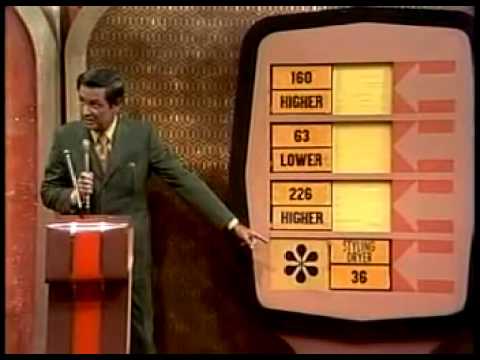
Episode of The Price is Right (September 4, 1972)
Bob Barker & Adam Sandler in epic Happy Gilmore scene
During his reign on The Price Is Right, Barker also had other pursuits. He guest-starred in various television shows and even made a memorable appearance in the 1996 film Happy Gilmore, holding his own against comedian Adam Sandler in a hilarious golf course brawl.

VIDEO | Bob Barker interview about his animal activism in 2012