That changed in 1847, when brothers Asa, Simeon and William Rogers — working out of Hartford, Connecticut — perfected a commercial electroplating process that bonded a thin layer of pure silver to a base metal, typically nickel silver. The result looked nearly identical to sterling, held up to daily use and cost a fraction of the price. They stamped their work “1847 Rogers Bros A1,” and that mark became one of the most recognized in American domestic life.
The first pattern the brothers produced under that name was Olive — a fancy flatware design that set the template for what would follow: ornate, finely detailed and clearly aimed at buyers who wanted a formal table without a formal budget. The business grew fast. Over the next decade and a half, the Rogers family branched into multiple companies, each operating under some variation of the Rogers name — Rogers & Brother in Waterbury, Rogers, Smith & Co. in New Haven and others.
The proliferation of Rogers-stamped goods became so widespread that it created real confusion in the market, with competing manufacturers attaching variations of the name to their own products. The original Rogers company leaned into its founding date as a differentiator, a way of asserting priority and quality against the imitators.
In 1862, the brand moved to Meriden, Connecticut, when the Meriden Britannia Company acquired the Rogers Bros. operation and relocated it to what had become the center of the American silver-plate industry. Meriden and its surrounding towns housed dozens of silverware manufacturers by then, and Meriden Britannia was consolidating the best of them.
The 1847 Rogers Bros mark survived the transition intact, and production expanded considerably under the larger company’s resources. Then in 1898, Meriden Britannia itself became the cornerstone of an even larger consolidation: the International Silver Company, formed in Meriden under New Jersey corporate law, which absorbed more than a dozen Connecticut silverware firms in its first year alone. Through all of it, the 1847 Rogers Bros name stayed on the flatware.

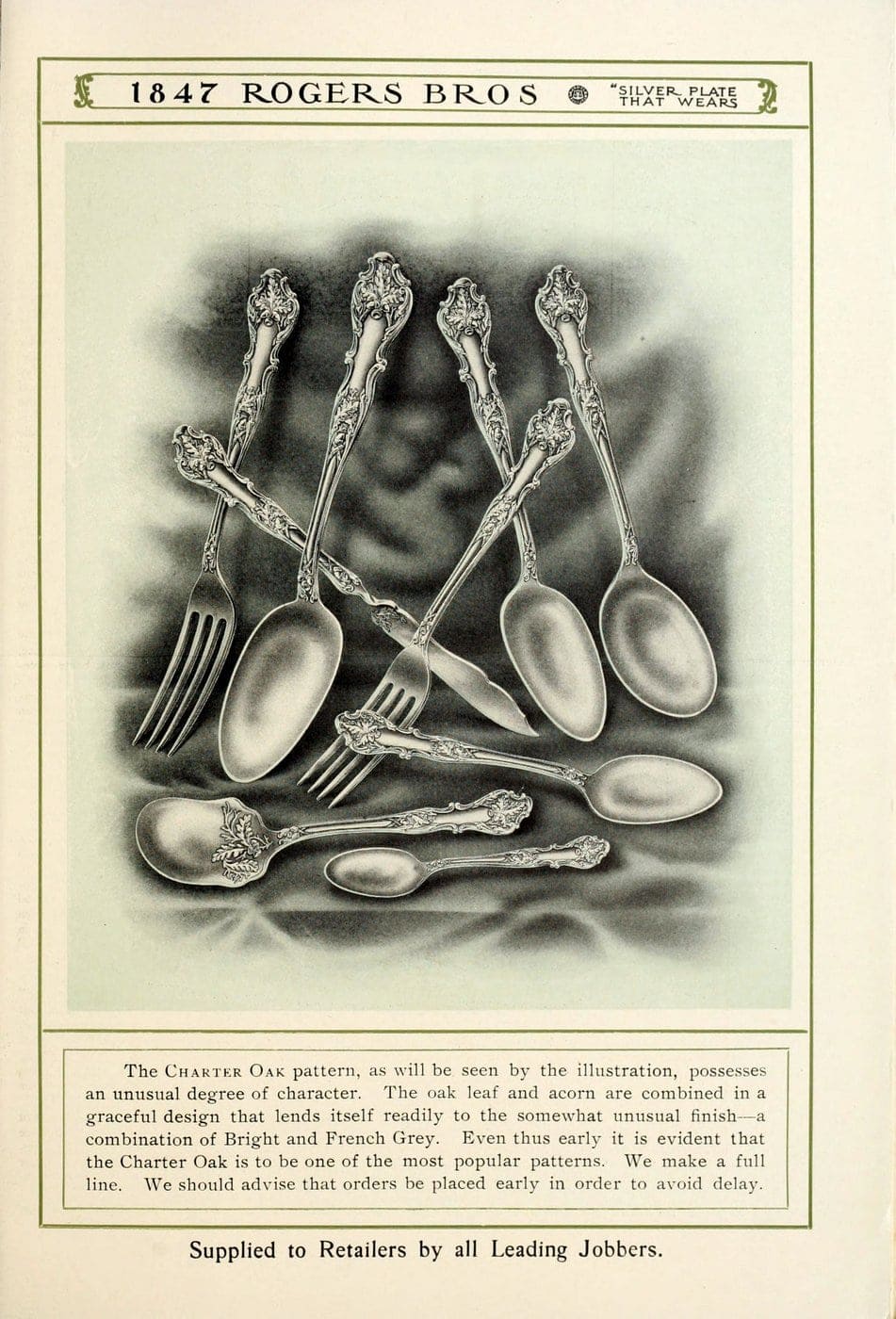
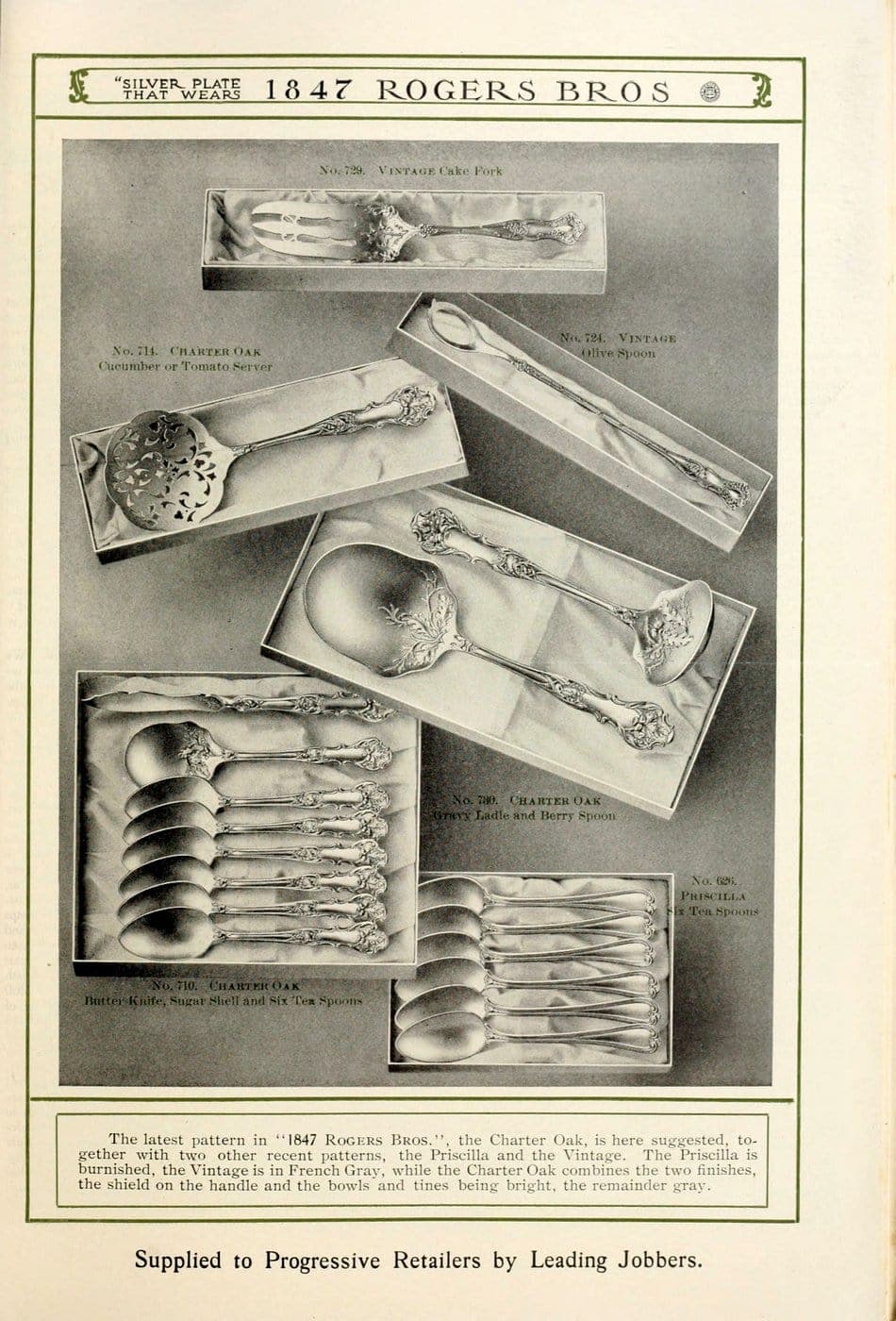
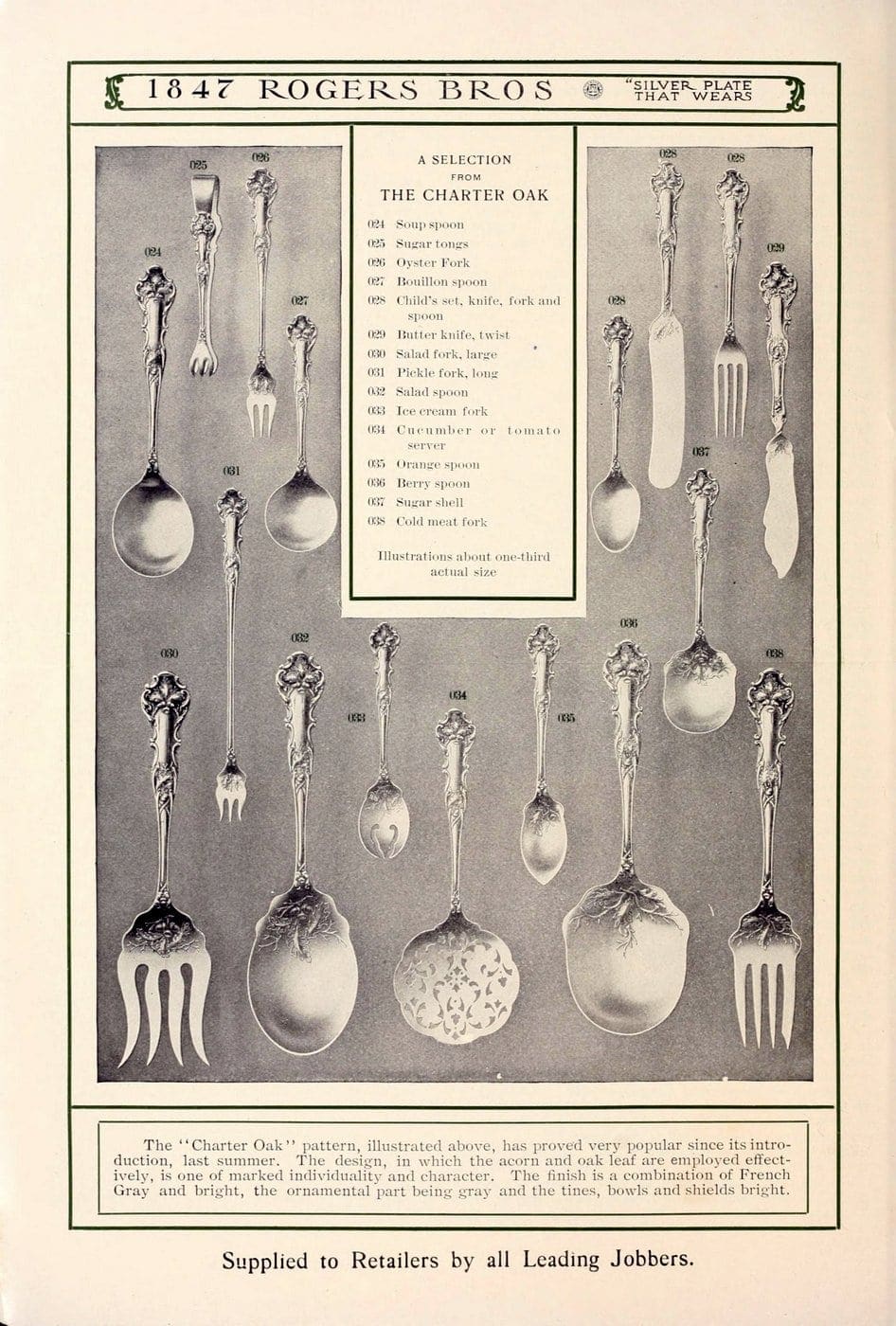
Under International Silver, the brand hit its commercial peak. New patterns arrived regularly — Columbia, Charter Oak, Berkshire, Ancestral, Adoration and First Love among the most popular — each designed to suit the aesthetic of its era, from Victorian floral scrollwork to the cleaner lines of the early 20th century.
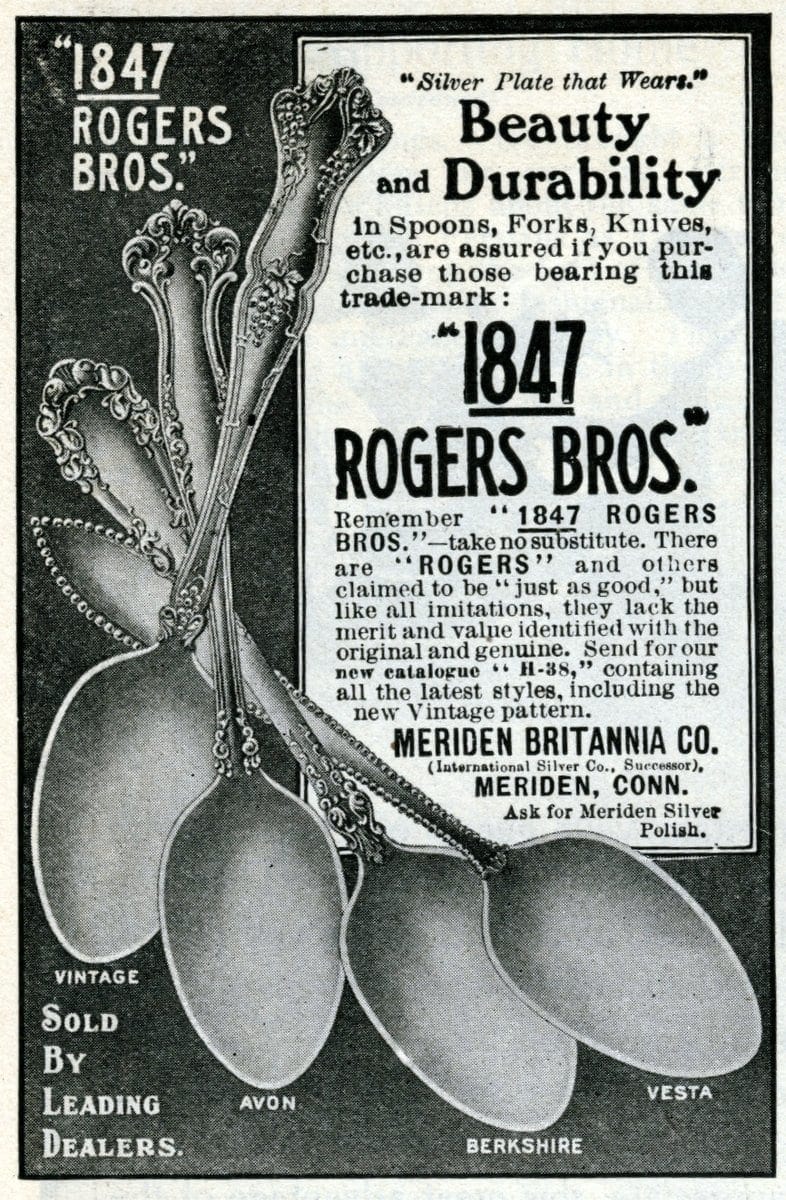
The company also invested heavily in the brand’s reputation, running national advertising campaigns that positioned 1847 Rogers Bros as the standard for quality silver plate. Imitators continued to be a problem; the brand’s ads from the early 1900s explicitly warned buyers to check the mark carefully and “take no substitute,” language the page here preserves from a 1905 ad. The concern was legitimate — the Rogers name had been imitated so widely for so long that consumer education was part of the marketing strategy.
The brand remained a fixture in American homes well into the mid-20th century, with patterns like Daffodil (1950) and Eternally Yours (1941) carrying it into the postwar era. International Silver continued producing under the 1847 Rogers Bros mark until the Connecticut plant closed in 1981, with the company completing liquidation two years later. Sets that were given as wedding gifts in the 1920s ended up passed down through two or three generations, which is part of why so many pieces survive today — often still in their original fitted cases, occasionally still in use.
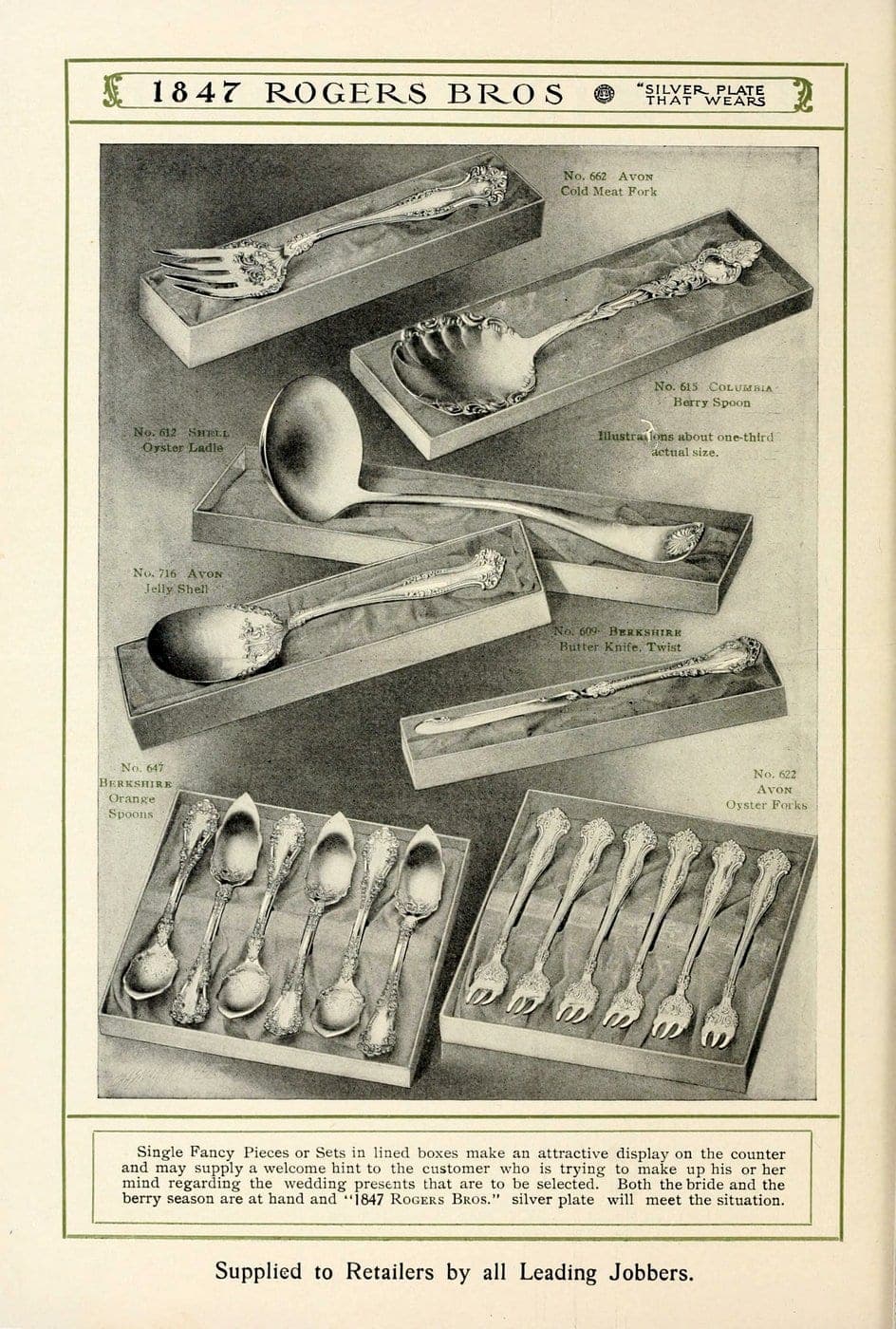
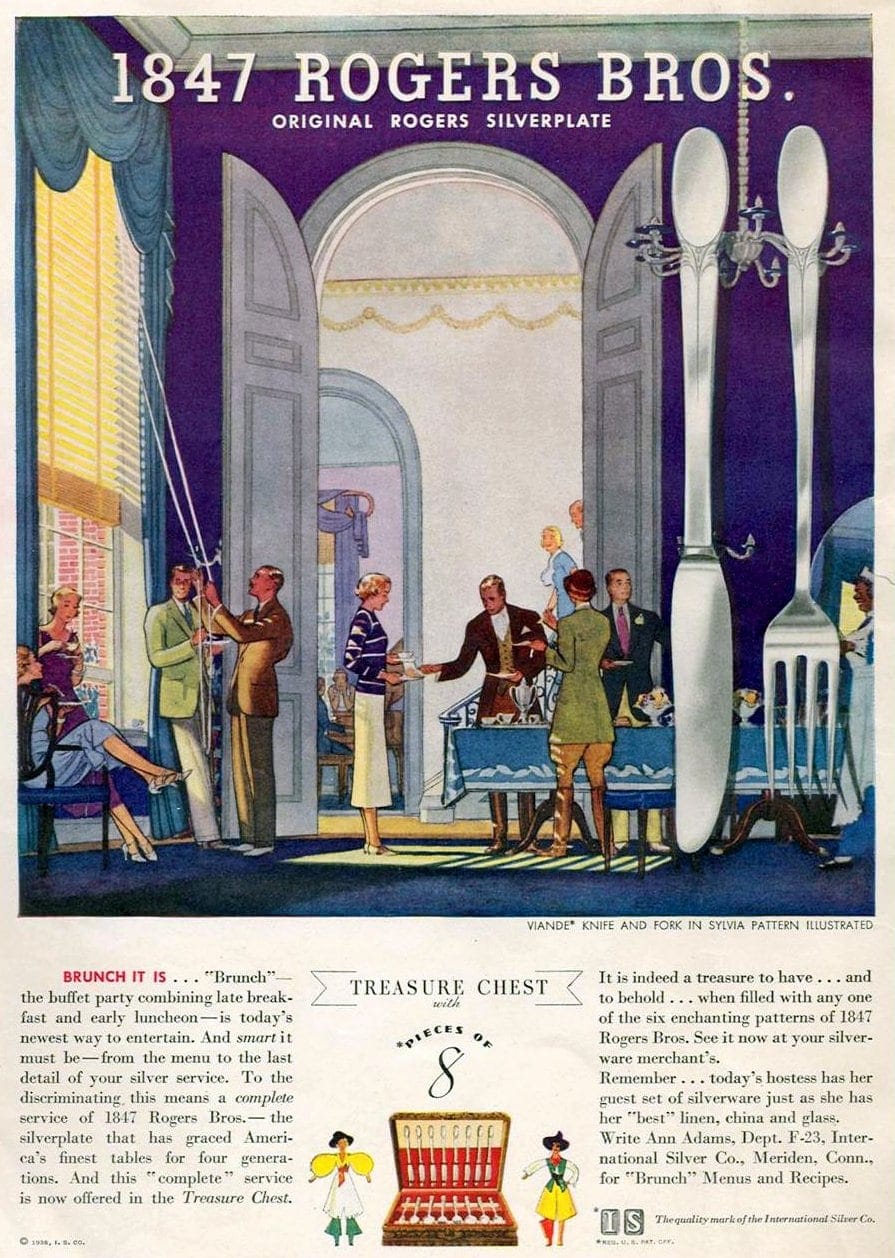
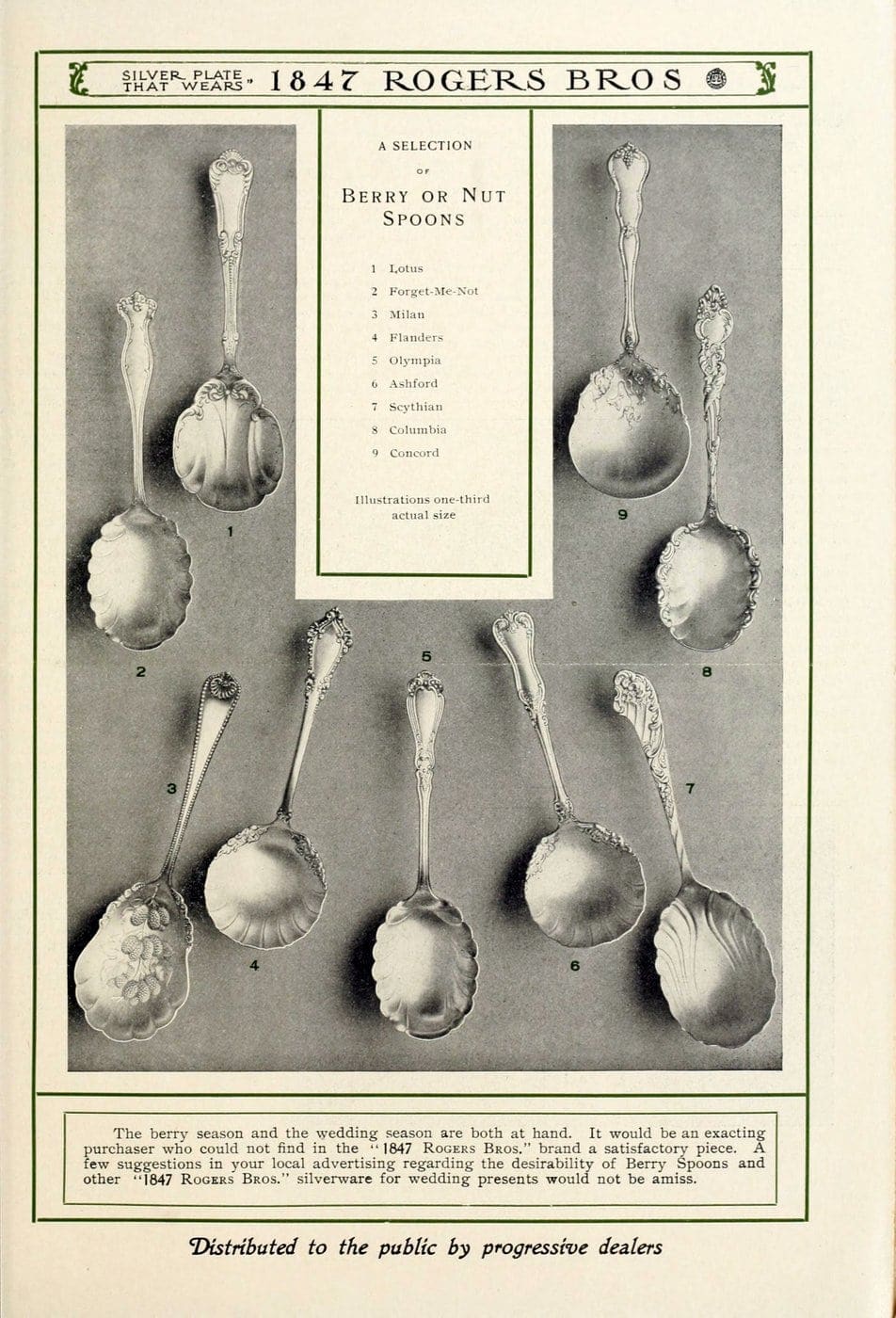
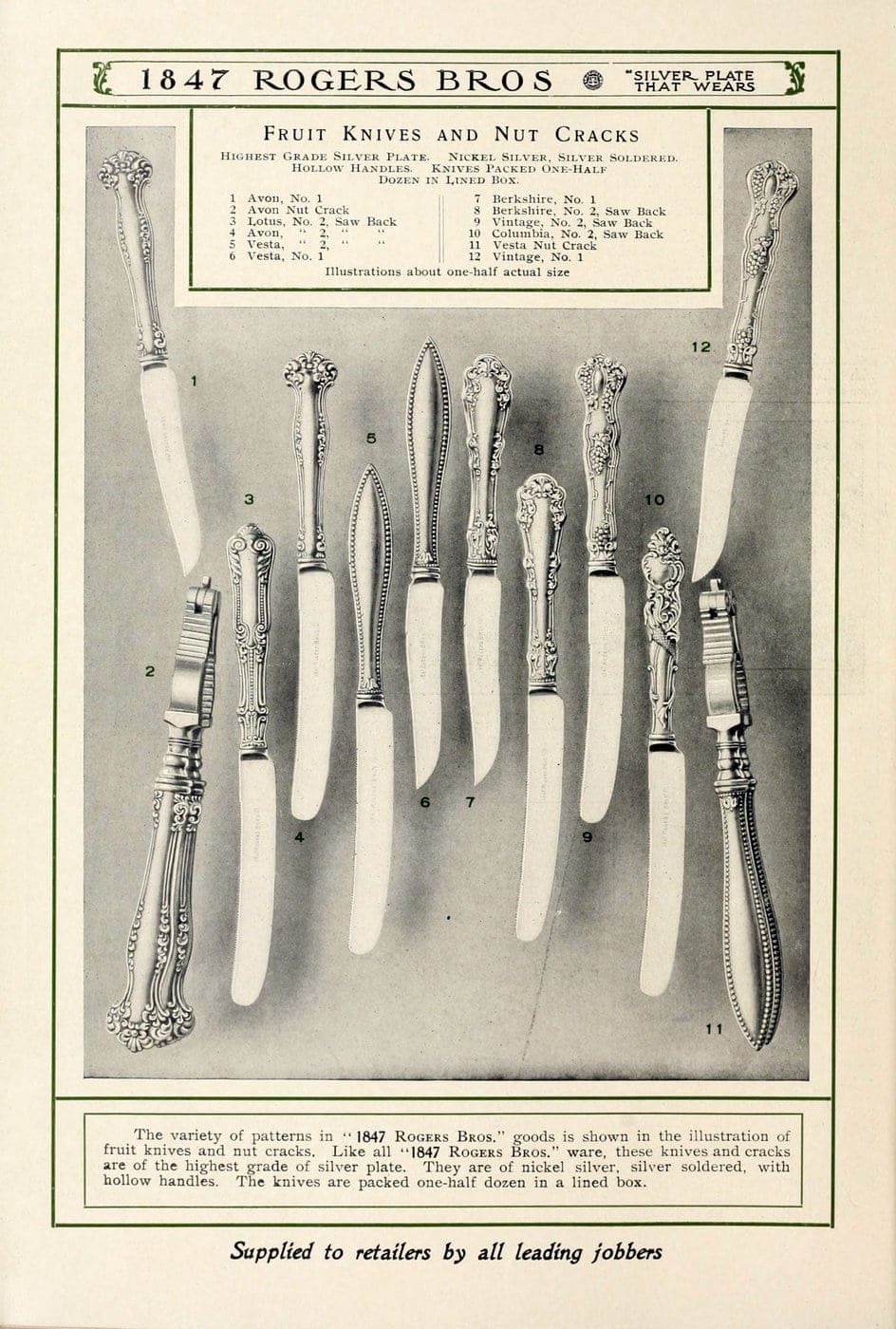
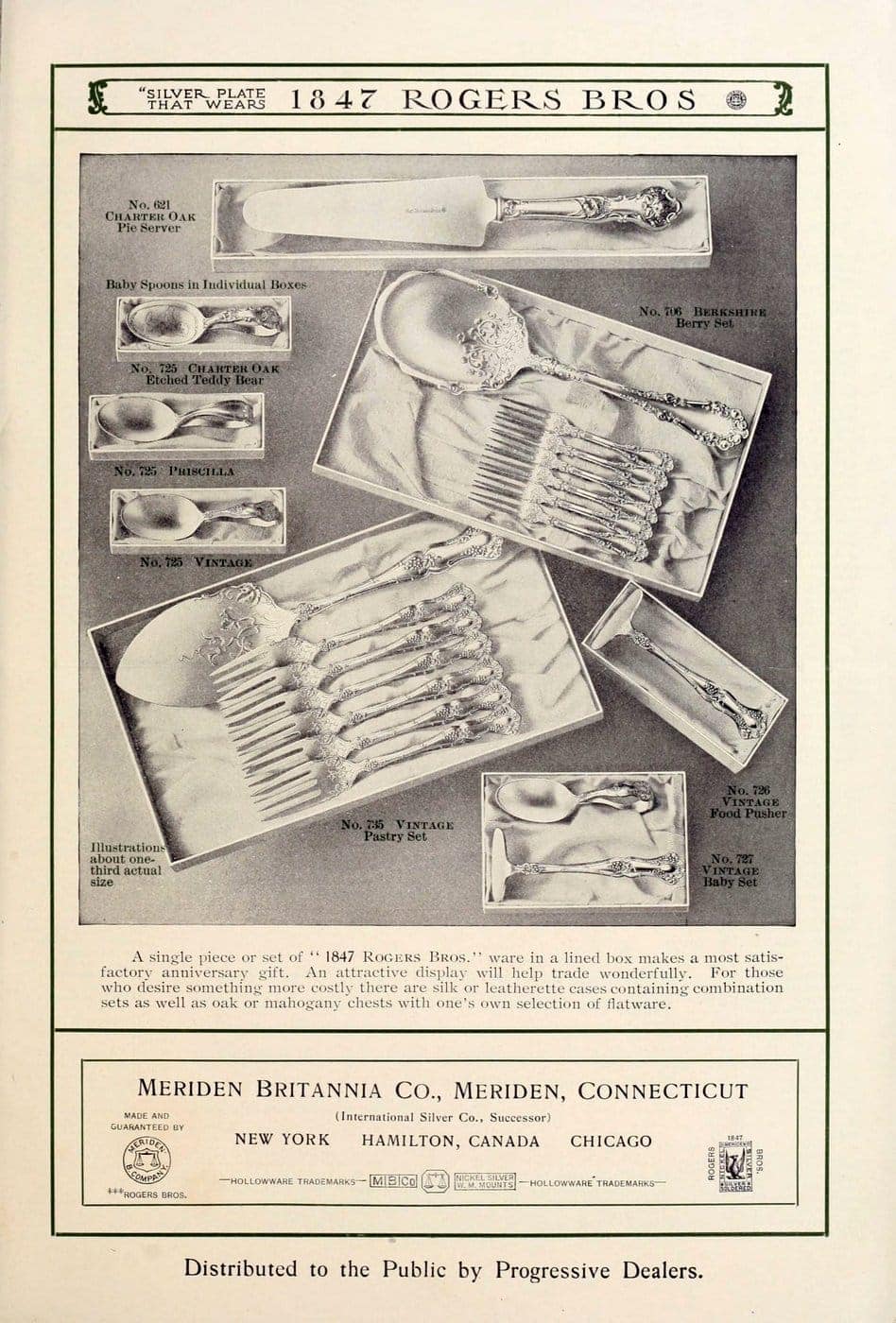
The ads and catalog pages collected here span roughly 1903 to 1935, covering the brand’s years under International Silver and showcasing patterns like Ambassador, Heraldic, Vintage, Vesta and Berkshire. They’re a good snapshot of how the company presented itself during its most active period — the language is confident, the designs are elaborate and the pitch is always the same: quality you can trust, silver that wears.
About antique 1847 Rogers Bros silver plate from the early 20th century
The ORIGINAL and GENUINE ROGERS’ goods for half a century have maintained the highest reputation for quality, workmanship and style, and made the name of “ROGERS” on Electro Silver Plate celebrated.
So well had the quality of this brand he- come known to the public throughout the world, that purchasers called for ROGERS’ goods, and would take no other. This condition of things has brought into the market during the past few years, a number of so-called ROGERS’ STAMPS, used for the purpose of reaping a benefit from the universal demand for the ROGERS & BRO. A-1 goods. Hot only has our brand been closely imitated, but the patterns, style of packing, color of the paper, and the labels, have been copied.
Purchasers, therefore, to secure the GENUINE ROGERS’ goods should examine the brand carefully, and insist upon getting those bearing our Trade Mark,
ROGERS & BRO., A-1 are made of the finest quality Nickel Silver, are heavily plated with pure Silver, carefully weighed before and after plating, and are guaranteed in every way. The different grades of Plate are designated by the Stamp upon the back of each article.
Long experience, highly skilled workmen, valuable patented machinery and ample facilities, enable us to produce goods of the highest class at the lowest prices consistent with the best quality.
Attention is called to the beauty and variety of patterns offered, to which are frequently added new designs. The Savoy and Tuxedo are the latest, and conceded to be the handsomest patterns ever made in Electro Silver Plate.
This valuable process is no untried experiment, but has been used for the past twenty years, and has proved all that was ever claimed for it. The articles are first plated a Triple Plate on all the parts most exposed to wear, after which the whole is plated the regular Extra or Triple Plate, as desired, over the XII plating.
The illustration shows the appearance of the goods after the XII Plate has been deposited. When the final coat of silver is plated on, and the article burnished, the appearance is exactly the same as goods plated in the ordinary way.

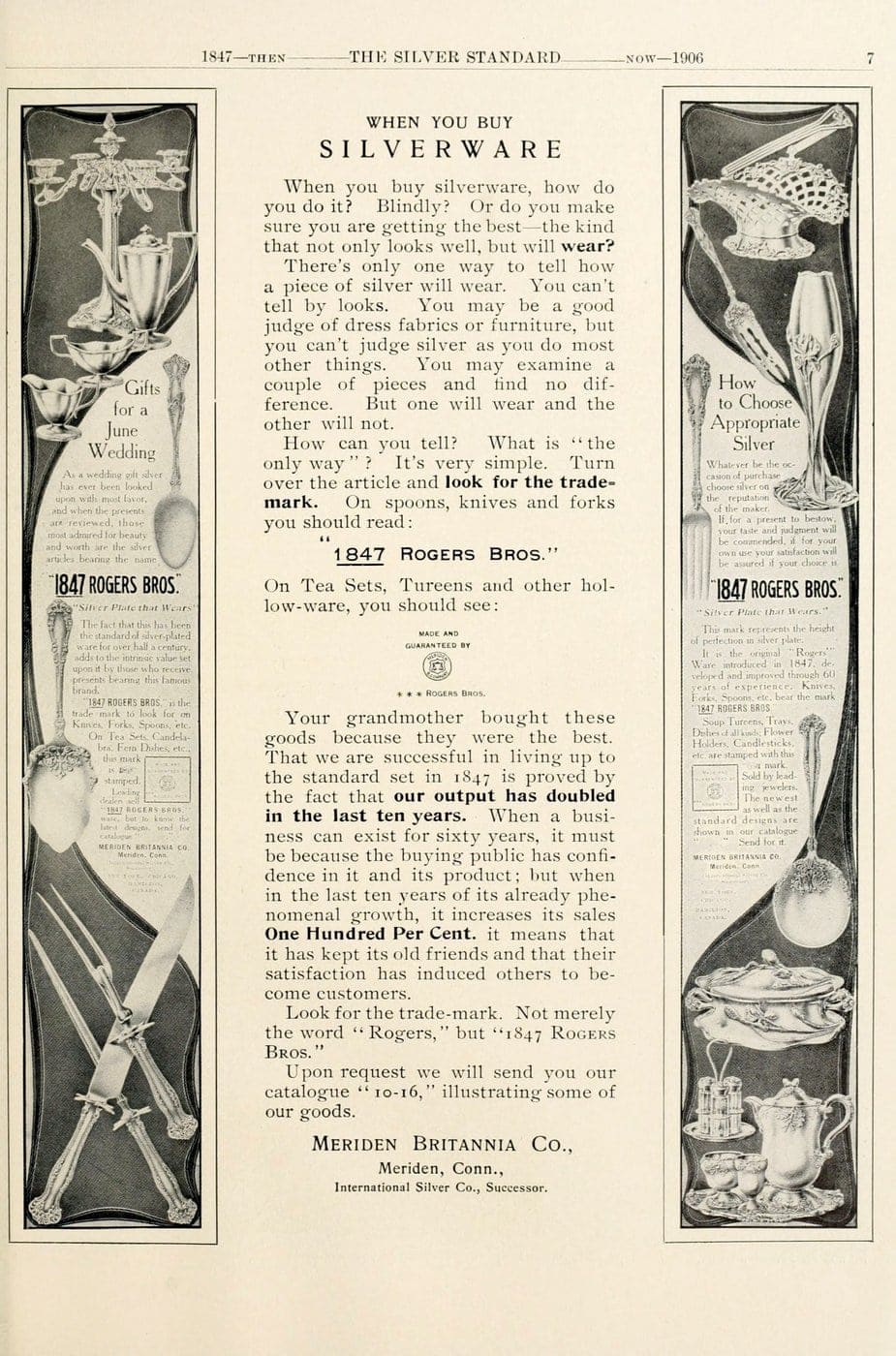
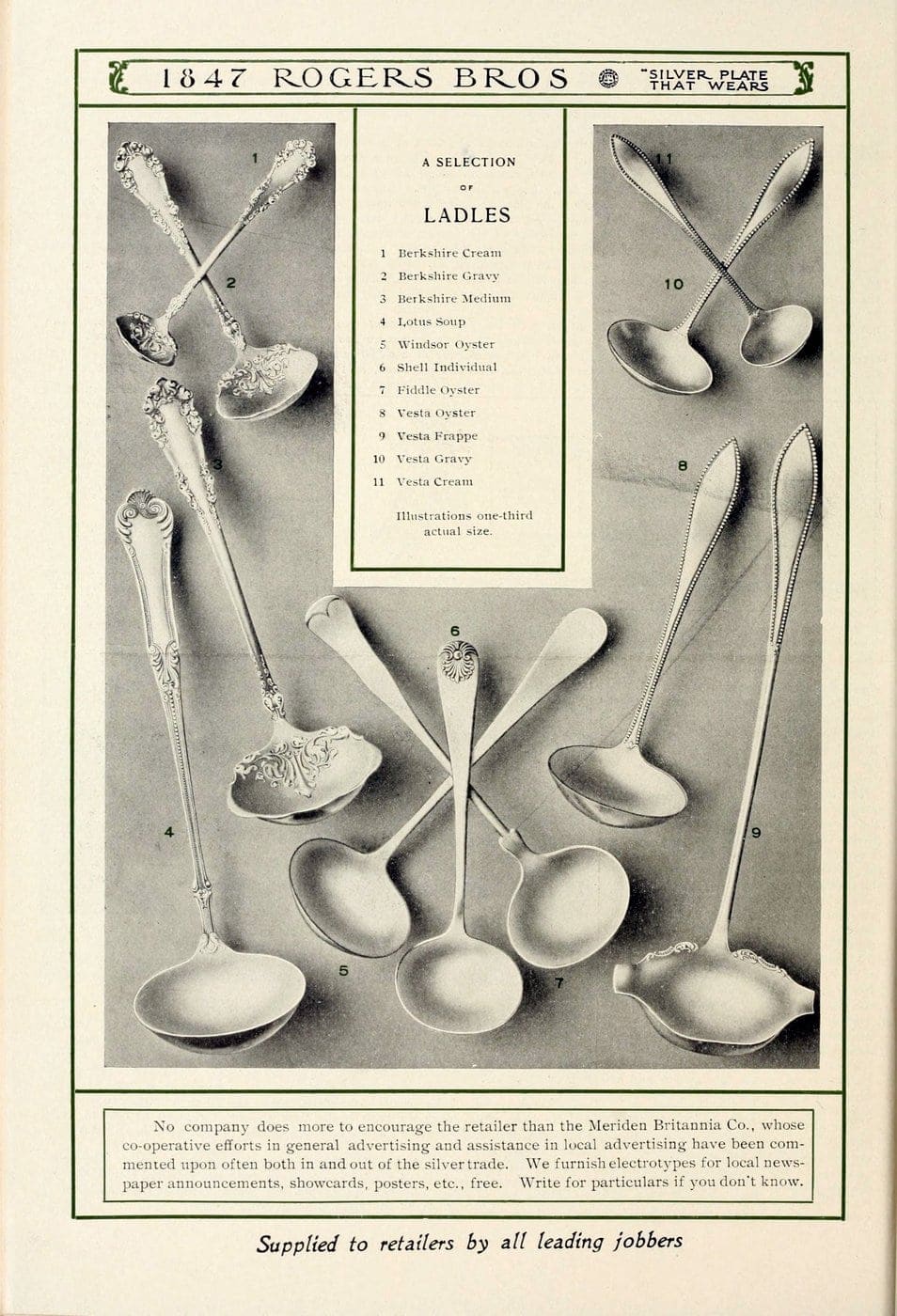
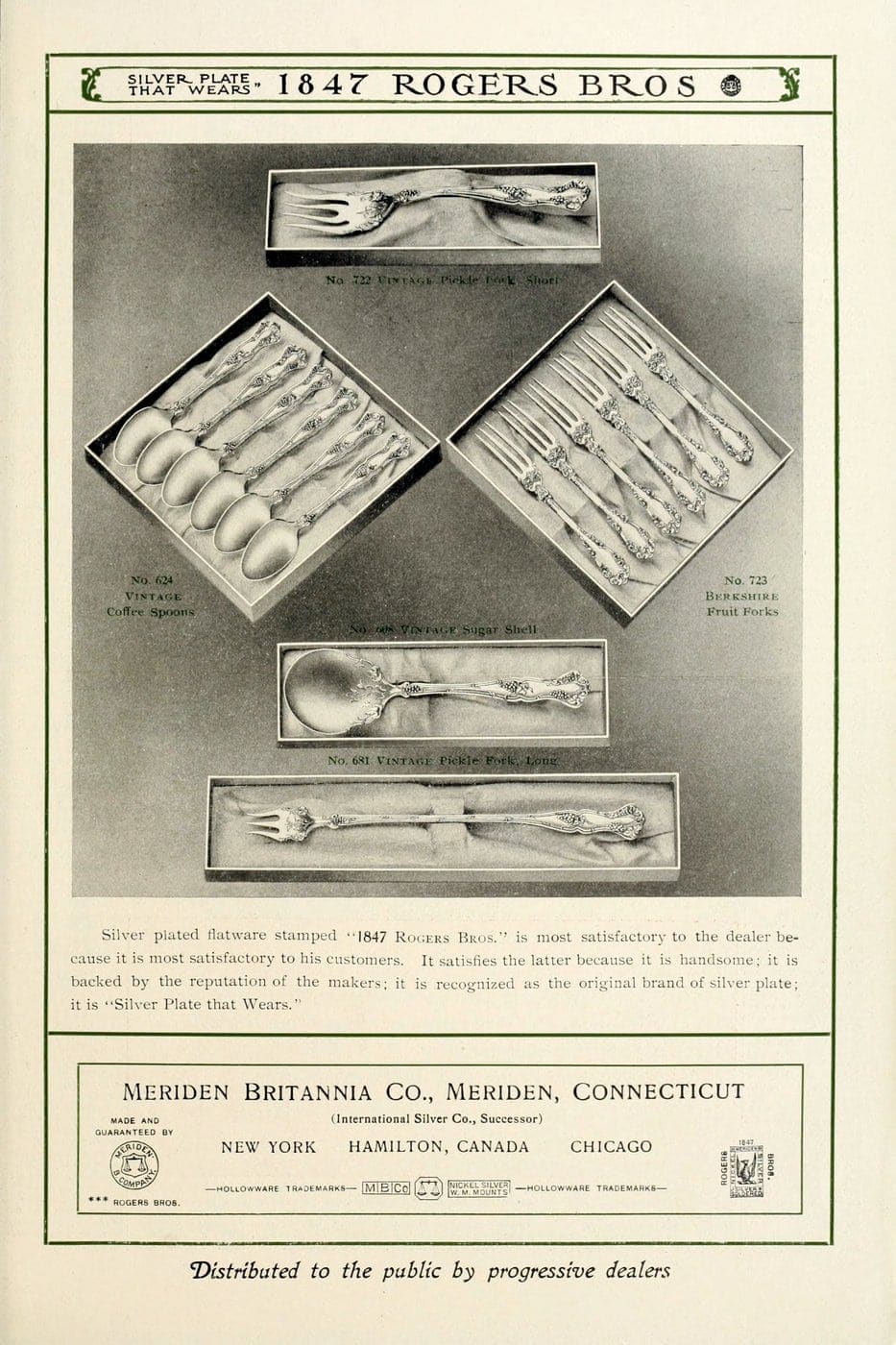
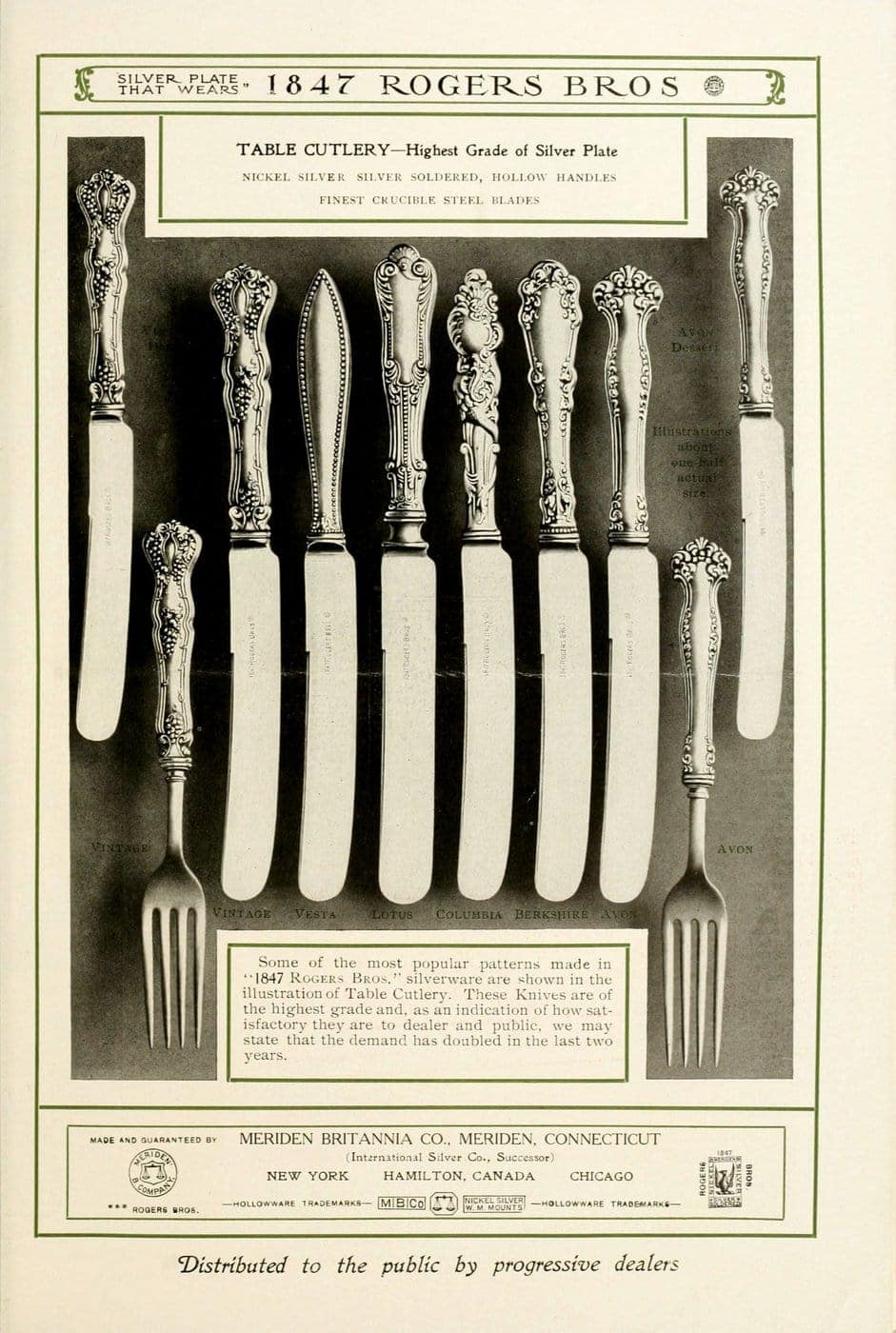


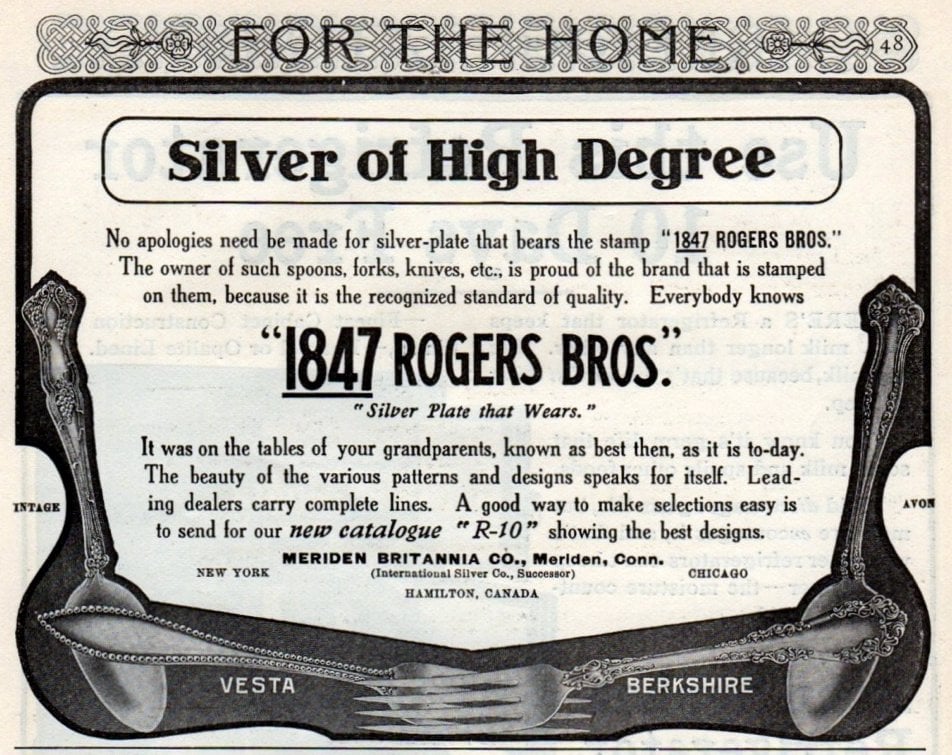
1847 Rogers Bros: Silver of high degree (1906)
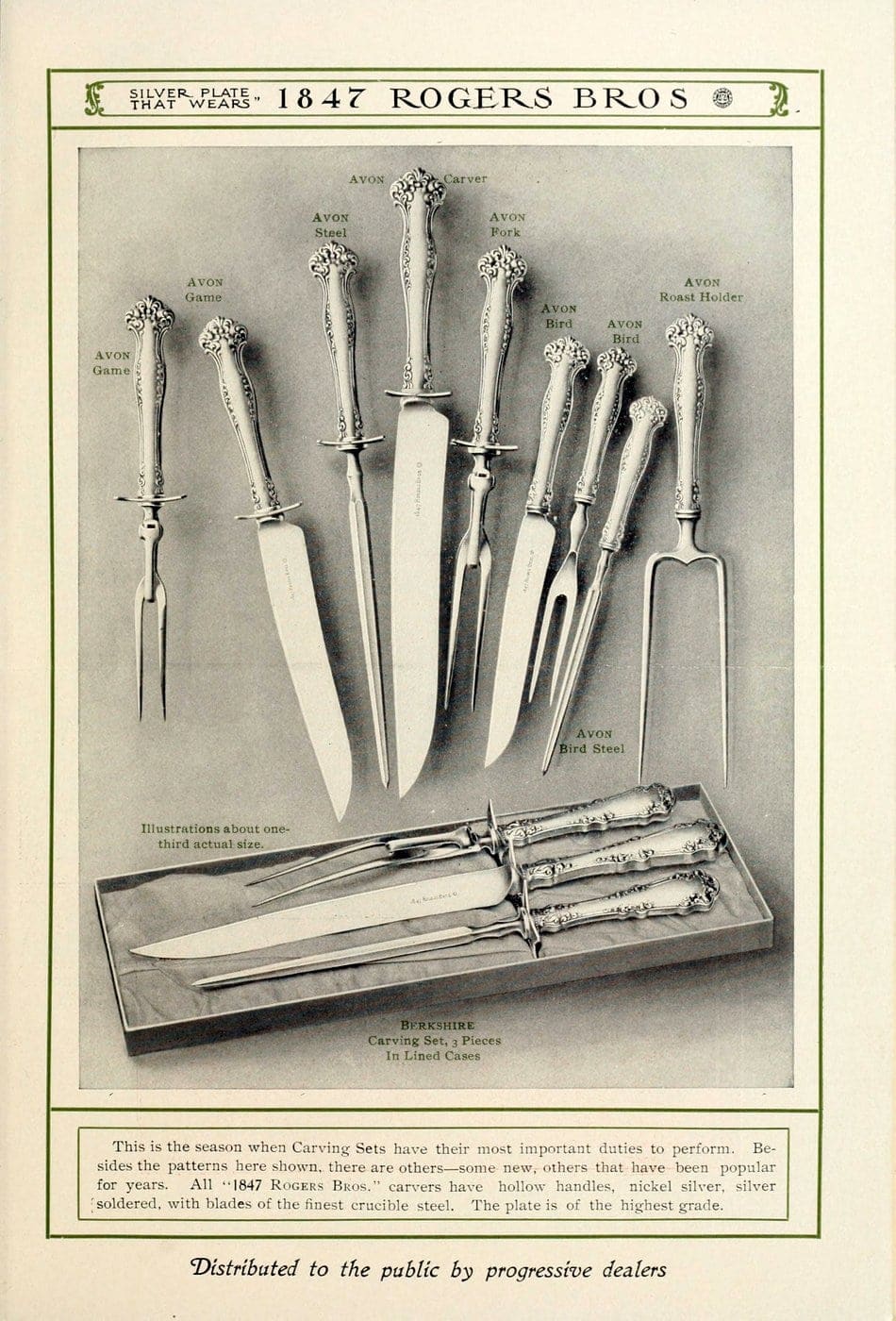
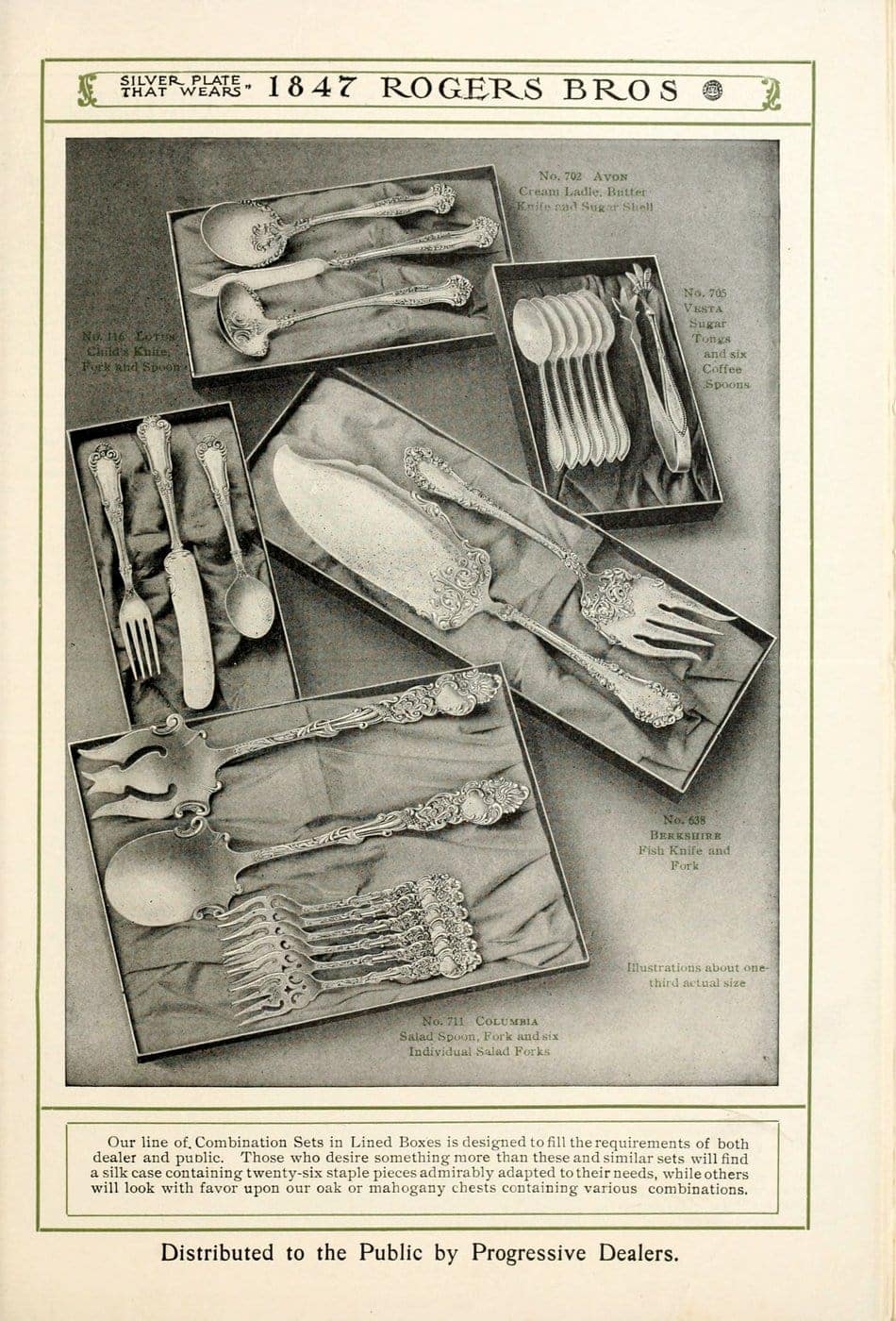
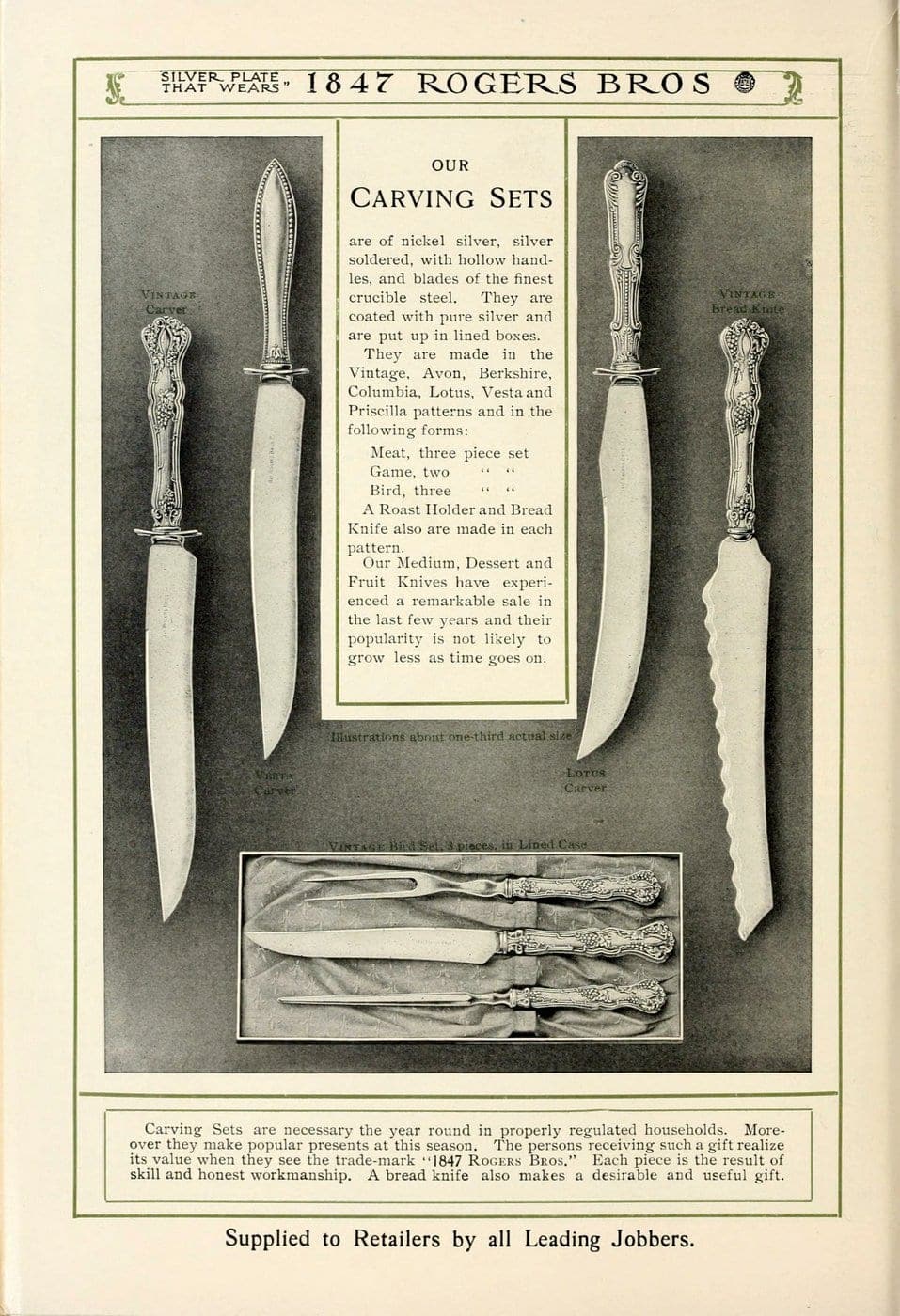
Vintage – Vesta – Berkshire – Avon
Through three wars (1903)
All these years, Rogers Bros spoons and forks have been famous.

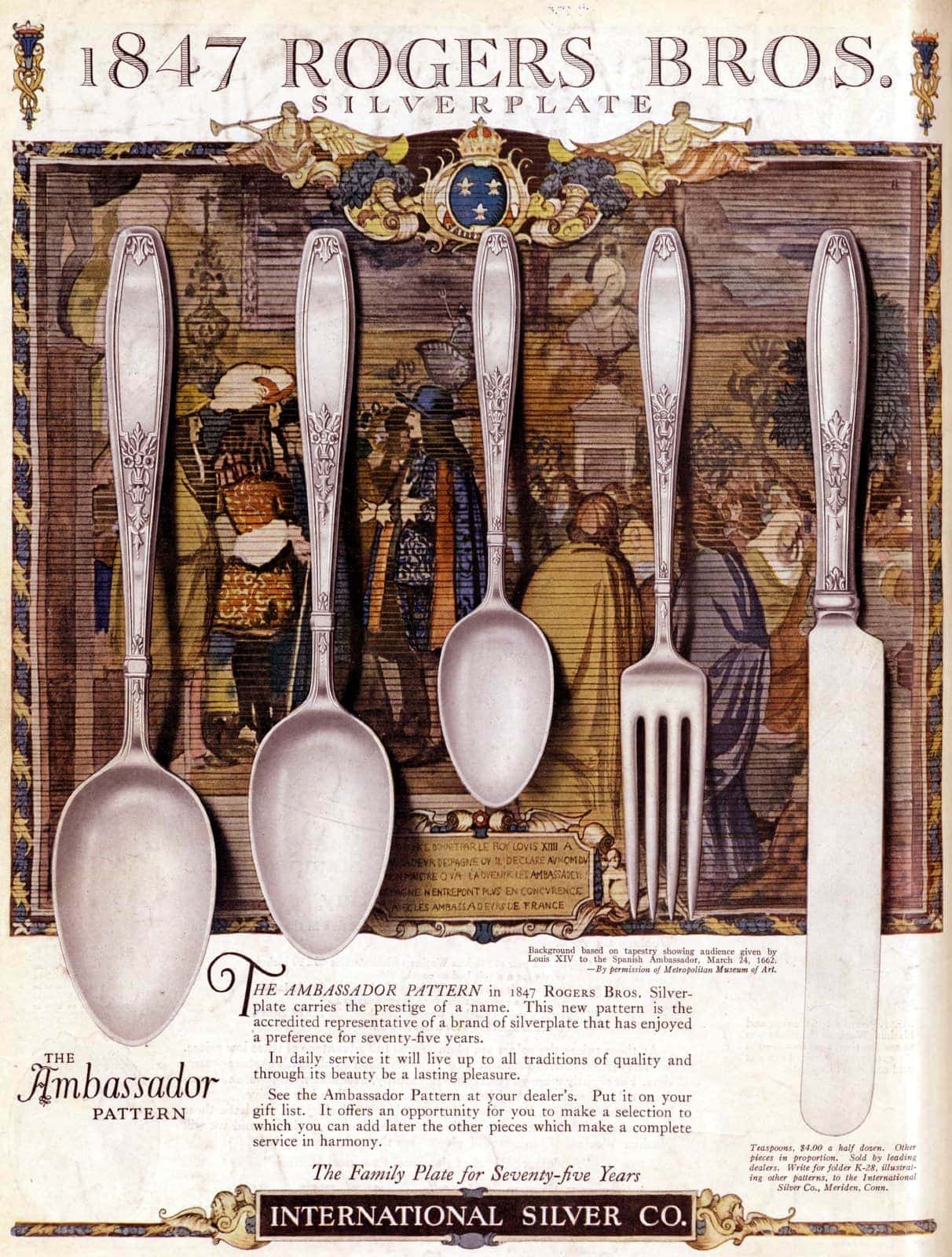
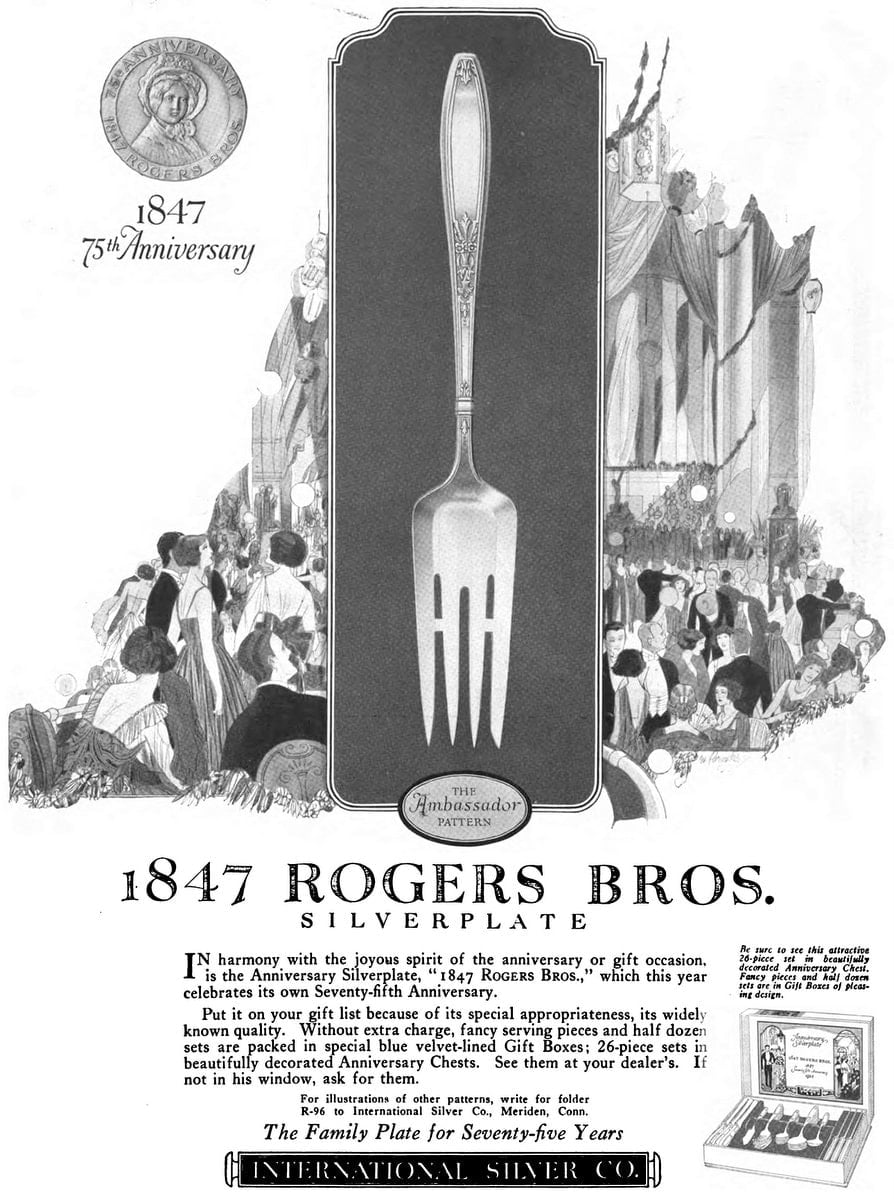
1847 Rogers Bros: Silverplate (1921)
The Ambassador Pattern in 1847 Rogers Bros Silverplate carries the prestige of a name. This new pattern is the accredited representative of a bland of silverplate that has enjoyed a preference for seventy five years. In daily service, it will live up to all traditions of quality and through its beauty be a lasting pleasure.
Furnishing the home with silverware (1922)
In many homes, the silverware is held in a special regard. This is because the various members of the family add to it from time to time on the occasion of certain anniversaries — mother’s birthday, wedding anniversary or Christmas — and all take an interest in gradually making the service table complete.
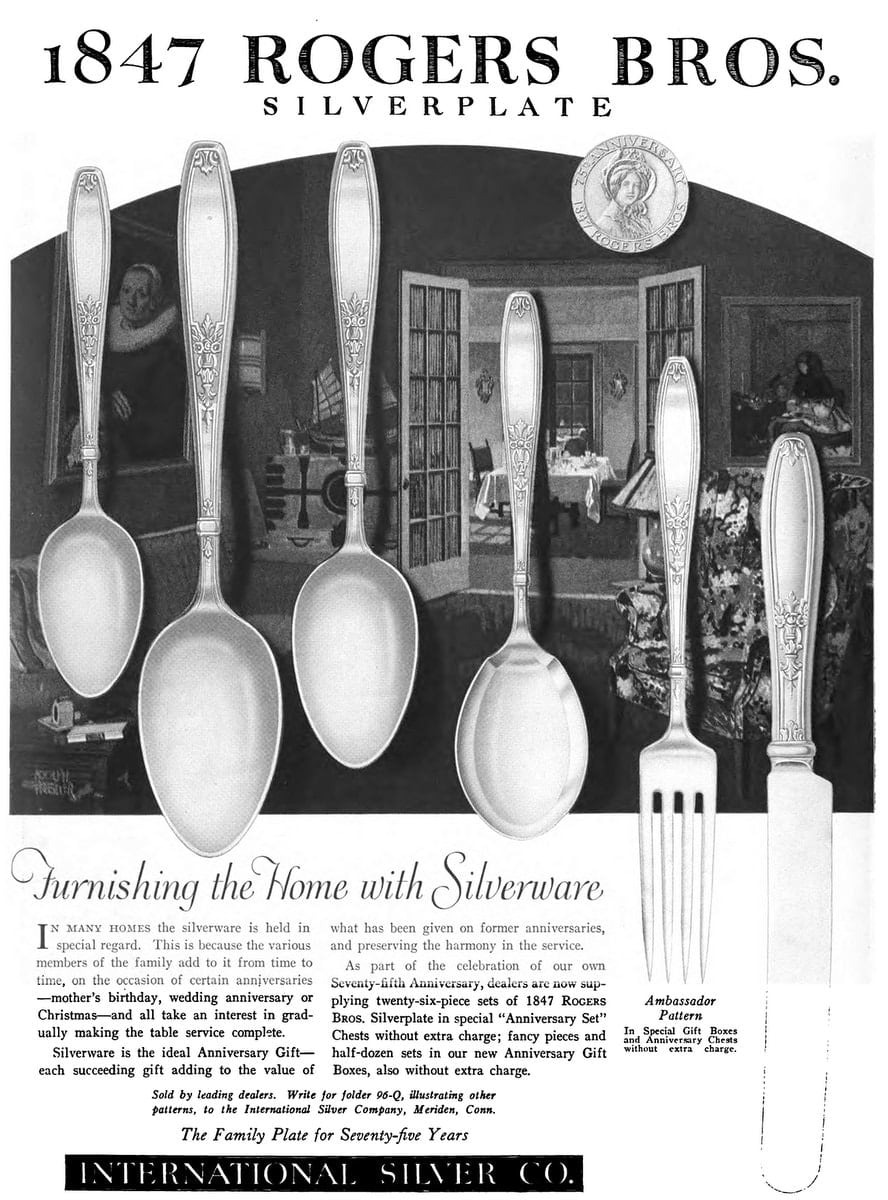
75th anniversary silverplate (1922)
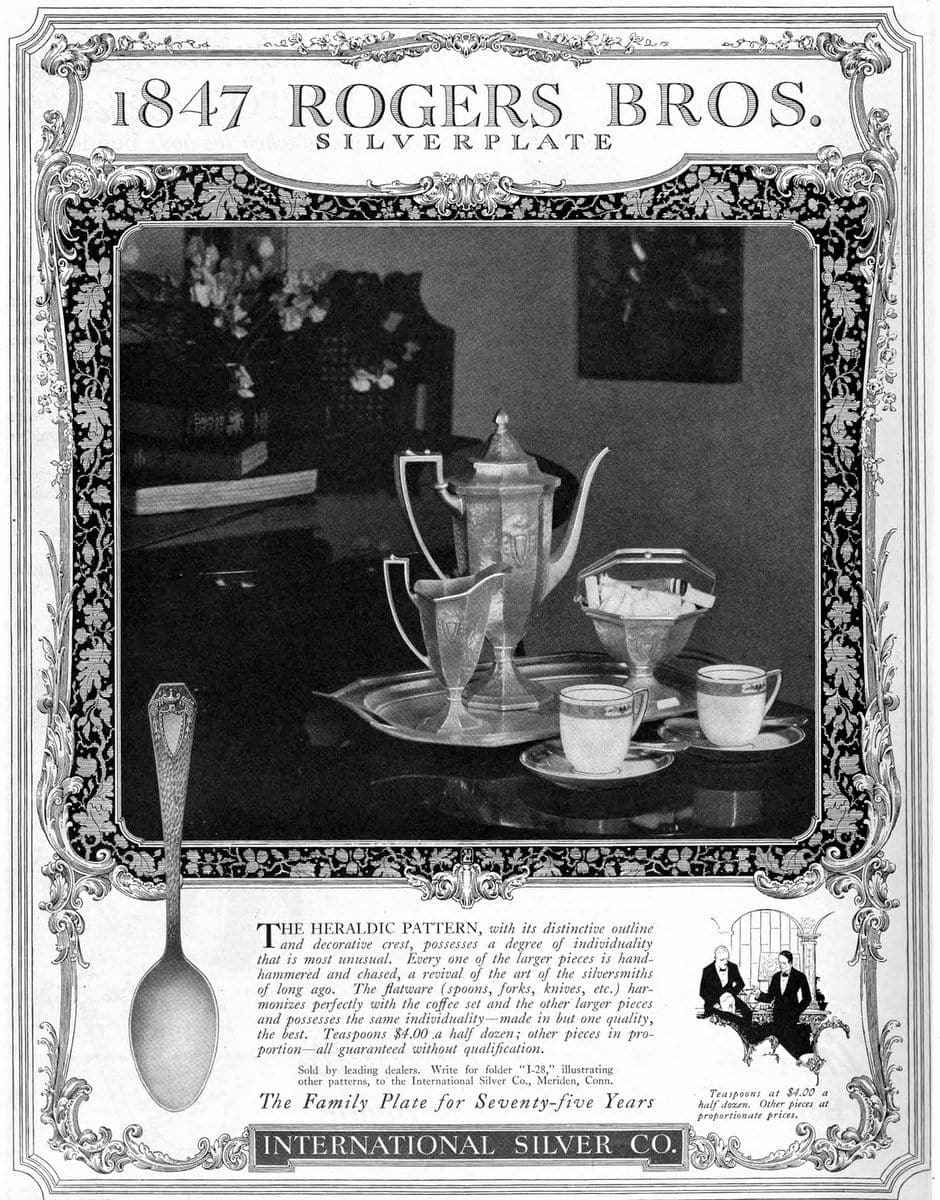
The Heraldic pattern (1921)
The Heraldic Pattern, with its distinctive outline and decorative crest, possesses a degree of individuality that is most unusual.
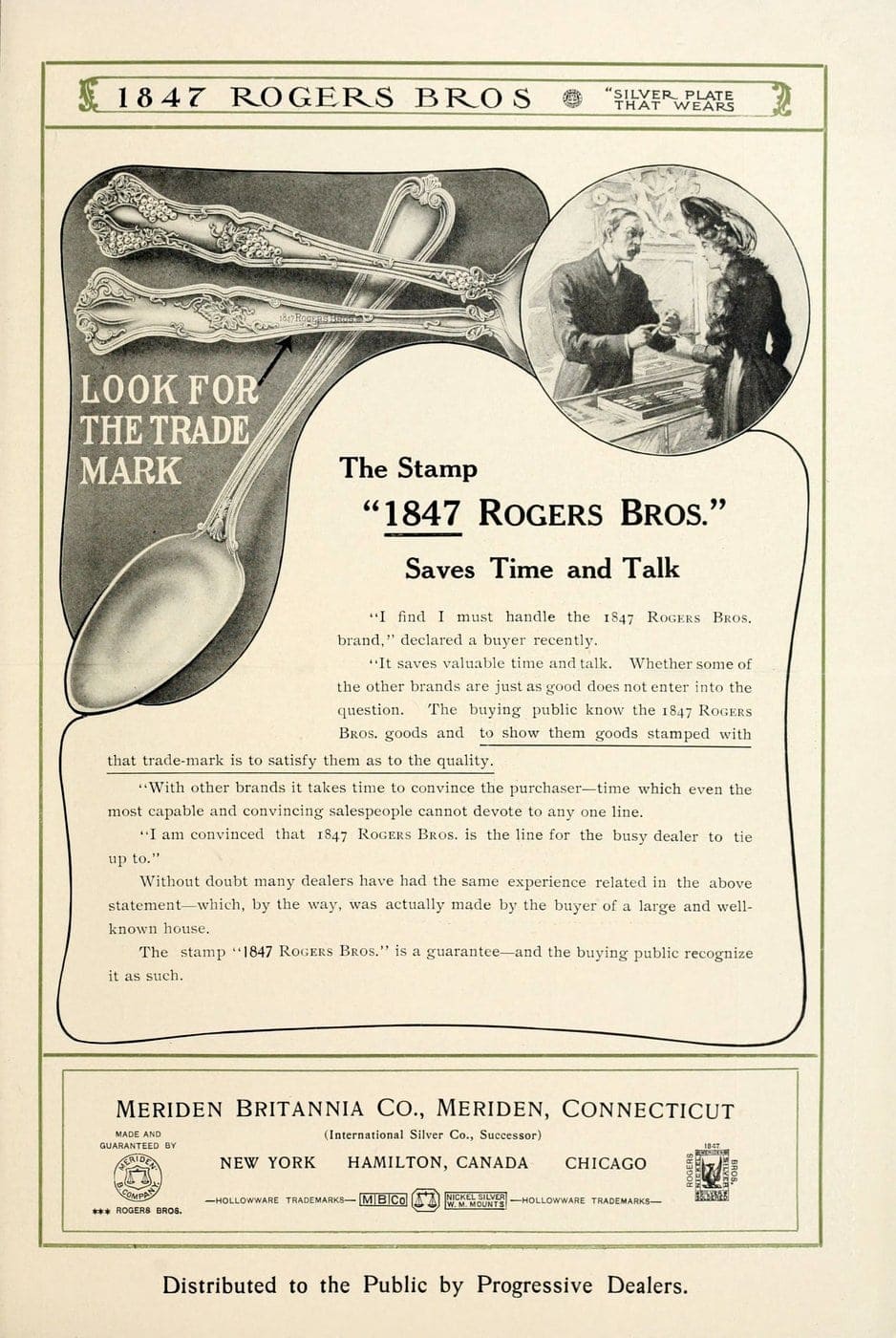
“Silver plate that wears.” (1905)
Beauty and durability in spoons, forks, knives, etc. are assured if you purchase those bearing this trademark: “1847 Rogers Bros.”
Remember “1847 Rogers Bros” — take no substitute. There are “Rogers” and others claimed to be “just as good,” but like all imitations, they lack the merit and value identified with the original and genuine.
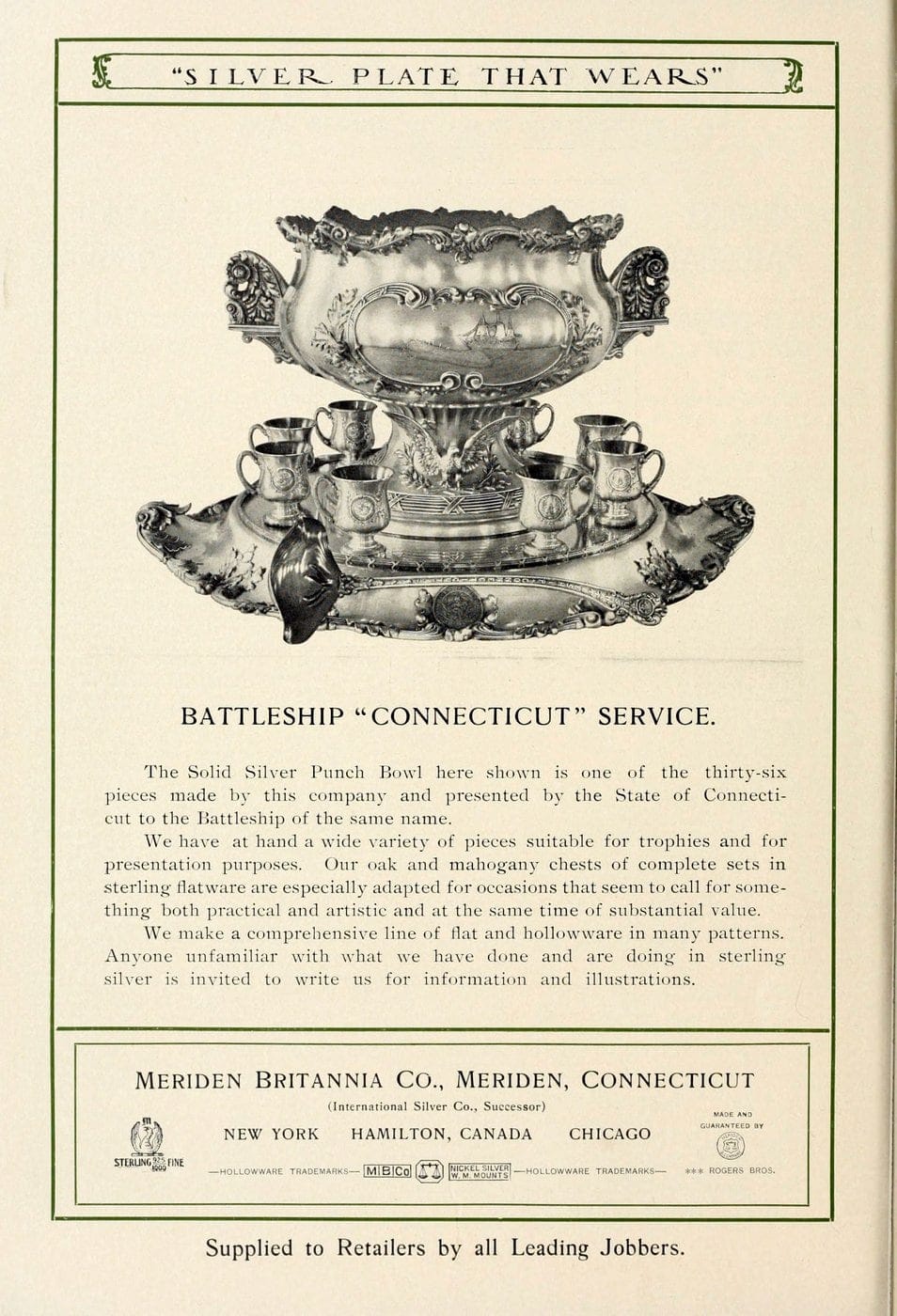
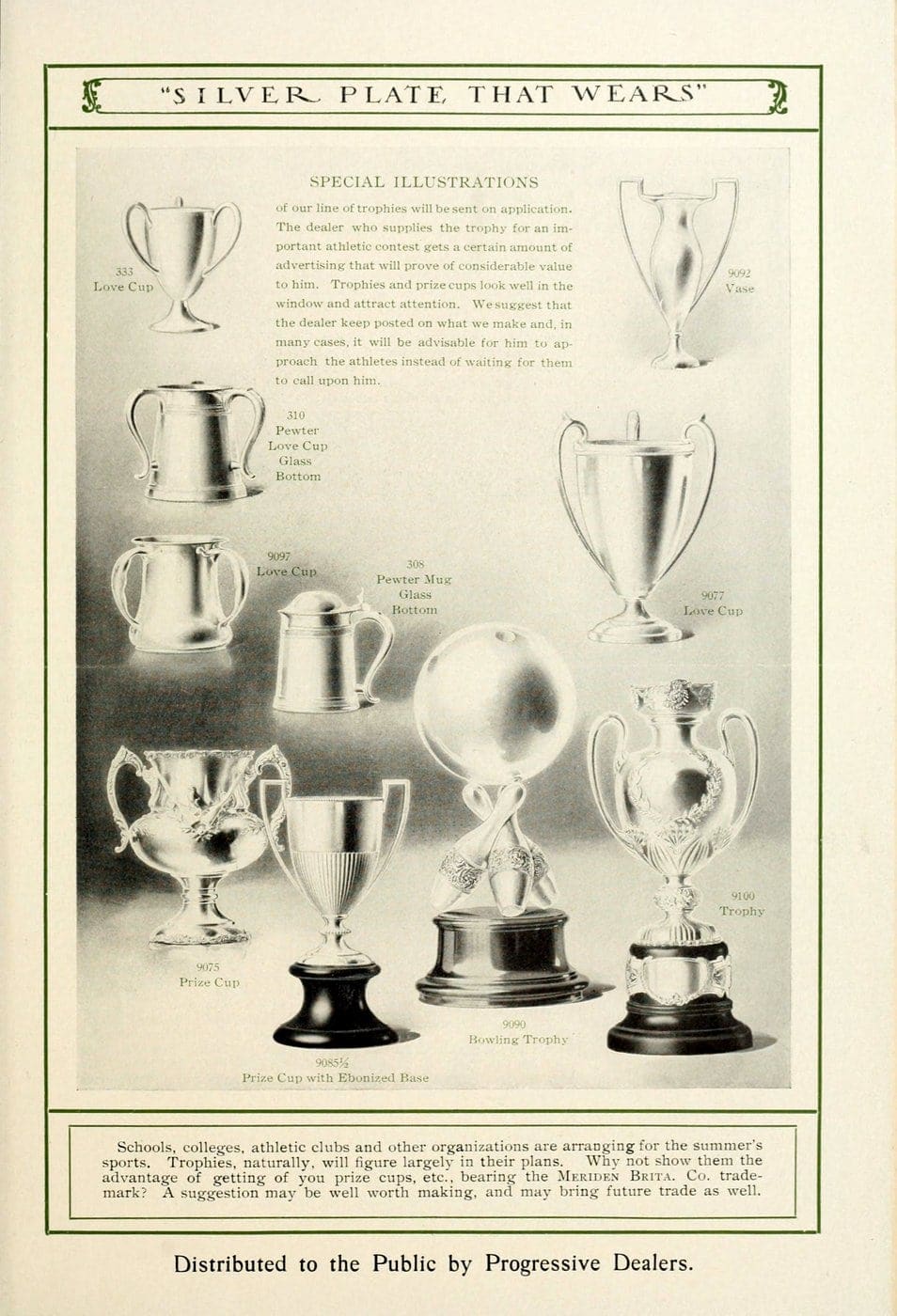
Meriden Britannia Co (International Silver Co successor), Meriden, Connecticut.