The idea behind the space shuttle was a clean break from everything that came before it. Every rocket that carried an American into orbit during the Mercury, Gemini and Apollo eras was essentially disposable — expensive hardware that splashed into the ocean and was never used again. The shuttle flipped that model. It was part rocket, part glider and part orbital workhorse, designed to launch like a rocket, orbit the Earth and glide back to a runway landing.
Congress approved the program in 1972, and NASA spent the better part of a decade working through the engineering. The prototype orbiter Enterprise flew unpowered glide tests starting in 1977, riding piggyback on a modified Boeing 747 before being released to land on its own. Those tests confirmed the concept worked — but they told NASA nothing about what would happen when a crewed shuttle actually lit its engines and left the atmosphere.

That answer came on April 12, 1981, when Columbia launched from Kennedy Space Center with astronauts John Young and Robert Crippen aboard. The date wasn’t accidental — it marked exactly 20 years since Yuri Gagarin became the first human in space. NASA called STS-1 “the boldest test flight in history,” and they meant it. Every previous first flight of a US crewed vehicle had been unmanned; Columbia’s maiden voyage had two people on it from the start.
What Young and Crippen didn’t know until later: an overpressure wave during solid rocket booster ignition had stressed a body flap well past the threshold where hydraulic damage would normally be expected. Young later said that had he known, he would have flown Columbia to a safe altitude and ejected — losing the orbiter on her very first flight. No damage had occurred, but it was a close call that set the tone for a program that would always carry more risk than its promotional materials suggested.
The shuttle fleet went on to rack up genuine achievements: Sally Ride became the first American woman in space in 1983, Guion Bluford became the first African American astronaut in space that same year, and the fleet eventually logged 135 missions total. The program also suffered two catastrophic losses. Challenger broke apart 73 seconds after liftoff on January 28, 1986, killing all seven crew members when a faulty O-ring seal on a solid rocket booster failed in unusually cold temperatures.
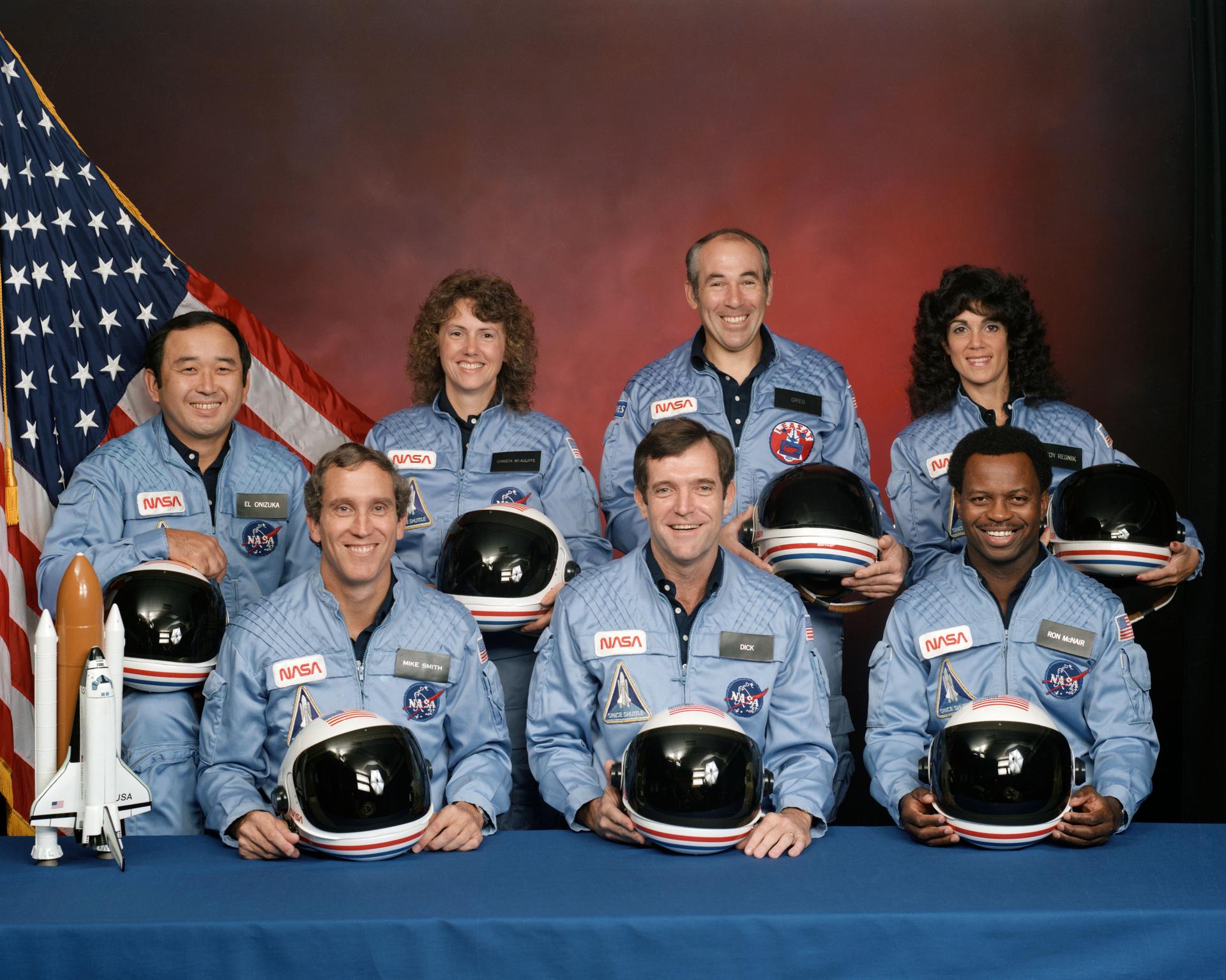
NASA grounded the shuttle program for over two years while making extensive safety changes, including a complete redesign of the joint that failed. Then, on February 1, 2003, Columbia broke apart during re-entry — the result of a piece of foam that had struck the leading edge of the left wing at launch, punching a hole that hot gases tore through on the way back into the atmosphere. All seven crew members were lost. The program was grounded again, this time for more than two years.
The shuttle was always a harder sell than NASA expected. The average cost per launch ran to roughly $450 million — far more than originally projected — and the turnaround time between flights never came close to the ambitious schedules NASA had envisioned. The fastest turnaround in the program’s history was 54 days, and after Challenger, that stretched to a minimum of 88 days. Those realities made it difficult to justify the program on purely economic terms, and after the Columbia disaster, the George W. Bush administration announced in 2004 that the shuttles would be retired once the International Space Station was complete.
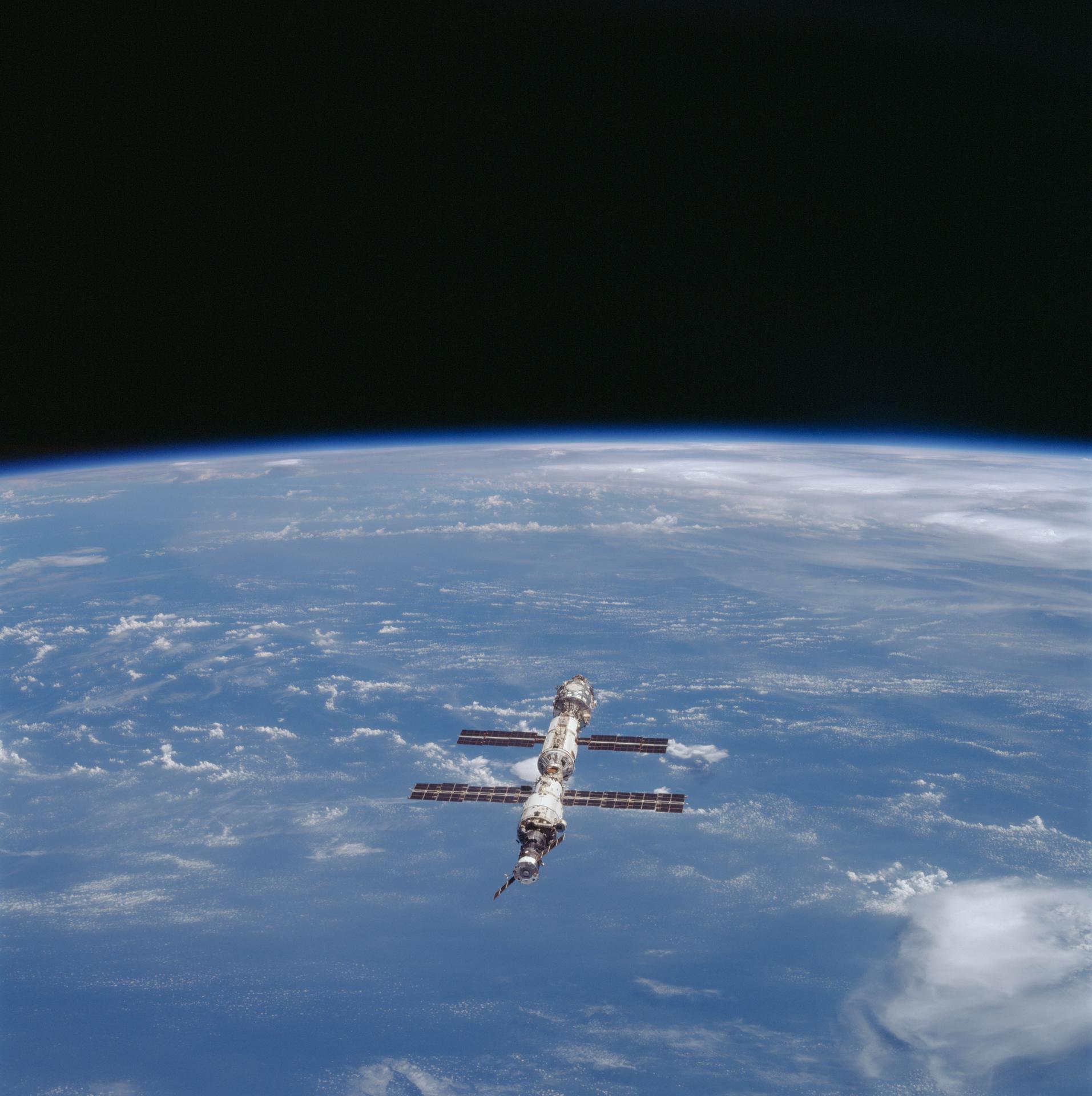
The final mission, STS-135, ended on July 21, 2011, when Atlantis touched down at Kennedy Space Center — closing out 30 years of American spaceflight that had no immediate successor waiting in the wings. For several years after, NASA relied on Russian Soyuz spacecraft to get astronauts to the ISS.
The shuttle also embedded itself in American culture in ways that went well beyond the launches themselves. Brands lined up to associate themselves with the program — Tang, already famous from the Gemini era, ran a Space Shuttle promotional tie-in in 1983. The orbiter’s silhouette appeared on lunchboxes, bedroom walls and school science posters from coast to coast. For anyone who grew up in the 1980s, watching a shuttle launch on a classroom television was a shared experience — thought one that took on a different weight after Challenger.

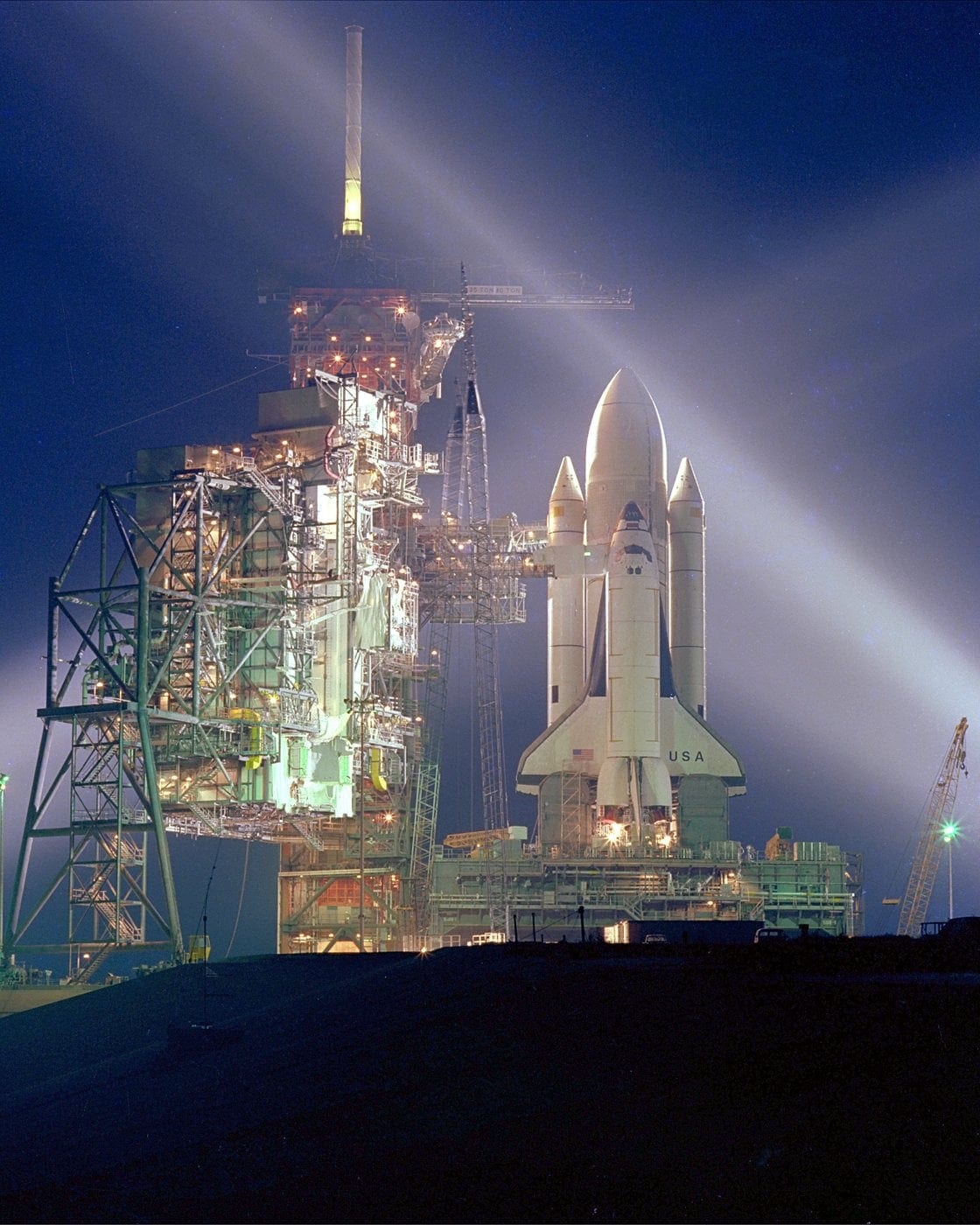
Here, we’ve pulled together photos and archival material from the program’s early years, including images of Columbia on the pad, in flight and on the lakebed at Edwards Air Force Base after landing — plus a look at some of the promotional material that shows just how thoroughly the shuttle program captured the country’s imagination. Take a look.
Space Shuttle Columbia just before launching into space
NASA astronauts John Young and Robert Crippen

Tang drink mix Space Shuttle promo tie-in

SEE MORE: Tang, the retro orange drink mix that astronauts & Florence Henderson liked
Columbia returns to earth

TS-1 Space Shuttle Columbia Glides Down Over Rogers Dry Lake

SEE MORE: Meet Ham, the first chimp to rocket into space (1961)
STS-1 Space Shuttle Columbia on Rogers Dry Lakebed – 1981

NASA’s 747 with Columbia Atop Ferries the Shuttle Back to KSC

All photos from NASA
MORE: Space Shuttle Challenger explodes shortly after liftoff (1986)