

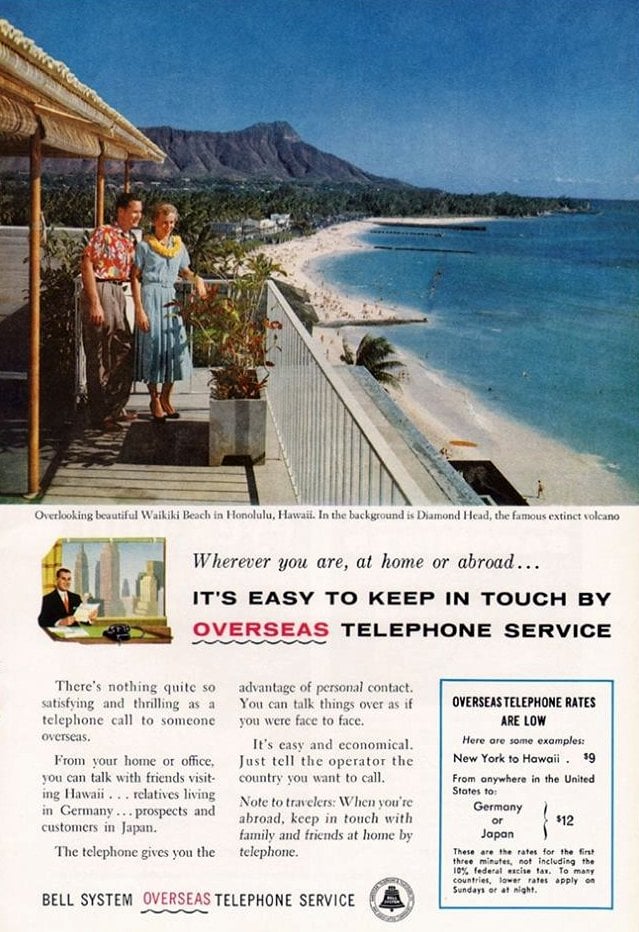
That $12 for the first three minutes quoted in Bell System ads of the era sounds quaint until you run the inflation math: it works out to roughly $100 today.
The whole thing started in 1927. AT&T inaugurated the first commercial transatlantic telephone service on January 7 of that year, using two-way radio to reach London — a remarkable enough feat that it drew crowds of curious callers on both ends of the line. It was part of a project that the Bell System had been working toward since 1915, as you can see explained in the ad below from 1919.
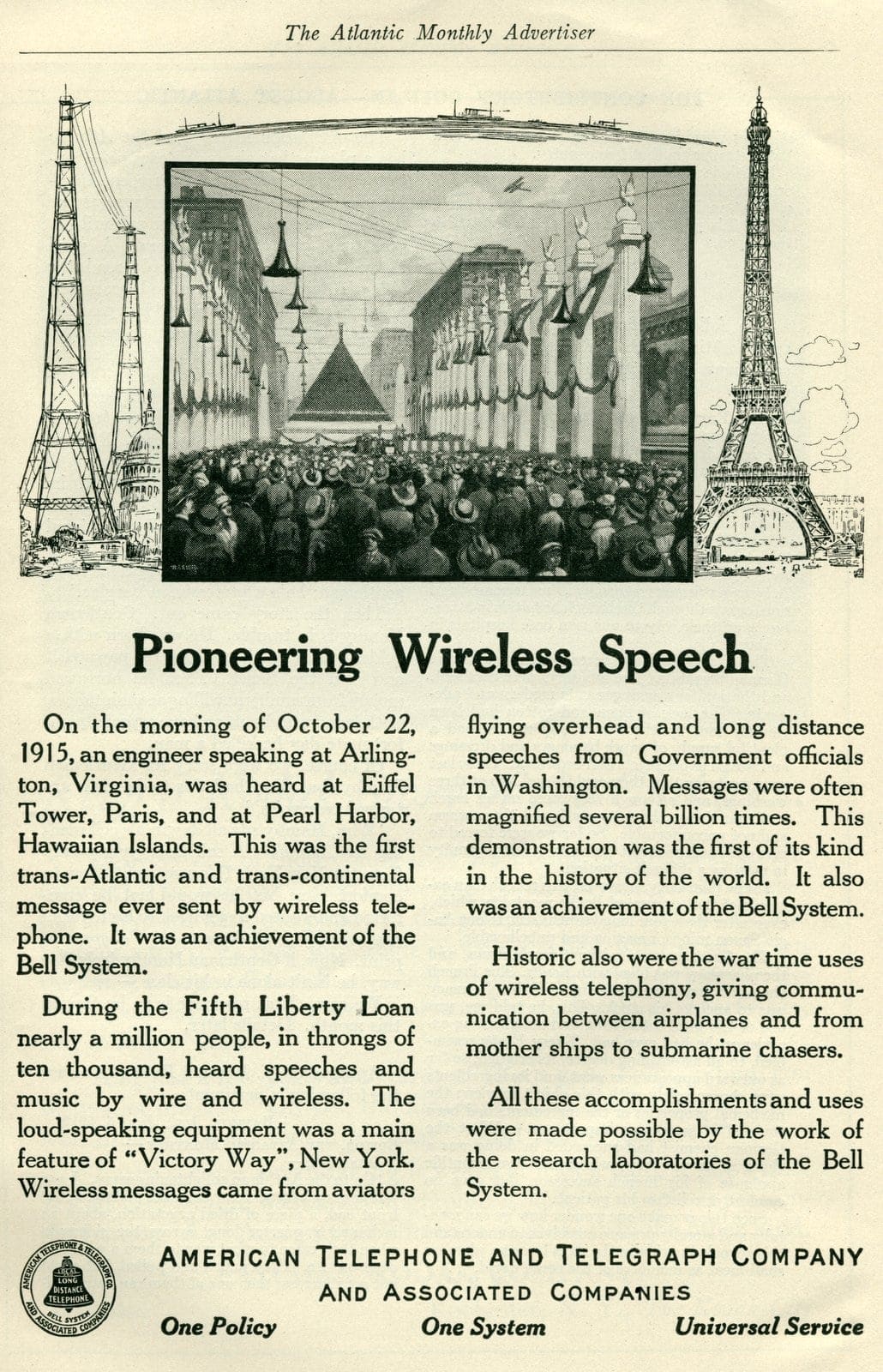
Those first calls cost $75 for three minutes (around $1,300 today!), which put them firmly in the category of things that only corporations and the very wealthy did. Within the first year, the radio system handled roughly 11,000 calls, suggesting there was no shortage of people willing to pay. The system worked, but it had real limitations since radio signals were subject to atmospheric interference, and the available spectrum could only carry so much traffic before it ran out.
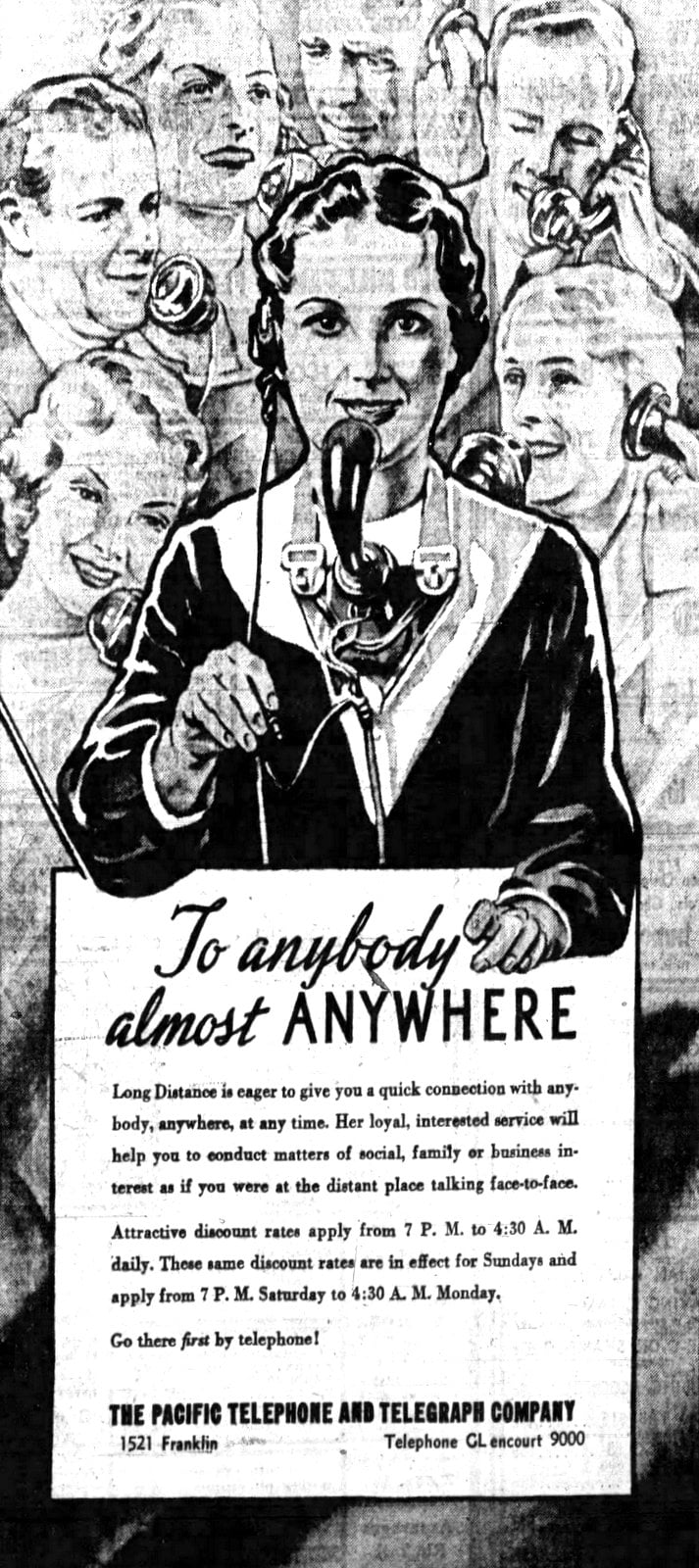
The answer was cable. TAT-1, the first submarine transatlantic telephone cable, opened on September 25, 1956, connecting Oban, Scotland to Clarenville, Newfoundland. It could handle 35 simultaneous calls — not a lot, but a significant jump from what radio allowed. During its first year, TAT-1 carried roughly twice as many calls as the radio circuits had in the previous twelve months.
The cable also delivered something radio couldn’t: consistent audio quality, without the static and fading that had made overseas conversations an exercise in patience. Prices came down, dropping to roughly $3 per call by the 1960s, compared to $12 in 1950.
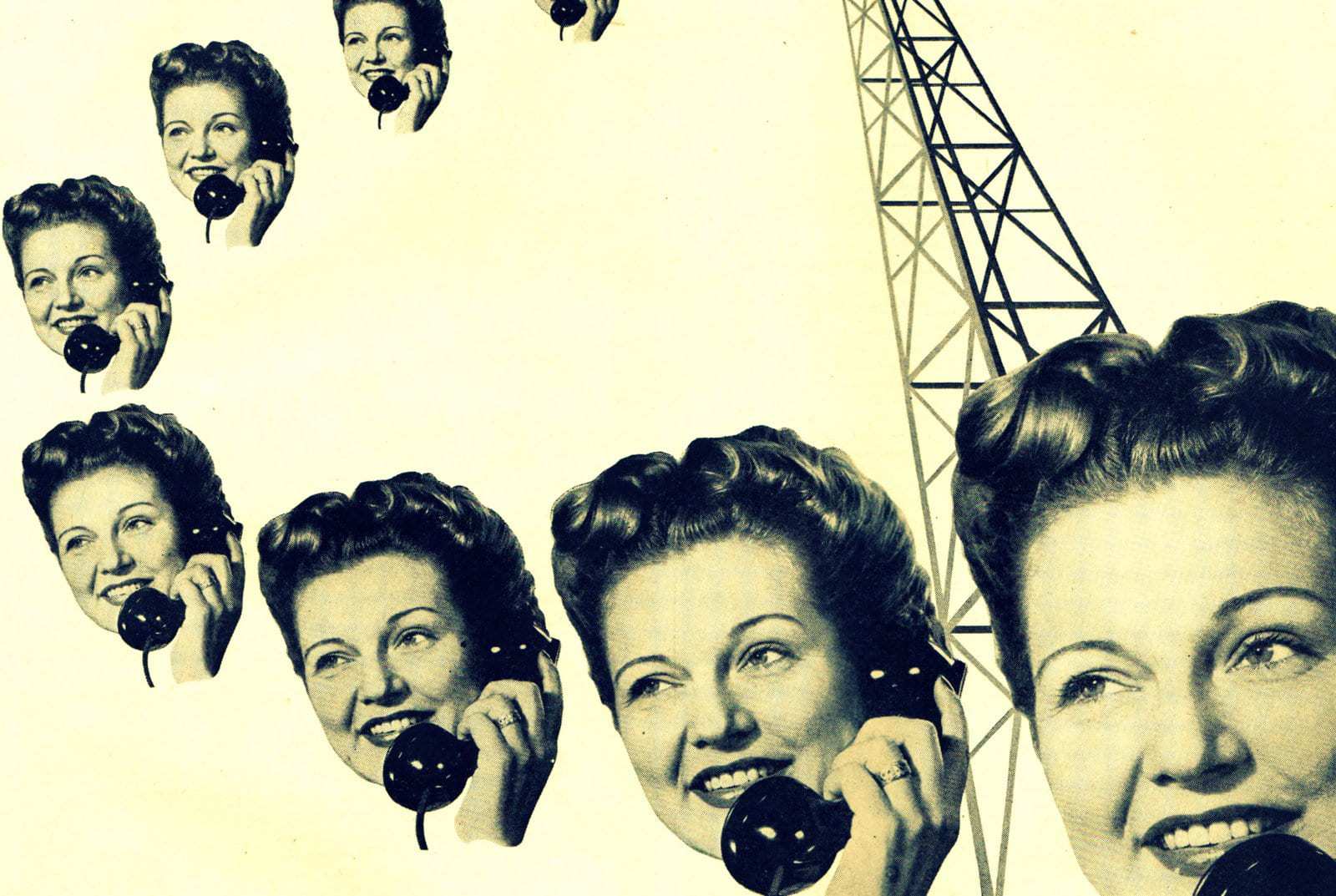
Then in 1962, AT&T launched Telstar — a beach ball-sized communications satellite in low Earth orbit, built in partnership with NASA — which relayed the first transatlantic television signal and demonstrated that satellites were a viable third leg alongside radio and cable for routing calls around the planet.
Even at $3, a three-minute international call was still a real outlay in 1960s money (around $30 today), and the process still required an operator. Direct international dialing didn’t exist yet — the International Telecommunication Union established a worldwide numbering plan in the 1960s, but automatic international dialing in the public phone network didn’t arrive until the 1970s.

Ordinary families treated overseas calls as a special occasion, reserved for births, deaths and the occasional holiday. Corporate customers like Sears leased their own dedicated lines between facilities just to get predictable costs. Conversations were short by design.
Rates stayed roughly flat through the late 1970s, then started dropping in earnest after AT&T’s breakup in 1984 opened the long distance market to competition. Carriers like MCI and Sprint moved aggressively on price, fiber optic cables added enormous capacity, and the cost of calling overseas fell steadily through the 1980s and ’90s.
VIDEO | MCI information superhighway commercial (1994)

By the time internet-based voice services appeared in the early 2000s, the idea of paying by the minute for an international call was already starting to feel outdated. Today, those calls are effectively free — which makes the old Bell System ads, with their proud claim that $12 was a bargain, a pretty vivid reminder of how much the world has compressed.
The vintage ads collected here span decades of that story, capturing the moments when international long distance was still a novelty worth advertising — and when reaching almost anyone in the world by telephone felt like something worth celebrating, even at those prices.
International long distance: You can telephone all over the world… (1965)
Today, you can reach 182 countries or areas of the world by telephone. It’s the quick, convenient, personal way to keep in touch.
And the cost is low. For only $12, plus tax, for the first three minutes, you can call almost anywhere in the world. The rate for the first overseas call, from New York to London in 1927, was $75.
Whenever you want to keep in touch with anyone — telephone. It’s the next best thing to being there.

Long Distance & international phone calls via ATT/Bell System (1967)
Today you can call 96.8% of the world’s telephones — for business or pleasure. And the cost is low.
Since the first overseas call in 1927, the Bell System, in cooperation with foreign telephone agencies, has pioneered the development of today’s worldwide telephone network. This network consists of radio facilities, undersea cables, and communications satellites.
Whenever you want to keep in touch with anyone — call Long Distance. It’s the next best thing to being there.

Overseas long distance telephone service from Hawaii (1956)
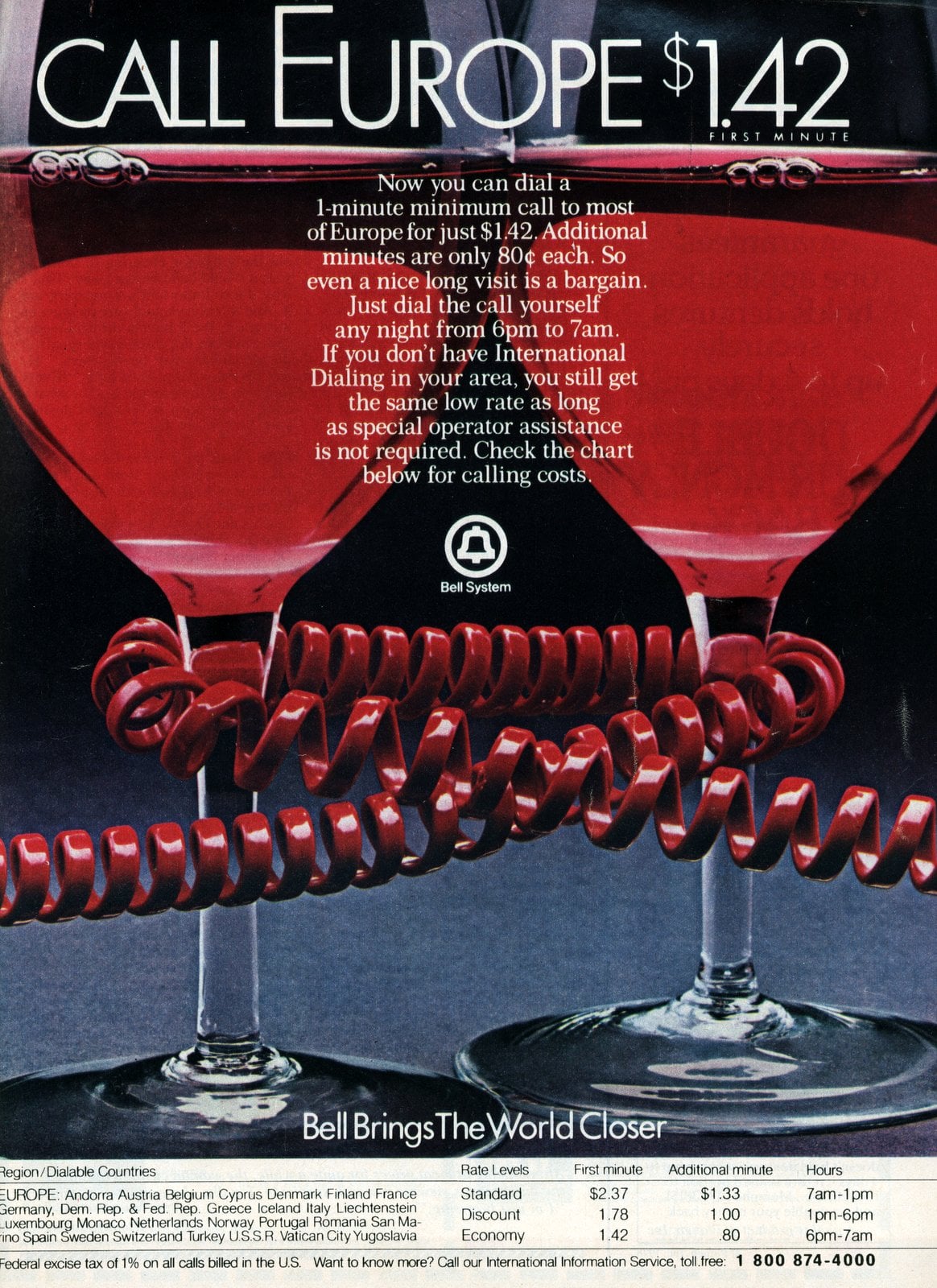
Call Europe long distance – Bell Telephone (1982)
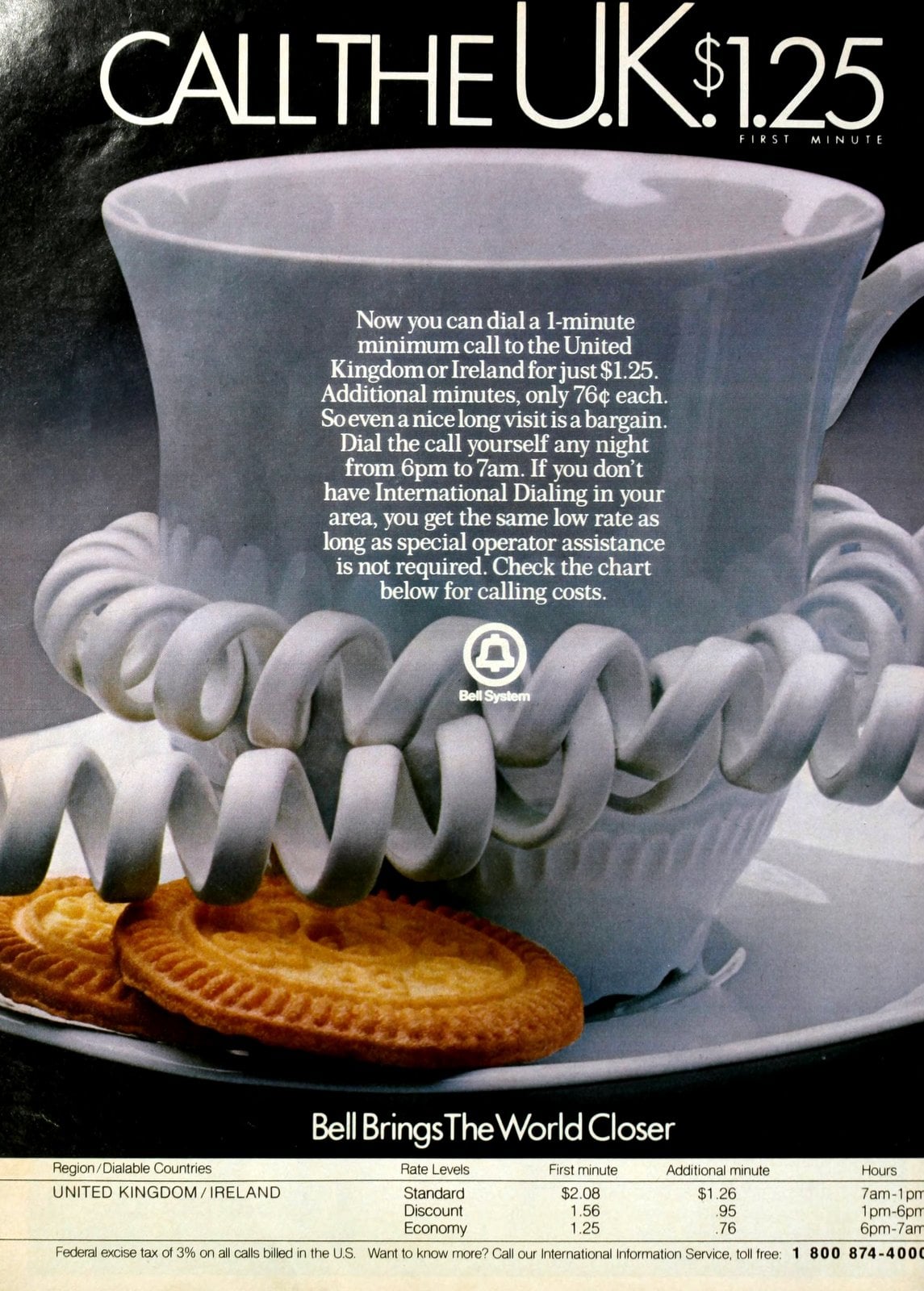
Call the UK long distance – Bell Telephone (1983)
NOW SEE THIS: Remember that AT&T jingle, ‘Reach out – reach out and touch someone’? Hear it again & find out more






3 Responses
I remember it was quite an event to make an overseas telephone call as a child to Europe in the 1960’s ! You had to dial the overseas operator, wait to be connected, (the process took several minutes), and get connected to a land-line in Italy with very poor quality sound. There was static, echoes, and the voice was dull. Not to mention, you had to talk fast because long-distance calls overseas were very expensive and cost prohibitive in those days !That was the old BELL SYSTEM, with rotary-dial,heavy metal black phones and no technology like today. These days, we have cell ubiquitous cell-phones, e-mail, long-distance dialing for pennies a minute on land-lines to virtually any country in the world, etc.
Love this stuff!
I would take old tec in a second. Too many choices equals no choice. Music, films and books. We lived outside. I was considered fat being constantly 20 pounds overweight back then. Now the US. Army has to set up ‘fat camps’ to try to get future soldiers into reasonable shape to enter boot camp. Yes, give me my ‘50s and ‘60 s back and we can all talk about the movie of the week around the water cooler without staring at our phones like zombies.