How is lipstick made? Inside this colorful industry of the 1940s
In 1947, LIFE magazine gave readers a look behind the scenes at the Tangee factory in Long Island City, New York. It was a time when lipstick was part of everyday dress for many American women. By the mid-1940s, an estimated 190 million individual tubes of lipstick were sold in a single year, pulling in nearly $30 million. That was enough for the federal government to collect over $5 million in luxury taxes from lipstick sales alone.

So how is lipstick made? At the Tangee factory, it all started with heated stainless steel vats, where color pigments, perfumes, oils, and waxes were mixed together at around 190 degrees Fahrenheit. Once fully blended, workers poured the hot liquid into molds, let it cool, then scraped off the excess. The cooled sticks were carefully removed from the molds, checked for flaws, and fitted into sleek metal cases.
Each lipstick had to meet a high standard. It needed to glide on smoothly but hold up against smudging and heat. Shades ranged from light orange to dark purple, with occasional outliers — like one unusual blue tone said to suit white-haired women. Once filled and polished, lipsticks moved down an inspection line before being boxed and shipped out.
Below, we’ve collected photos and original articles that show the lipstick-making process in full detail, plus a look at some of the leading Hollywood stars of the time who were rockin’ these popular shades. You’ll also find vintage lipstick ads and packaging from the 1940s, offering a snapshot of what beauty looked like in mid-century America.
Lipstick: Mouth paint is a big US industry (1947)
From LIFE magazine – October 20, 1947
To most American women, lipstick is a form of clothing; without it, they feel undressed. Consequently, lipstick production is a big industry.
In 1946 alone, American women spent an estimated $29,200,000 for 5000 tons of lipstick — 190 million individual lipsticks in all.
From this, the federal government collected $5,840,000 in luxury taxes — enough to pay the US President’s salary for the next 77 years.

How is lipstick made? The process in 1947
Lipstick is manufactured by combining perfumes, color pigments and oils with a wax base, as shown in these pictures made at the Tangee factory.

Good lipstick must spread on the lips smoothly and easily, yet once applied, it is expected to stand up under all wear and tear except the most violent kisses. The stick must not melt in hot weather, or become too hard in cold.
Lipsticks are made in every shade of red, from light orange to dark purple, to suit every feminine complexion and wardrobe.
Recently, one manufacturer introduced a lipstick of cold, funereal blue, which he claims perfectly complements white-haired matrons.

How lipstick is made: The lipstick factory line
On final inspection line, lipsticks and cases move slowly past girl inspectors on long belts to the end of the table (background), where they are boxed for shipment.
Imperfect lipsticks and containers are rejected by inspectors, who record them on control sheets.
The plant, at Long Island City, New York, can turn out 250,000 lipsticks a day.
ALSO SEE: Lip colors & vintage lipsticks from the ’60s

How is lipstick made: Manufacturing steps
Image 1: Lipstick-making begins with pouring and mixing of ingredients in large stainless steel vats, which are heated by steam to approximately 190 degrees F.
Presently, a workman (foreground) pours out a sample from a new mixture for testing and analysis in the company laboratory. Here, batches of four different shades are being compounded.

Image 2: On the other side of vats, girl worker fills the mold with hot liquid lipstick from a faucet on the base of the vat. After cooling, the excess is scraped from the mold with a putty knife.
Image 3: Molds are opened, revealing perfectly-shaped lipsticks inside. Lipsticks are sorted and examined carefully before being encased in their fancy metal containers.
ALSO SEE: Women’s shoes from the 1940s: Stylish high-heeled vintage footwear

5 famous actresses of the 1940s who loved their lipstick
1. Lucille Ball
MORE LUCY: I Love Lucy & the chocolate factory: The famous ‘Job Switching’ episode (1952) | ’50s magazines featuring the lovely Lucille Ball

2. Paulette Goddard

3. Judy Garland
MORE JUDY: How Judy Garland’s career began | See Judy’s home in 1942 | About the classic Wizard of Oz movie

2. Veronica Lake

DON’T MISS: See top vintage nail polish colors & retro brands
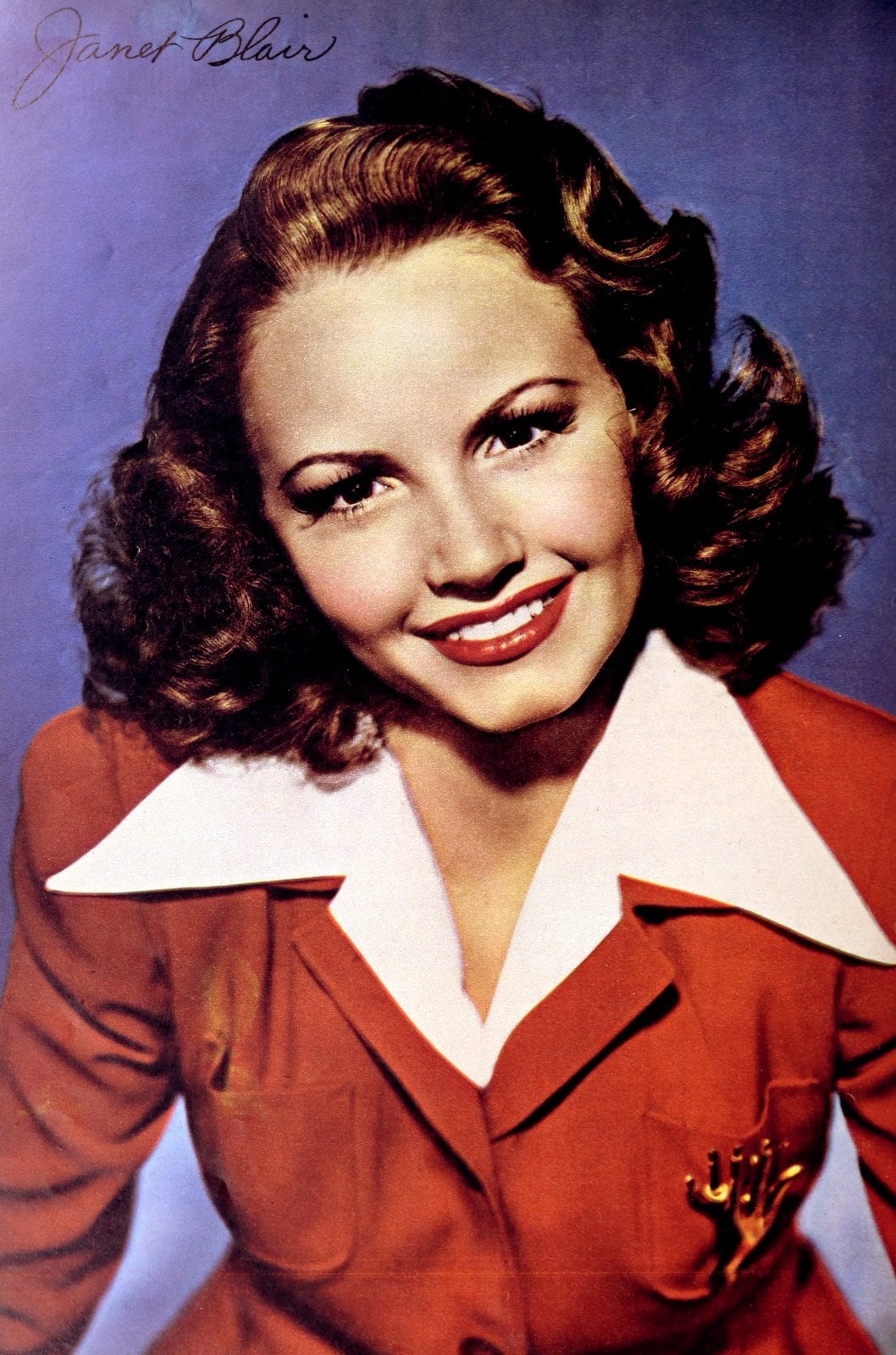
’40s actress Janet Blair wearing red lipstick
More lipsticks from the 1940s: Tangee Red


ALSO SEE: How to do ’50s eye makeup – brows, lashes, shadow & more – with tips from the pros
Vintage ’40s lipstick: Tangee’s Pink Queen


NOW SEE THIS: 40+ fabulous ’40s hairstyles for women
Red lipstick you can buy today

- Purse Pride - New improved formula and packaging
- Rich, creamy , buildable color that feels like silk on the lips
- Chock-full of nutrients - Enriched with conditioning ingredients of vitamins A & E, aloe vera, and macadamia nut oil.


- LUSCIOUS COMFORT: Formulated with 80% conditioning ingredients
- LUXURIOUS COLOR: Made with microfine pigments for lipstick shades that are rich with color yet lightweight in feel
- SOFT, FULLER-LOOKING LIPS: Glides on smoothly to visibly minimize lines for soft, fuller-looking lips

- 8HR Plumping Moisture: Enjoy 8 hours of lip plumping moisture with our innovative long lasting lipstick formula. Formulated with an oil blend and hyaluronic acid for serum-level care and lips that...
- Sculpt, Shape, and Define: Experience lush color in one swipe for lips that look fuller and shaped with a comfortable, barely there feel. Unique lip-hugging lipstick bullet shape allows for effortless...
- 16 Flattering Lip Stick Shades: Find your shade with 16 flattering satin and matte lipstick finishes. From subtle everyday nude lipstick to bold pops of color, this Maybelline Lipstick range offers a...

- Perfectly Matte: Achieving a flawless, color-intense matte finish is just a swipe away with Maybelline Super Stay Matte Ink liquid matte lipstick. Get up to 16 hours of wear with this liquid lipstick...
- Iconic Longwear Formula: The long lasting formula of this highly pigmented liquid lipstick gives you super saturated color in a smudge-free, matte finish. Color locks in, feels and looks fresh all...
- Sculpt With Precision: Get effortless, smooth application every time with the unique arrow applicator. This matte lipstick glides on easily for comfortable all-day wear. Removes easily with Maybelline...

- Mega Last Matte Lipstick: This semi matte lipstick is infused with Hyaluronic Acid, Natural Marine Plant Extracts, Coenzyme Q10 and Vitamins A & E, for velvety full color coverage that nourishes lips
- Perfect Your Pout: Available in 13 Cruelty-free, Gluten-free, and Fragrance-free shades, this long lasting, creamy matte lip color delivers full coverage in one swipe, glides on easily, and won't...
- Best Face Forward: From bronzer and blush to primer, highlighter, natural finish powder, and concealer, we've got you covered and photo ready for your next big thing. You've met your true makeup match

- Perfectly Matte: Achieving a flawless, color-intense matte finish is just a swipe away with Maybelline Super Stay Matte Ink liquid matte lipstick. Get up to 16 hours of wear with this liquid lipstick...
- Iconic Longwear Formula: The long lasting formula of this highly pigmented liquid lipstick gives you super saturated color in a smudge-free, matte finish. Color locks in, feels and looks fresh all...
- Sculpt With Precision: Get effortless, smooth application every time with the unique arrow applicator. This matte lipstick glides on easily for comfortable all-day wear. Removes easily with Maybelline...

- Transparent pigment glides on a sheer, glossy slip of lightweight color
- Emollient-rich formula gives lips a sleek, moist finish
- Cult-classic Black Honey is famous for its chameleon-like ability to flatter all skin tones

- Red Matte Lipstick: The red lipsticks with high impact formula will shape and accentuate your lips stay vibrant and bold for hours on end, making you the most dazzling person and creating a different...
- Long Lasting Lipstick: Our super stay lipstick ensures your lip color stays put up to 16 hours without smudging or fading. The color does not transfer when you drinking or eating for its full coverage
- Weightless Formula: This matte liquid lipstick for women smells good, infused with shea butter, glides like a gloss and delivers a smooth, matte finish. You don't feel clumpy or thick, not leave the...

- Butter Gloss: Buttery soft and silky smooth, our decadent Butter Gloss is available in a wide variety of sumptuous shades; Each glossy color delivers sheer to medium coverage that melts onto your lips
- Kissable Lips: Our best selling Butter Gloss goes on smooth and creamy and is never sticky, leaving your lips soft, supple and kissable; Try all of our delicious shades, from Angel Food Cake to...
- Lip Products for the Perfect Pout: Doll your lips in creamy, long lasting perfection; Try our complete line of lip makeup including liquid lipstick, lip gloss, lip cream, lip liner and butter gloss

- Butter Gloss: Buttery soft and silky smooth, our decadent Butter Gloss is available in a wide variety of sumptuous shades; Each glossy color delivers sheer to medium coverage that melts onto your lips
- Kissable Lips: Our best selling Butter Gloss goes on smooth and creamy and is never sticky, leaving your lips soft, supple and kissable; Try all of our delicious shades, from Angel Food Cake to...
- Lip Products for the Perfect Pout: Doll your lips in creamy, long lasting perfection; Try our complete line of lip makeup including liquid lipstick, lip gloss, lip cream, lip liner and butter gloss