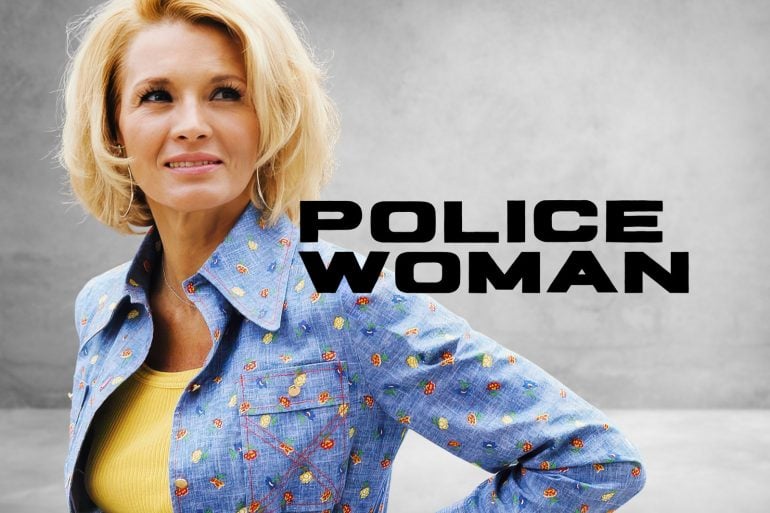
The show arrived at a moment when women were pushing into professional spaces that had long been considered off-limits, and Police Woman both reflected and accelerated that shift. Pepper wasn’t a sidekick or a love interest — she was the one running operations, working undercover, and earning the respect of her colleagues on the strength of her work.
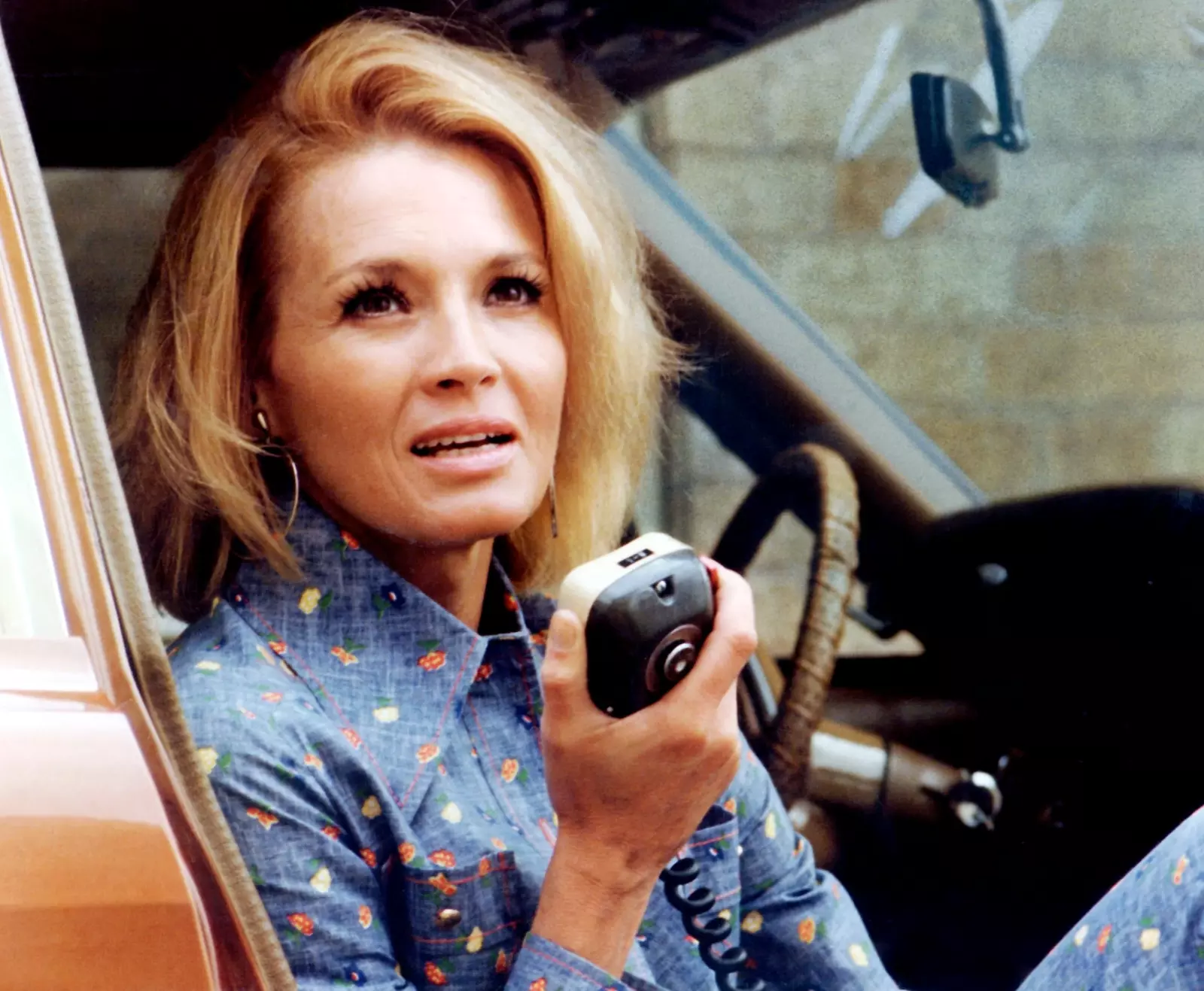
Producer Doug Benton eventually broadened the character’s assignments so that, as Dickinson put it in a 1976 interview, “Pepper gets involved in almost any sort of police work a male cop would get into.” That evolution mattered. The show’s early seasons leaned heavily on vice storylines — Dickinson herself noted wryly that the first season earned the nickname “the hooker of the week” around town — but it grew into something with more range.
Dickinson won a Golden Globe for Best Actress in a Drama Series in 1975, and the show’s ratings held remarkably steady across multiple time slot changes. When NBC tracked how other series performed after being moved to different nights, most saw significant swings — Hawaii Five-O jumped from a 14.8 to a 20.7 when CBS shifted it from Fridays to Thursdays.

Police Woman averaged a 20.3 on Fridays and a 20.2 on Tuesdays. The audience simply followed it. As for why Dickinson took on a weekly series in the first place, she was direct about it: “Because I wanted to be a star.” She had made notable films — Rio Bravo, Point Blank, Ocean’s 11 — but, as she put it, “nobody was talking about writing an Angie Dickinson picture.” Television was offering something movies hadn’t.
The real-world ripple effect was concrete. Police departments across the country reported increases in applications from women during and after the show’s run. Dickinson credited the dynamic between Pepper and her male colleagues — the easy familiarity, the mutual respect — as part of what resonated. “They respect her not because she’s a woman but because of the job she does,” she said.
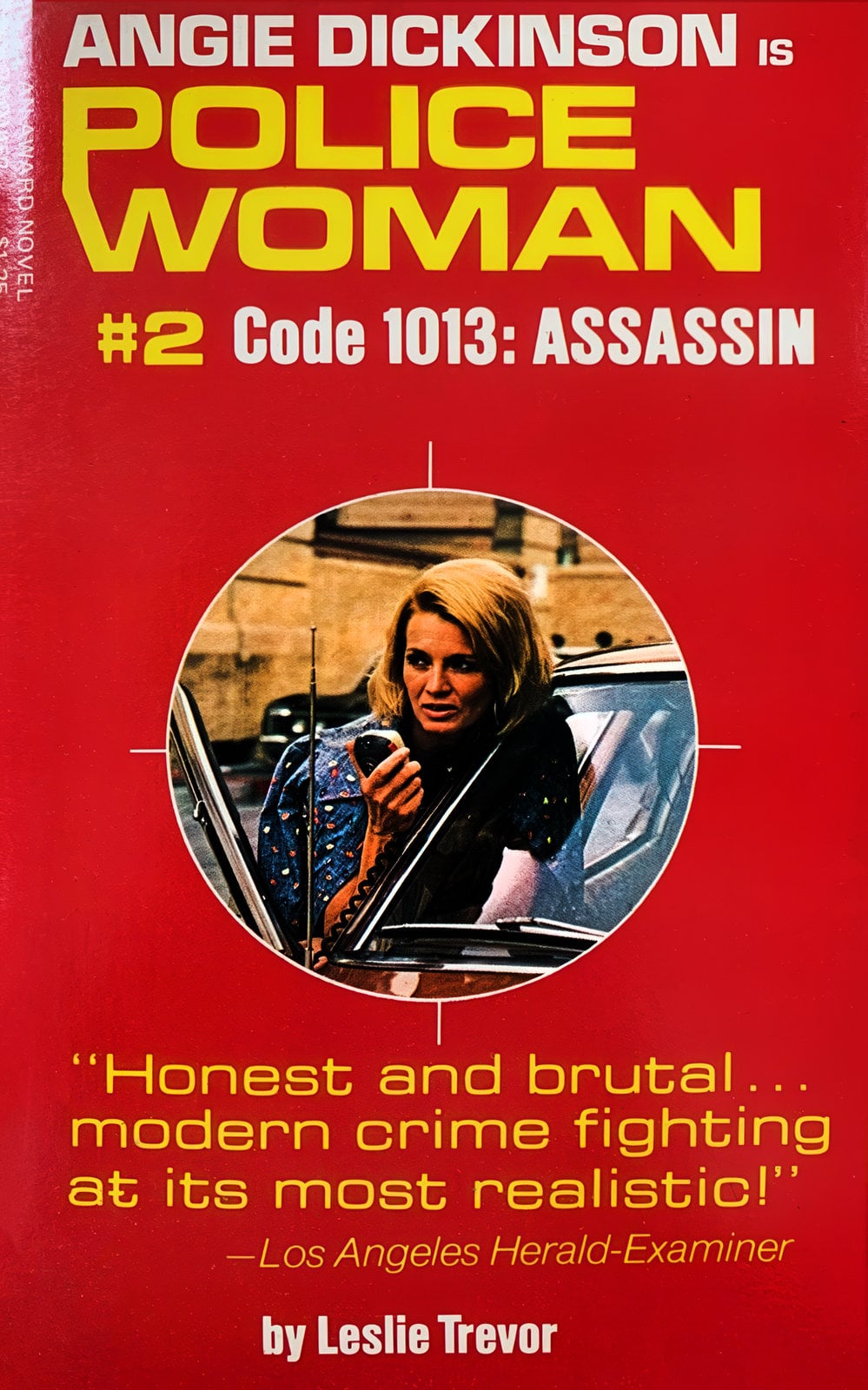
That framing was relatively new for prime-time drama in 1974, and it was an immediate hit. Charlie’s Angels, Cagney & Lacey and eventually The Closer and Law & Order: SVU all arrived in its wake, each building on the idea that a woman could anchor a crime drama without the premise being the novelty.
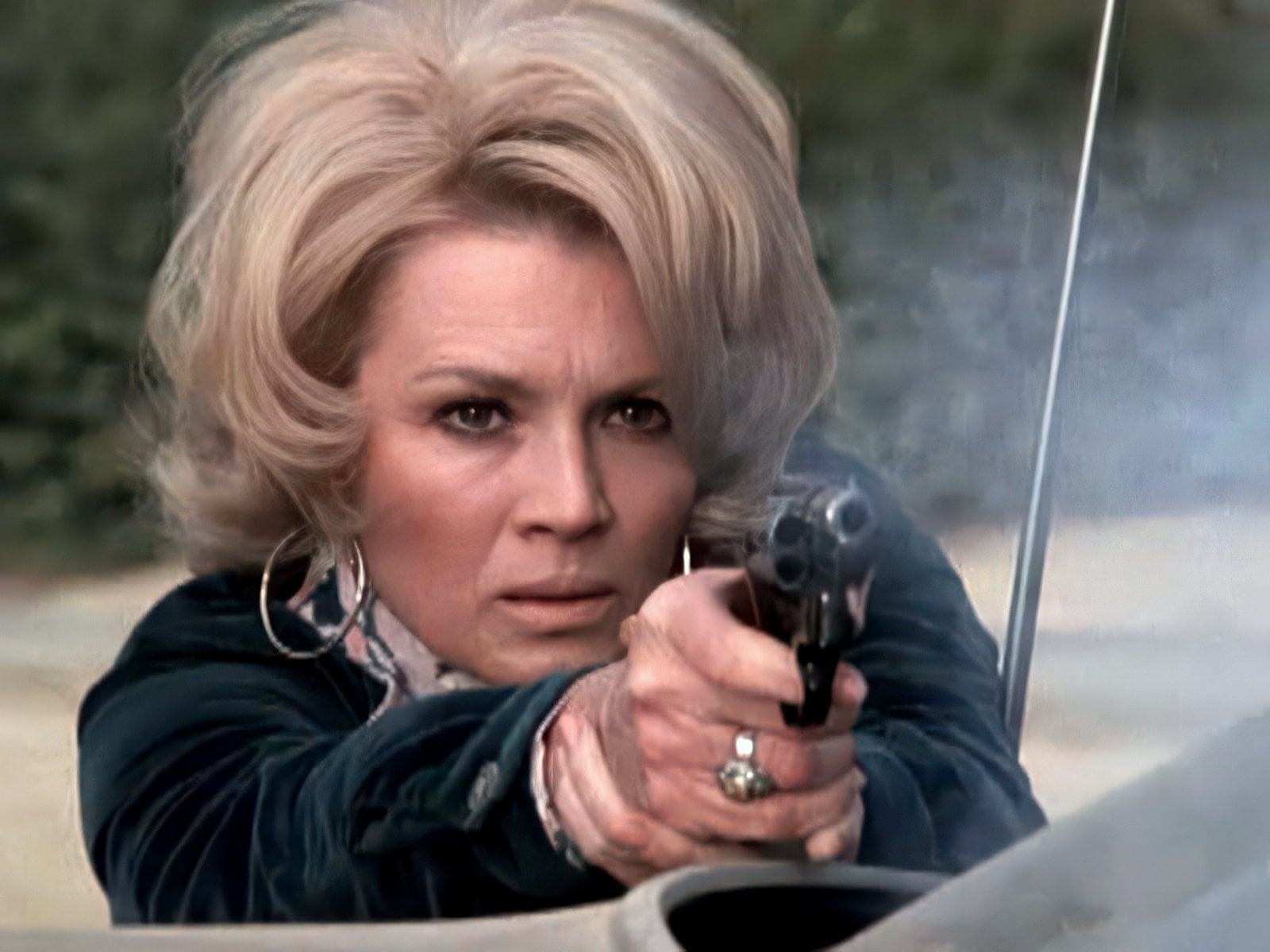
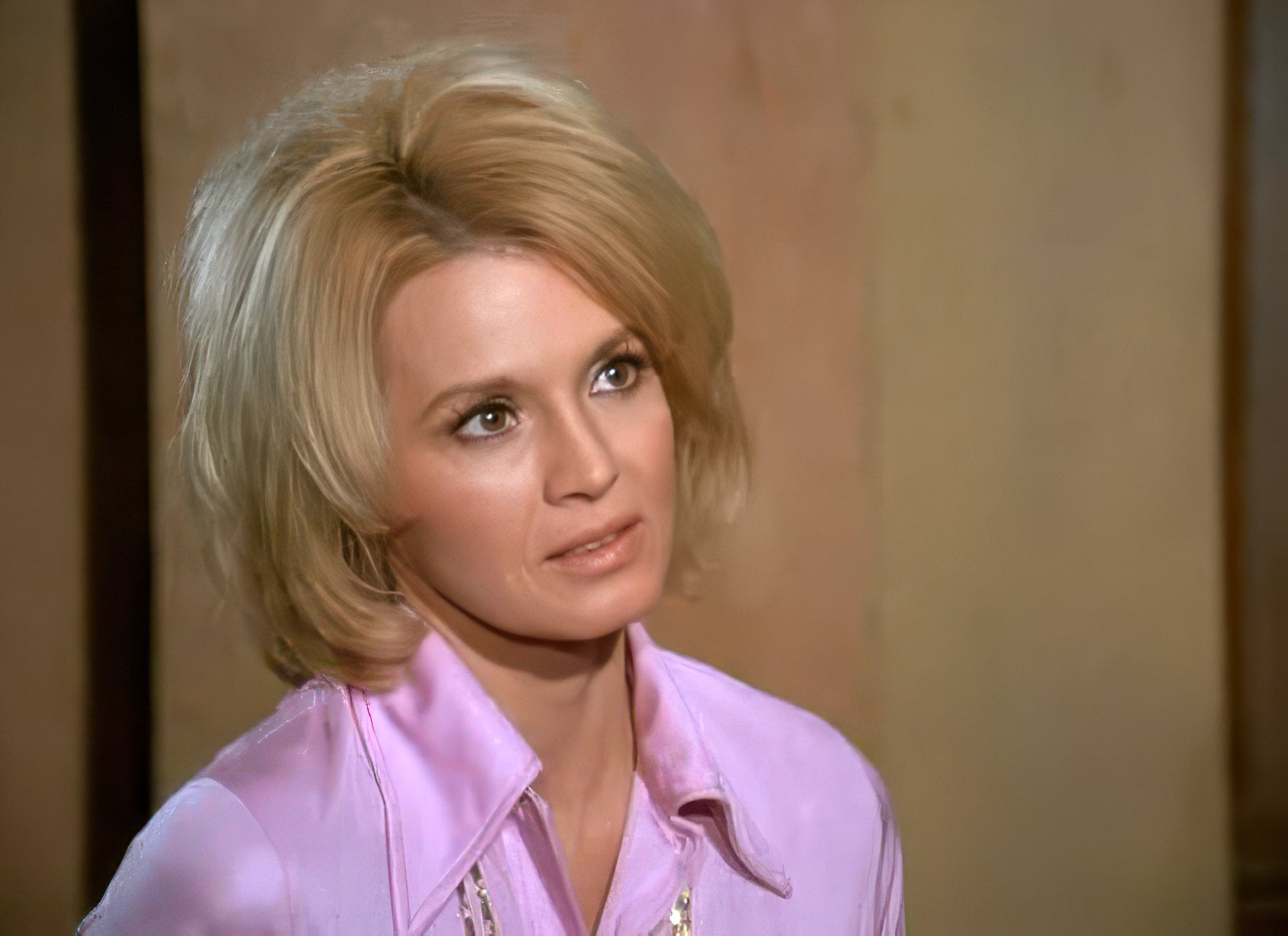
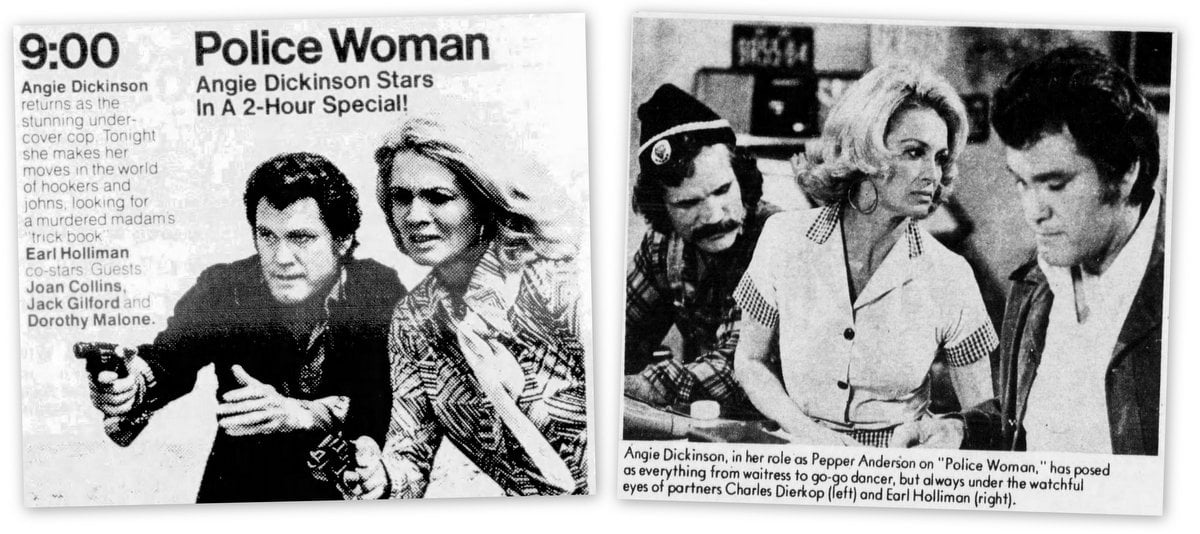
Below, we’ve pulled together a collection of vintage photos and reprints related to Police Woman and Angie Dickinson’s run as Pepper Anderson — including a 1976 newspaper feature by Cecil Smith that catches Dickinson between Emmy season and the start of her third year on the show.
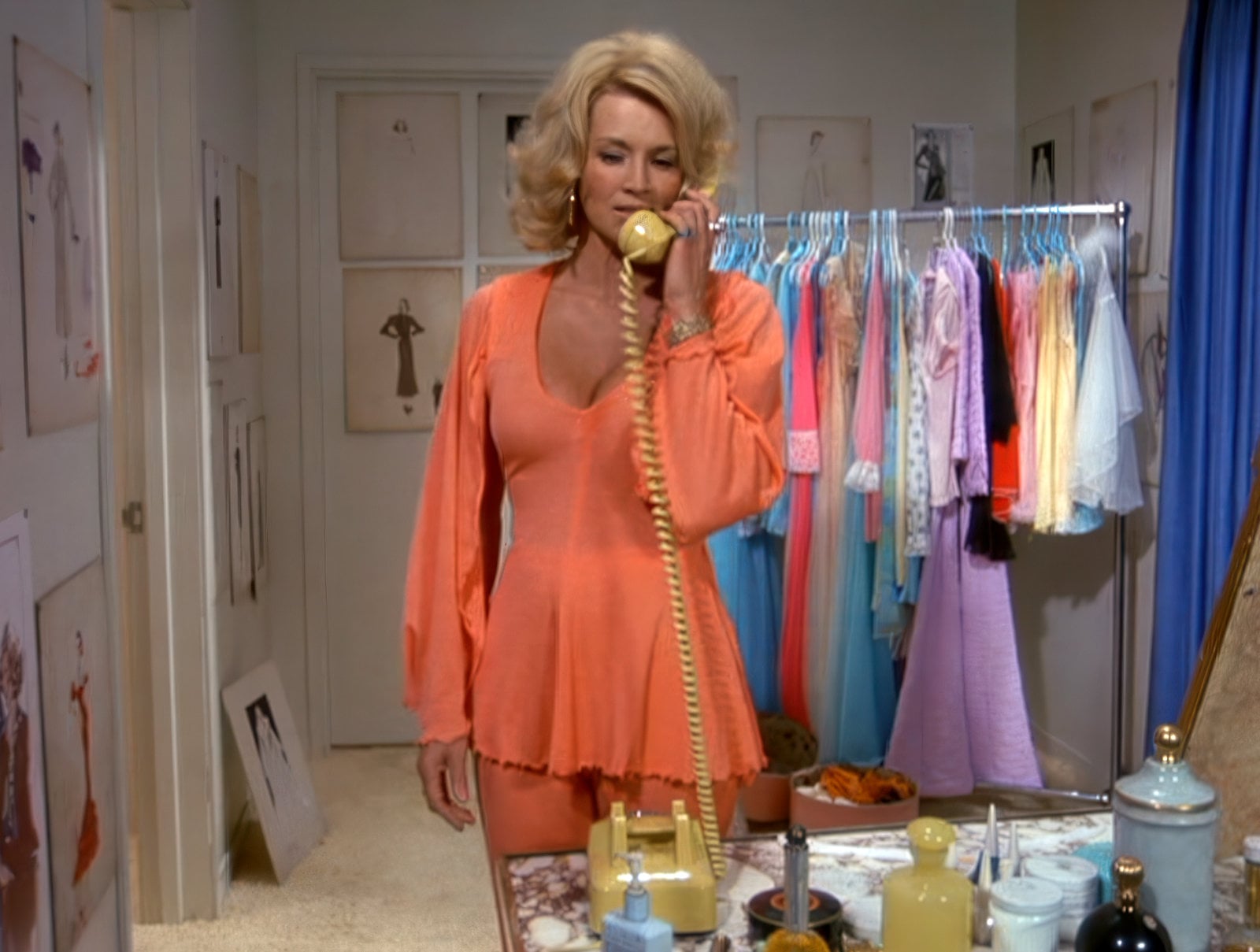
Angie Dickinson: Reflections of a policewoman
By Cecil Smith in the Anniston Star (Alabama) June 19, 1976
There were some Nielsen statistics released recently on the way various series performed when they were moved from one night to another this past season. Hawaii Five-O, for instance, was averaging a feeble 14.8 rating on Friday nights, but shot up to a stellar 20.7 average when CBS moved it to Thursdays. MASH did even better, climbing from a weak 18.7 average on Fridays to a 26.7 on Tuesdays.
On the other hand, Joe Forrester was doing fairly well with a 19.1 average on Tuesdays, but dropped to a 15.4 when NBC moved it to Mondays opposite All in the Family.
The one series that seemed unaffected wherever it was moved, apparently taking its loyal audience with it, was NBC’s solidly successful Police Woman. Its average rating on Friday nights was 20.3.
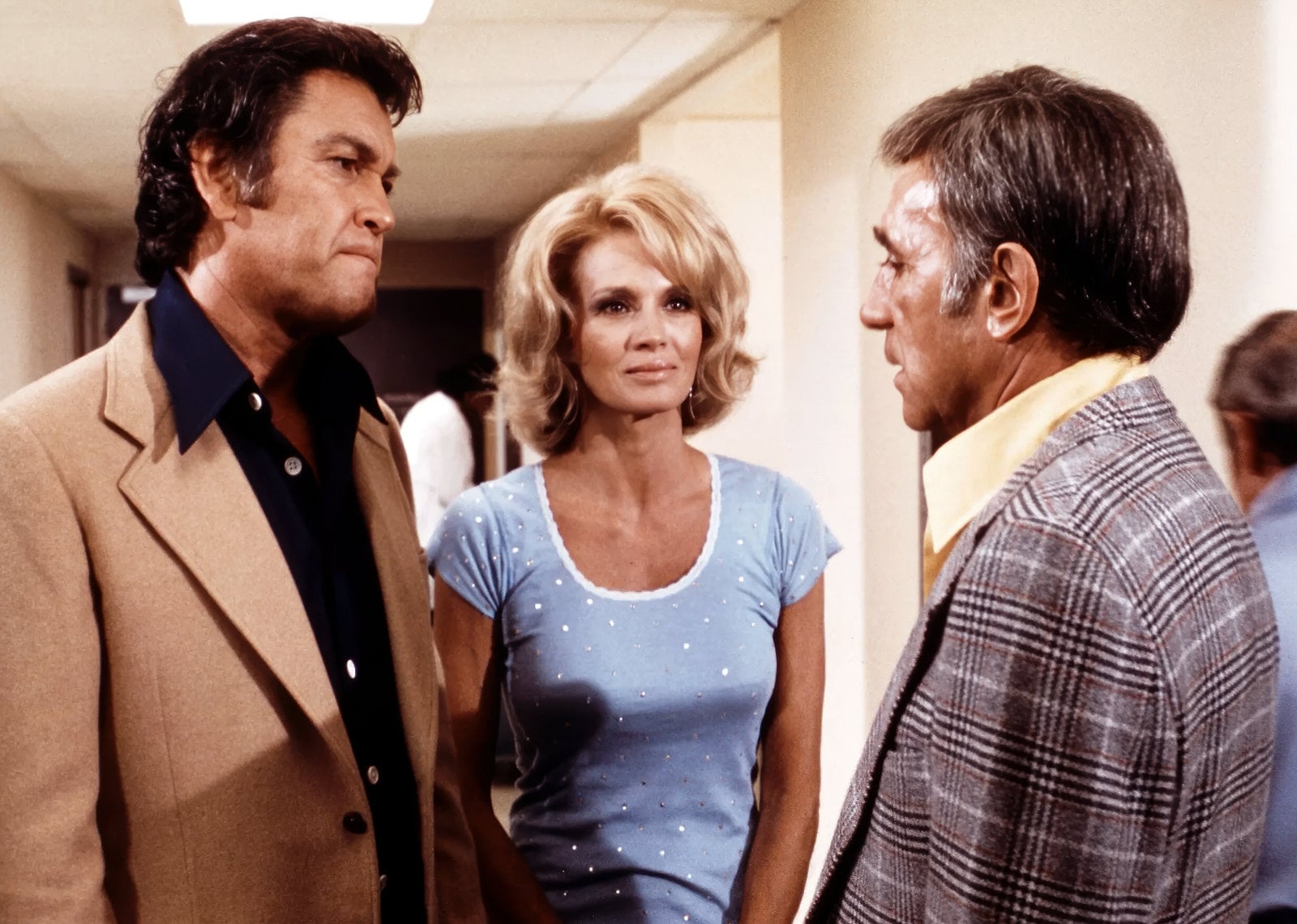
When NBC shifted it to Tuesdays, the average was 20.2. Angie Dickinson points out there was another move that was not recorded in the averages when the series was shifted in some major markets to Thursday nights, where it seemed to do as well.
“It’s their show and they can put it where they want,” said the tall, lithe actress. “They say we saved Police Story — and that’s good. But what burns me up is that they move us without telling people about it, without taking out ads to say, hey, Police Woman is now on another night. They just expect the audience to stumble over the show…”
For my money, the prettiest moment on the Emmy Awards telecast a couple of weeks ago was the appearance of Angie Baby with her cool, blonde, Nordic beauty. In her svelte evening gown, she crossed that big Shubert stage toward the cameras in such control she looked like she had the world tucked into her purse.
But the next day on a table in her portable dressing room, I found a book: “How to Control Your Emotions.” When I said: “You don’t need this,” Angie said: “You don’t know!” She added: “There’s one good thing about blowing up at a network. Last year we were so late getting started that we didn’t wind up until February — too late for me to do a marvelous movie for John Newland.
This year, we’re not only starting early, but we’re also taking vacations along the way and we’ll finish the season in time for me to do the movie.” She looked at the book and smiled broadly, eyes crinkling. “It doesn’t pay to always control your emotions.”
The dressing room was in the garage of a grimy warehouse in Little Tokyo in downtown Los Angeles. In white slacks and a pink cashmere sweater, her working clothes as undercover cop Pepper Anderson, Angie looked as sensational as she had on the Shubert stage. She was nominated for an Emmy but lost out to Michael Learned [of The Waltons].
Director Barry Shear on behalf of the cast and crew — including costar Earl Holliman and her fellow undercover cops, Charles Dierkop and Ed Bernard — had presented her with a plaque declaring that she was their Emmy winner, no matter what the TV Academy jury said.
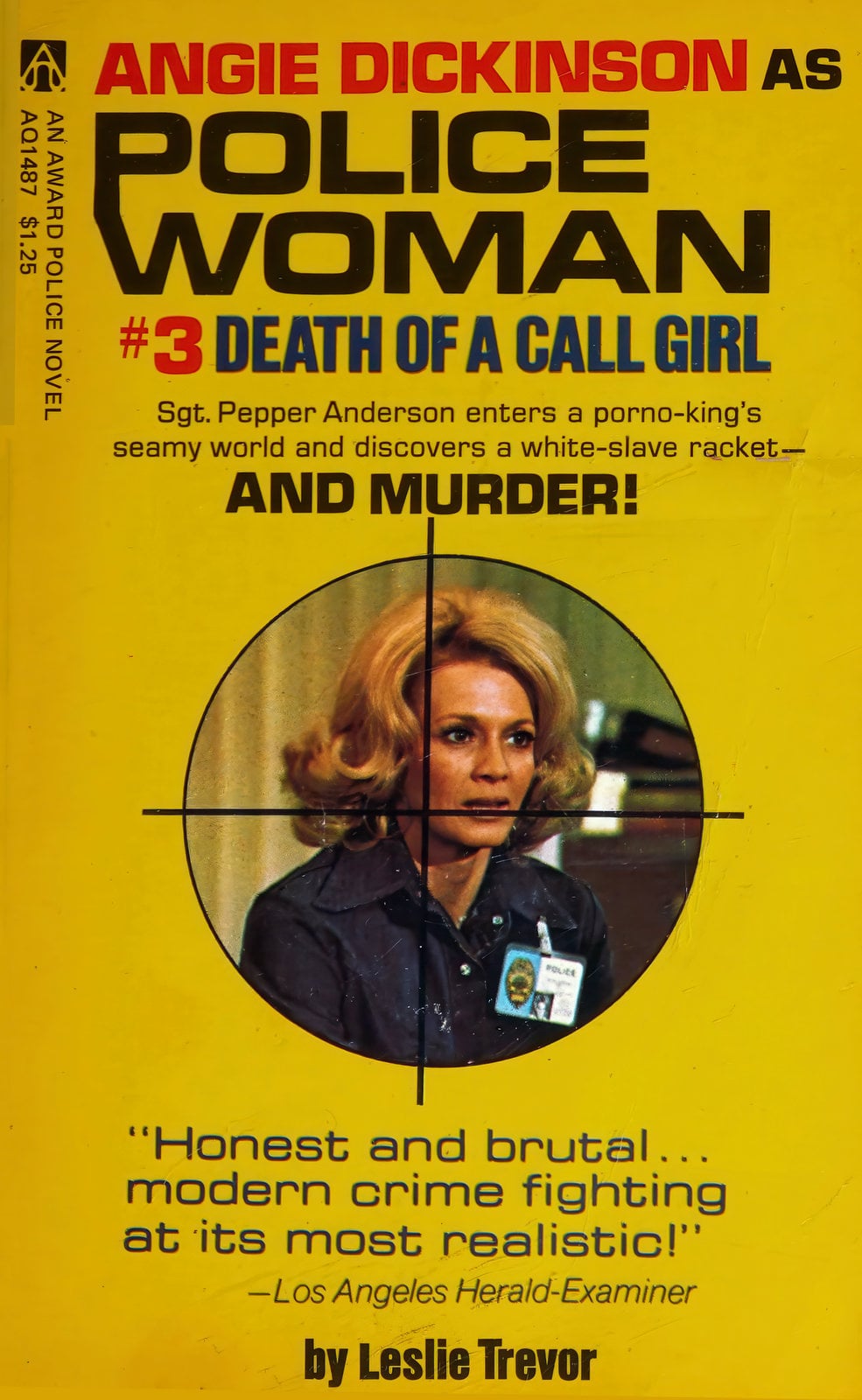
Beginning work for her third season of Police Woman, Angie Dickinson seems in bubbling good humor. She said John Newland has promised to hold the movie for her until she’s free. “He told me: ‘It’s yours, baby, we won’t go without you,'” she said. “Not that I need more work, but I think I should do something away from the series to show people that there still is an Angie Dickinson as well as Pepper Anderson.”
She feels, with reason, the series has steadily improved since it began as a Police Story spinoff two years ago. That first season she was so often a bogus prostitute infiltrating a vice ring that around town the show was known as “the hooker of the week.”
Says Angie: “I think they thought of me as a pin-up kind of movie actress and wanted to use that quality.” Lately, however, under producer Doug Benton (for Columbia Pictures TV), Pepper gets involved in almost any sort of police work a male cop would get into.
“And that’s good,” she said. “Police departments across the country tell me that applications for police women are way up — because of our show. I think it’s the easy familiarity Pepper has with Crowley and the other guys and the way they respect her, not because she’s a woman but because of the job she does.”
DON’T MISS! CHiPs: TV motorcycle cops Ponch & John hit the road in LA (1977-1983)
I was rather surprised when Angie Dickinson elected to do a television series. She seemed to have it made without the weekly grind, what with a good marriage to a distinguished husband, composer Burt Bacharach; a daughter Nikki, almost 10; an occasional substantial movie role to satisfy her creative urge. Why did she take on Police Woman?
“Because I wanted to be a star,” said Angie flatly. She smiled ruefully, tossed back her blonde hair, and said: “I made some good films — ‘Rio Bravo,’ ‘The Bramble Bush,’ ‘Point Blank’ — and I had an interesting career going. But I was not a star. Not here. Nobody was talking about writing an Angie Dickinson picture. Anyway, the best things I had had in recent years were all on television — doing ‘Thief’ with Richard Crenna, ‘See the Man Run’ with Bob Culp.”
There were lots of pictures over the last dozen years, playing the leading lady to Brando, Sinatra, Gregory Peck, Kirk Douglas — “Ocean’s 11,” “The Chase,” “Captain Newman M.D.,” “The Art of Love,” “Cast a Giant Shadow,” “Jessica.” There was even a Broadway play: “The Poor Sap” — “We closed in four days. That wasn’t for me.” There were good parts in inconsequential films and inconsequential parts in good films — “My trouble is I’m a Libra, and I want it both ways, a good part in a good film.”
She said that Police Woman held the answer — “Burt encouraged me by pointing out that this was not only the chance to be a star but to show what I could do as an actress. It wasn’t a glamor part — glamor couldn’t get in the way. It was a chance as an undercover police woman to play many characters, do many kinds of parts. Of course,” she added, “nobody knew it would be a hit.”
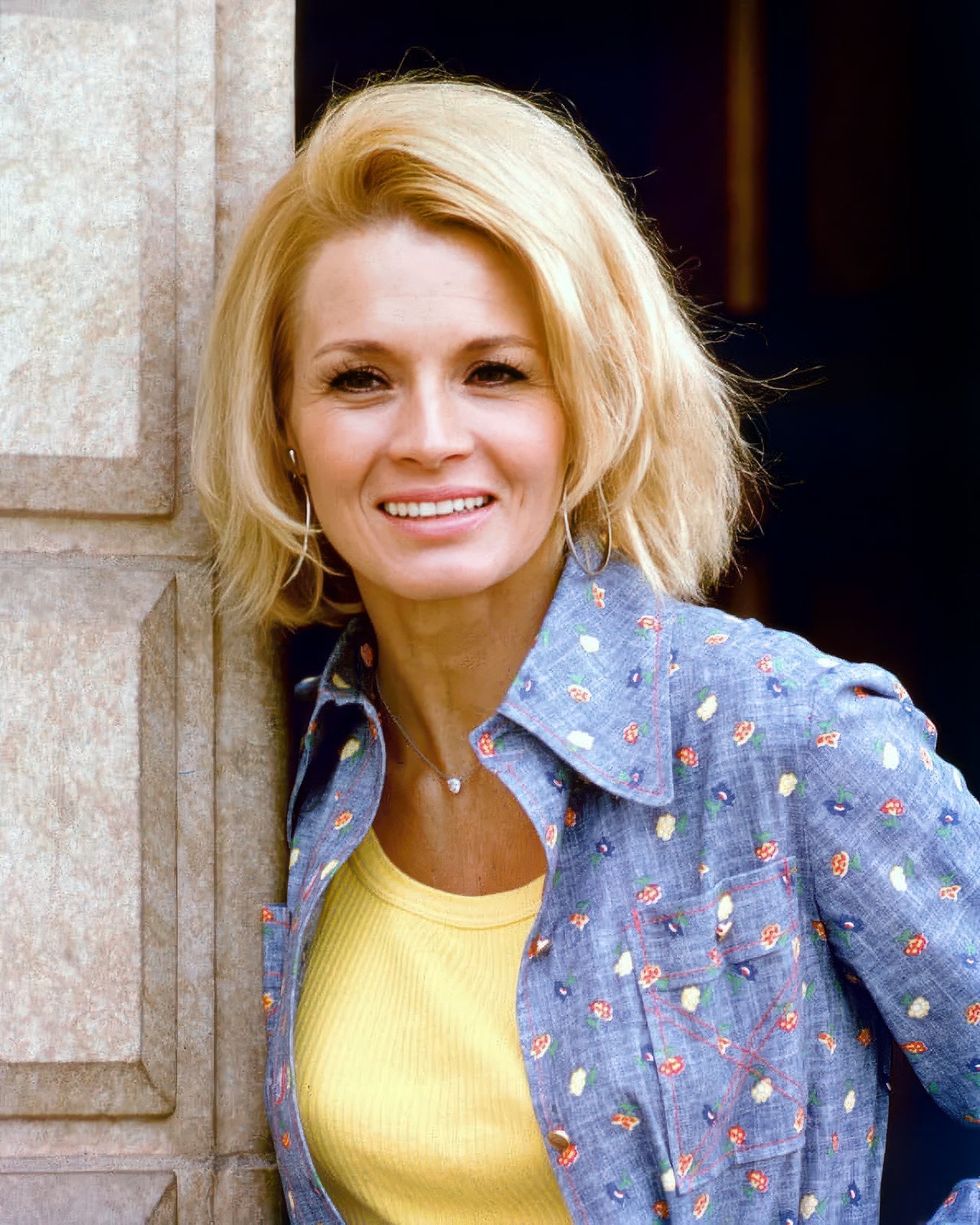
But then when Angie thinks back on it, television has always been good to her. TV launched her career. She was a kid from Kulm, N.D., who studied to be a secretary. She was working in the office of an aircraft plant when NBC, as a gimmick to promote the old Jimmy Durante Show, held a beauty contest. Angie entered and won.
When she stepped before the cameras as a long-legged chorus girl on Durante’s show, she knew she was where she wanted to be. She studied acting, posed for cheesecake publicity stills, worked whenever she could in TV dramas on the old Matinee Theater or with Dick Powell and David Niven in their Four Star Playhouse. Howard Hawks “discovered” her for his “Rio Bravo.”
“But then I guess I was always destined for television,” she said. “I was in the first television movie ever made — ‘The Killers’ with Lee Marvin. Only NBC was scared of it. Universal released in theaters instead…”
Police Woman theme song, opening credits & outro