One of the earliest American practitioners of the form was actually a men’s fashion editor who stumbled his way into it. Bert Bacharach — father of the composer Burt — spent years as an associate editor at Collier’s magazine before he began writing a column of household hints, “Now See Here,” for the New York Journal-American. It was eventually syndicated by King Features, running nationwide in newspapers five days a week. The column was a crowdsourced operation in the truest sense: tips came in from readers, manufacturers and what Bacharach cheerfully called the “baking soda lobby,” all cataloged in files at his Manhattan apartment.
Many of the more popular pieces were compiled into a bestselling book, How to Do Almost Everything, published in 1970 by Simon and Schuster. The book contained 3,300 how-to suggestions, organized under general headings and indexed for easy reference — the kind of book you’d flip open when the paint dried crooked or the pigeons wouldn’t leave the window. Bacharach reportedly had most of the 3,300 items committed to memory. His two household essentials, by his own account, were baking soda and vinegar, which he said together could handle nearly anything.
The household hints column had real predecessors and contemporaries. Heloise Bowles started her column, “Readers Exchange,” in the Honolulu Advertiser in 1959, and when King Features picked it up and renamed it “Hints from Heloise,” it appeared in over 600 newspapers worldwide within just a few years.
The tips traded through these columns were rarely exotic. They relied on pantry staples, common sense and the accumulated knowledge of people who had been running households for decades. What gave them staying power was the specificity — not “clean your pots” but exactly how, with what, and in which direction.
The 1970s were a particularly receptive moment for this kind of advice. Inflation, two oil shocks and a general sense of economic uncertainty pushed American households toward frugality and self-sufficiency. Stretching a dollar and fixing things yourself rather than paying someone else were less lifestyle choices than practical necessities for a lot of families. Columnists like Bacharach offered something useful in that climate — a reliable answer to the question of how to make things last or work better without spending much.

Bacharach died in 1983 at 85, but the tradition he helped build had legs. Heloise’s daughter took over the column in 1977 and it remains one of the most widely syndicated newspaper columns to this day. The tips themselves have aged unevenly — some hold up well (vinegar on windows, olive oil on furniture stains), while others reflect a world of materials and habits that no longer quite exist. Taken together, they capture something real about how Americans lived in their homes in that era — what broke, what needed cleaning and what they figured out along the way.
The photos and articles collected here come from the early 1970s and draw largely from Bert Bacharach’s “Now See Here” columns, showing the kind of practical, low-cost household tips he dispensed week after week to readers across the country.
Helpful, low-cost household tips from the ’70s
Household hint writer praises baking soda, vinegar
Albany Democrat-Herald (Albany, Oregon) November 12, 1971
NEW YORK — Here he is, Bert Bacharach, syndicated columnist, men’s fashion expert, inveterate traveler, a worldly man. And you ask him the two items he would not be without, and he answers, “baking soda and vinegar.”
Baking soda and vinegar play prominent roles in Bacharach’s new book, “How to do Almost Everything,” a compendium of household hints for the handyman, cleaning woman, chef, traveler and clotheshorse.
“They (baking soda and vinegar) do almost everything,” says Bacharach, father of well-known composer Burt (with a “u”) Bacharach, as he thumbs through a copy of the book.
Take plain old baking soda. “It’s good for cleaning rubber bathmats, it’s a mouthwash, a toothpaste, it’s good for cleaning cooking utensils that are not aluminum. It’s also good for washing hands after cleaning car batteries to get rid of battery acid, and for degreasing hands after greasing the car.”
And vinegar? “Look on page 76,” he says. On page 76 it says: “to clean deep vases, allow a solution of salt and vinegar to stand for an hour. Shake well, then wash and rinse.”
Bacharach’s hints come in from his readers and the “baking soda lobby,” and are cataloged in files in his apartment office.
Testing these easy & low-cost household tips and tricks
When it comes to making repairs and doing odd jobs at his own place, Bacharach says, “Where I live, I have a wonderful handyman.” But when a hint needs testing, he tries it out for size himself.
That’s why there are plates of tobacco in his closets (moths keep away from tobacco), blotting paper lining his medicine chests and kitchen cabinets (it blots up spills), camphor balls on his window sills (they make pigeons go away).
All these are among the 3,300 how-to suggestions included in the book published by Simon and Schuster. They’re all short items listed under general headings and indexed. Bacharach says that by this point, he has most of the 3,300 items committed to memory.
The strangest how-to tip he has ever gotten, he recalls, is “the one from a guy working in a ceramics plant in New Jersey. He said if you ever touch anything hot and burn your finger, hold your finger to the earlobe. It works. Doctors don’t know why, but it works.” Bacharach tested it on a finger burning occasion and vouches for the technique.
He says the question he is most frequently asked is how to get alcohol stains off furniture. “Rub the spot with olive oil,” Bacharach suggests. “And for stains made from heat, rub cigarette ashes into a paste with a few drops of water and rub on stain.”
Since Bacharach’s wife, Irma, is a painter, his living room walls are loaded with her work. To keep the paintings from tipping when being dusted, Bacharach says, “we hang them on two picture hooks instead of one, and they don’ t go askew.”

Painting tips & tricks
Two full pages in the general housekeeping section of the book are filled with suggestions for making painting (of walls, not pictures) easier.
Although the author does little painting himself, he rattles off these suggestions:
— Dip hands in paraffin wax before starting to paint and wash them clean when finished. Petroleum jelly, olive oil or linseed oil on hands also keeps paint from sticking to them.
— A simple method of removing paint from the hands: just rub them with salad oil.
— Glue a large plate to the bottom of the paint can. It keeps the paint from dripping all over the floor and makes a convenient resting place for the brush.
— Cover chandeliers with plastic bags when painting to keep them from getting splattered.
— Paint-splattered windows can be cleaned by rubbing with hot vinegar.
— Put an old pair of socks over shoes to keep them clean while painting. The socks are also good for wiping up any drippings that do occur.
— A few slices of raw onion, several feet apart in a freshly painted room, will remove the paint odor.
— One of Bacharach’s favorite paint tips is to add a little vanilla — 2 teaspoons per quart of paint — to any color paint to eliminate the bad paint odor. He said it will not change the color of the paint.
Other Bert Bacharach hints include:
— The metal cutting edge of wax paper boxes can be easily shaped into handy cookie cutters.
— You can remove rust from utensils and tools by rubbing them with cork dipped in olive oil.
— Rotating the five tires on a car regularly (the spare, too) will add as much as 10,000 miles of wear. The right rear tire gets 38 percent of the wear; the left front only 14 percent.
— [If a vinyl] record is warped, try this: Place each record on a smooth surface, preferably glass, that has been covered with cloth. Weigh down with about eight heavy books and remove books after about one week. This usually does the trick.
— To remove a fish odor from a frying pan, boil [some] water and salt [in it], then rinse in cold water.
— To clean eyeglasses without leaving streaks, use a drop of vinegar on each lens — or a drop of gin or vodka.
— You can temporarily weatherproof a cracked windowpane by giving it a coat of fresh shellac.
— If there’s moisture on the inside of windows, wipe from the bottom up. The windows will be cleaner.

— To get your dog’s coat extra shiny and soft, add two tablespoons of baking soda to both rinse and wash water.
— Artificial flowers can be held in an artistic arrangement by pouring salt into the container, adding a little cold water and then arranging the flowers. The salt will solidly as it dries and hold the flowers in place.
— A good, safe, nonpolluting, non-enzyme pre-wash soak [for clothes] is a sinkful of warm water spiked with a third cup of washing soda.
— Silverware, soaked in sour milk for a few hours and then washed, rinsed and dried will have a lovely gleam.
— Cover the head of a hammer with a padded bandage when striking decorative nailheads or tacks.
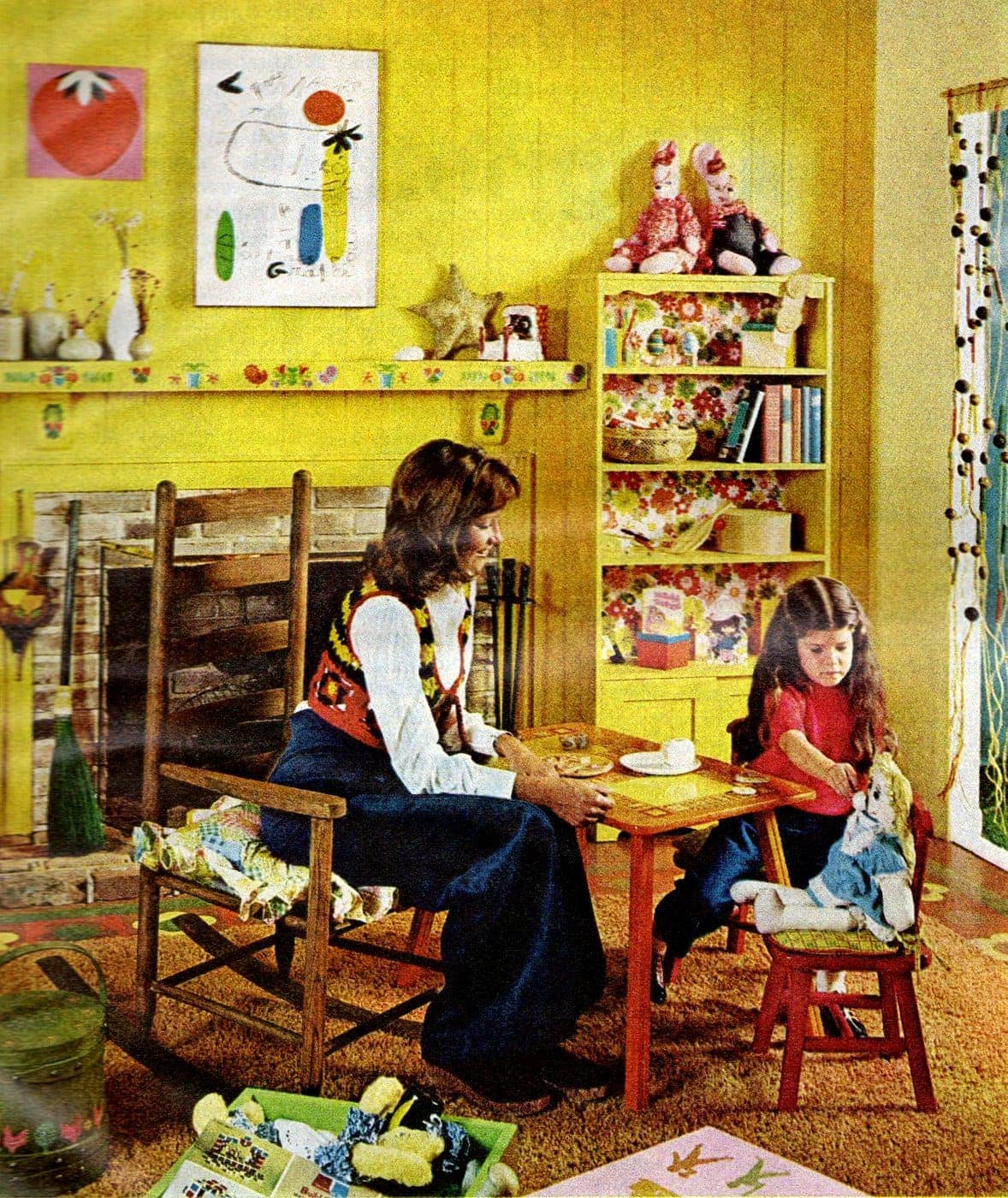
— Decorating one wall in a child’s room with pegboard will allow clothes hooks, blackboards, etc., to be adjusted to the proper height as the child grows taller.
— Try using equal parts of salt and flour to clean hairbrushes. Rub mixture into brush, comb through bristles and shake vigorously. Mixture picks up oil and dirt.
— To clean natural woodwork, moisten a cloth very lightly with a solution of water and a few drops of white vinegar.
— Cover a cot mattress you don’t use often with heavy denim and let your children use it for a gym mat.
— When replacing furniture on a rug that has just been shampooed, place pads of aluminum foil under legs to avoid leaving rust or pressure marks.
— For more effective cleaning when using steel wool on aluminum pots and pans, rub in one direction only, rather than with a circular motion.
— You can soften hard water by adding a teaspoon of borax to two-thirds of a quart of water.
— Scrubbing plastic table mats with a stiff brush sprinkled with dry baking soda revives their color by removing all soil.
— To remove fingerprints from [a painted wall], dip a damp cloth in baking soda and rub prints.
— Egg beaters will clean easily if they are put in cold water as soon as you have used them.
— To get paper off a frozen steak, put the meat in a plastic bag and pour hot water over it. The paper will come off almost at once.
— To remove most food stains from rugs, mix one teaspoon of white vinegar with three teaspoons of lukewarm water. Apply with eyedropper, allow to stand for 15 minutes, then blot with a clean cloth.
— And if you’ve worked up an appetite caulking windows or scraping floors, treat yourself to Bacharach’s flaming Mount Fujiyama dessert: Place a bed of shredded coconut in a dessert dish. Add a cone-shaped scoop of vanilla ice cream, sprinkle with more coconut, and pour brandy over it. Light the brandy, which toasts the coconut for added flavor.