With the release of the IBM PC in 1981, Microsoft became a key partner, providing the operating system and development tools that helped define the platform.
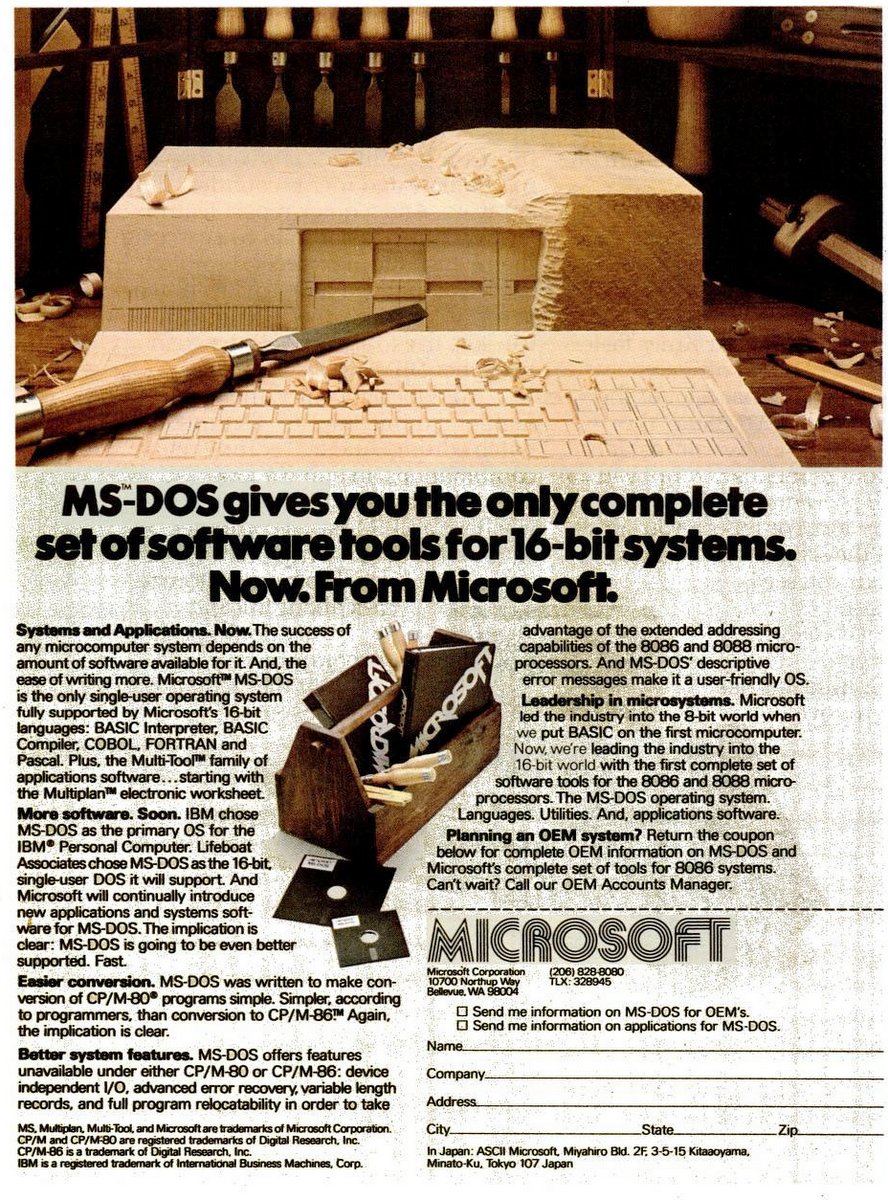
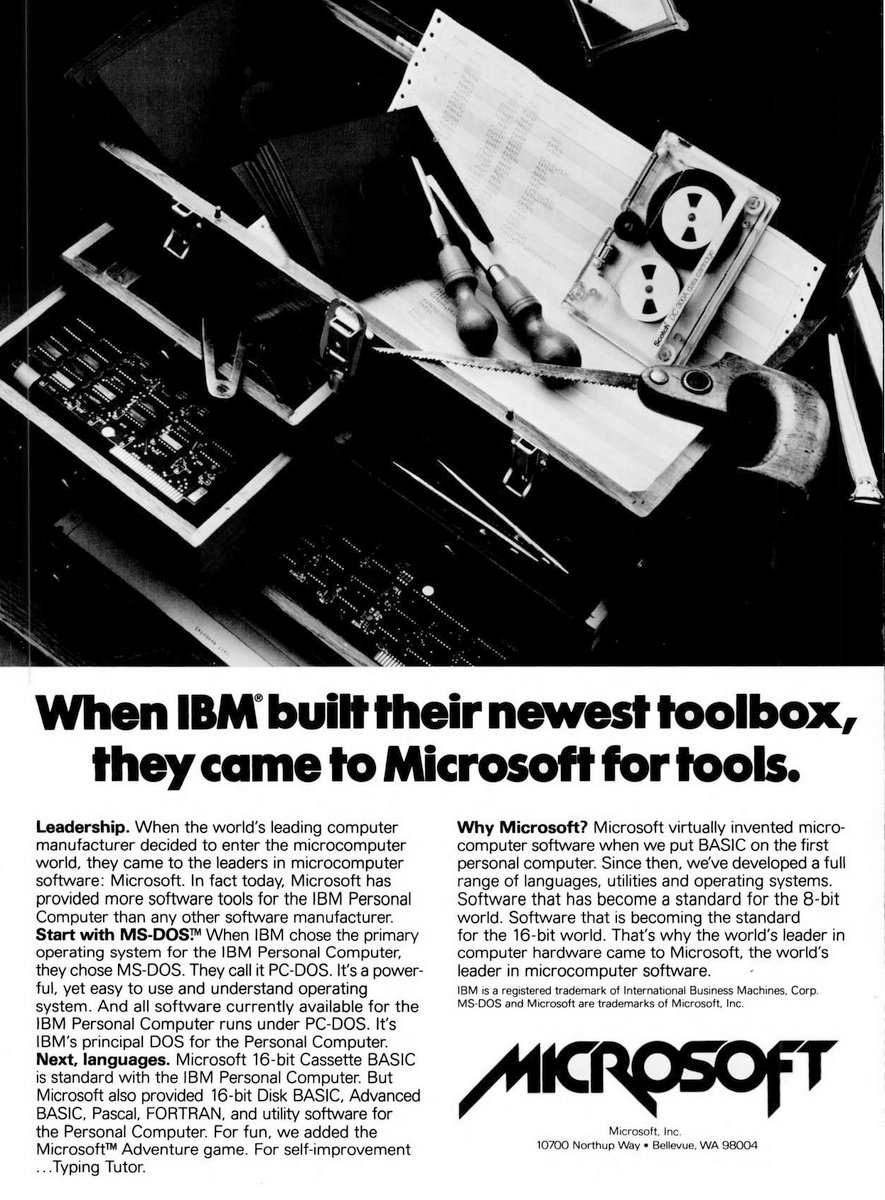 That operating system was MS-DOS, and in 1982, Microsoft was working to establish it as the standard for 16-bit systems. They promoted it not just as an OS, but as a complete environment for programmers, backed by a suite of compilers and interpreters for languages like BASIC, FORTRAN, Pascal and COBOL. These tools made it easier to create new software, which helped IBM’s platform grow — and Microsoft with it.
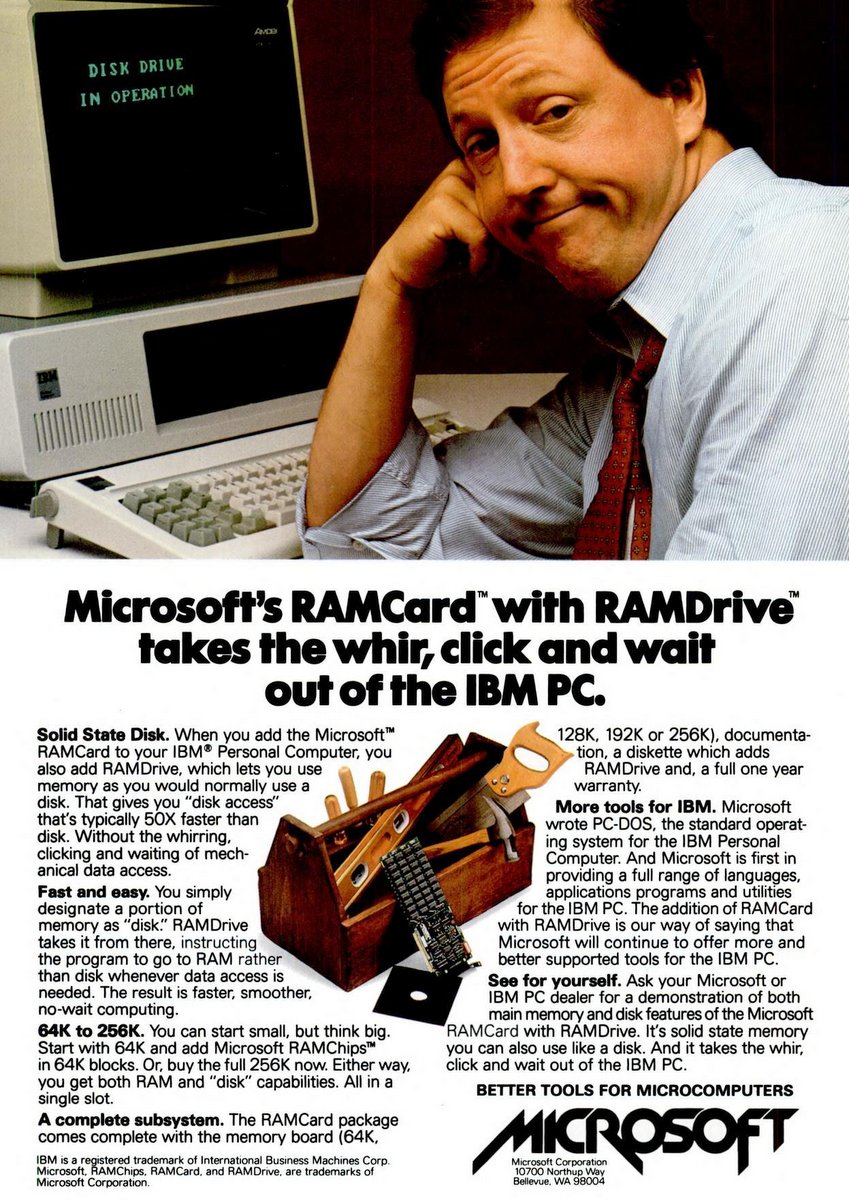
The company was also building hardware accessories. One example was the Microsoft RAMCard, introduced with software called RAMDrive. It let users treat memory as fast, solid-state storage — a clear improvement over the noisy, slower mechanical drives that came standard in most machines. For early PC users, it was a practical upgrade that cut down wait times and boosted performance.
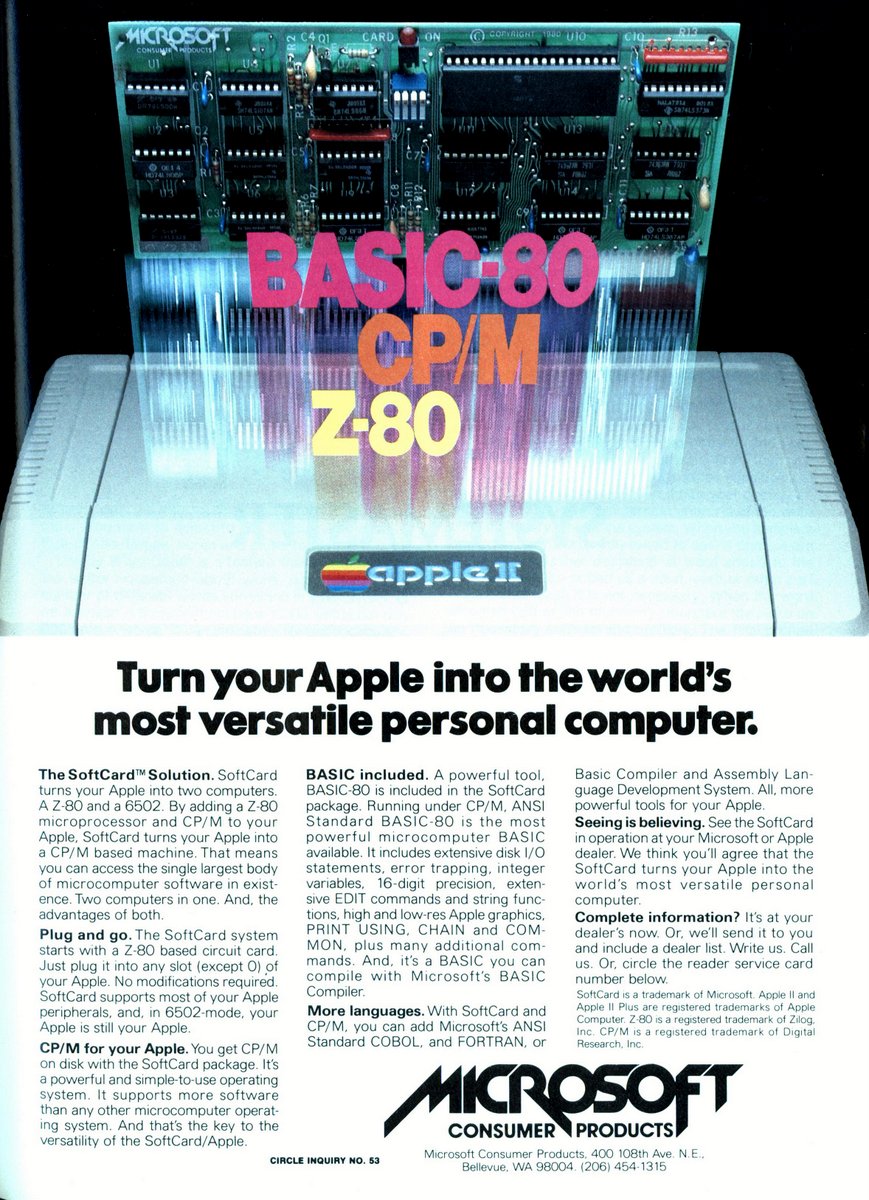
Even as it leaned into its work with IBM, Microsoft didn’t limit itself to one system. In 1982, the company was still supporting Apple users, marketing software that expanded what those machines could do. This cross-platform focus helped Microsoft stay visible in a fragmented market, and it set the stage for its broader dominance in later years.
We’ve collected a few original Microsoft ads from 1982 that highlight how the company positioned itself at the time — as a provider of tools, not just products. These early efforts show 1980s Microsoft working behind the scenes to shape what personal computing would become.
Turn your Apple into the world’s most versatile personal computer.
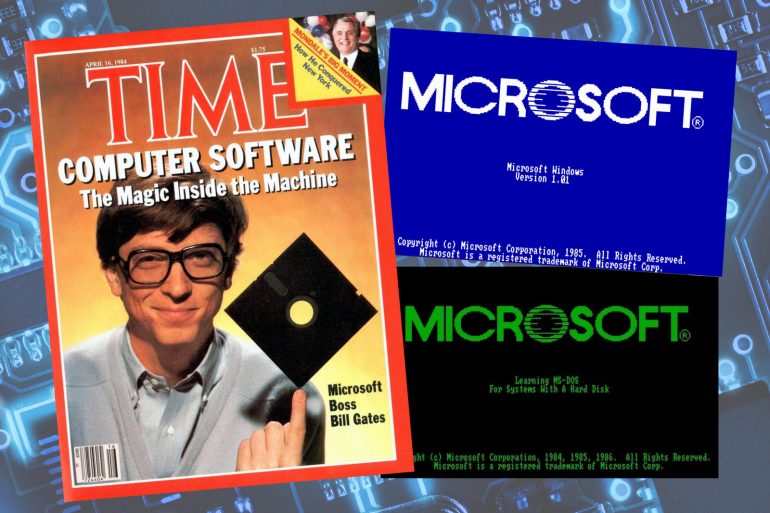
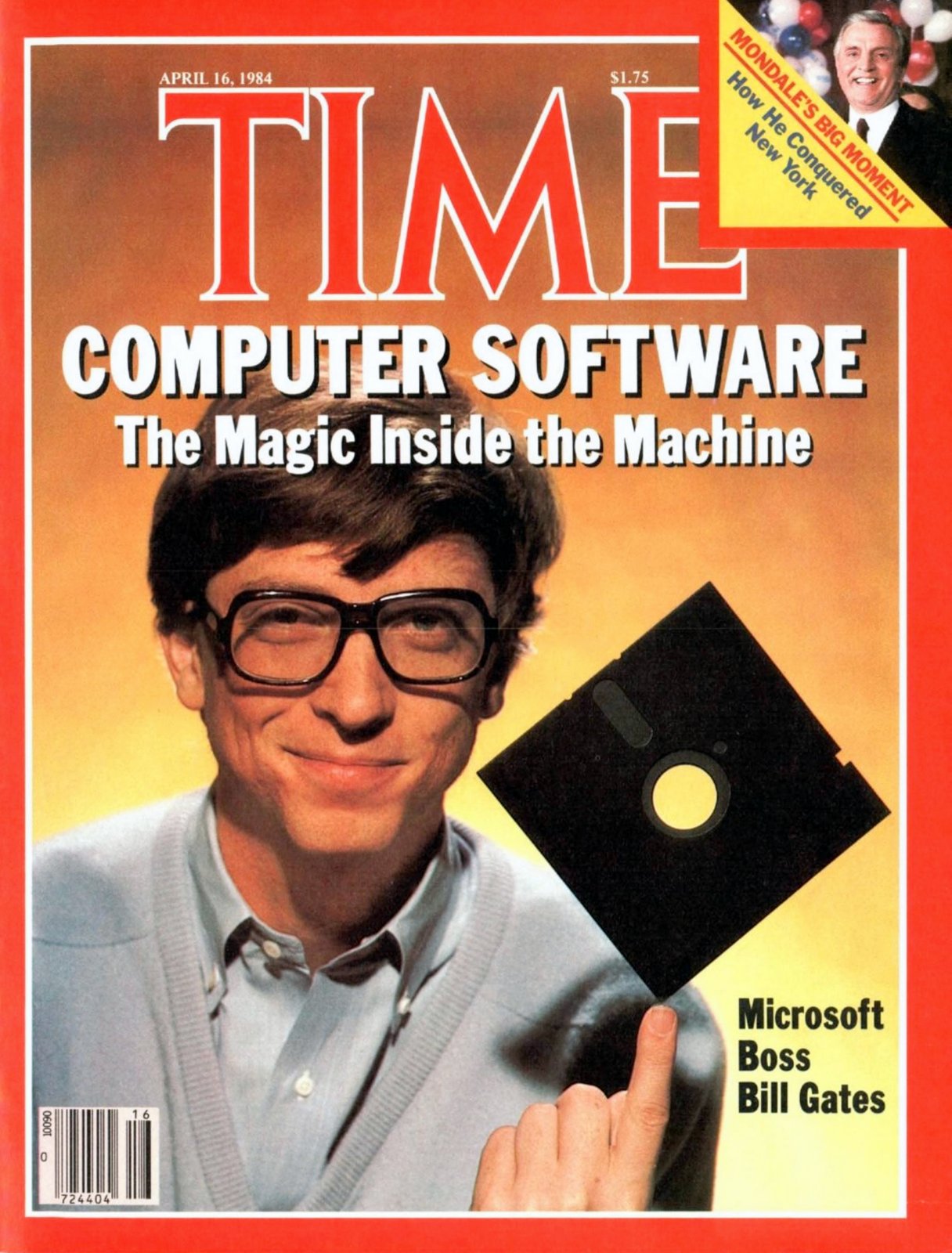
Bill Gates on the cover of Time magazine (1984)
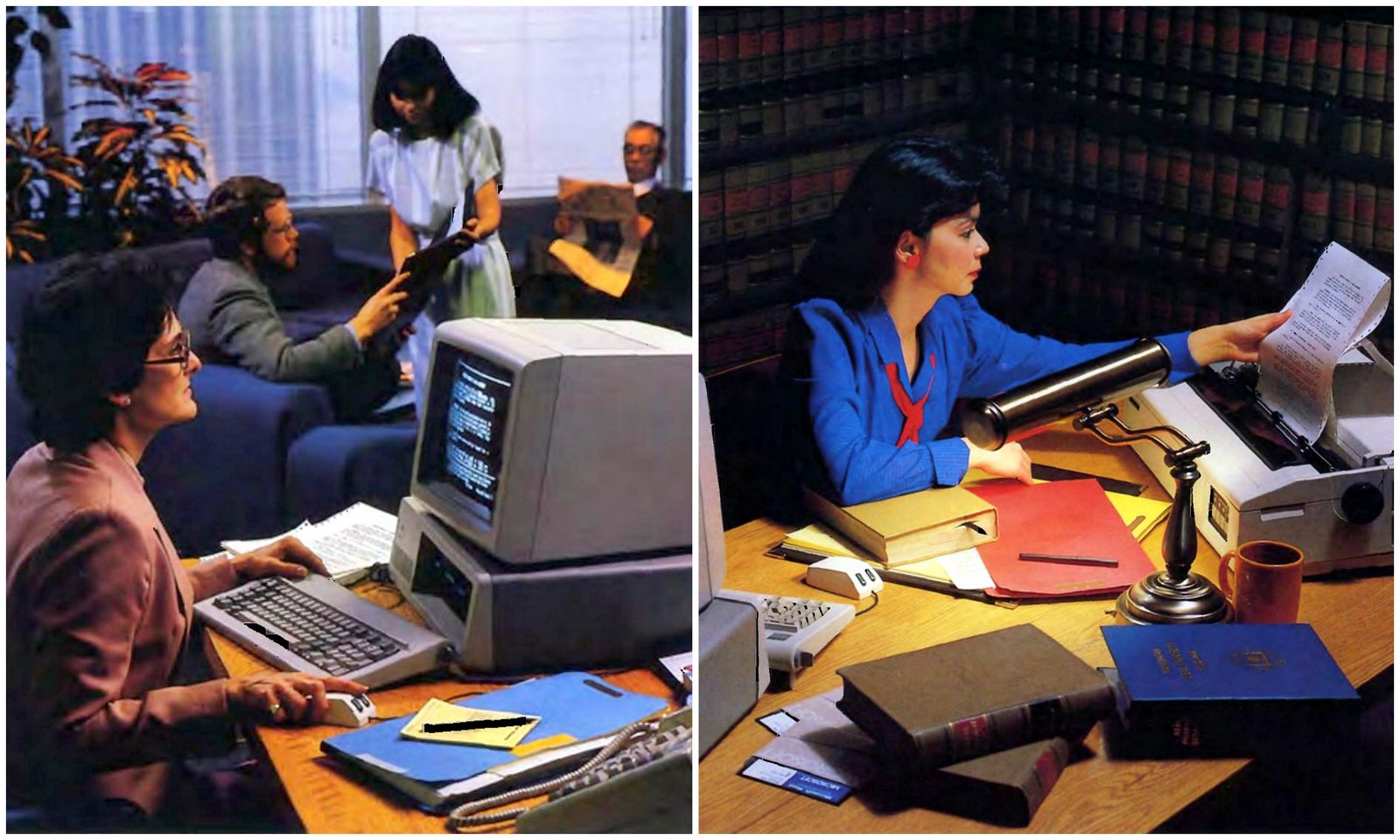
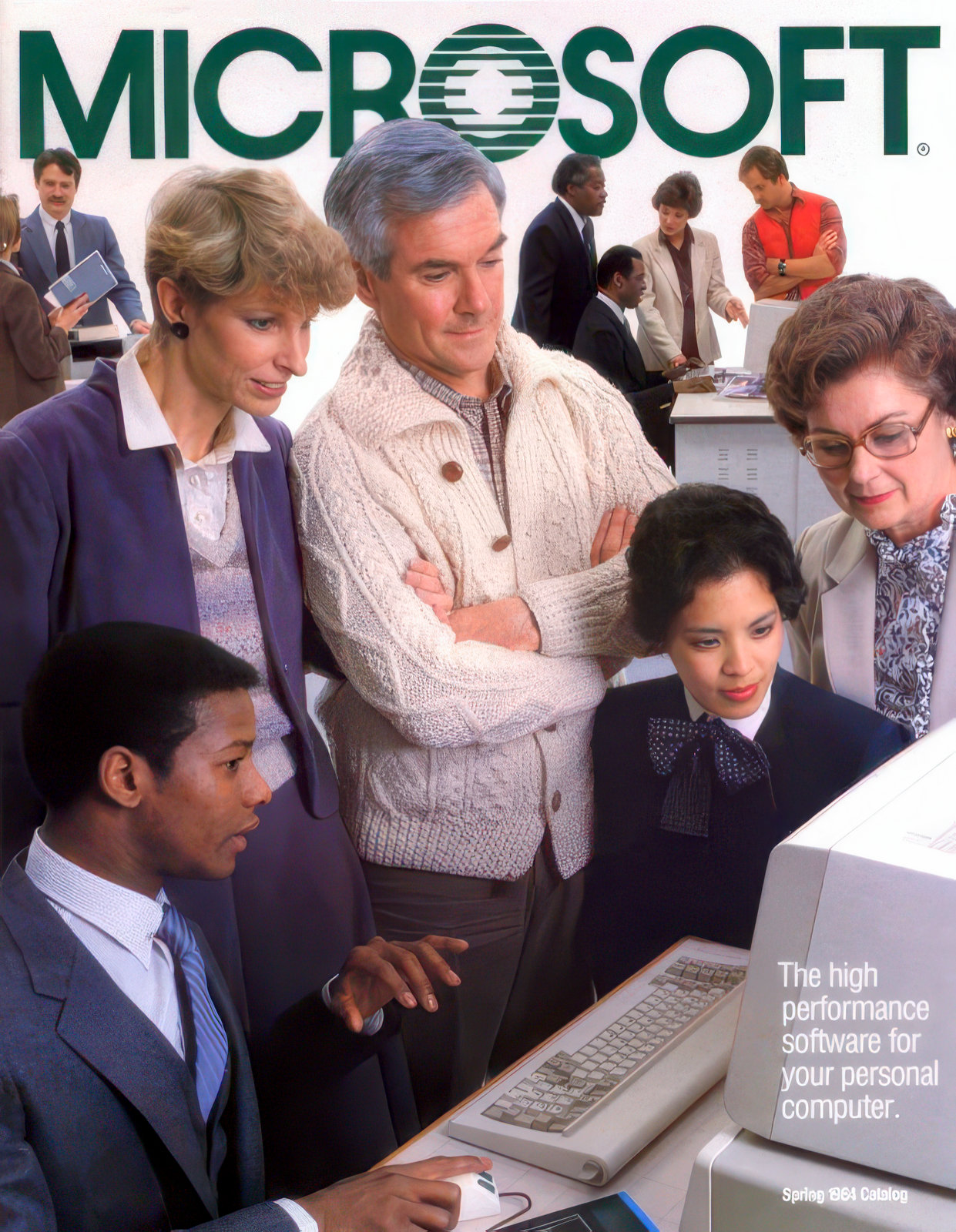
Microsoft Spring 1984 Catalog
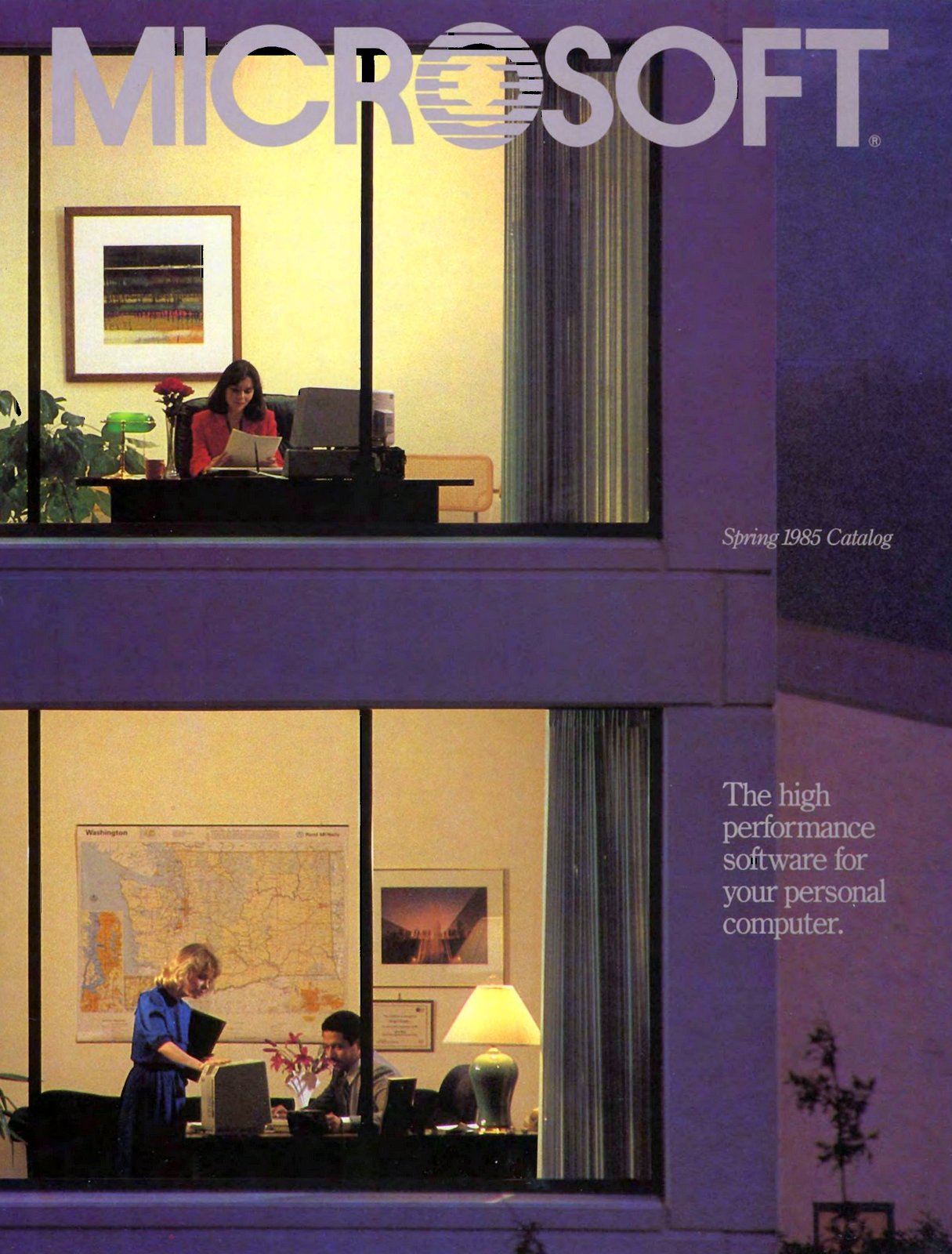
Microsoft Spring 1985 Catalog
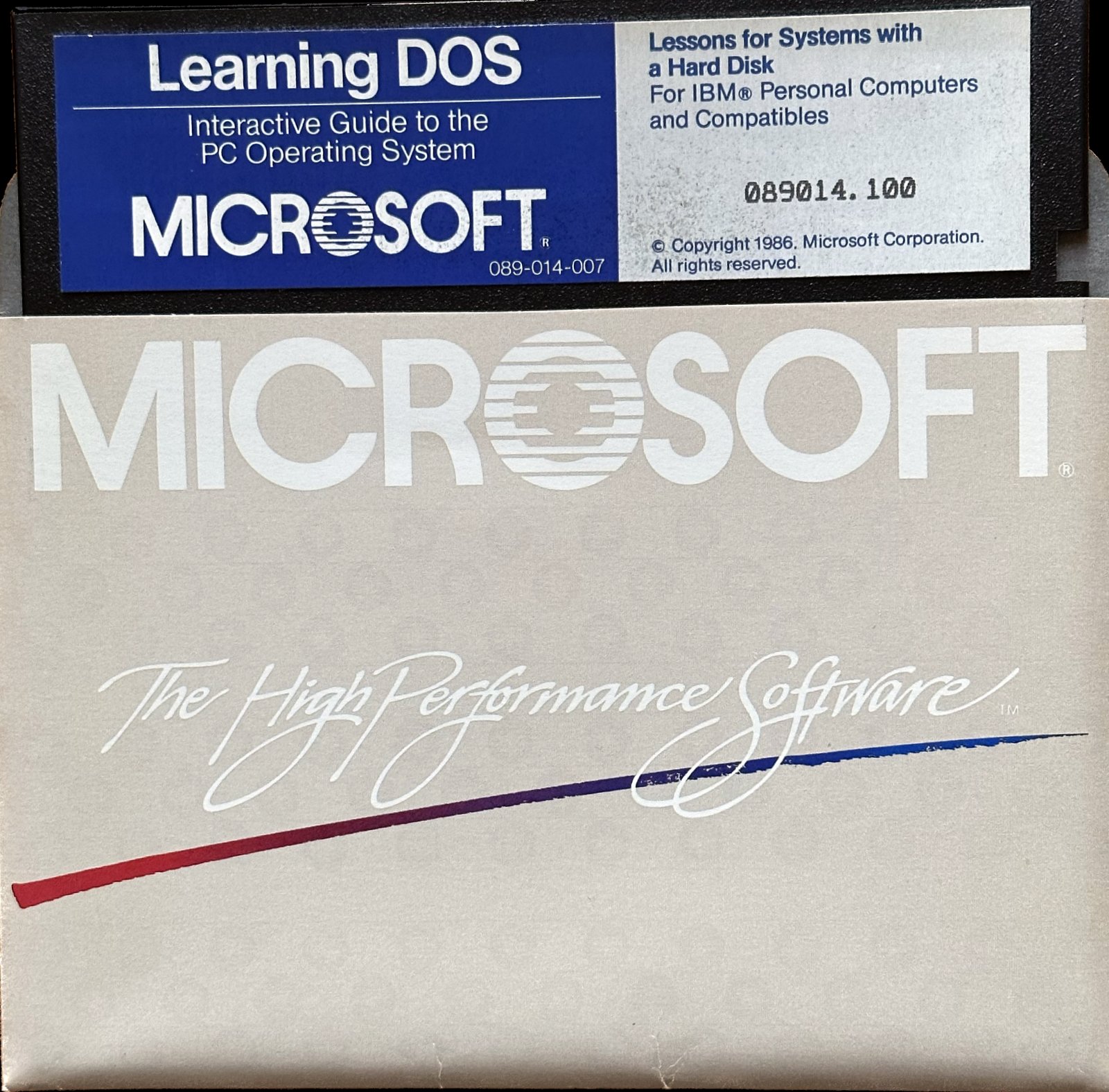
Microsoft disk (1986)