Tile manufacturing in the United States traces back to the American Encaustic Tiling Company, founded in New York in 1875 and later anchored by a massive Zanesville, Ohio factory built in 1892. The company grew so fast that Zanesville nearly tripled in population over three decades as workers moved in to staff the plant. By 1890 American Encaustic was the largest tile producer in the world, competing directly with the English imports that had dominated the American market for fireplaces and vestibules.
Tile’s move into the home bathroom had a lot to do with hygiene, not style. As indoor plumbing spread in the early 1900s, health advocates pushed for surfaces that could be scrubbed clean, and small white hexagonal floor tile paired with glazed wall tile became the standard prescription for a sanitary bathroom. A 1912 design guide called for exactly that combination, white hex flooring topped with white 4-by-6-inch wall tile and a marble threshold.
Color is what changed everything in the twenties. Tile makers who had spent decades limited to white, black and a handful of muted pigments started rolling out olive, navy and pink glazes, and homeowners took notice. Manufacturers also began pre-mounting small mosaic tiles on sheets of paper, which cut installation time dramatically and made elaborate patterned floors realistic for an ordinary family budget rather than just wealthy clients.

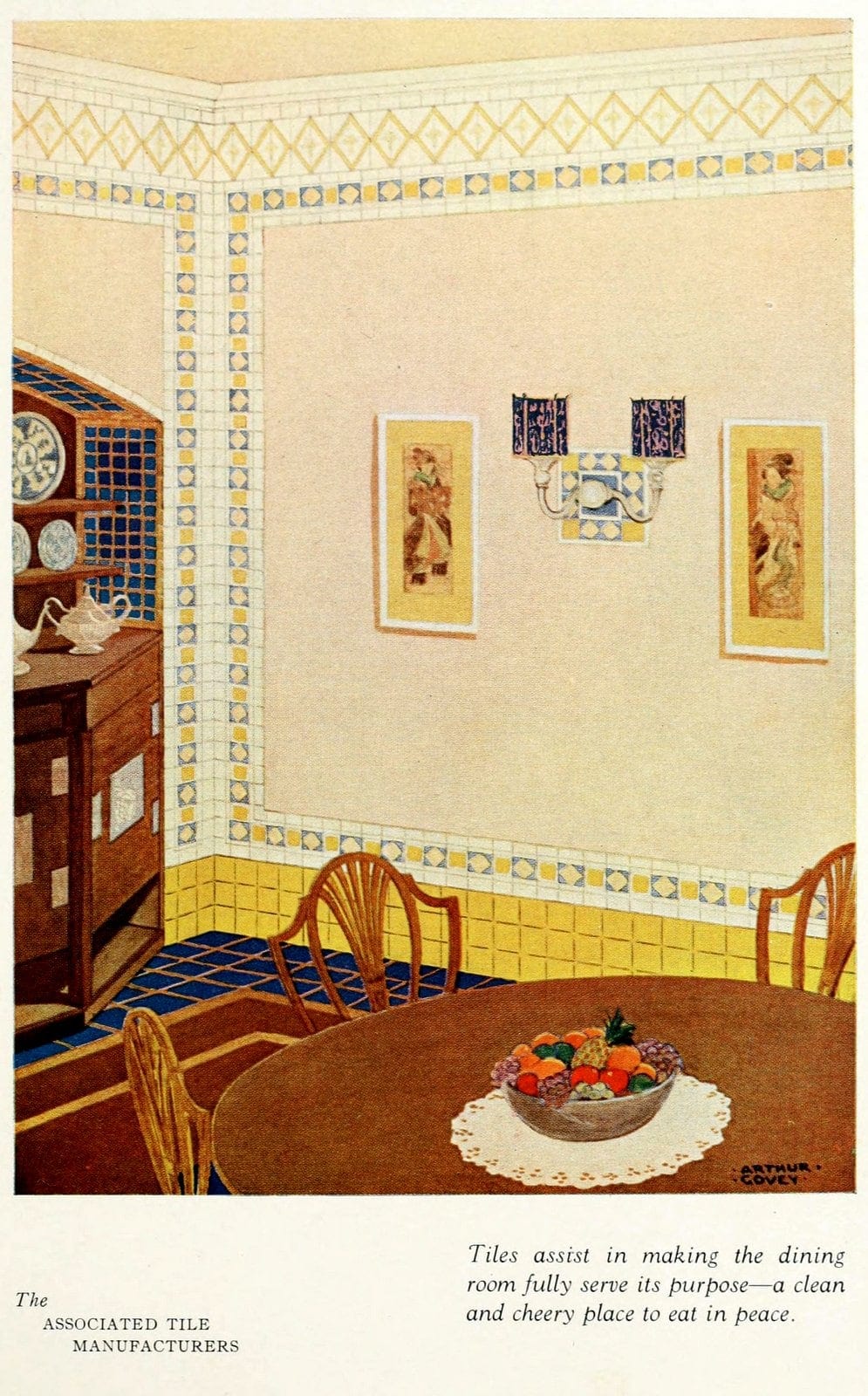
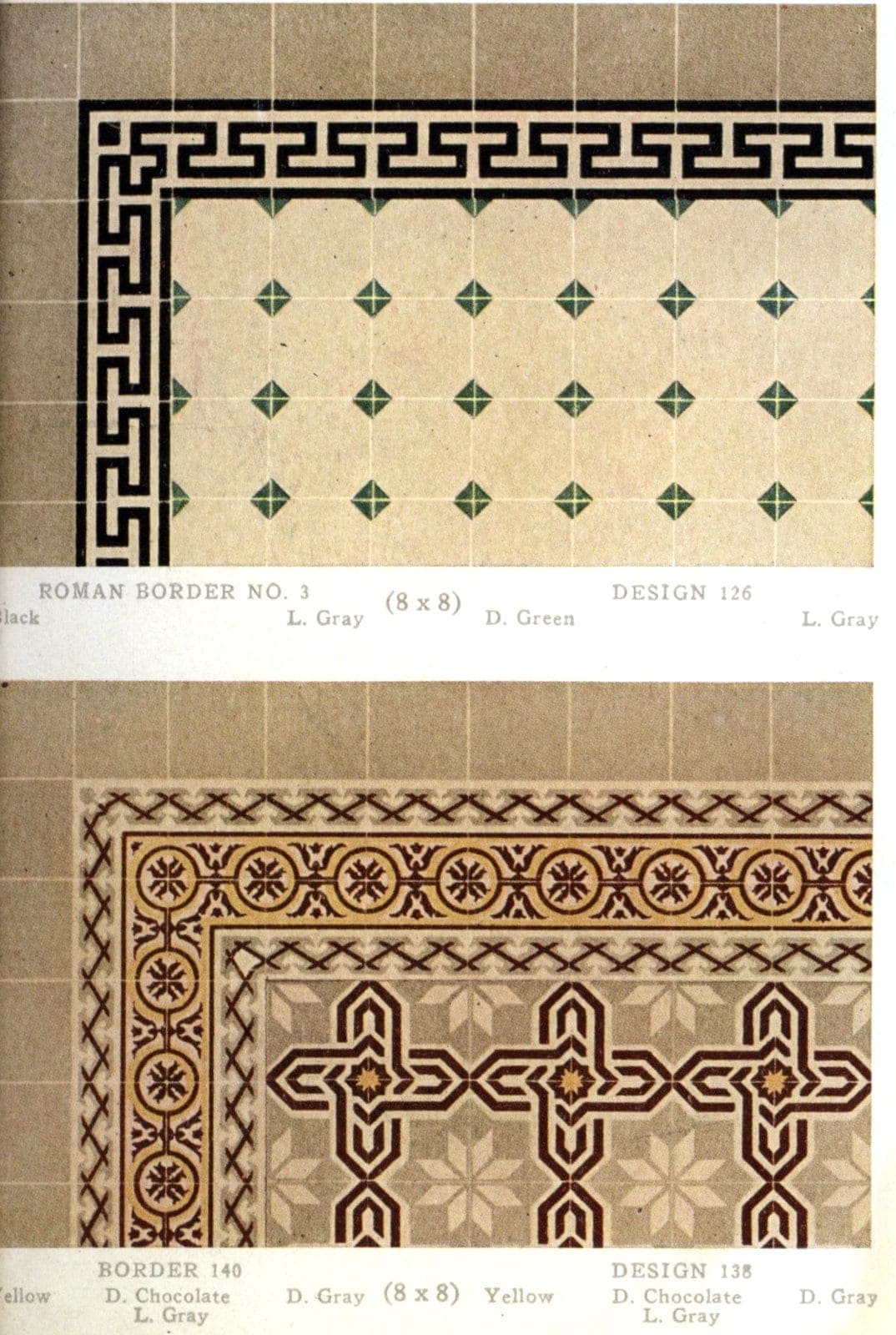
American Encaustic employed some genuinely notable talent during this stretch, including ceramicist Frederick Hurten Rhead, who later designed the Fiestaware line, and Herman Mueller, who went on to found his own Mueller Mosaic Company in New Jersey. Their influence shows in the era’s more ambitious tile work, where geometric borders and stepped, Art Deco-inflected motifs started creeping into bathrooms and sunrooms alongside the classic black and white checkerboard floor.
The good times didn’t last far past the decade that made them. The Great Depression gutted demand for decorative tile, and American Encaustic shut its doors in 1935, reopening two years later as Shawnee Pottery, a different business entirely. Cheaper alternatives finished the job after World War II, as asphalt tile and then vinyl composition tile, first shown off at Chicago’s 1933 Century of Progress Exposition, gave homeowners a flooring option that looked decorative without the labor or cost of real ceramic.
Ceramic tile never disappeared, but it settled into a narrower role, mostly reserved for bathrooms, kitchens and other spots where water resistance mattered most. Original 1920s tile patterns have become something of a benchmark for restoration work today, with salvage dealers and specialty manufacturers matching decades-old color palettes for homeowners trying to get a period bathroom right. The colors and layouts that once signaled a modern, sanitary home now signal something closer to the opposite: proof that a house has held onto its original character.
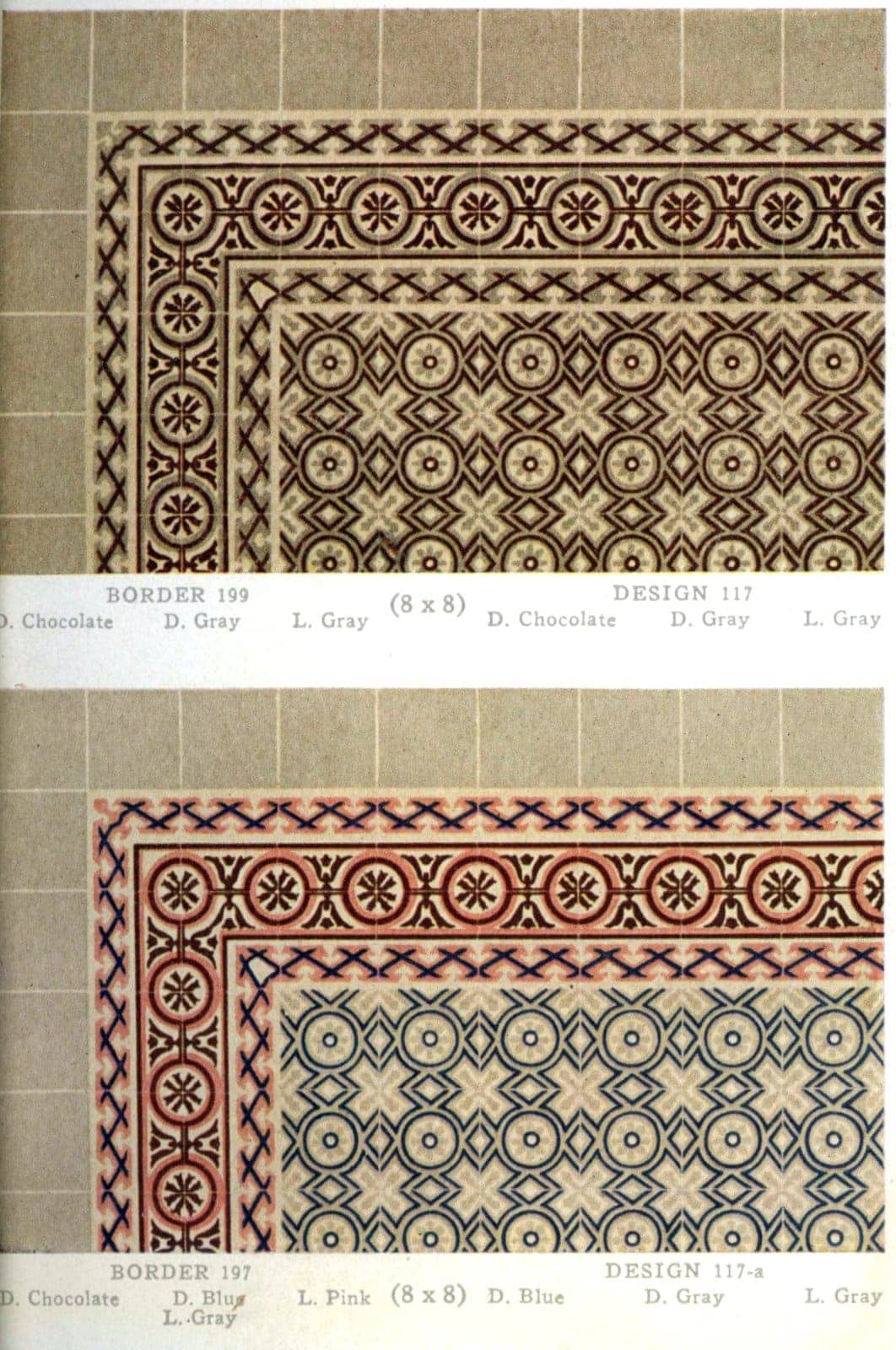
The gallery below collects dozens of authentic tile patterns and design spreads pulled straight from 1920s trade publications and manufacturer catalogs, offering a genuine look at the colors, borders and layouts homeowners were choosing at the height of the decade.
Tile: A good standard of value (1928)
By John R. West, Tile Talk magazine (volume 3, number 3 – 1928)
Tiles are fashioned of clay and textured in various manners to produce stunning effects. They are burned to an intense heat to make them durable, colorful and fireproof. No other material used in constructing the walls and floors of a home so admirably combines the qualities of permanence, beauty and safety as does tile, for the fundamental processes of manufacture produce these desirable factors.
Tile establishes its claim to durability through the universal and splendid history of centuries-old service in buildings and structures of every type known to the civilized world. Like a great aristocracy, it has the mellowing background and tradition of the ages. It is not something new, just in an experimental period of its usefulness, durability and beauty. It has been tried and was not found wanting.
It was well known and in great favor when the master workmen of ancient Greece and Rome gave forth works of art that have never been surpassed in this or any other age. Subjected to the fierce ravages of heat and cold, storm, wind and time, down through the ages, tile construction has proven to be a bulwark of strength and safety.
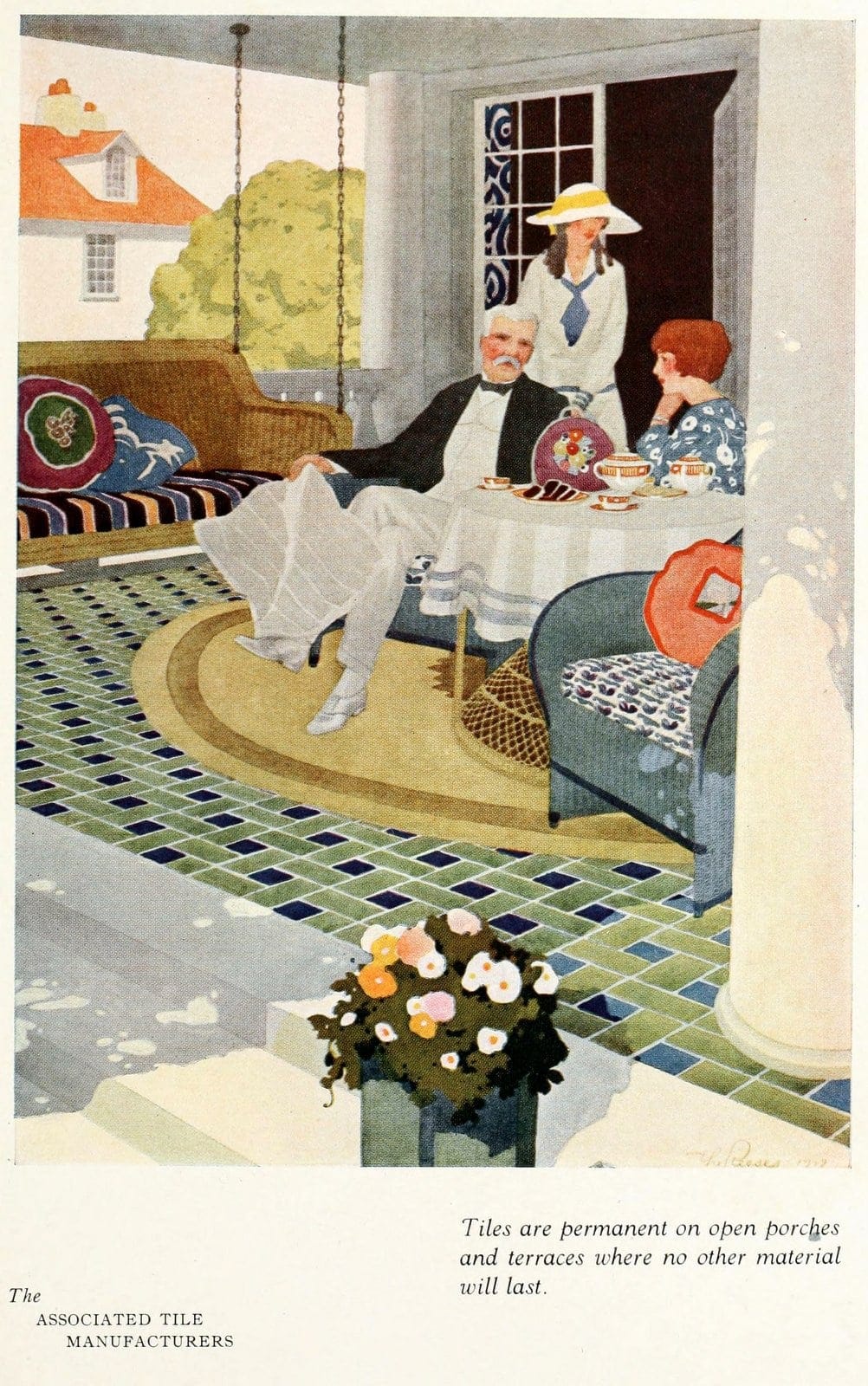
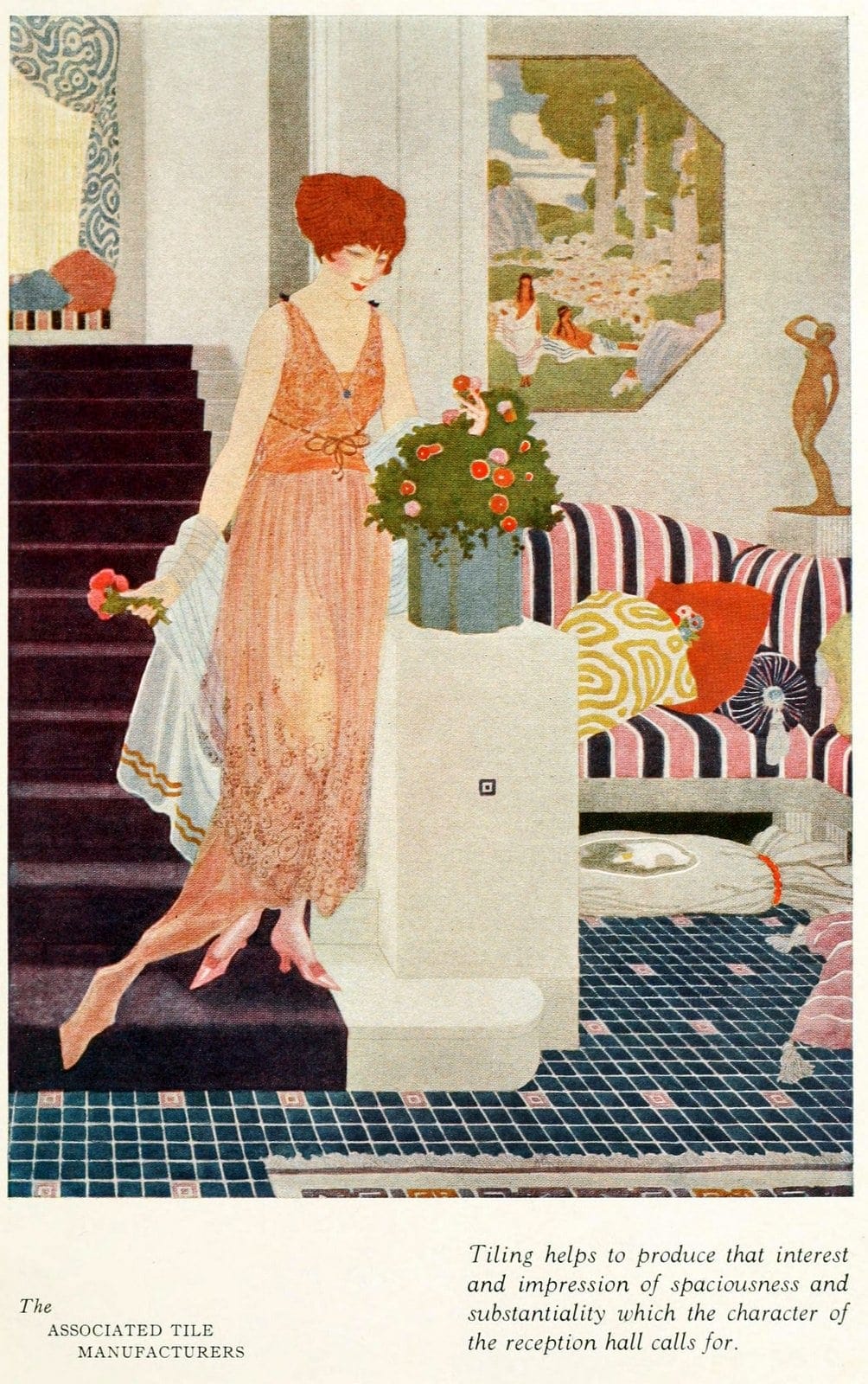
The innumerable color schemes afforded by present-day tilecraft and the case of obtaining desired effects make it the most popular medium for expressing beauty and distinction. Tile is the only medium that in diversity, blend and versatility can come anywhere near approximating the present-day American’s love of color. This beauty of texture combined with durability, as evidenced in our subways, public restaurants, bank foyers, hotel lobbies and passages, is an outward manifestation of our appreciation of tile as a national building unit.
The use of tile for providing substantial and attractive walls and floors is rapidly coming into its own in the home. A thoroughly flexible material, tile readily adapts itself to any type of architecture because of its workable unit size.
Tile made its way from the kitchen to the bathroom, to the halls, then to the porch and the walks, back again then to the living room, sun-parlor, then upstairs to the bedroom and sleeping room, and is gradually usurping the home throughout.
The great favor in which tile was held in the hospitals, church aisles and passageways, and in places where cleanliness was the prime requisite, has resulted in tile creeping into the home in its avalanche fashion. Tile lends itself most readily to creating striking patterns for interior wall decorating, particularly in sun rooms, hence the great demand for its use here.
Living room walls are lined with tile to carry out individual designs in a surprisingly startling manner. This individuality of tile design in the home counterparts woman’s love for individual dress and finery, hence its great favor here.
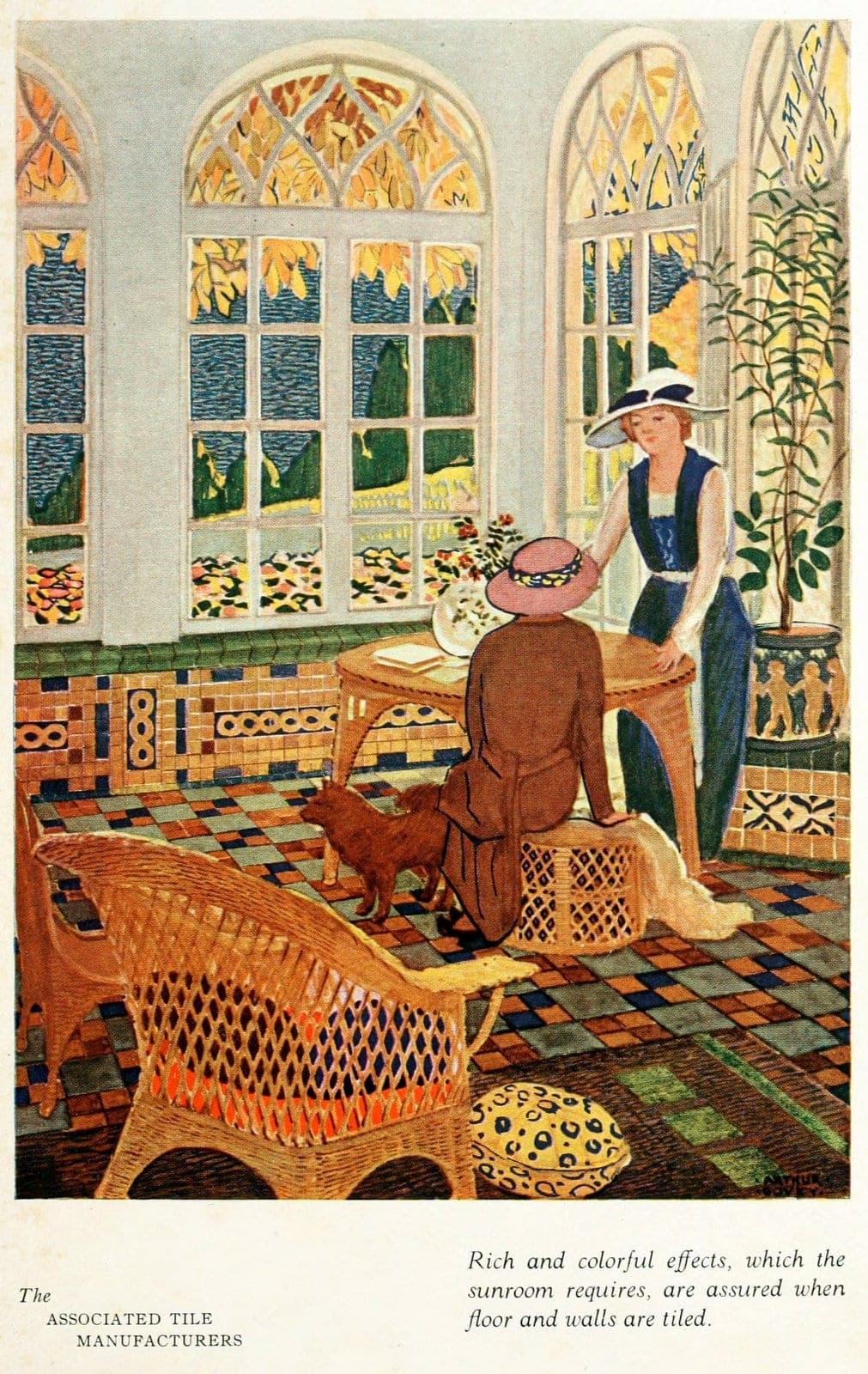
Tile insures that the interior wall and floor decorations will never lose their original beauty and color, and painting, tinting and other maintenance expenses are forever eliminated. The rich interior wall and floor tiles stimulate rugs for richness of color and originality of design, as well as acting as a counterpart or blend for priceless tapestry and floor covering.
Outside of the house the use of tile for floors, walks, steps, pergolas, gate entries and seats are in great favor also, and justly so. For all outside service it is a most permanent and unfading material which will never crack or decay. Even under the hardest wear, possible tile retains its original color and texture just as the tile used in the house.
Is tile wall and floor construction throughout expensive? Of course, we accept it as the proper thing for the bathroom and kitchen, but for the walls and flooring for the rest of the house does it come within the purse of the average family of limited funds?
Recent investigations on this subject have dispelled many false notions. Briefly, the actual difference, in first cost, between the average-size tile wall and floor and a similar size wall of ordinary material and a similar size floor of the usual hardwood is an amount equivalent to two or three wallpapering and resurfacing bills for the material other than tile.
Considering the subsequent saving in painting, papering, resurfacing and glossing-over expense, the lower cost of insurance protection, the high loan and resale values, by reason of the non-depreciation of tile wall and tile flooring, the tile medium is not only the least expensive, but represents the safest and wisest investment for the lifetime savings of the family.
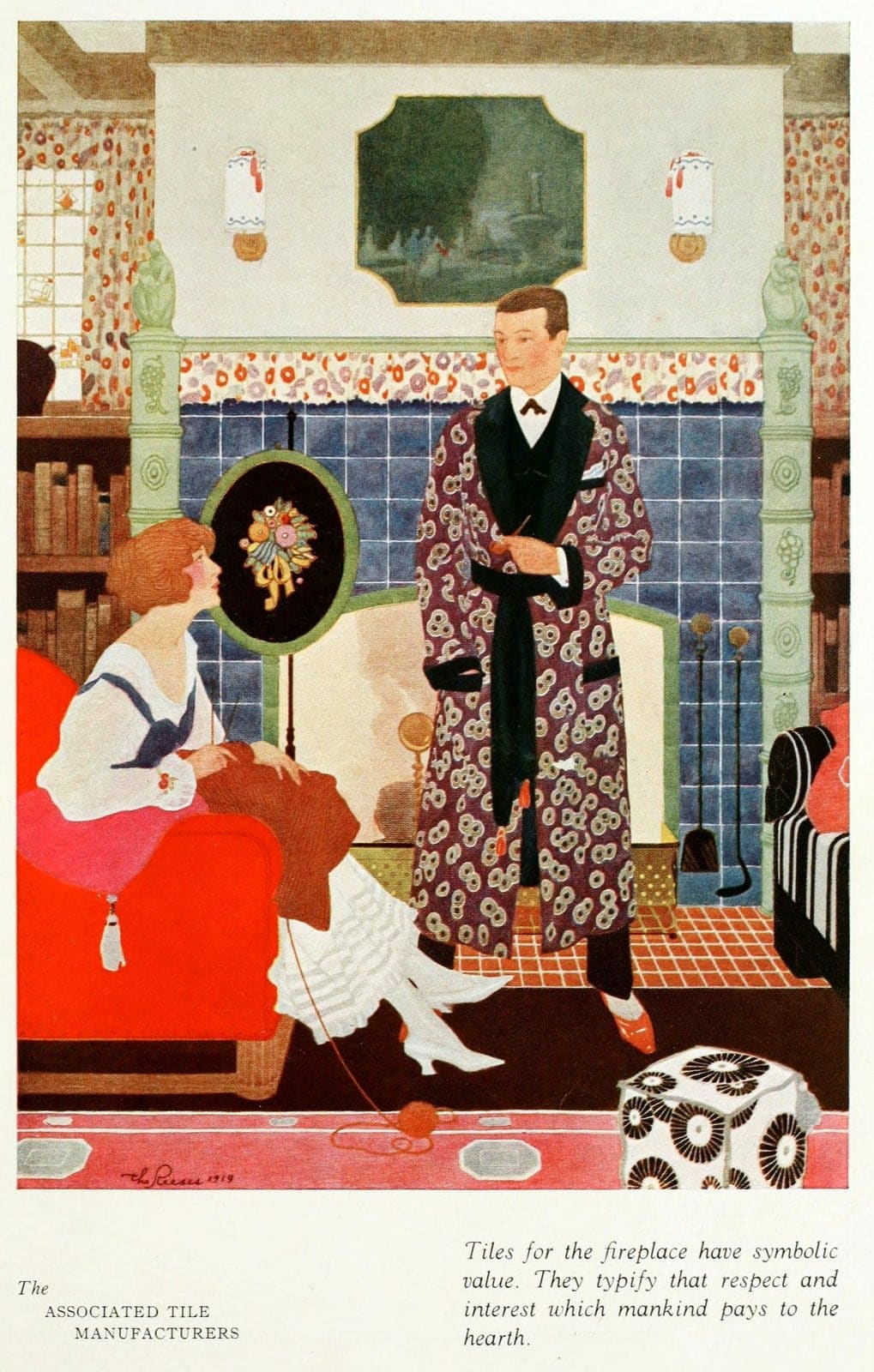
In this age of crowded cities and the great influx of people into the suburban and country districts, quite a distance from adequate fire protection, or at least excellent fire protection, this fire hazard is one that must be taken seriously into consideration, not only because of the danger of the physical loss of property, but because of the greater one of actual loss of life.
Have you ever stopped to analyze why a vestibule, a living room floor, a kitchen or a bathroom were so especially striking and beautiful? You know they are made of tile and that tile is attractive and very strong; that it can be washed and that it does not seem to grow dull.
But you have missed its greatest secret: versatility. Tile molds the very effects that you find so striking without knowing why. It comes in a large variety of colors and does things that no other material can imitate . . . and it is NOT costly.
Have you ever considered the great amount of retouching and fixing up the homeowner has to do to the ordinary wall and wooden floor in his home. Plaster cracks; paper fades, polished floors lose their luster, woodwork becomes shabby and needs paint; he can’t buy this piece of furniture that he has set his heart on because it will not blend with his wall and color scheme; and after a while he takes a dislike to his surroundings without knowing why.
This is all done away with in the tile wall and flooring. For here he has the whole spectrum of the rainbow enhanced by a natural brilliance and sparkle that becomes greater under the night artificial lights, and this color and brilliance make an unbeatable combination and is found only in tile.
1920s tile design gallery of vintage home decor

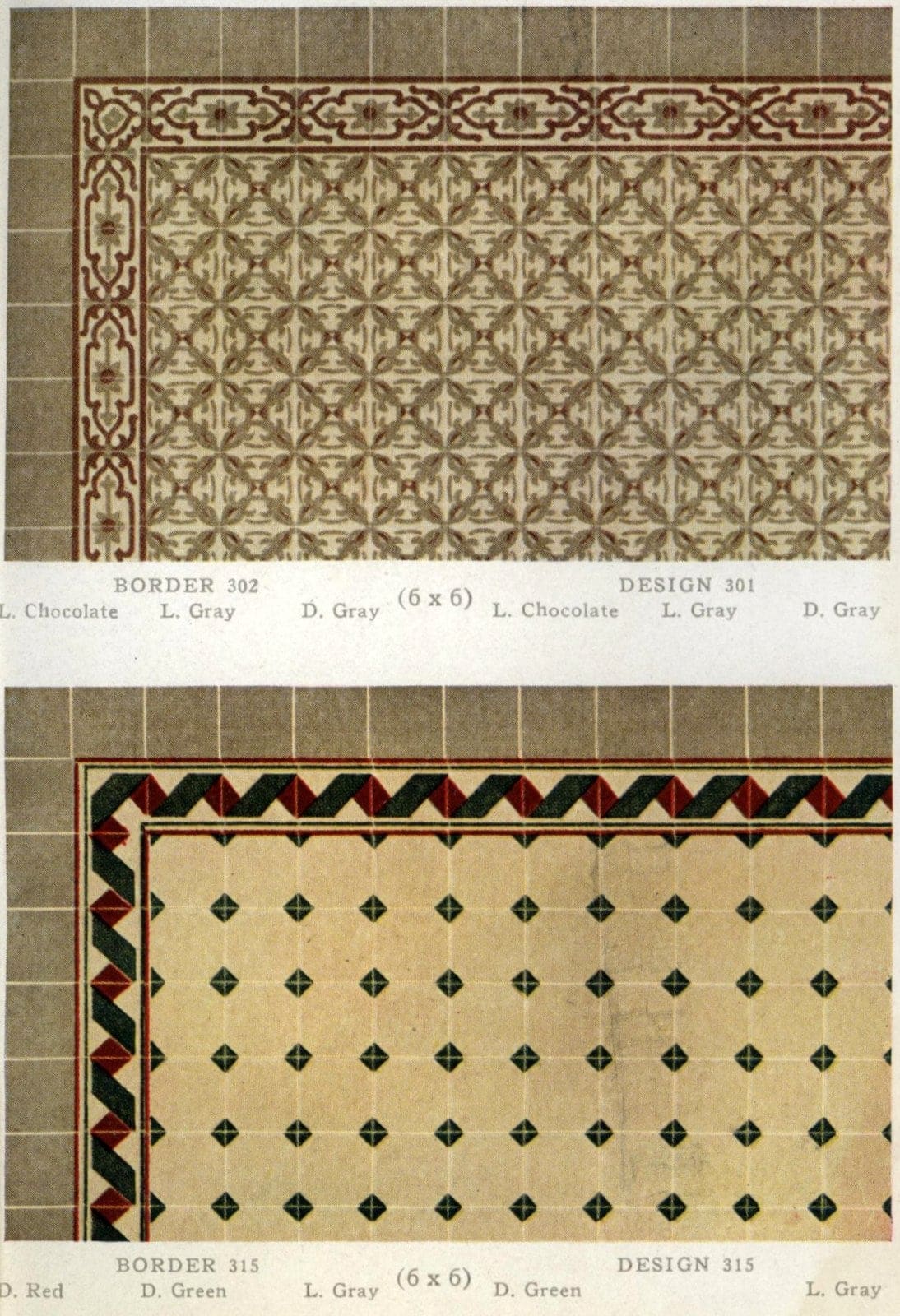
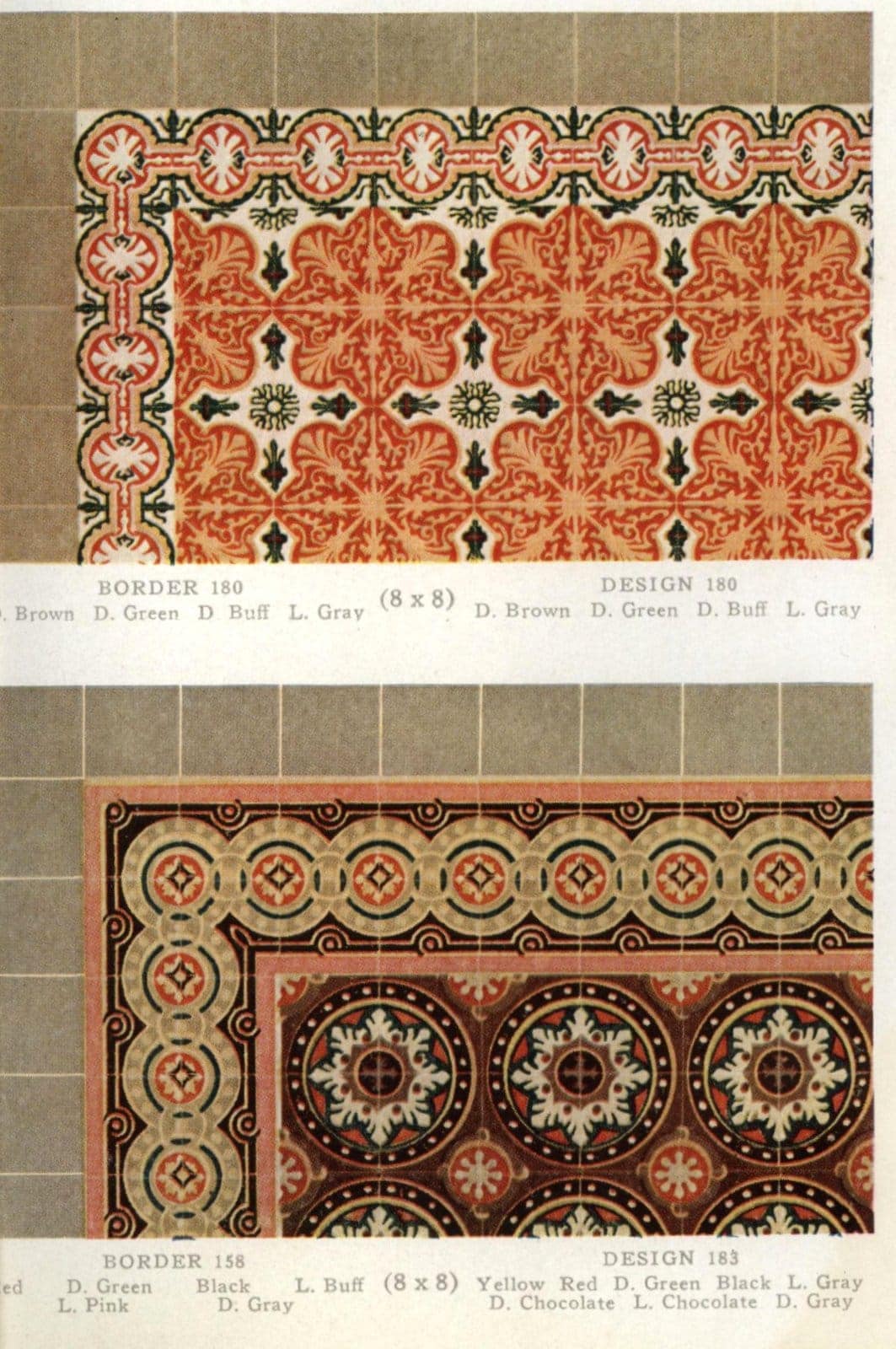
Antique tile patterns and edging/borders
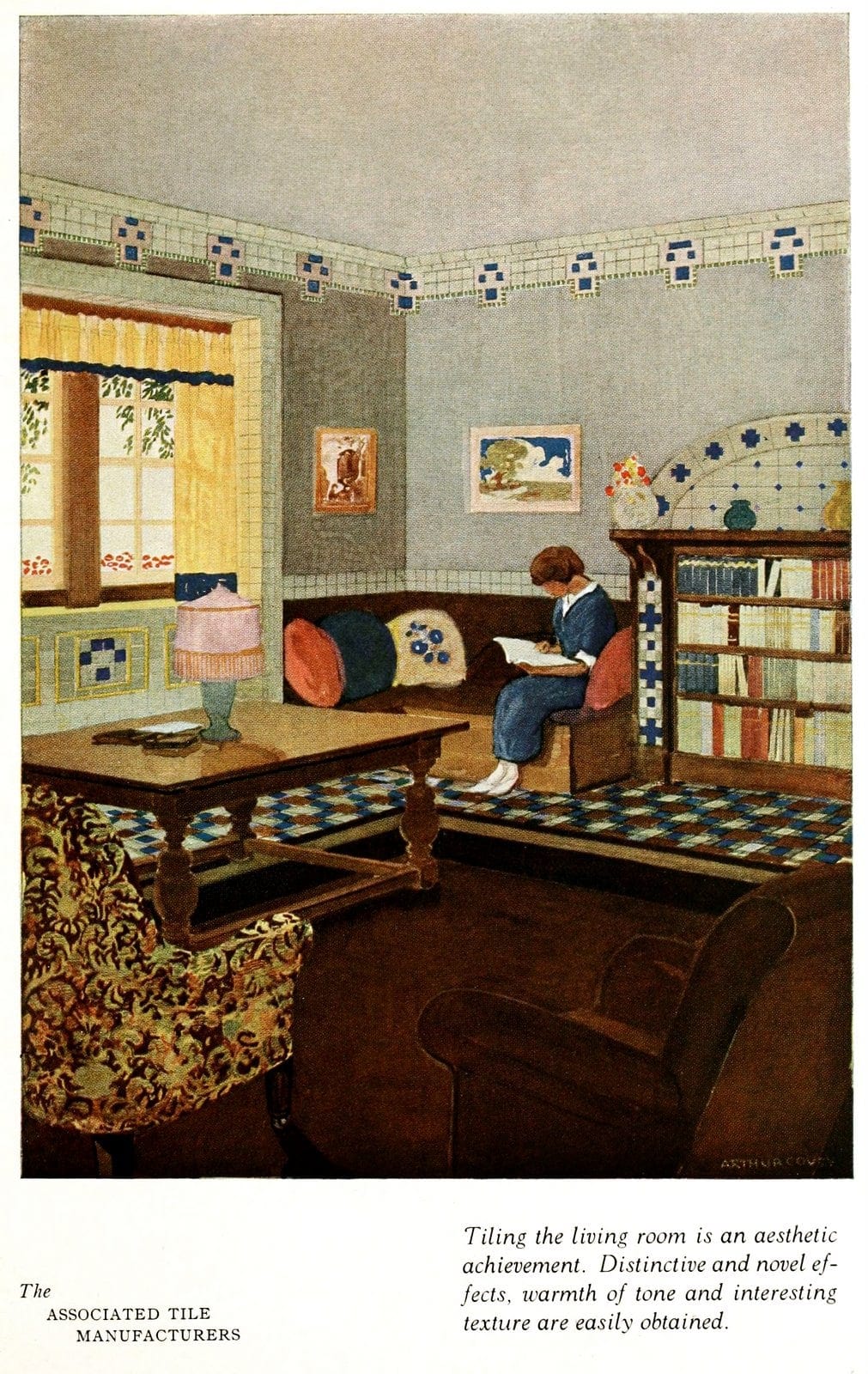

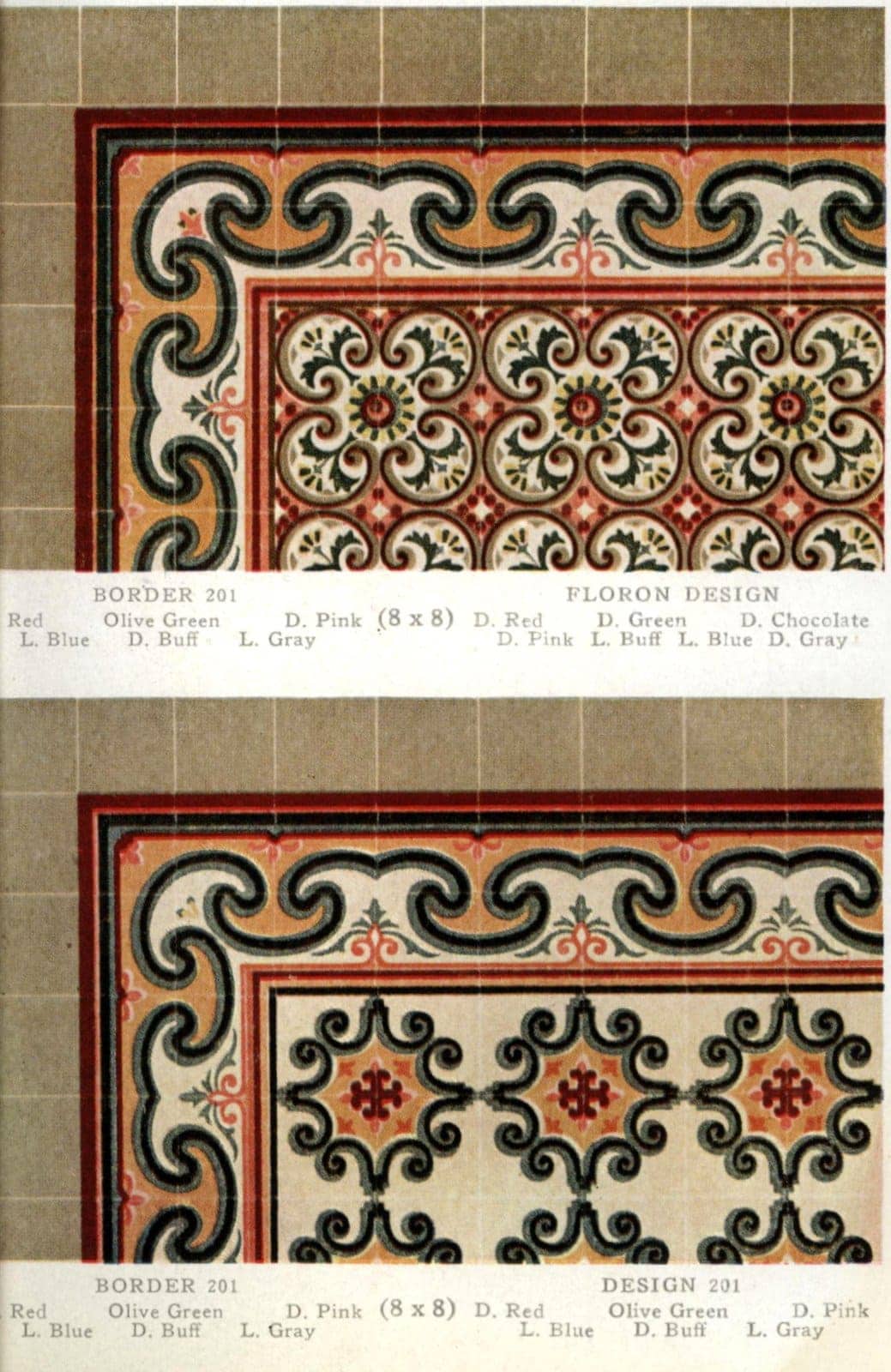
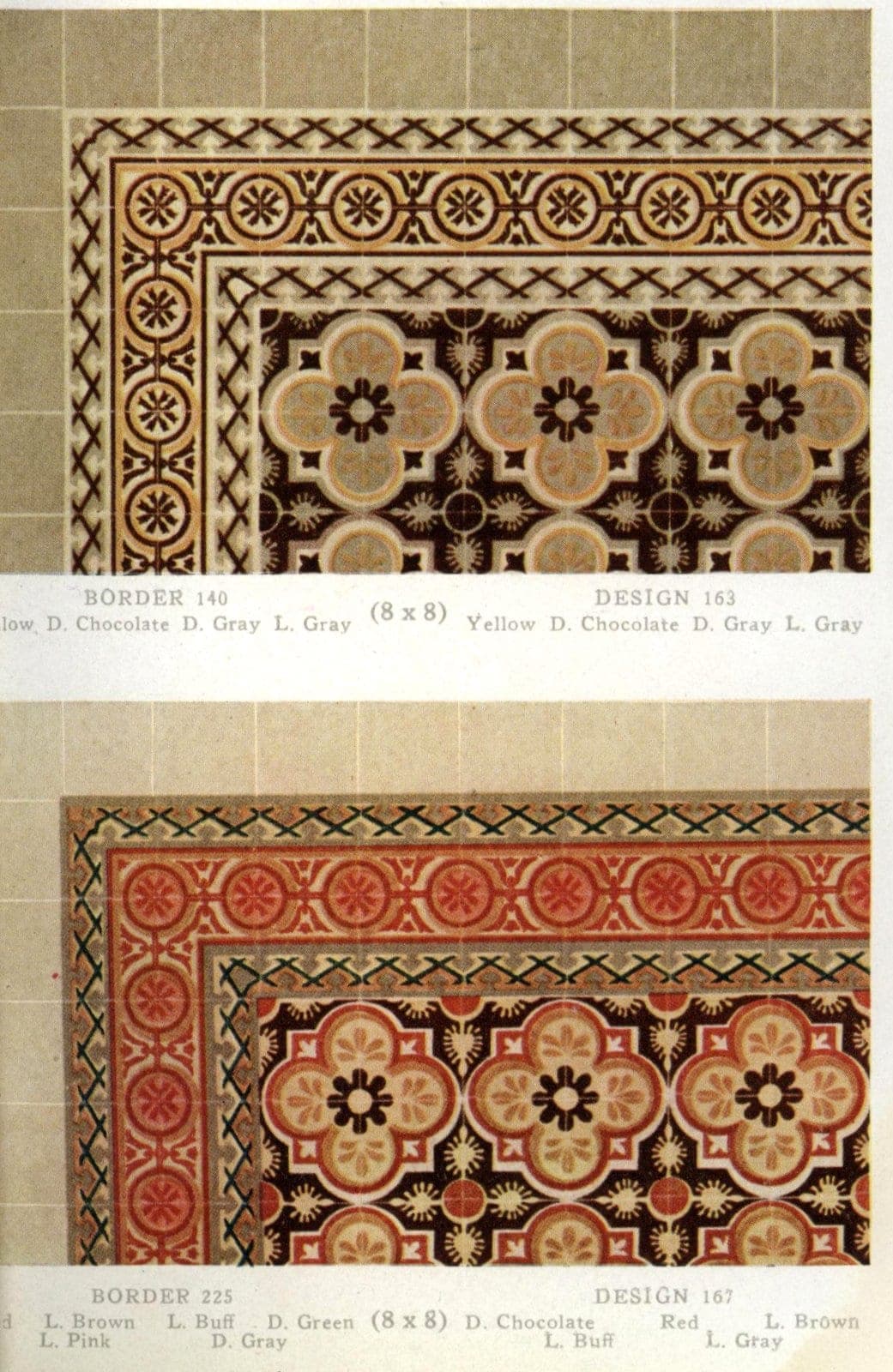
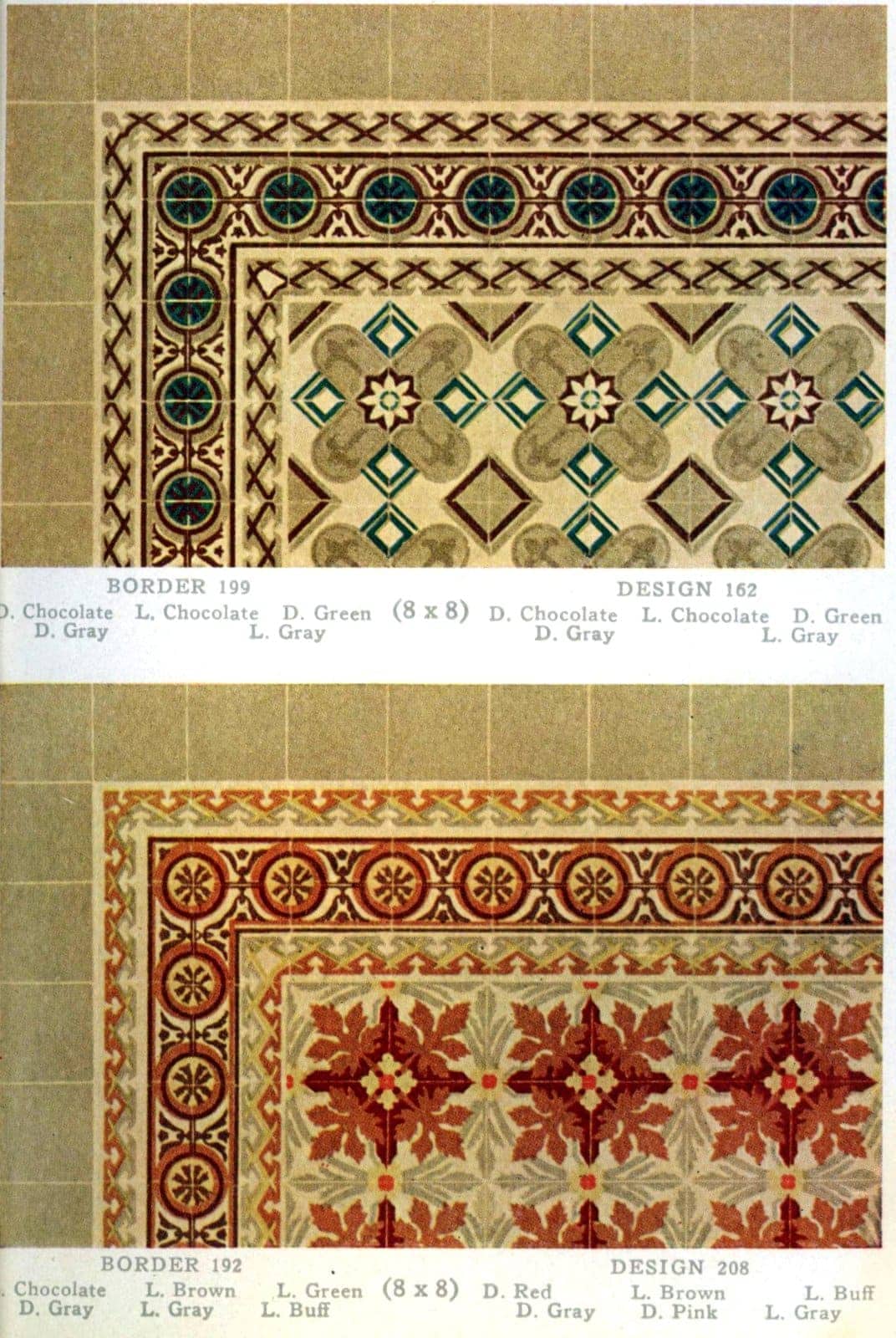
Antique tile with color contrasts from the ’20s
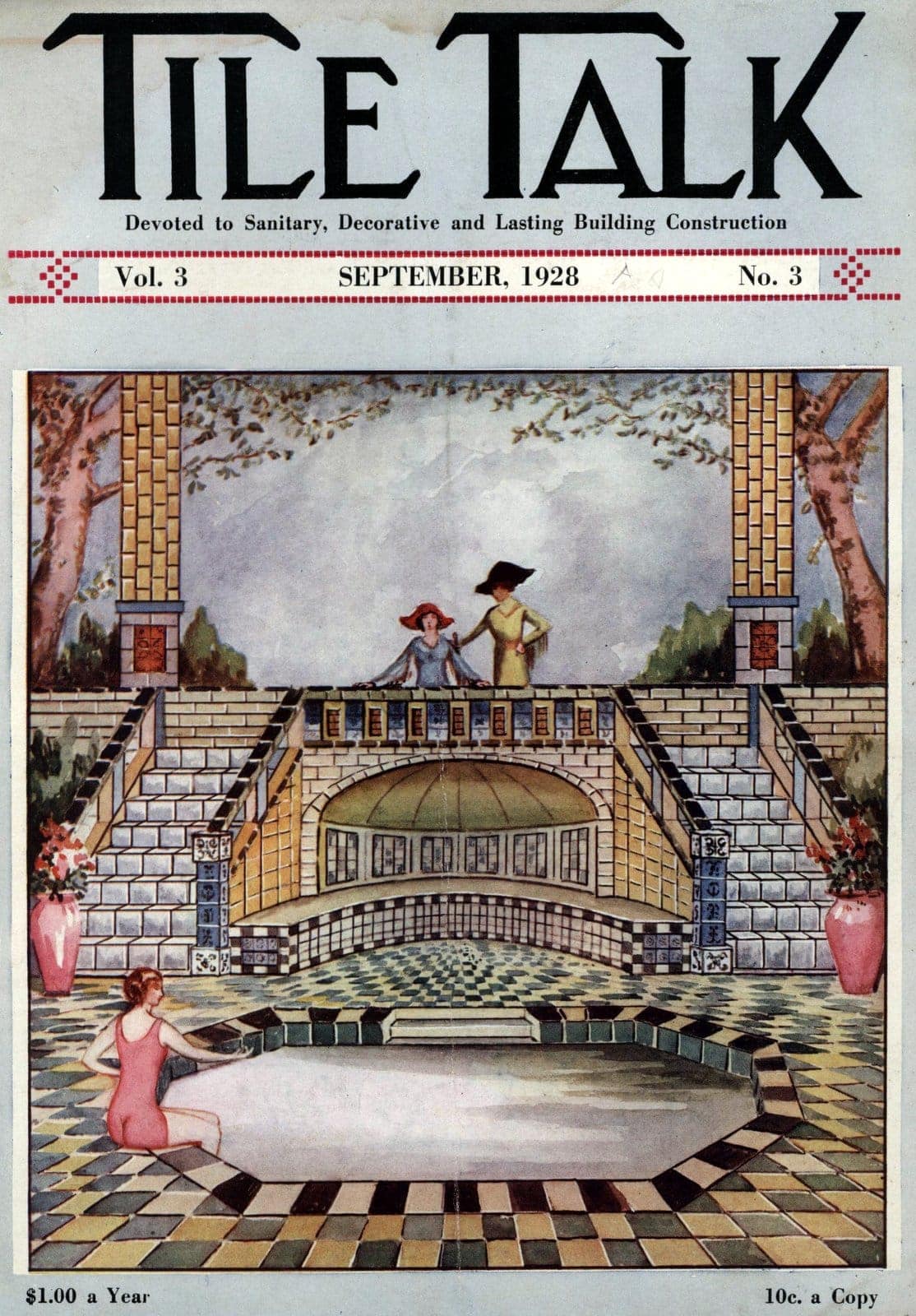


Authentic vintage home decoration with ’20s tile patterns

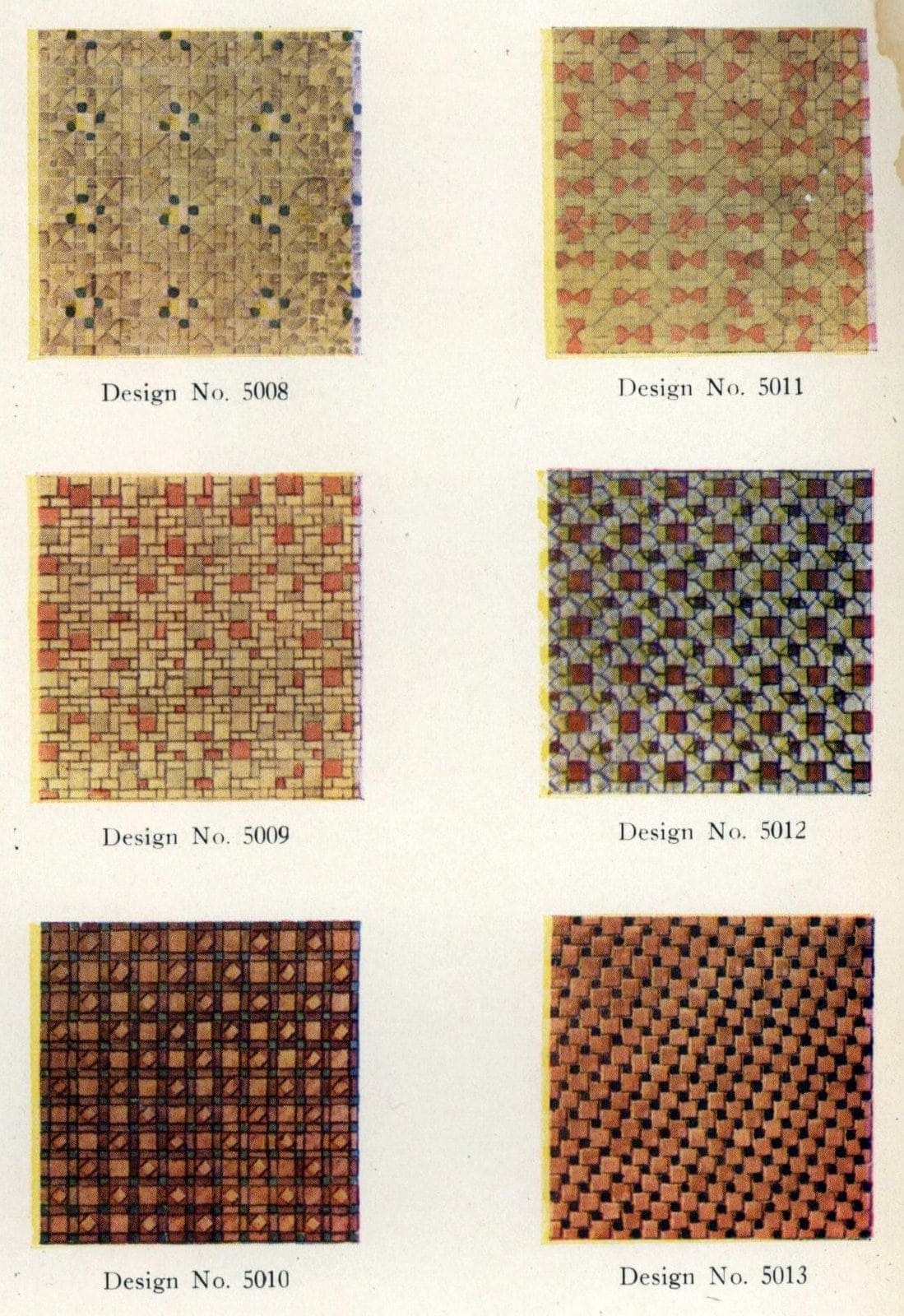
Vintage mosaic pattern tiles


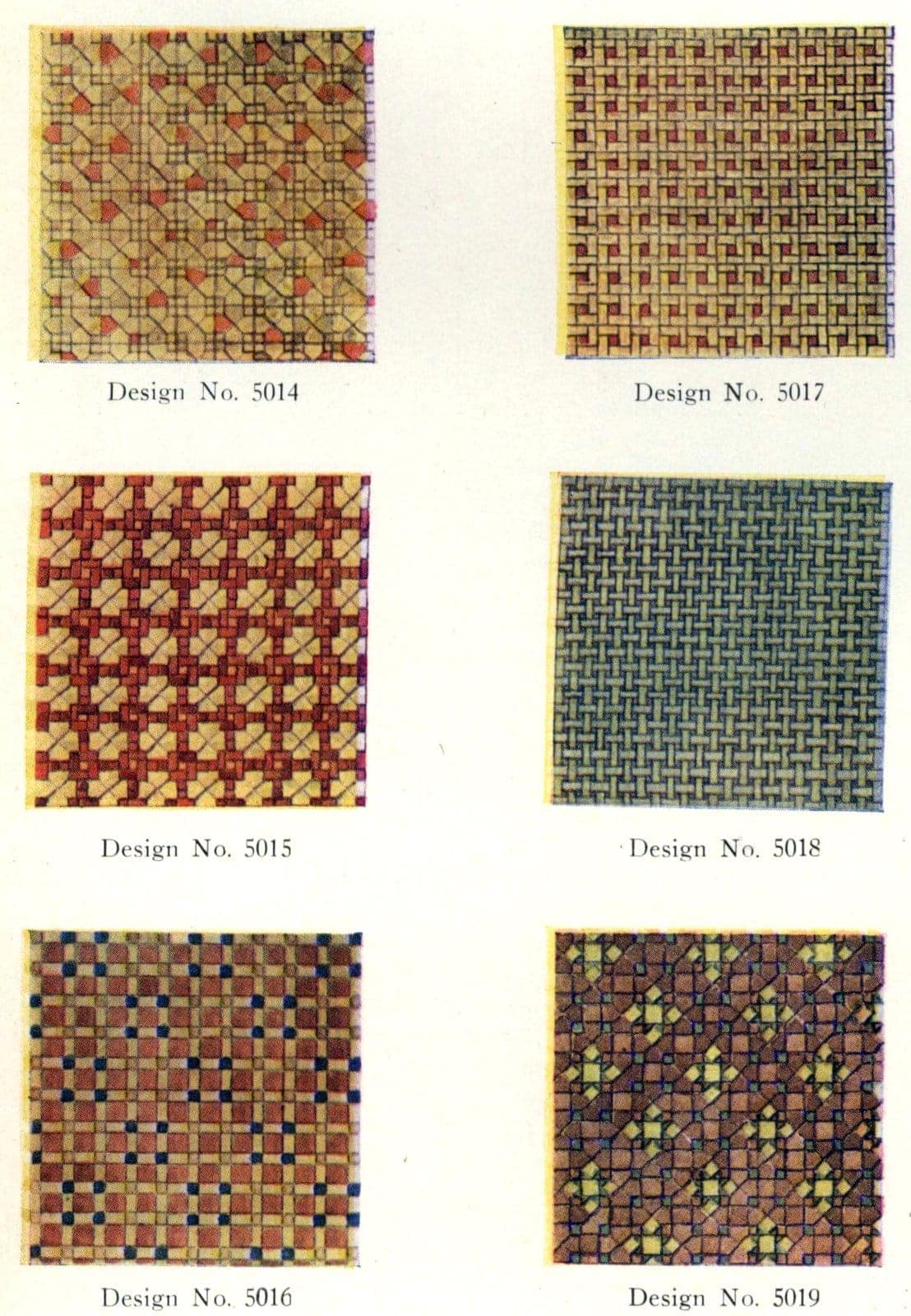


Antique wall and floor tiles
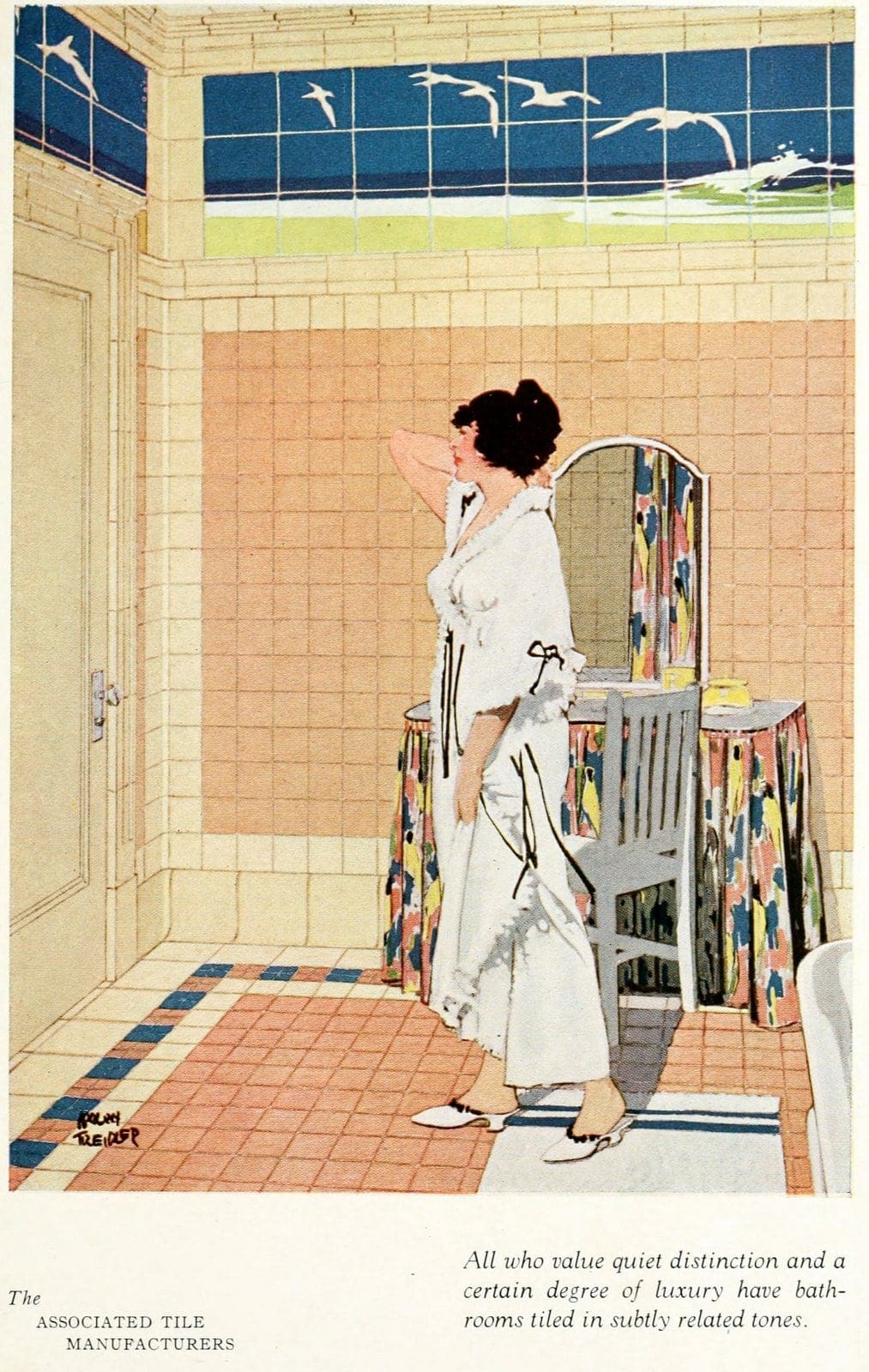

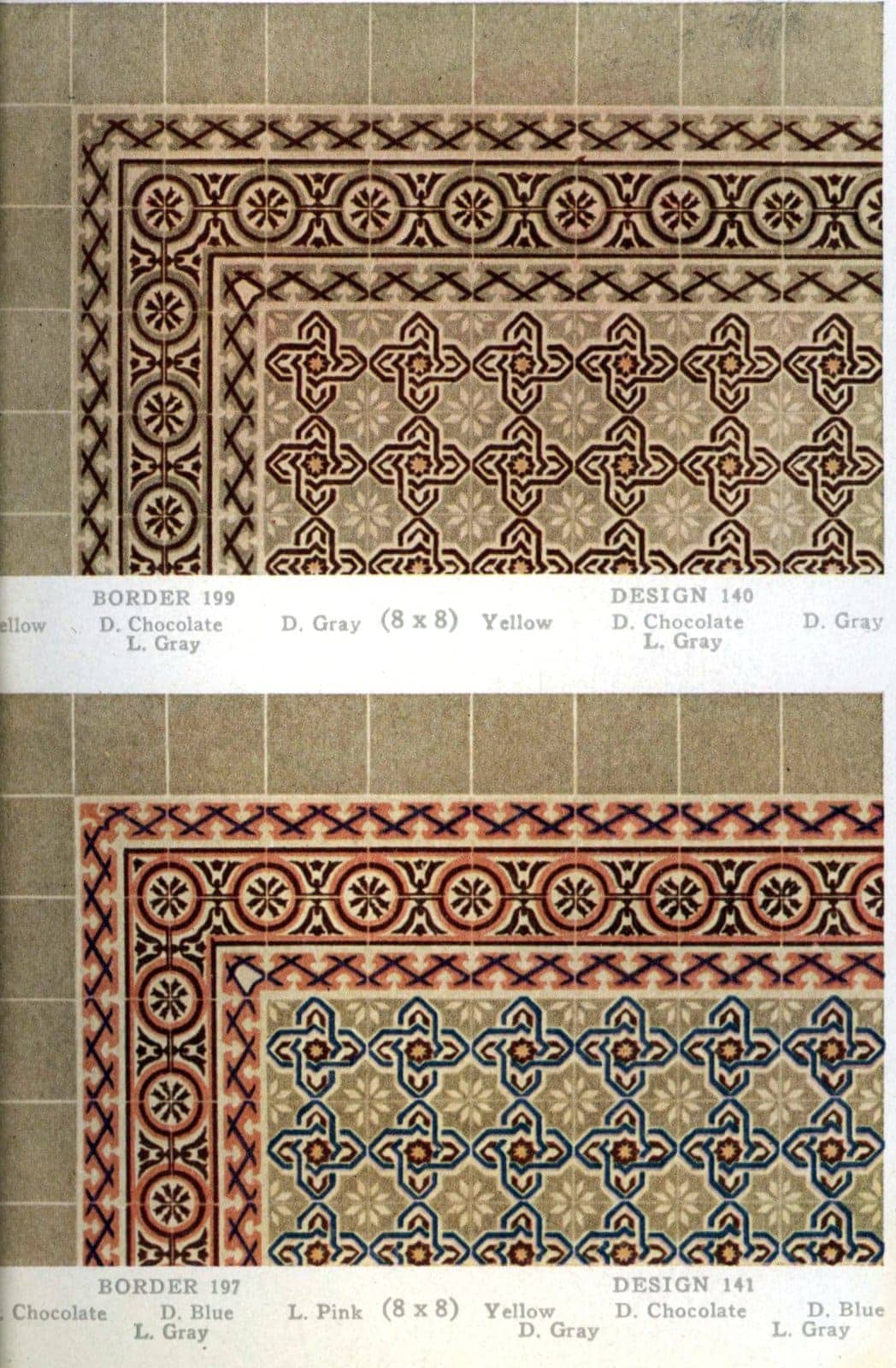
Classic 1920s tile designs for inside and outside the home
Classic black & white checkerboard tile floors and other kitchen tile ideas