

For much of the 19th century, coffee in America was sold green. Shoppers scooped raw beans from open barrels at the general store and roasted them at home in a skillet or over a wood stove. Burn even a few beans and the whole batch turned bitter.

That started to change in 1868, when brothers John and Charles Arbuckle patented a process for roasting coffee in bulk and coating it with a mix of egg and sugar to lock in freshness. Their Ariosa brand became the first coffee sold pre-roasted in sealed one-pound bags, and it caught on fast with cowboys and homesteaders far from a fresh supply. By the 1880s the company was roasting more than 800,000 pounds of coffee a day.
Even so, plenty of households kept roasting their own beans well into the 1900s, convinced fresh was worth the extra work. The 1903 piece reflects that thinking, recommending a frying pan set aside just for roasting so the coffee wouldn’t pick up other flavors. It also nods to European habits, describing how French cooks sometimes roasted with a little butter and sugar, and how the Turkish method called for pounding beans by hand and boiling the grounds three separate times.
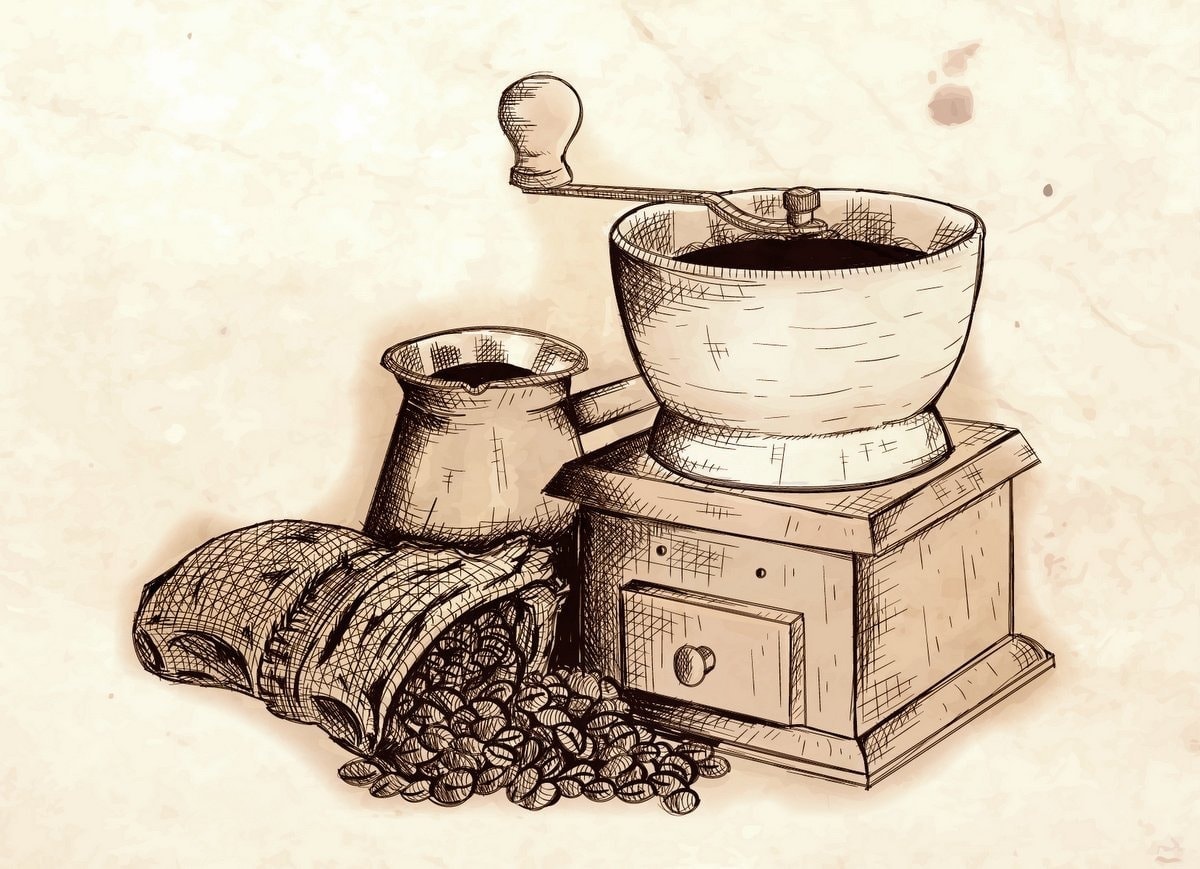
Once beans were ready, brewing them was its own project, and it kept evolving too. Percolators, patented since the 1860s, became a kitchen fixture through the early and mid 1900s before falling out of favor for producing a bitter, over-extracted cup. Automatic drip coffee makers took over by the 1970s and 80s, and instant coffee gave anyone in a hurry a shortcut that skipped roasting and brewing altogether.
Fresh beans meant something different in 1903, when roasting your own was often the only way to guarantee freshness. Today pre-roasted coffee is the standard, but raw green beans are still sold for anyone chasing that same freshness at home. For the most bespoke cup of coffee possible, home roasting remains the surest technique, letting you control everything from roast level to grind size yourself.

Fresh beans, whether bought already roasted or roasted at home, and the right quantity do most of the work before a drip machine, French press or pod system ever enters the picture.
The photos and vintage how-to article collected here trace some of that history, from early roasting equipment to the routines people relied on before automatic machines took over.

- 【Artisanal Bohemian Design】Each ceramic mug in this 6-piece set features a unique, hand-painted boho pattern, perfect for daily coffee, tea, and gifting
- 【Spacious 16 oz Capacity】With a generous 16 oz volume, it comfortably holds everything from lattes to iced drinks. The easy-grip handle offers secure, ergonomic comfort. (Dimensions: 4.5"H x 5.4"W...
- 【Built for Daily Use】Crafted from high-fired ceramic, these mugs are durable, microwave-safe, and dishwasher-safe for ultimate convenience

How to make coffee Continental style — a good, old-fashioned brew
From The Saint Paul Globe (St. Paul, Minn.) October 25, 1903
Considering that we nearly all drink it, why is it that we so seldom get a good cup of coffee?
This is not a national cooking offense, either — for with the exception perhaps of Egypt and Turkey, where great importance attaches to its excellence, bad coffee may be regarded as an international grievance.
There is one phase, however, which, judging from my own experience, is wholly American. I allude to the atrocity one too often meets within the average lunch cafe — the glutinous, evil-smelling fluid produced by the dilution of cheap coffee essences.
There are three salient points, the ignoring of any one of which will jeopardize an otherwise successful cup of coffee:
- The berries [coffee beans] should be freshly roasted and ground.
- The quantity should not be stinted.
- The inside of the coffee pot should be at least as clean as the outside; should never be allowed to stand with coffee in it longer than necessary, and should be well-wiped after washing.
Some connoisseurs buy their coffee and keep it for two years before using, as it greatly improves with time. This, however, is unnecessary if it be cured at a really reliable house.
ALSO SEE: What are the different types of coffee beans?

How to make coffee the old-fashioned way: Roast your own beans
A primary importance is attached by every good judge to fresh roasting, and this is really quite a simple matter to accomplish.
Few people in this country own coffee roasters heated by charcoal, such as are universally in use on the Continent.
 An efficient substitute is a frying pan no longer in its first youth, placed over a clear fire. Let the pan be kept for the purpose and untainted by alien influences, for always remember that the coffee berry is very prone to incorporate other flavors with its own.
Many people in France add a little butter and sugar when roasting their coffee, judging that the thin coating confines the subtle aroma of the berry.
If it is found inconvenient to roast coffee every day, then it should be kept tightly shut down, and when ground, place in the oven for a minute or two before making.
Many people like the Turkish method. In this, the berries are pounded in a mortar. When pounded, the coffee is placed in a special Turkish cafetiere, sold for the purpose, with as much sugar as taste may direct, and water is added until the receptacle is three parts full.
The lamp is then lighted, and when the liquid boils and rises, the lamp is withdrawn, and the process repeated — three times in all.
ALSO SEE: After vintage automatic coffeemakers like these were invented, mornings were never the same








One Response
I truly enjoy looking through on this website , it has superb content . “The great secret of power is never to will to do more than you can accomplish.” by Henrik Ibsen.