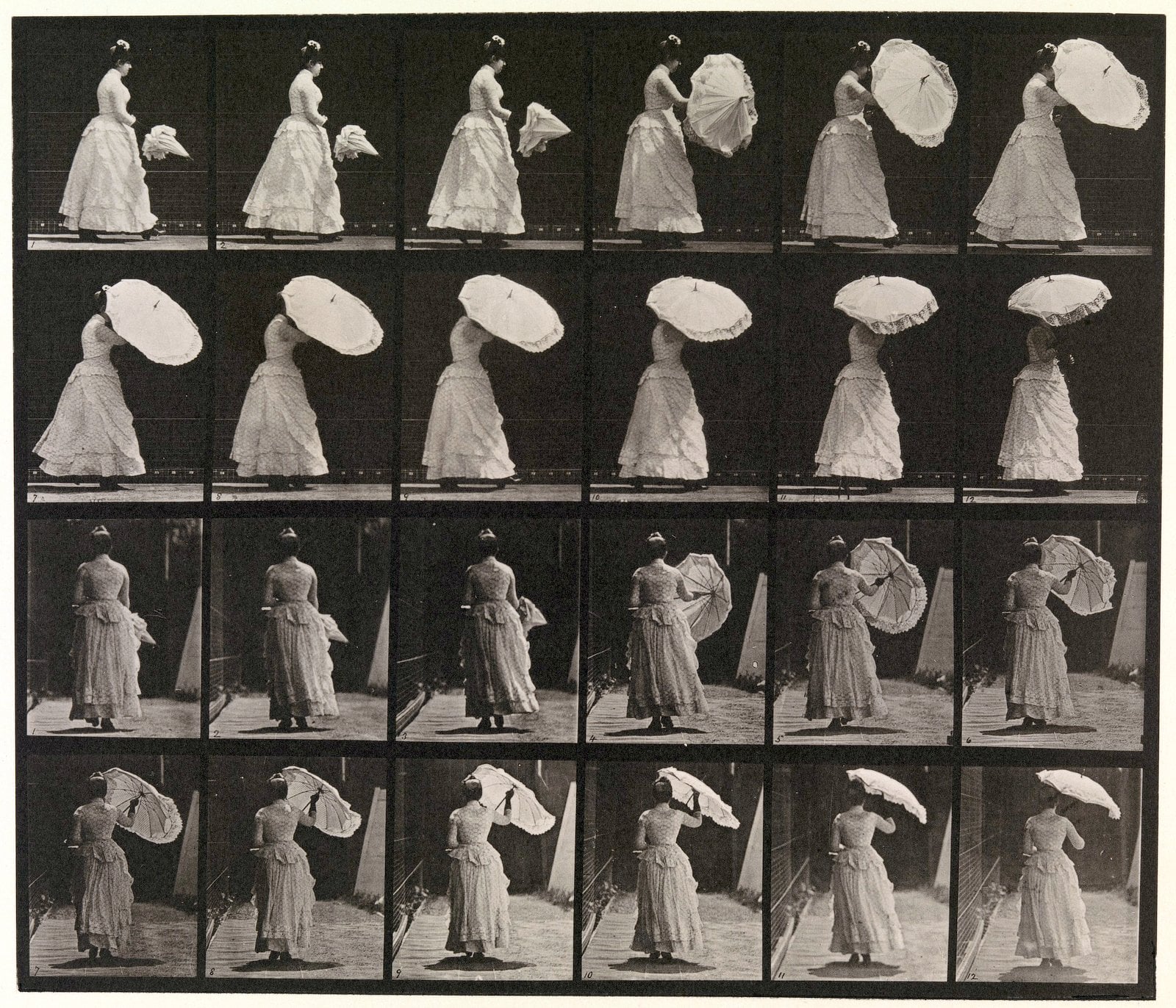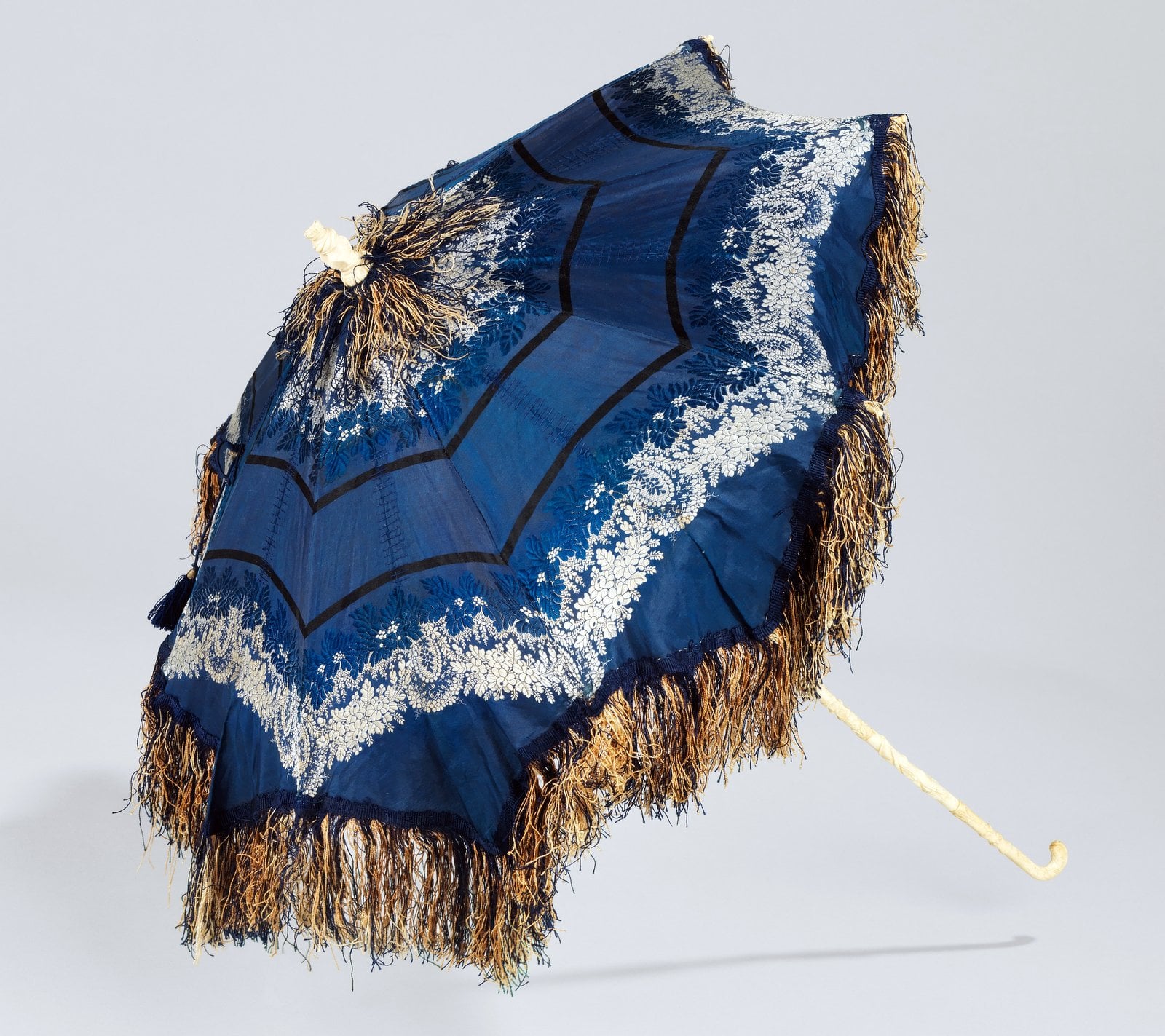
By the time the 1890s rolled around, parasol culture in America had reached a kind of peak, with factory workers sketching original designs on their own time and department stores installing mirrors so shoppers could audition sunshades the way they tried on hats.
The parasol’s roots go back to ancient Egypt, China and Greece, where canopied shades were carried by servants over royalty and high priests — less a fashion item than a symbol of divine or earthly power. As trade routes expanded and the accessory traveled west, it gradually democratized, eventually becoming a staple of European court dress and, by the 18th and 19th centuries, a fixture of middle- and upper-class women’s daily life across America and Britain. The logic behind it was both practical and social: pale skin indicated you spent your days indoors, away from field labor, and a parasol helped you keep it that way.
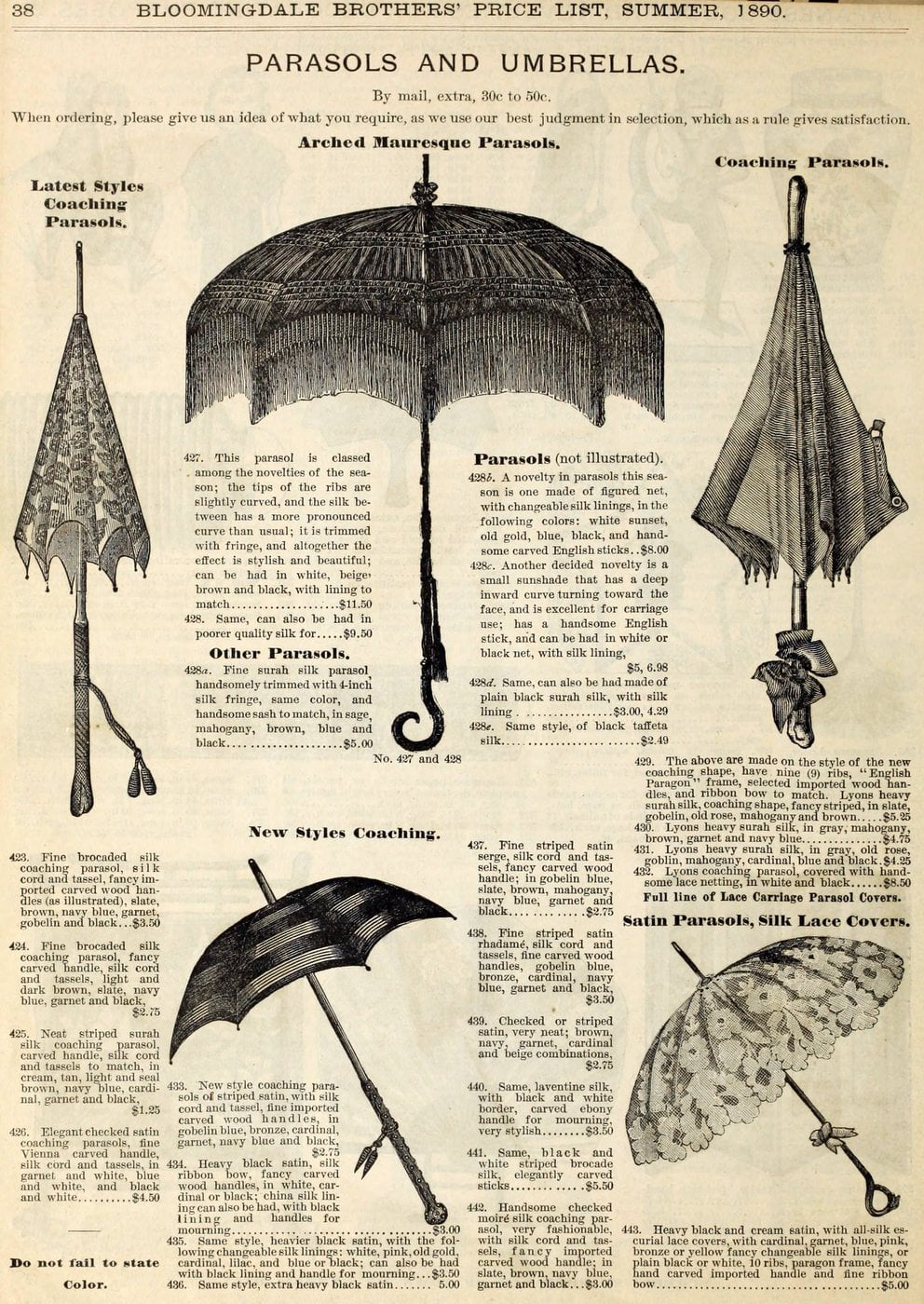
That association between sun avoidance and respectability gave the parasol unusual cultural staying power. It wasn’t just something you carried — it was something you were seen carrying, which meant the design mattered enormously.
Silhouettes, handle lengths, fabric choices and trim all shifted season to season, tracked by fashion reporters the way hemlines and denim silhouettes are followed today. Manufacturers imported sample styles from Paris and Vienna each year, but the most sought-after designs were American originals, often produced by skilled craftswomen who competed internally for the privilege of having their concepts chosen.
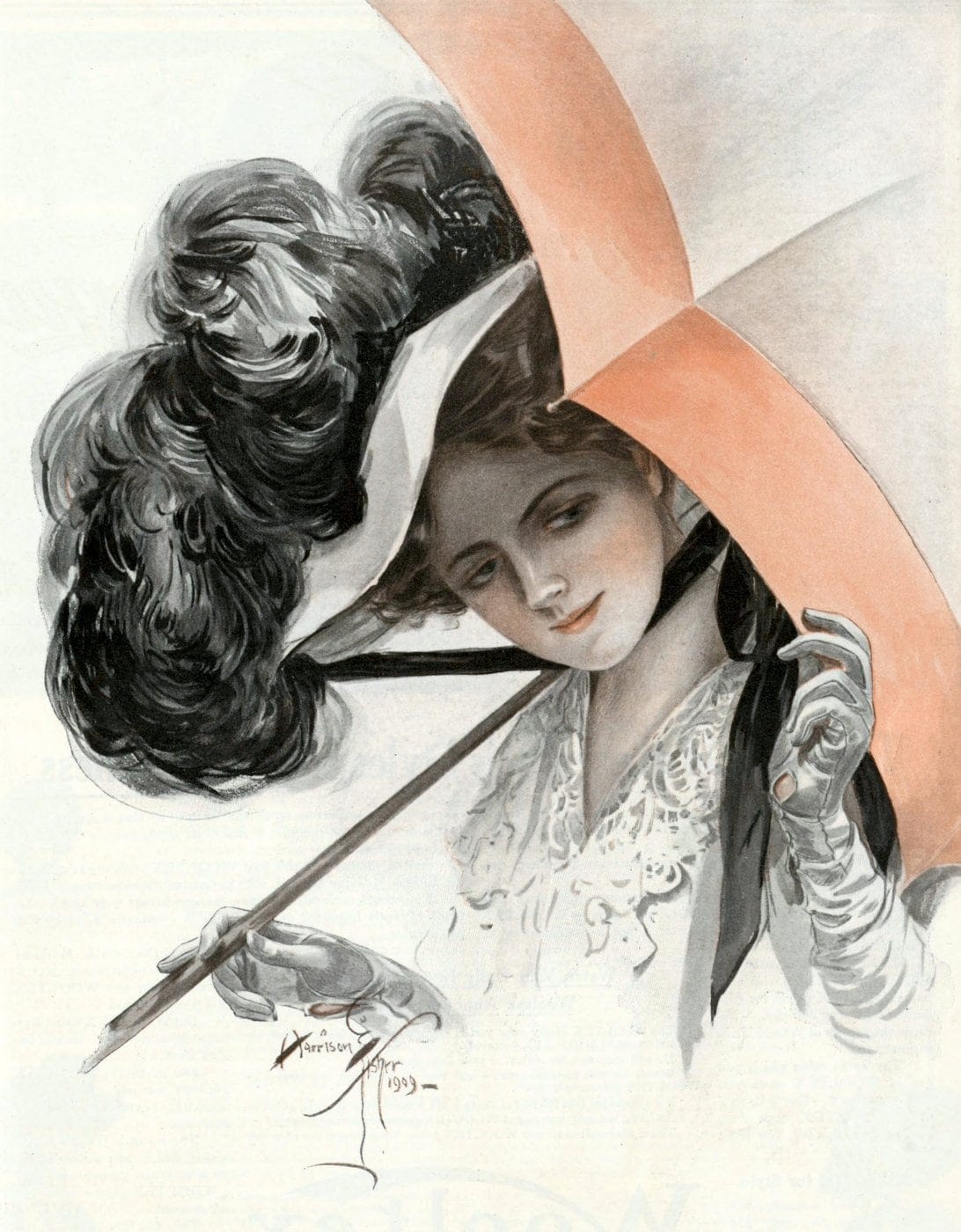
What’s striking in retrospect is how quickly it all ended. In the 1920s, Coco Chanel famously returned from a Mediterranean trip with a tan, and the cultural calculus reversed almost overnight. Sun-kissed skin became the new marker of leisure and health, the parasol lost its social function and within a generation it had gone from indispensable to obsolete. The automobile played a role too — women simply spent less time outdoors on foot, which had been the whole context in which a parasol made sense.

Below, we’ve pulled together original newspaper features from 1898 and 1903, along with vintage photos and catalog images from the Victorian and Edwardian eras (and beyond), all of which capture the parasol at its American peak — when the designs were getting more inventive and the craft behind them was genuinely taken seriously. Take a look below.
Vintage parasols: The fashionable accessories (1898)
Dreams of beauty in lace, chiffon, fishnet, satin ribbon, and of every hue
From the New York Sun – Kansas City Journal (Kansas City, Mo.) March 13, 1898
Women don’t miss it far when they say that this season’s parasols are dreams of beauty. Many of them are so thin and fluffy and cobweb-like that they almost look as if they might vanish with handling. The parasol is one of the so-called summer girl’s most effective weapons of attack and defense. It is a pretty background to her pretty face, and from beneath it she can hide or show her feelings at will.
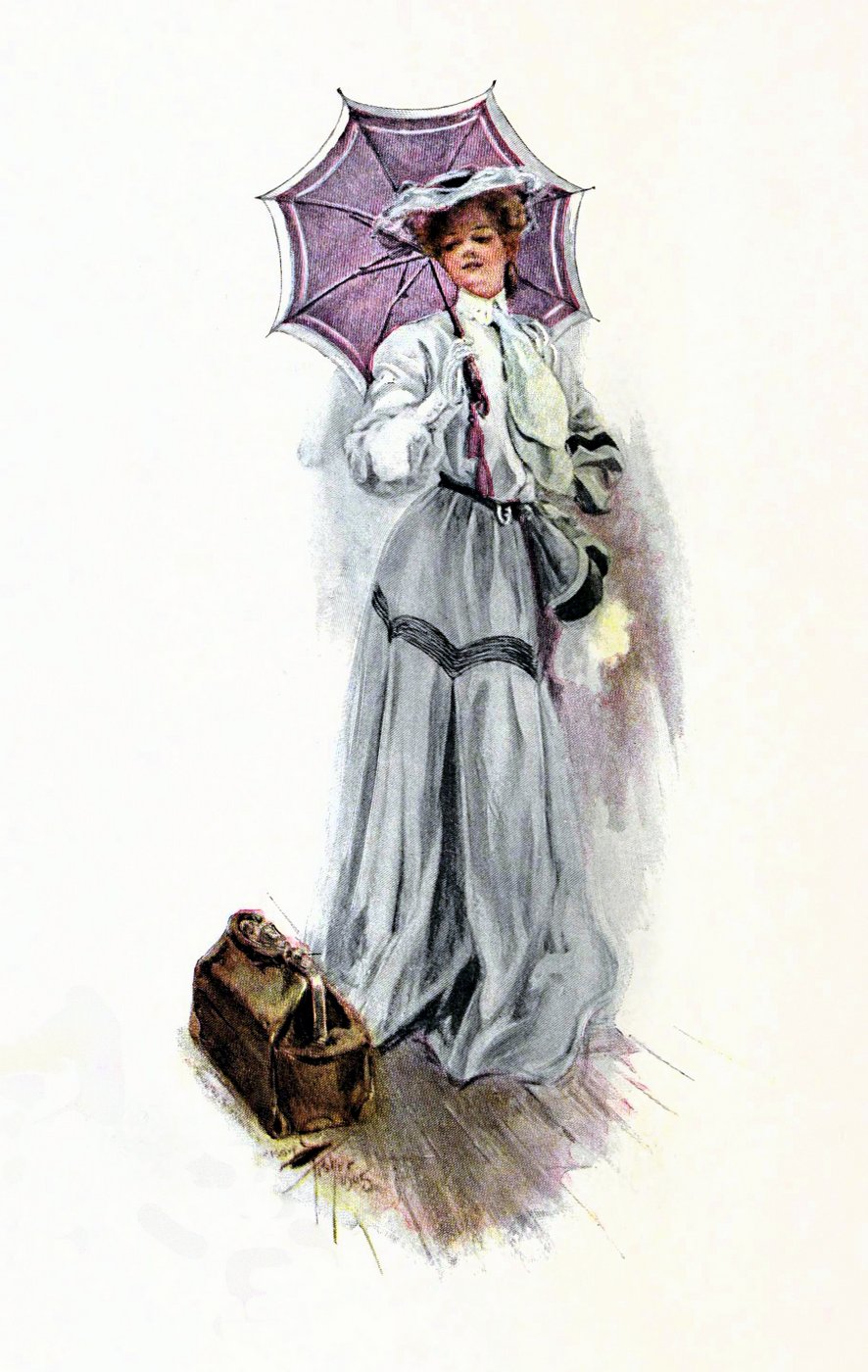
It may seem queer to the men folks, but the last thing a woman considers in selecting one parasol or a whole outlay is whether they will protect her from sun and rain.
The first thing she lends an eye to is becomingness, and it is a positive fact that in every parasol department there are large mirrors, before which the women try their sunshades just as religiously and reverently as they do their hats.
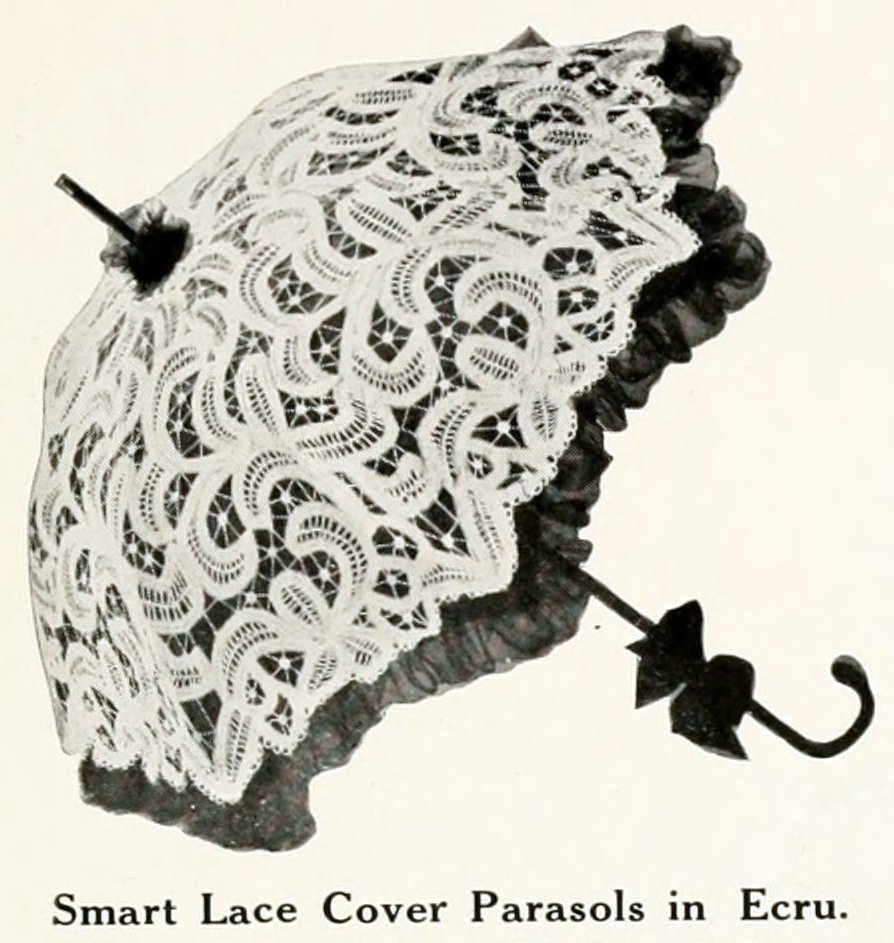
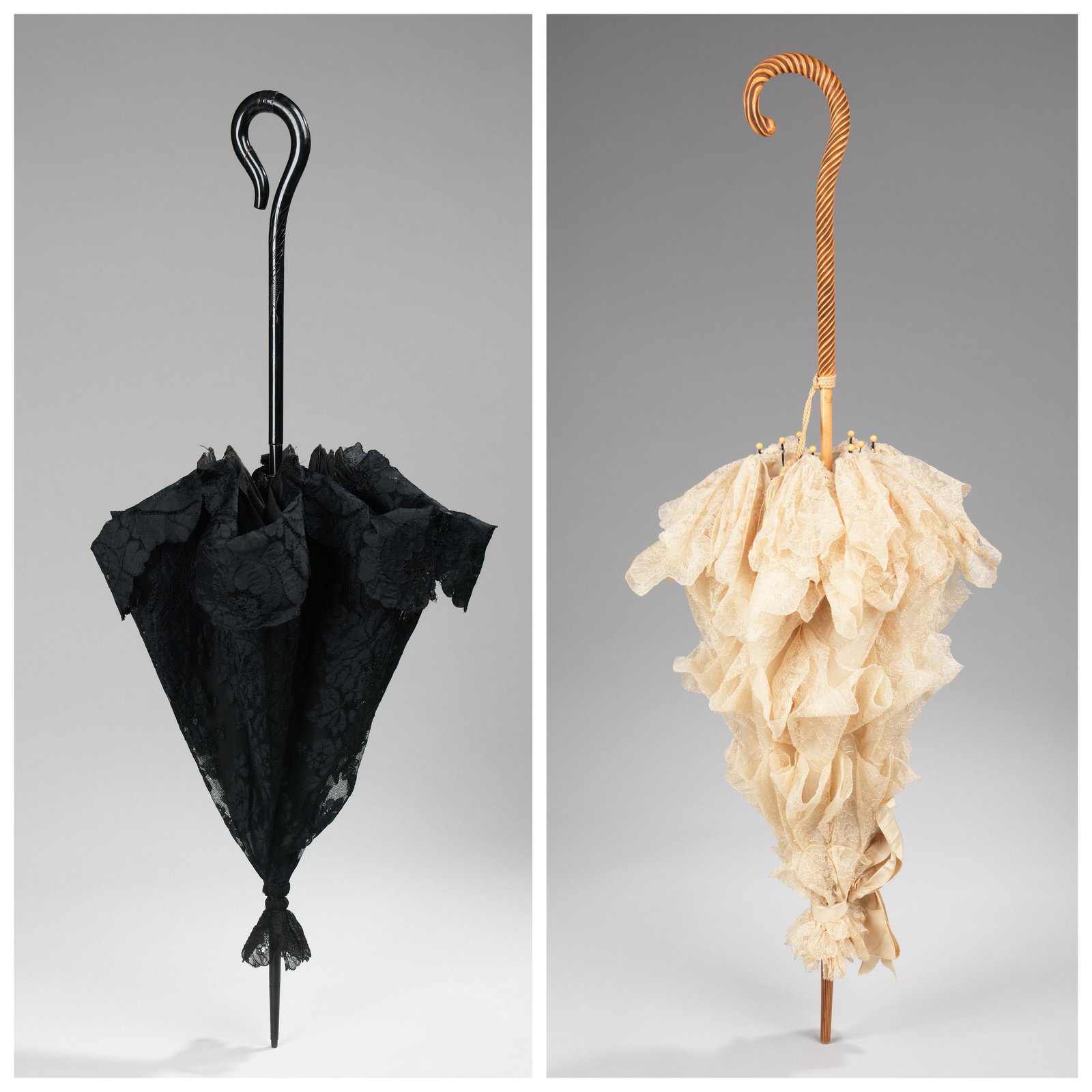
The swellest parasols for afternoon wear are made of white. Some of the handsomest have duchesse lace covers in new designs with panels, set on over a black chiffon foundation with black insertion let in. The combination is striking.
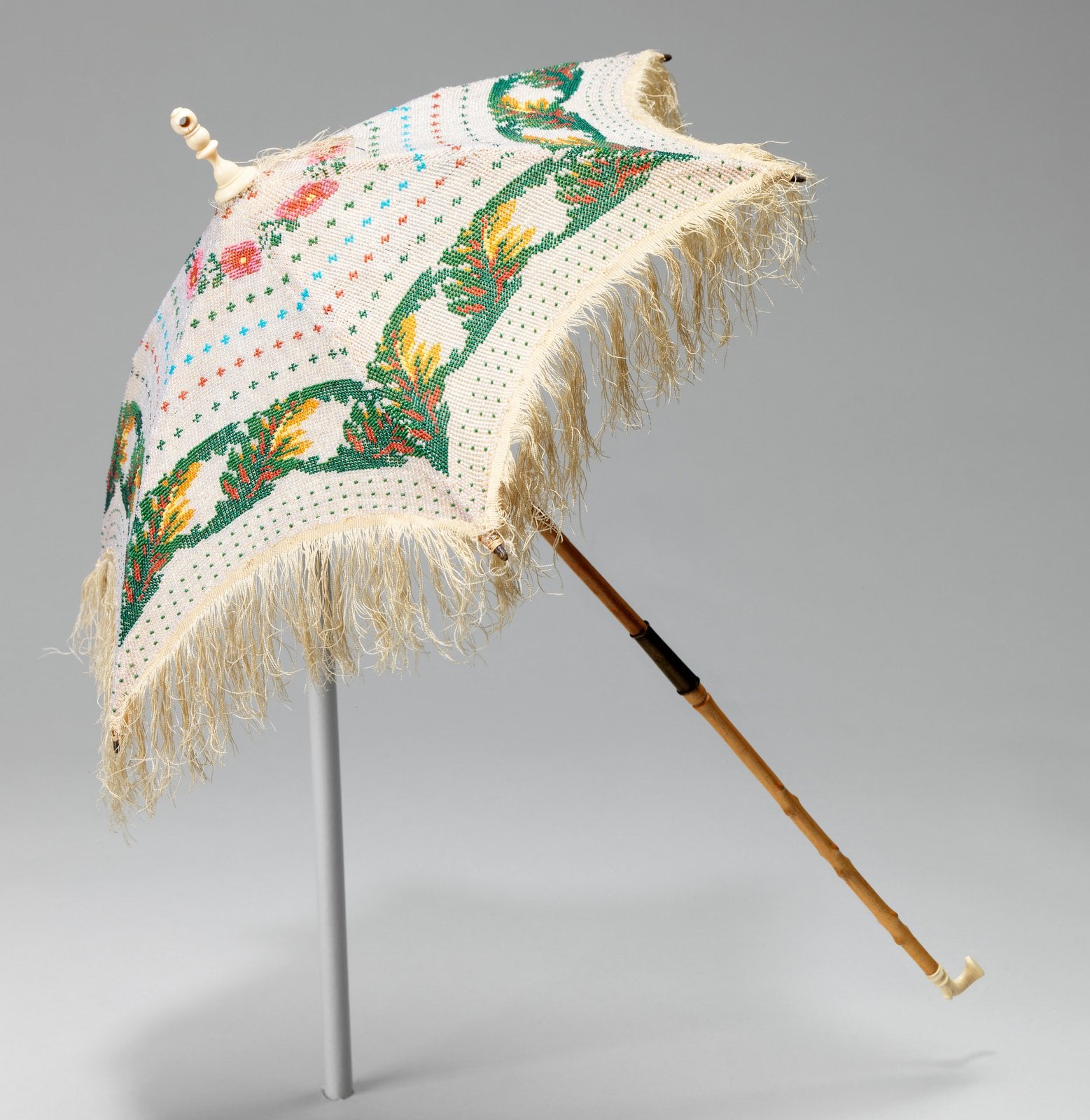
Even more dressy but less expensive parasols are made of white or cream silk fishnet with flounces of the same edged with narrow satin ribbon. Another pretty design is made of white chiffon fulled on and trimmed with fluffy ruffles of the same material edged with very narrow black velvet ribbon. White and black is the favorite combination for dress parasols.
A new design is a parasol made of heavy satin and entirely covered with full frills of narrow satin ribbon. These are particularly effective in cerise, turquoise blue and white, and will be much used with tailor-made suits of pique and duck.
The handles of all parasols are much handsomer and longer than ever before.
MORE: Old-fashioned haircare tips for more beautiful hair, the way they did it 100 years ago
Stylish antique umbrellas: Who created such unique parasols? (1903)
The New York Sun, in the Nashville Banner (Tennessee) March 7, 1903
The woman who is able to estimate accurately the cost of parasols to be made to order is an invaluable assistant to the parasol manufacturer in these days, because the craze for exclusively designed parasols keeps the makers busy, and it requires a good deal of technical knowledge to tell beforehand what the cost will be.
Some women want parasols made up according to their own ideas. Others simply want something that will not be duplicated. The makers try to cater to this demand.
Of twenty-five or thirty parasols made by one manufacturer for south-going tourists lately, no two were alike. In some feature of material or ornament they differed, however similar in shape or dimensions.
The head designer and forewoman in the parasol factory acquired her knowledge by steady application and long apprenticeship. Although an artist in a way, adapting many of her prettiest conceits from nature, she studied at no school of either industrial or abstract art. The expert maker of fine parasols is paid better than any other factory worker in the city.
The woman supervisor of the sixty girls employed in a fine parasol factory has an important, well-paying place. She has bolts of costly chiffon, silk, satin, and tissue nut in her care each morning to be cut and apportioned out to the various workers; blocks of fairy ribbons and whole pieces of fine embroidery and costly lace objects for applique work; also rich velvet chenille and other materials to choose from so that no designer may be hampered in her work for lack of variety of fabrics.

As with the millinery trade, a few pattern parasols are imported from Paris and Vienna by the manufacturers every season for duplication; but the most exclusive and admired specialties are designed by home talent.
A parasol in admirable suggestion of the burr artichoke in flower is a recent creation. The lower part of the panels is of a dull, lusterless green, shaggy stuff arranged in pointed layers, and the upper half of the pinkish purple tint of the artichoke blossom. The edges terminate in double-fringed borders of the same pinkish hue. The handle is of dull green stained wood delicately carved.
Another quaint design has the lining of as many pendulous strata as the layers of an onion, soft and silky, the outside being severely plain. Parasols of very pliable undressed leather of the sort used fur tapestry work are novelties. They are made in shades of leaf green, fawn and mushroom.
MORE: Classic corsets: How women wore them in the Victorian era, plus see 200 examples

An uncommonly beautiful sample parasol is designed on the style and coloring of an orchid. One for use with an outing costume has the spotted, thick-textured lining and smooth outside covering of a tan toadstool. The handle is of translucent pearl decorated with inlaid work.
The parasol-makers are encouraged to exert all the ingenuity and deftness they can summon in originating novel combinations of texture or new devices of trimming.
Many parasols are hand-painted at the instigation of designers ignorant of technicalities of artists’ work, but with very clearly defined ideas of the effect they wish simulated.
There is scarcely a fabric or trimming material used for gowns and wraps or hats at the present time that is not utilized in parasol making. Parasols of fine, thin mull or net are tucked, corded, ruched and lace inserted just as crepe and chiffon gowns are decorated.
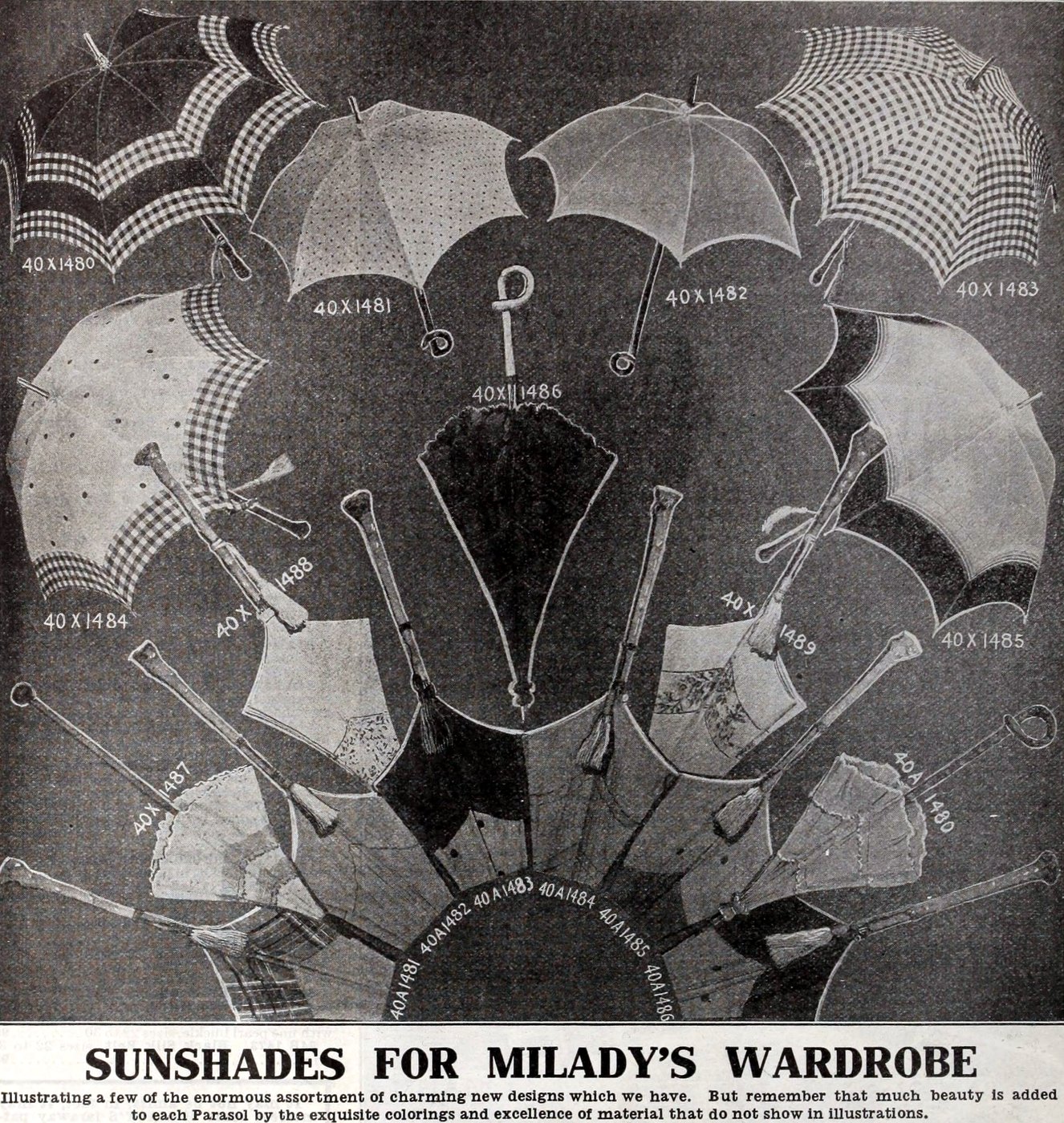
Expensive thread-lace parasols are among the much-prized possessions of luxurious women. Even velvet and heavy textured fabrics of wintry import are used for embossing, and in the applique work about edges and in the centres of panels where richness of color is wanted.
The parasol maker does her most interesting work for weddings. When the bride and her maids are all to carry parasols, samples of the materials chosen are riven to the forewoman, and she notifies her best workers that a prize will be awarded for the cleverest design submitted.
The girls plan out their designs at home in the evenings. The best designs are submitted to the customer ordering the parasols, and the originator of the chosen design gets applause and praise for her work. Some very beautiful parasols in white and cream are made to order for baby carriages. Others of unique make are worked out for use in the ballets and scenic effects in spectacular operas.