How 1960s short hairstyles went from bouffant curls to geometric precision
The shift had a few different starting points, but London was at the center of most of them. Vidal Sassoon, working out of his Bond Street salon, had been developing geometric cuts since the early 1960s, inspired in part by Bauhaus architecture. His collaboration with designer Mary Quant — whose miniskirts were redefining women’s fashion at the same moment — produced what the British press quickly called “the Sassoon bob.”

Short-cropped in the back, longer at the sides, with hair falling forward at the cheeks, it was built for movement. By 1964, the style had appeared in both British Vogue and French Elle. Quant herself later said that Sassoon “freed us as much as the Pill and mini-skirts.”
What made Sassoon’s cuts genuinely new was the philosophy behind them. He wanted to “eliminate the superfluous and get down to the basic angles of cut and shape,” as he put it. The result was wash-and-wear hair at a time when women were returning to work in large numbers and had neither the time nor the patience for lengthy salon appointments.


His five-point cut — an asymmetrical bowl cut with sharp geometric angles, worn most famously by model Peggy Moffitt — became one of the decade’s defining looks. His most publicized moment came in 1967, when he cut Mia Farrow’s hair on the set of Rosemary’s Baby in front of 40 fashion editors, 110 photographers and five television crews. The short, almost boyish result landed on front pages everywhere.
While Sassoon’s geometric precision was shaping one wing of the short-hair movement, American women were still working out what to do with the bouffant. The teased, voluminous silhouette that had defined the early 1960s didn’t disappear overnight.
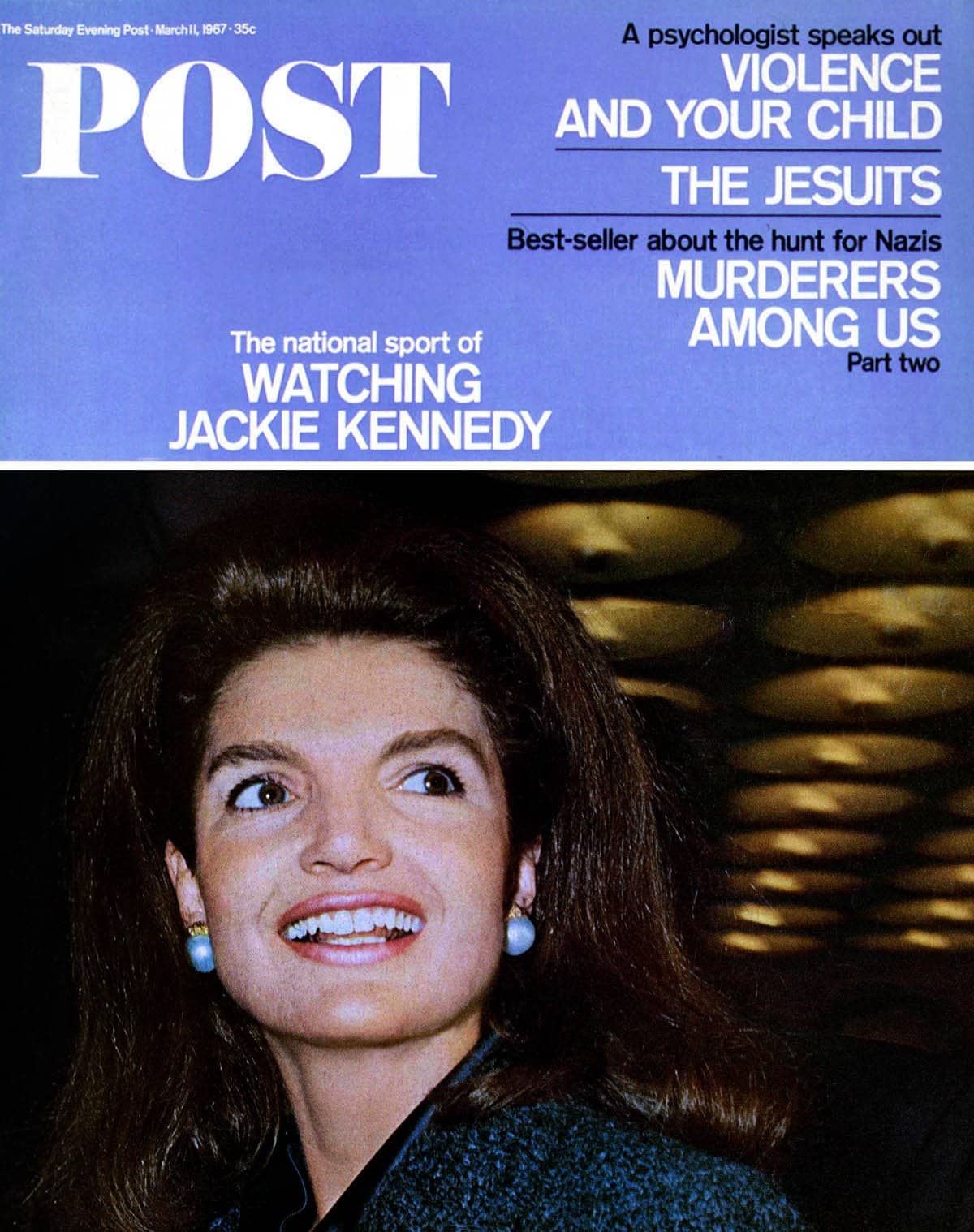
Jackie Kennedy wore a refined version of it throughout much of the decade, and hairstylists at mainstream women’s magazines — like the famous Kenneth, who did Kennedy’s hair and worked with Woman’s Day and other publications — were producing softer short styles that split the difference between the old glamour and the new informality. Sidesweeps, cloche shapes and loose bouffants with tight-set curls all remained popular well into the late 1960s, particularly outside major fashion centers.
By the middle of the decade, the mod movement had brought another short-hair option into the picture. Twiggy, the British model who became a sensation in the US after her 1967 American tour, wore a cropped pixie cut with an androgynous quality that contrasted sharply with the softer, feminized short styles. Her look — ultra-short, straight, with heavily lined eyes — made the pixie feel like a statement rather than just a convenient cut. The “Moppet,” a sleekly brushed-down version of the same basic shape, appeared in American fashion coverage that year as a mod alternative to the curlier bouffant styles.

The decade ended with short hair pulling in two directions. The precision cuts and cropped pixies of mid-decade mod style were giving way, for many women, to longer, freer hair associated with the counterculture. But the short-hair vocabulary that Sassoon and others had built didn’t disappear — it became the foundation for the wash-and-go cuts of the 1970s, and the five-point cut and geometric bob kept turning up in fashion editorials for decades after.
The photos collected here include hairstyle spreads from 1967 published in Woman’s Day, featuring seven looks designed by Kenneth, with the range of short styles that were considered fashionable that year — from curly bouffants to sleek sidesweeps to the mod Moppet.
The new short hairstyles from 1967: Brief and breezy
Beauty feature by Judith Chase Churchill
The fashionable length is short, for hair as well as hems — and here are seven ways to wear your hair short and look smart, designed especially for Woman’s Day by New York’s trend-setting hairstylist, Kenneth.
Choose a full and curly style or a straight and sleek one — in some instances you can have either look from one cut.
Sidesweep 60s short hairstyle
The sidesweep hairdo follows the neat, clean-cut look of tailored suits. its prerequisites: a well-shaped head, perfect features. This style can be brushed back from the same cut as Bouffante, with a slightly varied setting.

Bouffant hairstyle from the ’60s
This style is a bouffant with loose curls, dips, swirls and bands has an easy elegance and femininity. The sides and top are backcombed and left full. Back lies close to nape.

’60s short hairstyles: The Grecian
The Grecian hairstyle of 1967 is sculptured and youthful with casual curls at the crown, petallike bangs, swirly sides to frame face.
MORE: Mary Tyler Moore models the hottest wigs of the sixties

Short ’60s hairstyles: Moppet hair
Moppet, the walflike style imported from England, can be sleekly brushed down from the same haircut as Grecian to go with the mod look of bulky turtleneck sweaters.

Short ’60s hairstyles: The cloche hairdo
Cloche hairstyle has a flattering roundness that’s especially becoming to small features. From a pivot point at top crown, divided bangs brush the brow, sides are full, back hugs the nape.

Scandinavian hairstyle, ’60s-style
Scandinavian hairstyle has striking simplicity, is easy to style and care for. Long bangs extend from temple to temple and full straight has turns slightly under, pageboy fashion. If your hair is very short you can create a similar look by adding a fall.

Sixties hairstyles: A casual look
Casual coif hairstyle with prettily tossed curls and graceful motion is designed for hair of medium-short length that’s neither too fine nor too coarse. Ends flip out all around, top has a strand looped forward to add to the windswept look.
MORE: How to get hot eighties hair & makeup (1982)