By 1987, the Star Wars phenomenon was a full decade old. George Lucas had reshaped Hollywood with his 1977 original, and the pop culture footprint of that galaxy far, far away had only grown since. The Empire Strikes Back and Return of the Jedi had followed, along with an ocean of merchandise, action figures and lunchboxes. The franchise was practically begging to be lampooned, and Brooks was the right person for the job.
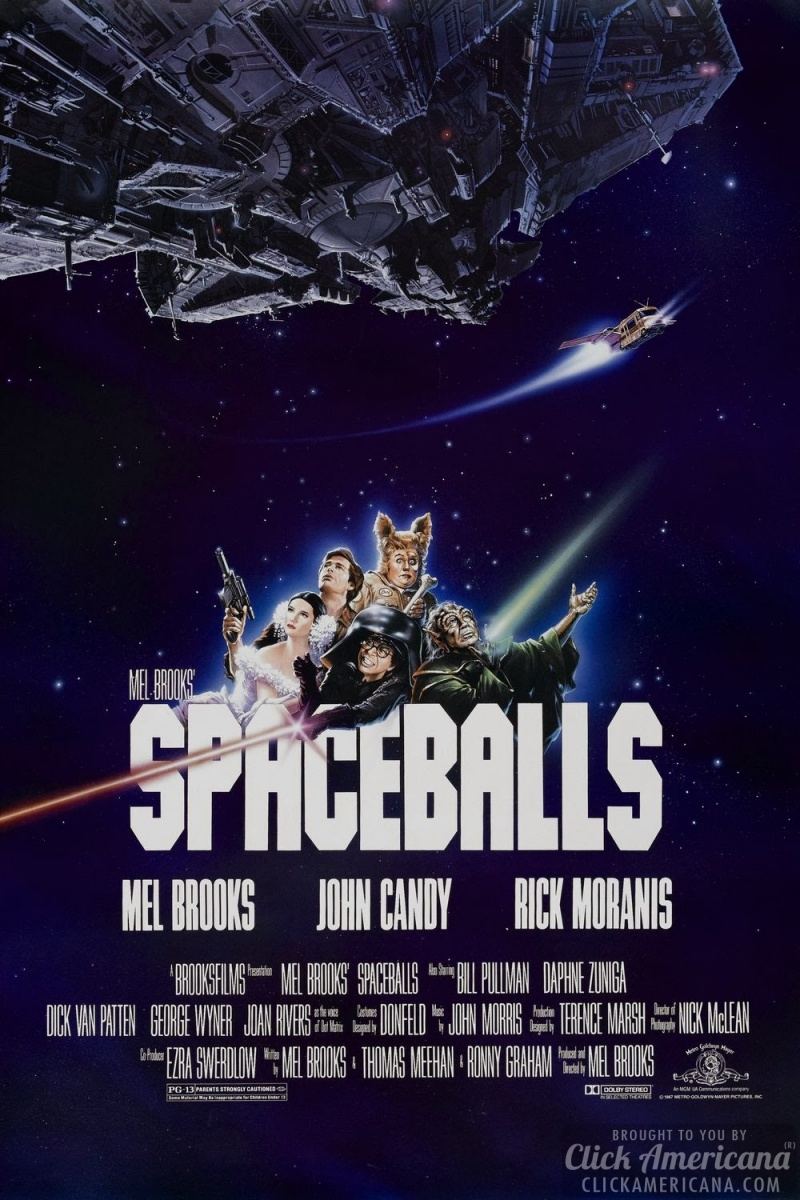
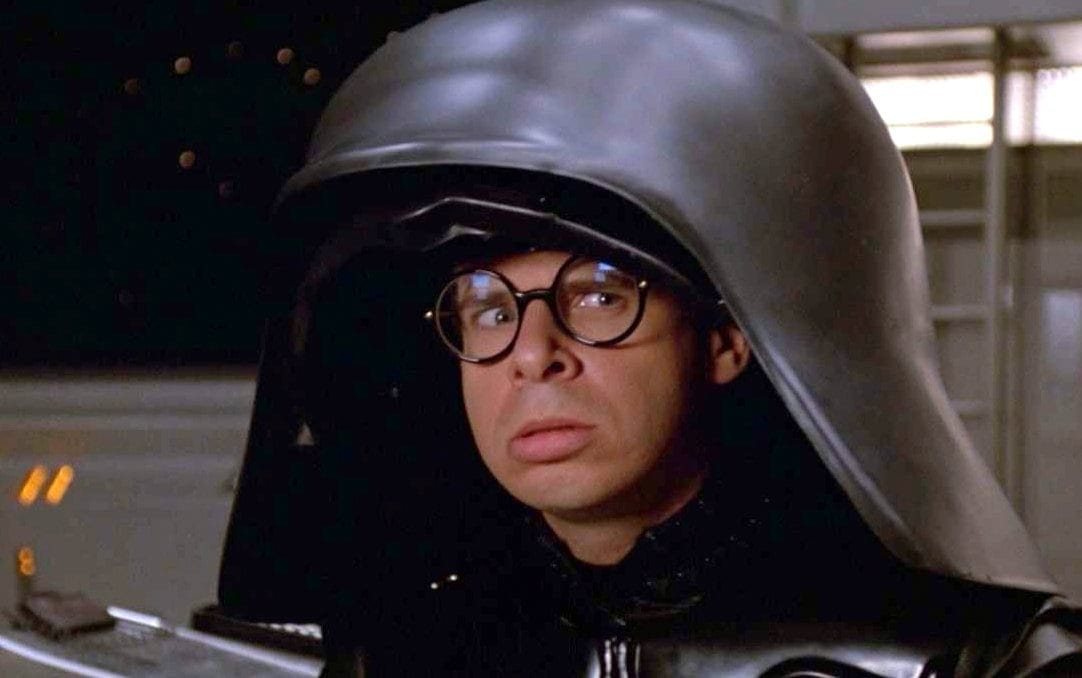
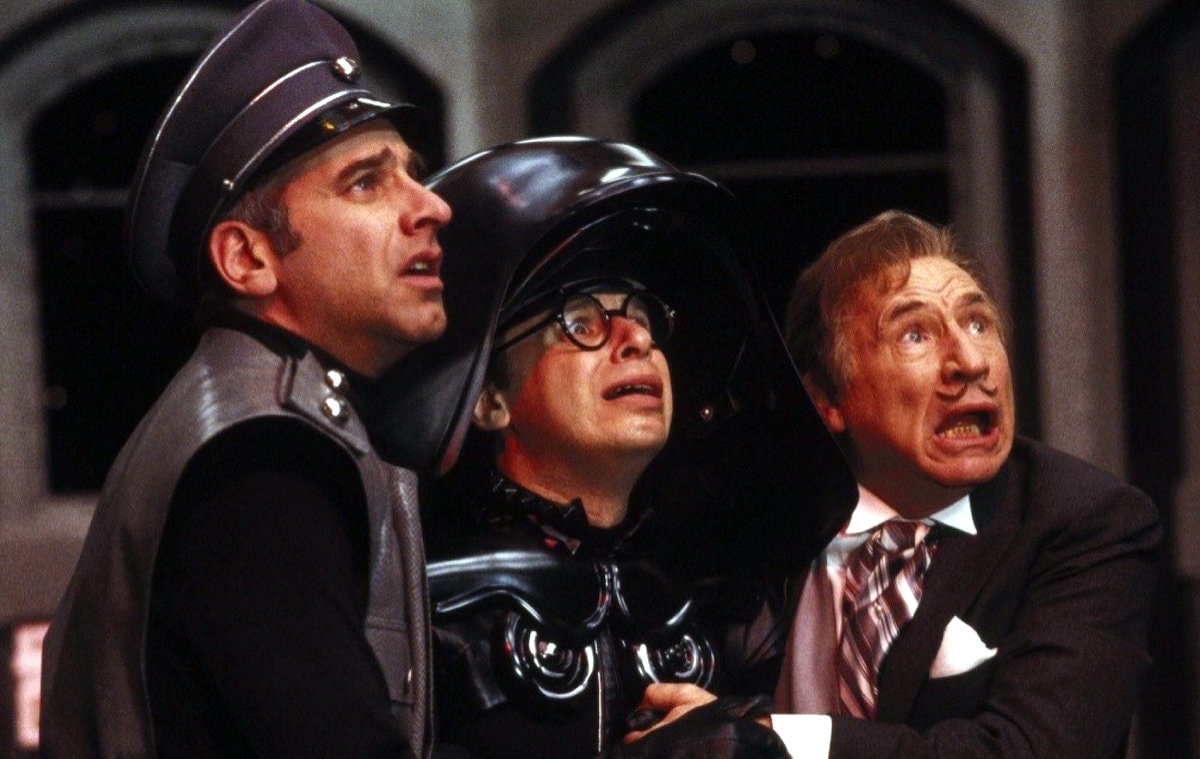
In Spaceballs, Brooks cast himself as the villainous President Skroob, ruler of the planet Spaceball, with Rick Moranis playing the bumbling Dark Helmet — a send-up of Darth Vader complete with an oversized helmet that keeps crashing down over his face.
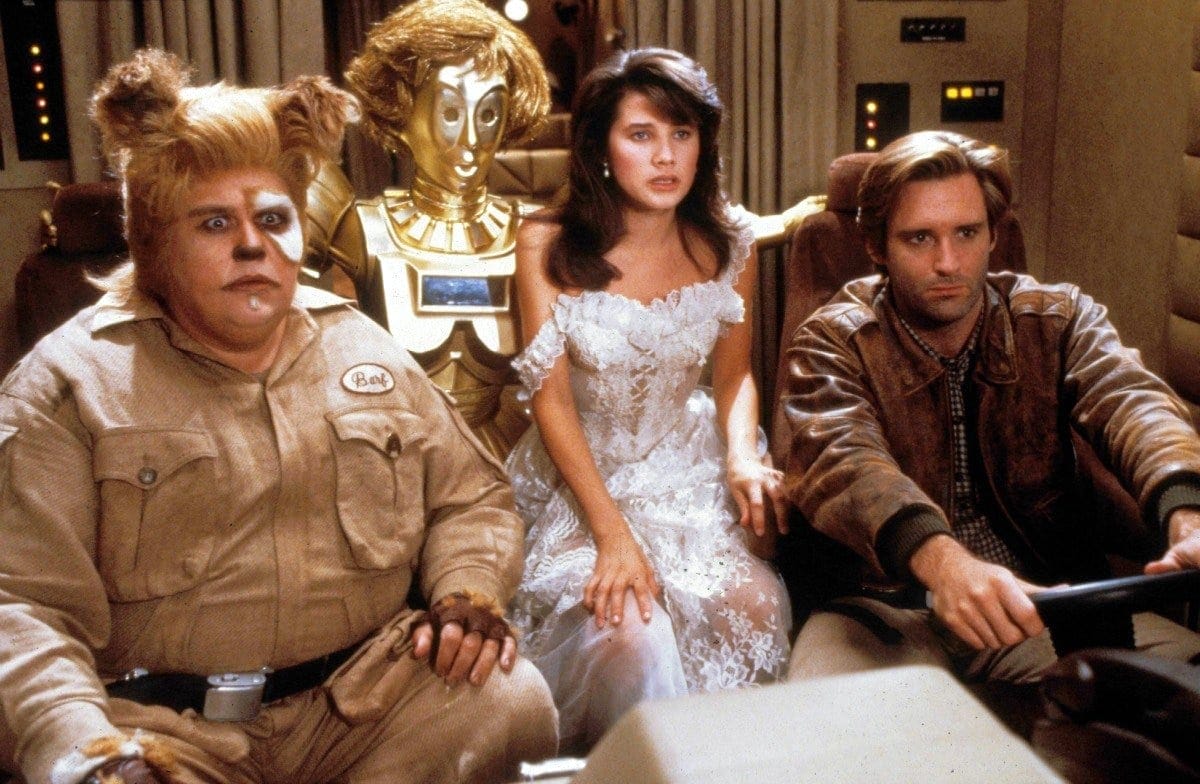
Bill Pullman played the Han Solo stand-in, Lone Star, and John Candy brought warmth and laughs as Barf, his half-man, half-dog companion described as his “own best friend.” Daphne Zuniga rounded out the main cast as Princess Vespa, a Druish princess who escapes her kidnappers with an enormous load of designer luggage in tow.
What made Spaceballs work beyond its obvious target was how far the jokes extended. As critic Doug Brode wrote in the Syracuse Post Standard at the time, the film reached well past Star Wars to take aim at Star Trek, Alien, The Wizard of Oz and even Raiders of the Lost Ark.
VIDEO | Spaceballs (1987) official trailer | MGM Studios

Brode put it well: “Brooks is making a movie about the movies.” The film’s most meta gags leaned into characters who knew they were in a film — a Brooks signature — and took sharp aim at the then-booming home video market and the Hollywood machine’s habit of merchandising every hit to death. Given that Star Wars had practically invented modern film merchandising, the joke landed on several levels at once.
Reaction at the time was warm, if measured. Brode called it “a solid summer laughfest” and credited Brooks with a clear comeback after the poorly received History of the World, Part I (1981). The film’s weaknesses, in his view, were an uneven opening and a finale that didn’t quite stick the landing the way Brooks’ best work had. Still, he found enough moments of genuine comic inspiration to call Spaceballs “a comic charmer, if not quite a comic classic” — which is probably a fair assessment that still holds up.
Below, we’ve collected the original movie poster, film stills and a period review of Spaceballs below so you can see how it all looked and read when it first hit screens in 1987.
Brooks soars again in ‘Spaceballs’ spoof
by Doug Brode – Syracuse Post Standard (New York) June 26, 1987
It’s time to forgive Mel Brooks for “History of the World, Part I.” That nasty, unfunny travesty appeared several summers ago, and convinced many former fans that perhaps the man we’d accepted as a comic genius after “Blazing Saddles” and “Young Frankenstein” had lost his touch.
Not so. Brooks’ latest, “Spaceballs,” may not be quite in their league, but is at least sharp enough to make it resoundingly clear that Brooks is back in fine form.
Though this film lacks the consistency of comic quality those classics from the mid-1970s featured, it boats enough bright humor — including two brilliant sequences — to qualify it as a solid summer laughfest.
What Brooks did to the Western in “Blazing Saddles” he does in “Spaceballs” to the space-fantasy films that have enjoyed popularity ever since “Star Wars” kicked off the genre 10 years ago.
Just as in “Blazing Saddles,” Brooks seized on “High Noon” as the basis for his spoof, so does he here make the first “Star Wars” film the basis for his burlesque approach.
“Chapter Eleven,” the receding titles (superimposed against an image of the galaxy) includes the first gags, which — like those that follow — play off our common knowledge of popular films.
For instance, what follows next is a marvelous visual gag, taking off on that seemingly endless spaceship which, in the opening sequence of “Star Wars,” had everybody applauding (remember?) in 1977.
From there, Brooks moves swiftly into a Lucasland plot about the evil leaders of planet Spaceball and the good inhabitants of their neighbor world, Druidia.
Spaceball’s wicked President Skroob (Brooks) orders the mysterious Dark Helmet (Rick Moranis) to kidnap Princess Vespa (Daphne Zuniga).
Her only hope is a space cowboy, Lone Star (Bill Pullman), and his hairy half-human, half-canine companion (his “own best friend”), Barf (John Candy).
Spaceballs more than just a spoof
“Spaceballs” is not simply a “Star Wars” spoof any more than “Blazing Saddles” was a “High Noon” spoof. “Blazing Saddles” used the “High Noon” plot as a starting point to lovingly satirize the entire Western genre.
“Spaceballs” does much the same thing. Shortly, elements from “Star Trek” appear, and before the film is over, there will be one “Alien” joke that’s absolutely dazzling.
Moreover, the film extends to other movies as well: Everything from “The Wizard of Oz” to “Raiders of the Lost Ark” gets sent up here. More than a comic tribute to “Star Wars” — or even to the whole area of space fantasy — Brooks is making a movie about the movies.

As in his previous pictures, his most brilliant gags are those in which characters acknowledge their awareness that they are indeed characters in a movie.
This allows Brooks to present a pair of inspired gags about the rapidity with which home videos of a current hit can be purchased and the calculating way in which every popular film is merchandised.
ALSO SEE: About Young Frankenstein, the 1975 comedy-horror movie that people still talk about
These last two phenomena are very much occurrences of the ’80s, so Brooks gets to savage several syndromes that were not targets in his earlier work.
Still, his comic angle on the moves remains essentially the same: imposing on white-bread movie forms a Jewish ethnic humor that adds a marvelous sense of the ridiculous.
Here, the princess is not a fantasy image of intergalactic charm, but a Druish princess. When the heroes help her escape, they must struggle with her immense load of designer luggage full of clothing and beauty aids.
When gags like this begin clicking, “Spaceballs” plays as a near-masterpiece of Mel’s mellow madness. But it does take a while for them to begin.
There’s a somewhat slow opening and no grand finale — no classic comic capper — of the sort that brought “Blazing Saddles” and “Young Frankenstein” to their knockout conclusions.
MORE: ‘Blazing Saddles’ is Mel Brooks’ hilarious take on the Western (1974)
In those two films, audiences who were not completely convulsed in laughter at the grand last gag lept to their feet to applaud. Here, we’re merely chuckling, and exit the theater mulling over some of the film’s finest moments.
There are enough of them to qualify this as a comic charmer, if not quite a comic classic.