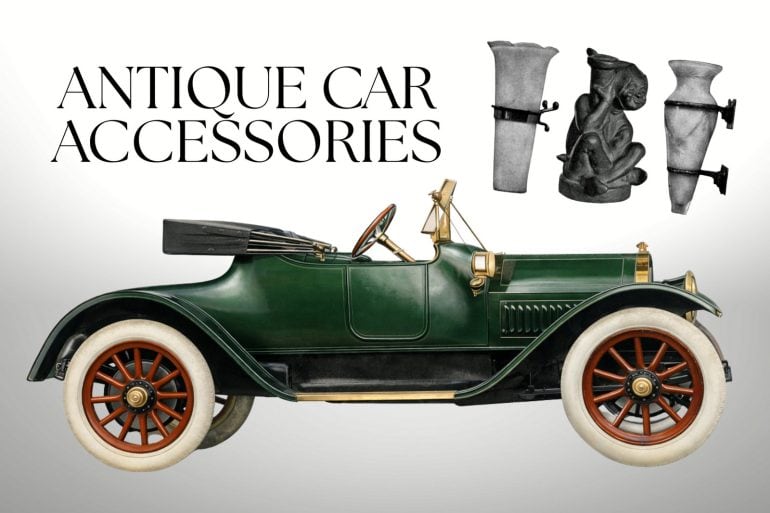
Back in that era, cars didn’t come with much — no radios, turn signals, or even enclosed cabins. Drivers and passengers all those years ago sat in open-air vehicles, exposed to the elements, rattling along at modest speeds. In that setting, antique car accessories weren’t just fun extras–they were how owners adapted a bare-bones machine into something closer to a personal space.
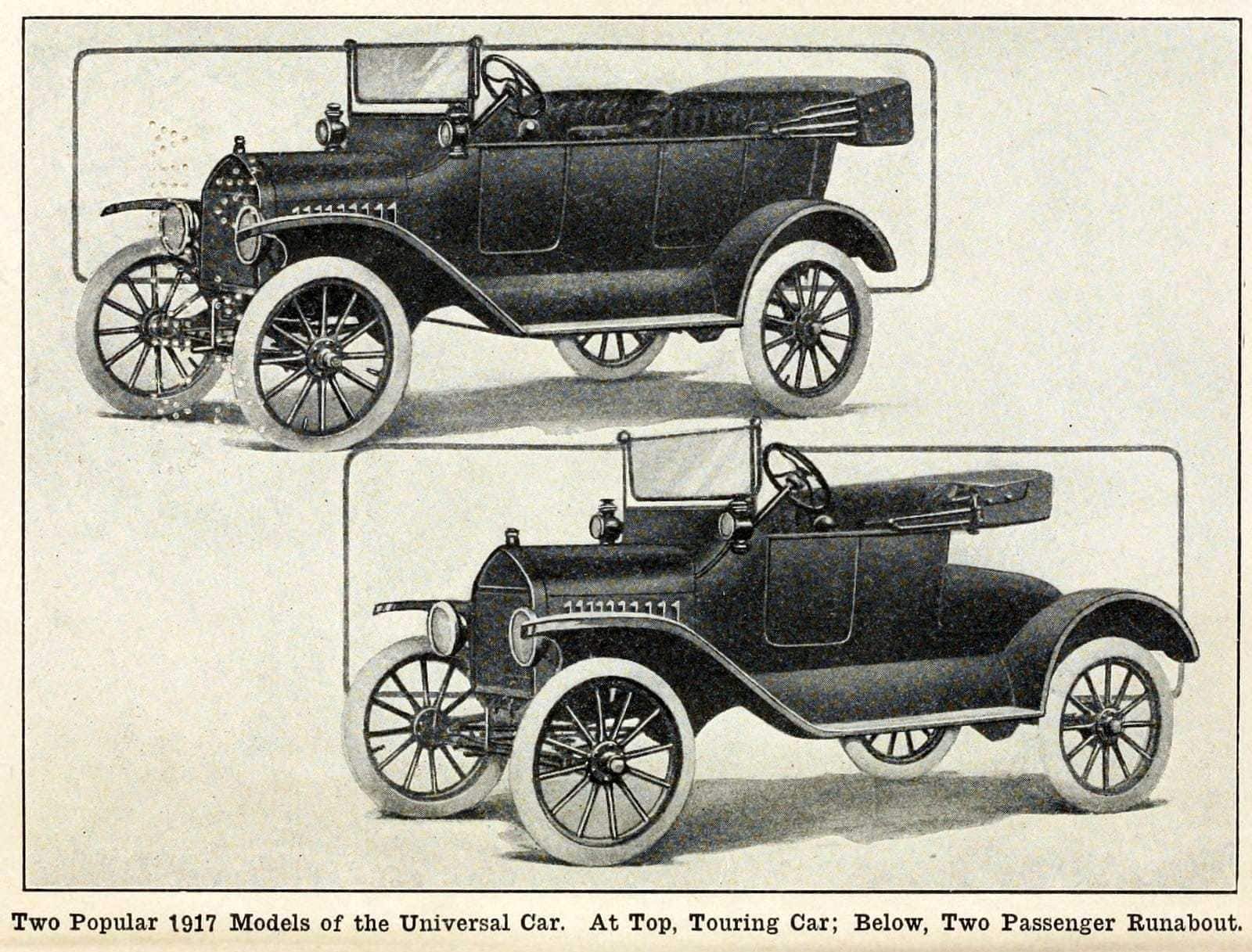
By 1913, the idea of “automobile accessories” had become its own cottage industry. As cars slowly became more affordable and practical for the upper middle class, owners started customizing their vehicles to reflect their tastes and make long trips more comfortable.
Accessories also played into the broader consumer culture that was taking shape during the Progressive Era — a time when home goods, clothing and now automobiles were increasingly seen as extensions of individual style. According to an article published in July of that year in American Homes & Gardens, “the accessories of the automobile have grown apace in design and number with the progress of development in motor-vehicles,” and makers were quick to fill in the gaps left by auto manufacturers.
ALSO SEE: Cars from the 1900s: See 55 of the earliest automobiles ever manufactured
Some add-ons clearly filled practical needs, like a compact leather case outfitted with a large-faced clock, writing tools, and a mirror — items that might’ve been handy on an all-day tour. But others suggest the car was beginning to be seen as more than just transportation.
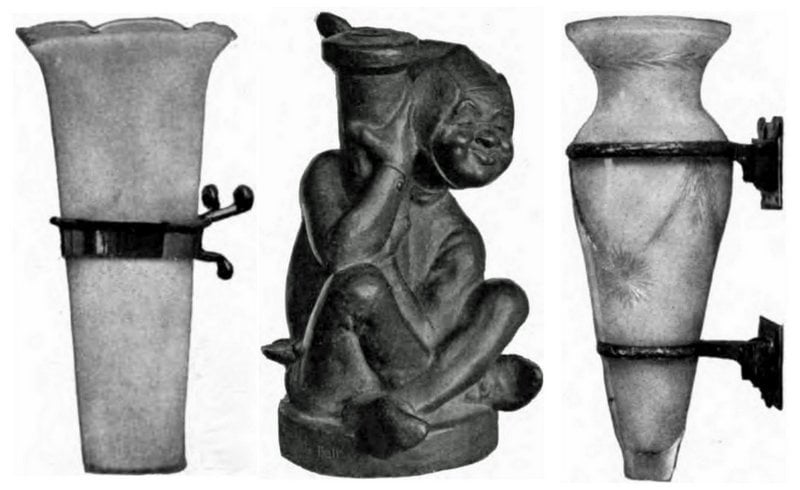
A glass flower vase, mounted inside the vehicle, was described as “perhaps the most interesting” accessory of its time, available in both simple and more ornate designs. Another favorite was the little “Speed Imp”–a bronze radiator cap ornament dreamed up by an American woman sculptor. It clutched a flag holder and grinned “sardonically” at passersby, presumably to entertain both driver and spectators.

What these objects reflect is a transitional moment in American life, when automobiles shifted from being experimental machines for the wealthy into fixtures of modern life. Accessories helped ease that transition. They brought a sense of familiarity into a new and often unpredictable experience. The inclusion of St Christopher medals — a revival of an older traveler’s tradition — underscored this blend of old and new. These tokens of protection, described as works of art “stamped from dies cut by some of the foremost medalists of the time,” offered reassurance in a rapidly changing world.
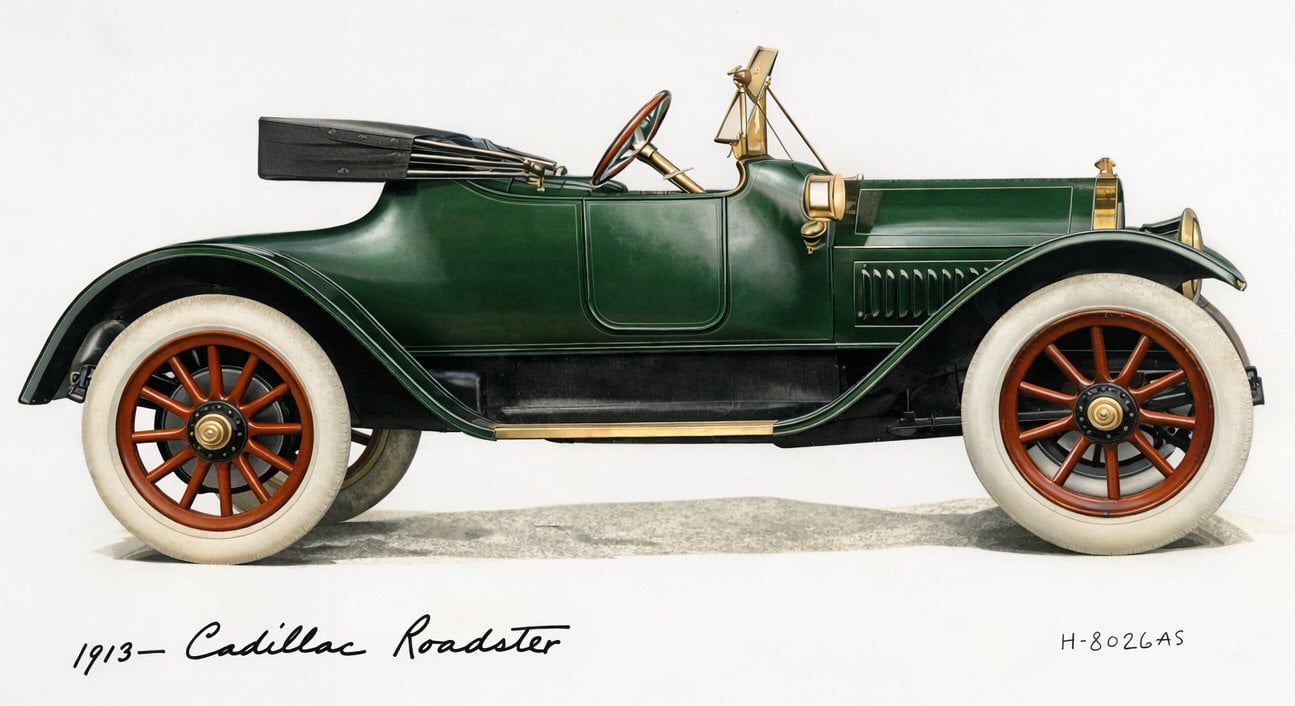
Below, we’ve collected original photos, along with some excerpts from a 1913 article by Elizabeth Lounsbery, who documented some of the more notable antique car accessories of the day. It’s a fascinating look at how drivers and passengers brought a bit of comfort, style and humor to their early motoring adventures.
You will notice in this article that there is no mention of cup holders. Insanity. In fact, it would be another eighty years or so before that particular all-important car acccessory would finally become ubiquitous. We can only hope the motorcar occupants of the time were well-hydrated before going for a ride.
Some antique car accessories
by Elizabeth Lounsbery, American Homes & Gardens (July 1913)
The accessories of the automobile have grown apace in design and number with the progress of development in motor-vehicles, until now there is almost nothing left unthought of by the ingenious designer whose devices have done so much to add to the comfort of the occupants and the adornment of the machine.
A leather case with clock
One of the most attractive of these accessories is the leather case illustrated upon this page, a case so carefully planned, that it takes up very little room in the car and yet contains innumerable articles so necessary in these days of touring to every motorist.
A clock with an eight-day watch movement is inset in the center of the case and so arranged that it may be rewound without removing it. The dial numerals are very large and can be seen from any point in the car at a glance.
A mirror, protected from dust by a leather cover is included, and also “leak-proof” bottles for aromatic salts. A writing pad, card case, fountain pen, and pencil have also their place in this case, while the remainder of its space is taken up with compactly arranged cases holding various other useful articles.

Flower vases
Perhaps no automobile accessory is more interesting than the flower holder. These automobile vases may be had in a great variety of forms and materials, but the ones of clear glass, either plain or cut, are in preferable taste to the more ornamental vases.
Like the amphora-holders of ancient times, the automobile vase-holders are so arranged as to permit the vases to be removed quickly and thoroughly cleaned. The vase shown by the illustration at the upper right hand corner of this page, is distinctly Empire in style, the decoration being exquisitely engraved upon the glass. The mountings are silver. The vase shown in the upper left hand corner is simpler and less expensive, but very attractive.
The Speed Imp sculpture
 An interesting little automobile accessory which is really novel (the idea of one of our clever American women sculptors) is the little bronze “Speed Imp,” of grotesque personality, here illustrated.
This may be bolted on to the radiator cap of the car, from which the “Imp” grins sardonically at the passer-by and appears to encourage the man behind him at the wheel, to greater speed. He is so arranged that into the holder which he is gleefully clasping with arms and legs, may be inserted the staff of a pennant.
St Christopher’s medals
To St Christopher, motorists have assigned the duties of standing as patron saint of automobilists, taking as he does all travelers under his protection. Therefore, the automobile owner has encouraged the pretty conceit of wearing a St Christopher medal. Although the idea is comparatively new to our country, the faithful traveler of two hundred years ago treasured his St Christopher medal, little dreaming that the dawn of a new era would find the saint concerned with a mode of travel not even anticipated in the wildest dreams of the traveler of olden times.
Many of these St Christopher medals are works of art in the true sense of the word, being stamps from dies cut by some of the foremost medalists of the time. The automobile medal bids fair to become a fetish in France. American artists are also designing and producing medals of this sort.
ALSO SEE THIS: Classic Cars Adult Coloring Book #1: Early American Automobiles (1895-1919)