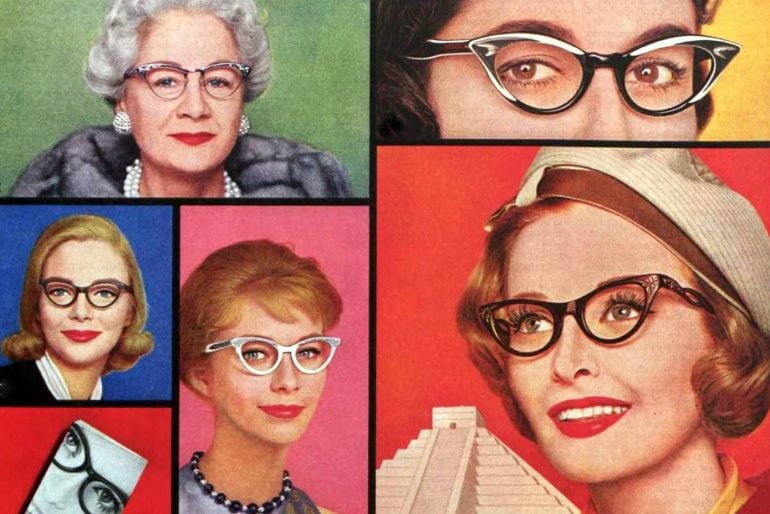
Dorothy Parker put it plainly in her 1926 poem “News Item”: “Men seldom make passes / At girls who wear glasses.” That two-line verse stuck around because it captured something real. Women who needed corrective lenses often chose rimless frames or tinted glass precisely to draw as little attention as possible to the fact that they were wearing them.
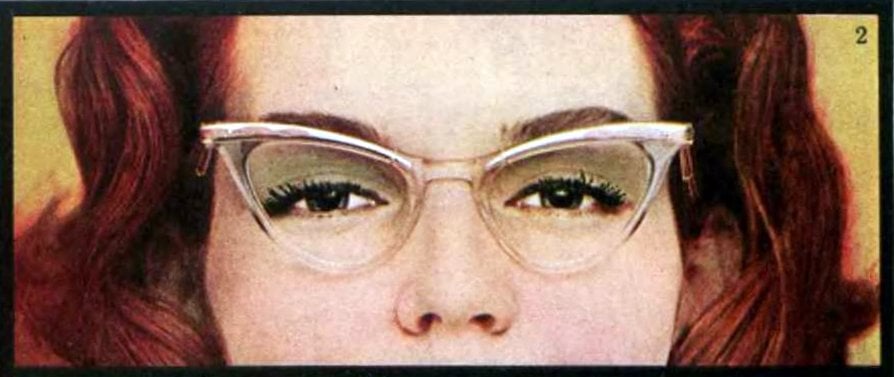
The turn started in the 1930s, when a New York artist named Altina Schinasi walked past an optician’s window and found the options depressingly dull — round, functional and entirely unisex. Inspired by the masks she’d seen in Venice, she designed a frame with an upswept outer edge that she called the Harlequin.
As glamorous as anything in your evening wardrobe are these exquisite. They have a graceful sweep at either end of the browline that blends to the side hair for a very flattering and festive look. Wear them for theater, dining and dancing or whatever the dress-up occasion after dark.
Major manufacturers weren’t interested, but Schinasi found customers anyway, and by 1939 she had won a design award from Lord & Taylor and earned credits in both Vogue and Life for her contribution to eyewear. The shape that would eventually be called the cat eye had arrived.
It took the postwar decade to make that shape mainstream. The 1950s brought two things that changed eyeglasses permanently: cellulose acetate and a culture ready to embrace it. The plastic, which had originally been developed in the 19th century as a substitute for ivory billiard balls, allowed manufacturers to produce frames in colors and shapes that metal simply couldn’t support.
Fashion designer Claire McCardell partnered with American Optical to release the first designer eyewear line in 1952, bringing the cat eye to a mass market. The timing clicked with the broader cultural mood — Christian Dior’s New Look had reintroduced a conspicuously feminine silhouette in 1947, and the upswept cat-eye frame fit right alongside it.
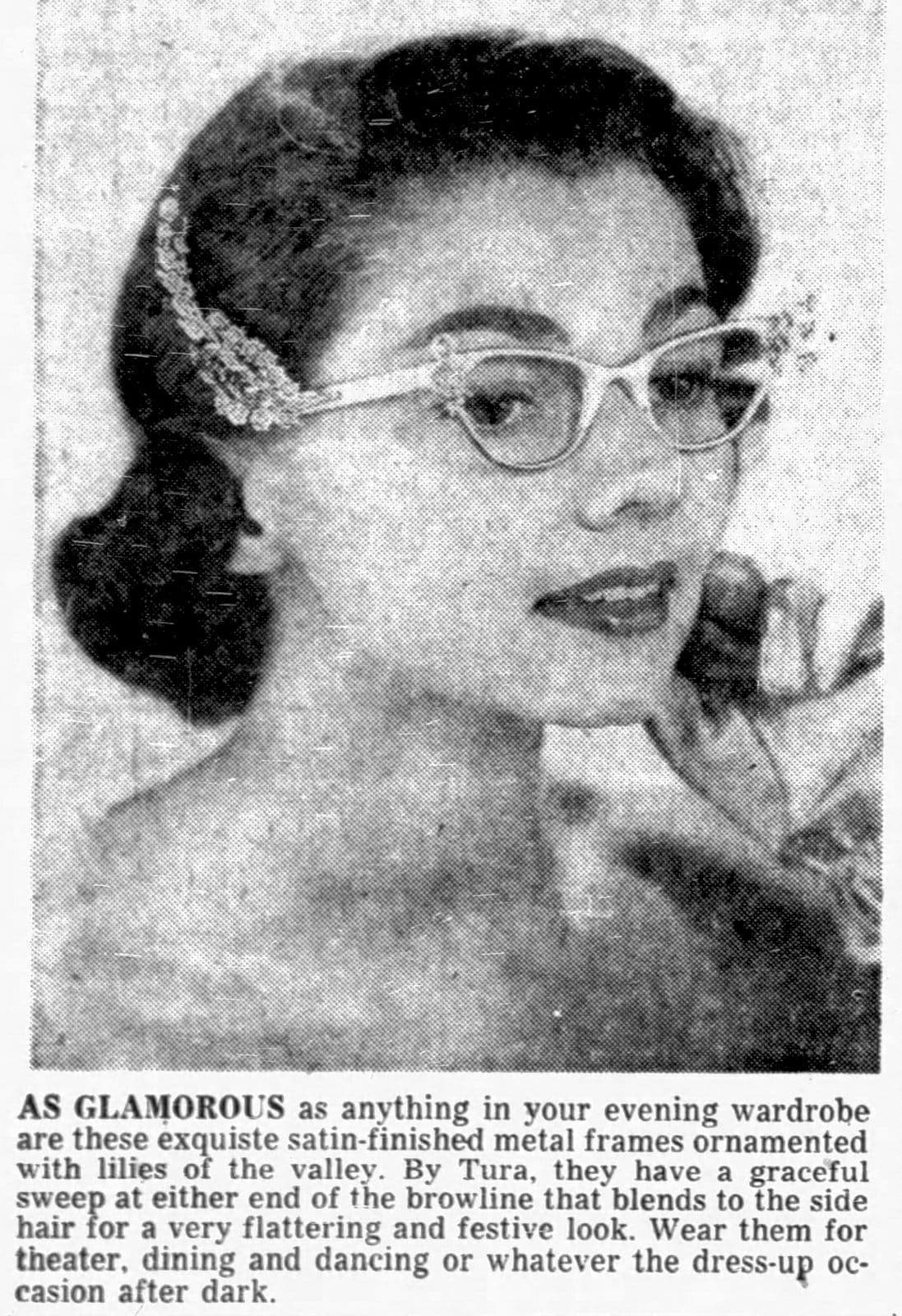
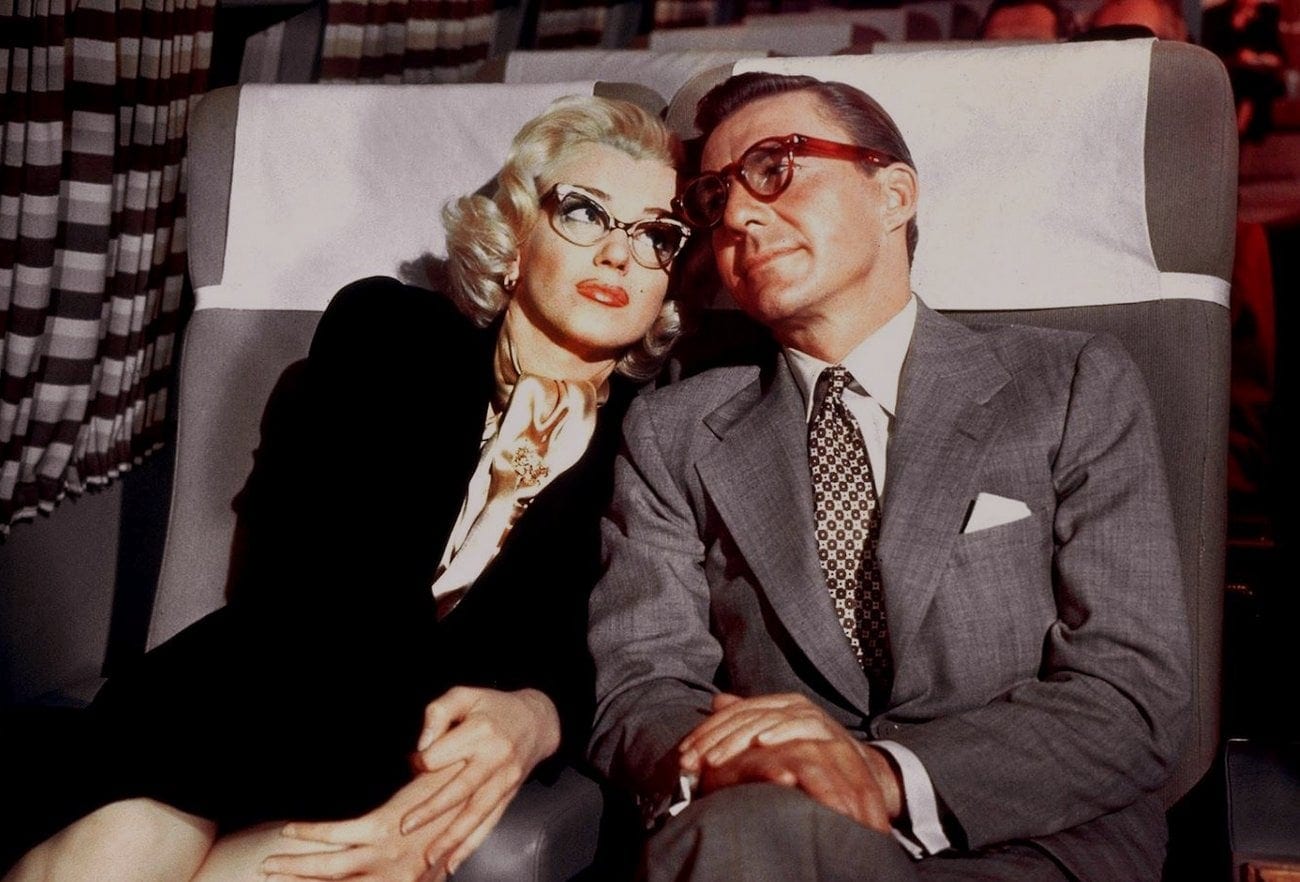
The two shapes shared the same logic, both including a tapered point, an emphasis on the outer edge, with a kind of dressed-up exuberance. Marilyn Monroe wore them in Gentlemen Prefer Blondes in 1953. Grace Kelly was photographed in them the following year. Within a few years, roughly every women’s eyewear manufacturer in the country had its own version.
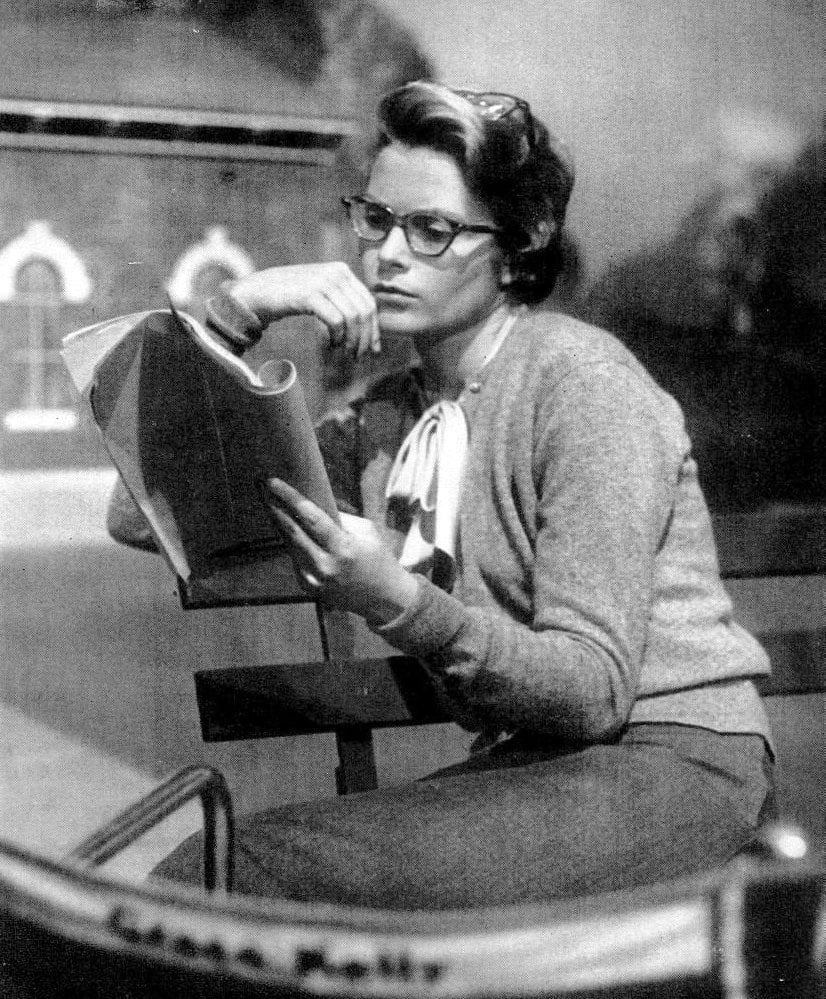
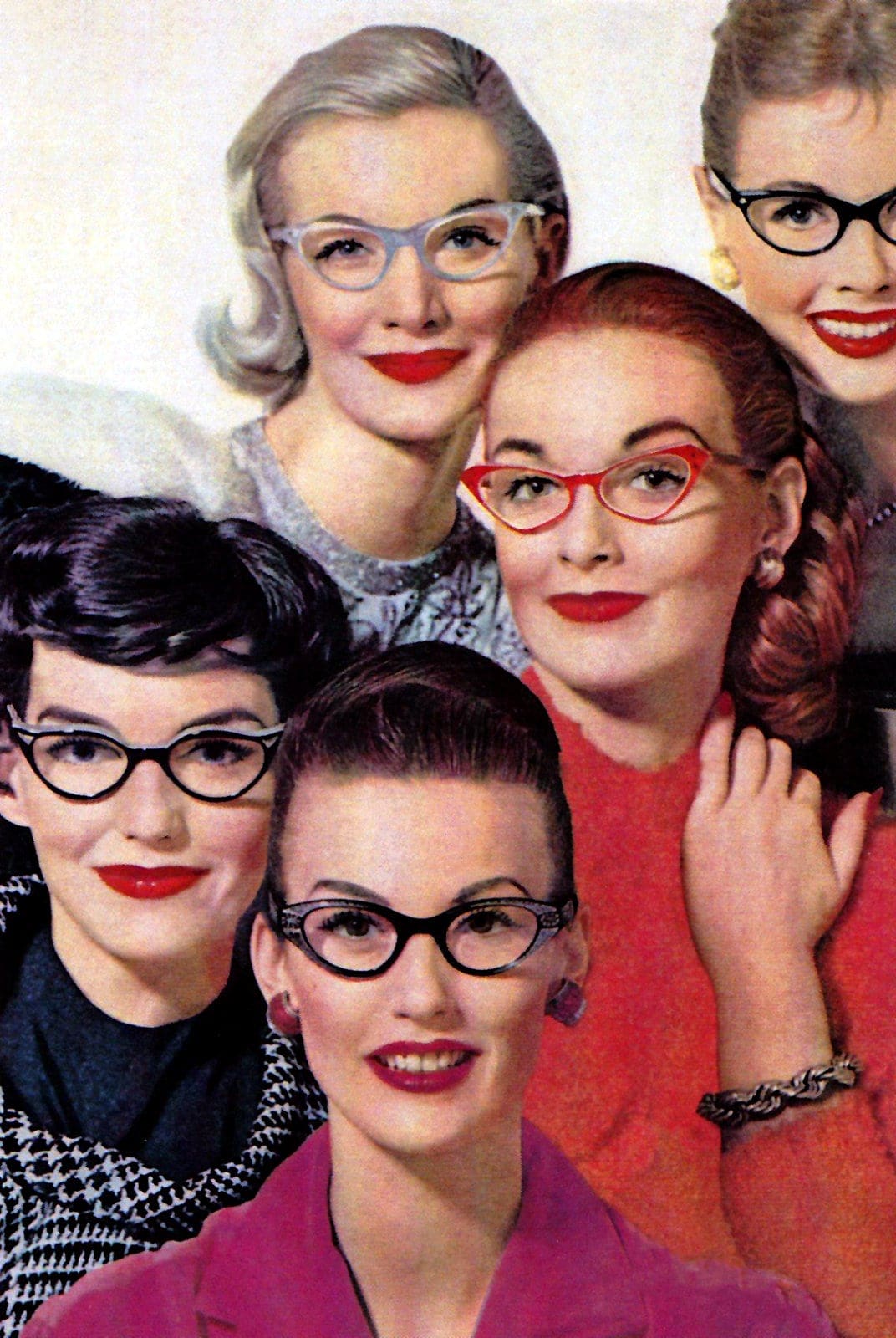
Period style guides — like the 1953 advice column reprinted below — show just how seriously the fashion dimension of glasses was being taken by mid-decade. The prescription was specific, suggesting platinum blondes in black frames, brunettes in deep red (sold under the name “dubonnet”), redheads in blue or green.
Two-tone frames combining a plastic upper and a metal lower half were the newest thing. Frames were being designed to follow the eyebrow line, decorated with rhinestones and engraved metalwork, sold in collections meant to coordinate with different outfits and times of day. Some women with perfect vision bought frames with clear glass, purely for the look.
The 1956 guidance collected here goes even further, advising readers on how to use frame ornaments to visually correct a crooked nose, a small mouth or a downturned corner. Glasses, the article noted, could be selected “with decorative touches that direct attention away from a sole facial irregularity.”
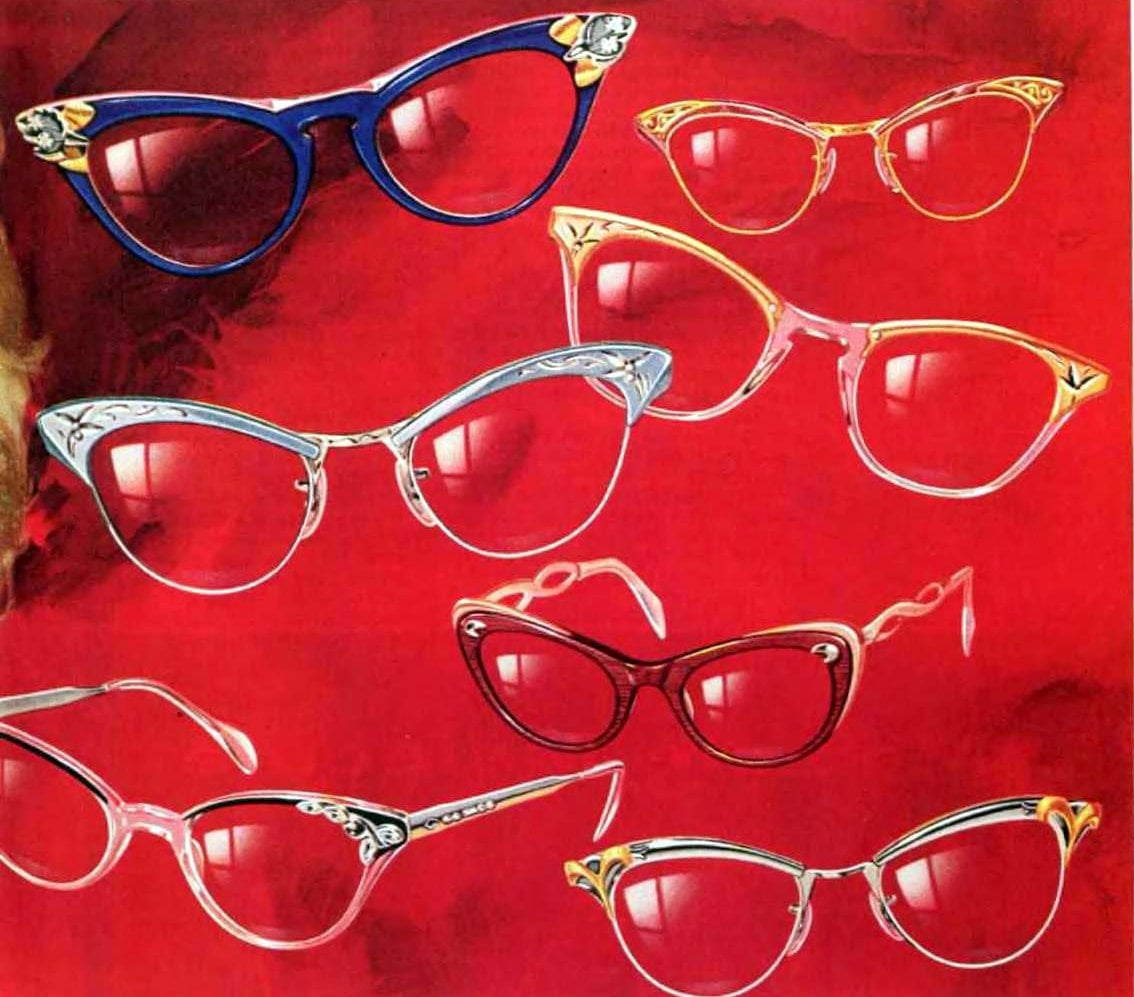
The cat eye’s run at the top of American eyewear fashion lasted through the early 1960s, when the shape softened and expanded before giving way to the large round frames associated with the counterculture. Audrey Hepburn’s sleeker take in the 1961 film Breakfast at Tiffany’s represented the pivot point — still upswept, but rounder, less pointed, heading somewhere new.
The shape went quiet after that for a few decades, surviving mainly in thrift stores and editorial shoots, until a revival in the 1990s and a full-scale return in the 2010s brought it back as a deliberate vintage reference.
The photos and style guides collected on this page give a clear look at what the fuss was about!
Vintage-style glasses: Girl with modern design eyeglasses envied by those who have perfect vision (1953)
by Libbie Cline, Charleston Gazette (South Carolina) August 2, 1953
Dorothy Parker is wrong! Men DO make passes at girls who wear glasses.
The girl with four eyes is no longer shunned. She is considered attractive. In fact, she is so attractive that the style-conscious women with 20-20 vision envy her. In certain areas, women with perfect vision buy gay frames and put window glass in them.
It is imagined that the little woman, with her taste for beauty, first demanded new spectacle styles. Men, in their usual slow manner about new fads, just recently adopted unusual frames. Today, the gentlemen buy frames with dancing girls to cover up the hinges.
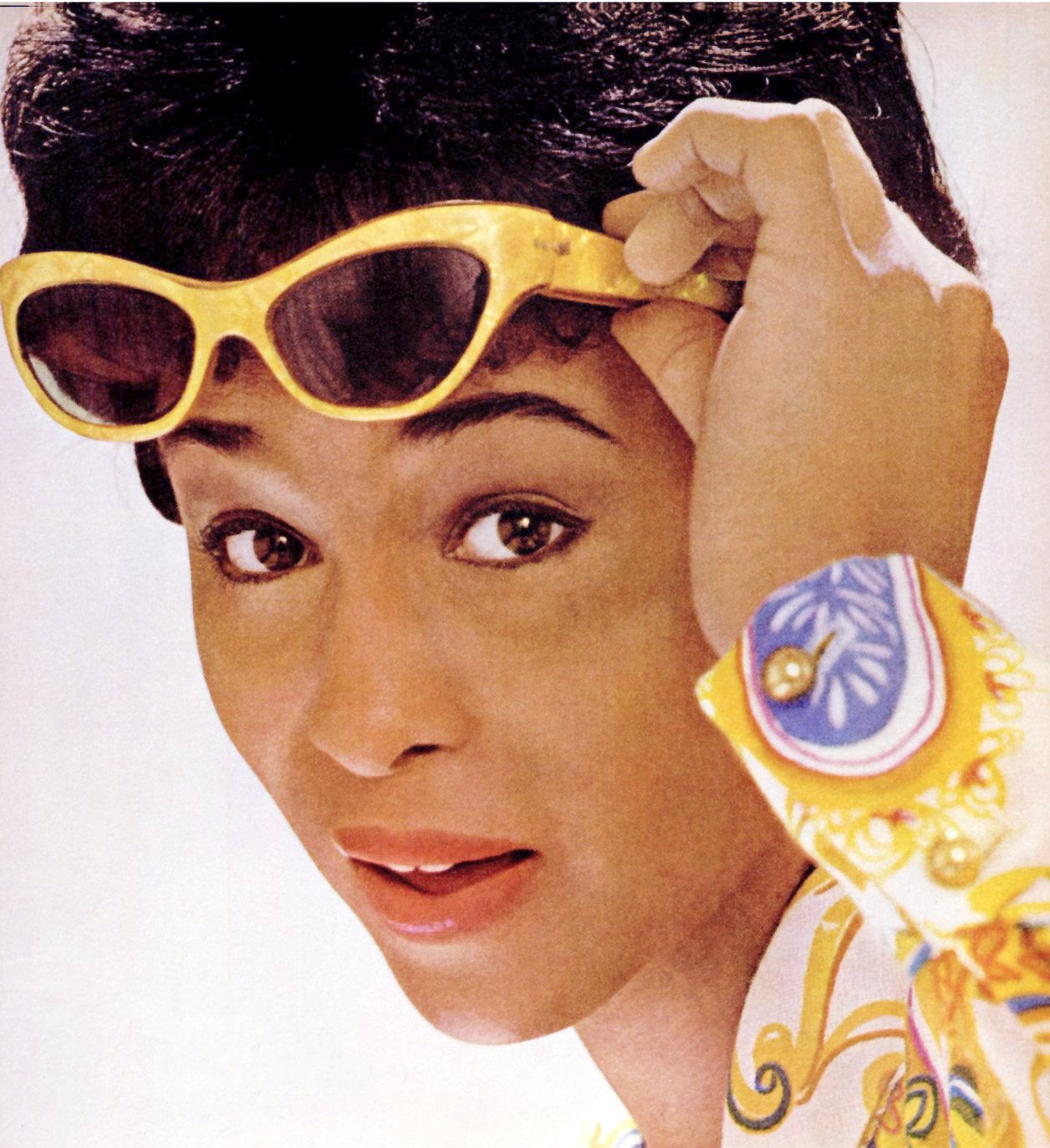
The newest frames have a two-tone combination. The top is plastic and the bottom is metal. These are taking the place of the all-plastic standbys.
According to two of Charleston’s top opticians, the newest color should be worn by people with pink tones in their complexion. Another optician added that midnight blue was a good color for fall. “Both the slate and midnight blue will be used with crystal or metal in the lower half of the frame,” he explained.
Back in the days when women were ashamed to wear glasses, they chose colors to blend with their skin tones — or they chose rimless glasses. Anything to call less attention to their eye affliction.
Now the story has changed, and they want harmonizing colors, something that goes well with their coloring and will be noticed. The rimless glasses are a style of the past.

For women who wear glasses: New colors & patterns
Just what is glasses news for blondes, brunettes and redheads? What are the best colors? For platinum blondes and very light blondes, the black frames are the most stunning, according to the opticians.
Brunettes need dubonnet colored frames. Dubonnet is a fancy name for deep red. There are blues and greens for those with auburn hair. Brown also harmonizes with light coloring. The plaid novelty glasses are for children. The blue plaid is manufactured for children with a reddish tint in their complexions and the red plaid for brunettes and brownettes.
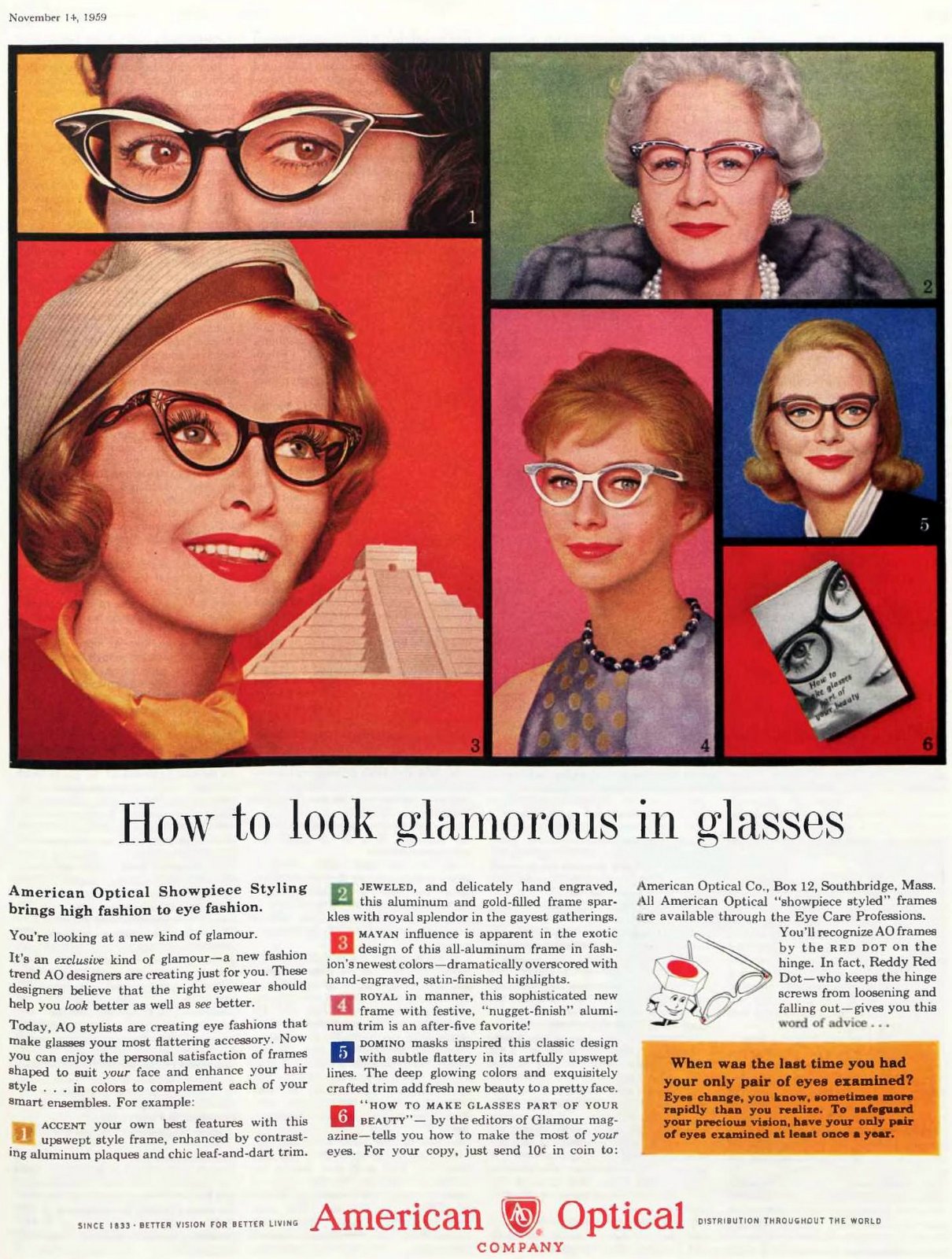
About the shape of the new glasses, this year they follow the eyebrow line. The pixie frames are out. Glasses are being designed with all sorts of emblems and stones this fall. One type of metal frames, called “tura,” is hand-engraved. This style rim is practically indestructible and won’t scratch easily.
If you can believe it, all of the glasses come with or without diamonds — to suit your fancy and pocketbook. Flowers and arrows cover up ugly hinges. If your favorite specs are horn-rimmed ones, the designers have decided they aren’t feminine. You look owlish in them. So, for fall, pick out a pair of bejeweled, crystal metal and plastic frames with the dancing girls to cover up the hinges, and you will be in step with the eye-styles.
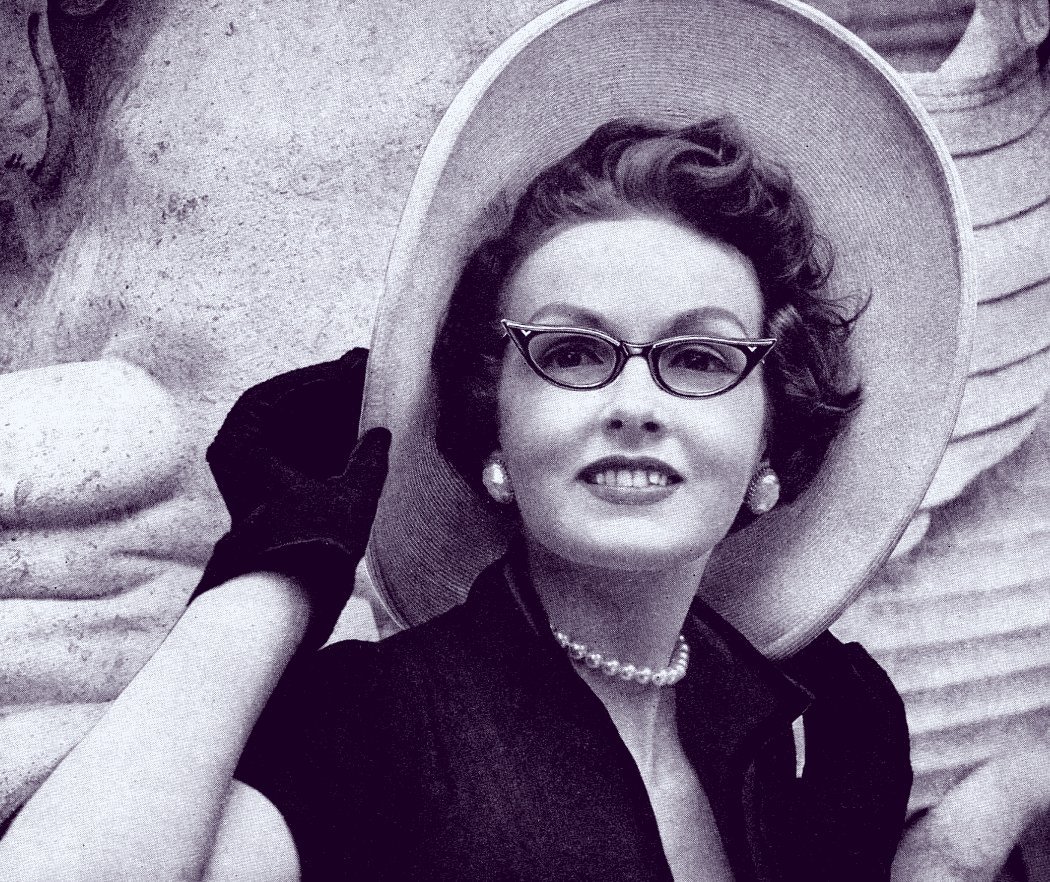
Women who wear glasses: No more horn-rimmed specs for her
The well-dressed woman will scrap the old horn-rimmed glasses this fall and purchase brand new ones in the latest styles. Miss Mabel Dalrymple, of The Gazette Promotion Department, models five new style frames.
1. Evening wear demands rimless glasses with delicate gold legs (extreme left). Although the rimless specs are considered passe, they will be used for formal occasions.
2. Joe or Jill College will enjoy wearing the glasses with the modified horns on the bridge (second from left). These frames are dark brown plastic.
3. Miss Dalrymple (center) wears the very newest note in the frames’ fashions — the two-tone combination. The top half is tan and the bottom half is crystal. These are for shopping and general all-round use.
4. Plain brown plastic frames (second from right) are a favorite with the career girl. Note that the top of the frames follows the contour of the eyebrow.
5. New this season is the part metal, part plastic frames (extreme right). The durability of these frames is making them a fast favorite for the fall season. Women will be especially interested in them from a beauty standpoint as they don’t slip and slide down the nose but stay in place perfectly. The metal frames are almost indestructible.

How to balance your facial features with glasses (1956)
By Marian Rahl, Hutchinson News-Herald (Kansas) July 7, 1956
Eyeglasses have become a fashion accessory and any girl who wears them knows how their colors can be coordinated to her wardrobe and to the hour or occasion. Newest frames promote a wide-eyed look, and they can be selected with decorative touches that direct attention away from sole facial irregularity.
Choose your frames in a dark color for daytime wear, select a pastel for afternoon or late day and gold or silver for evening. You can have lightweight metal frames in a wide range of colors and decorated to enhance your features.
Tailored frames without ornamentation serve for casual daytime wear or a bit of contrasting metal sweeps across the top to follow a graceful brow line.
When you desire a bit of glitter, you can have rhinestones or pearls or multicolored jewels. (Of course, if you desire diamonds, cultured pearls or precious stones they may be ordered too!)
When you are fitted for eyeglasses and given a scientific facial analysis, you’ll discover some of the ways in which facial irregularities are overcome or minimized.
For example, is your nose too long, with a narrow bridge? Then a frame with ornamentation at the center can flatter. When the bridge of the nose is very narrow, decoration at the ends of the frame will help.
Nose tilted slightly to one side? It will appear straighter with ornamentation at one side of your frame only, and this should be at the side opposite from the nose slant. You achieve better balance this way.
Not all attention is focused on the nose and eye area when creating a frame for good facial balance. Your mouth should be considered also.

Is yours small and thin? Then draw attention upward with delicate ornamentation at ends of the frame.
For a large thick mouth, raise attention again with brilliant ornamentation at the top of the frame. When the mouth tilts down at one corner, a decorative touch at the same side of your glasses frame helps give the illusion of a straighter mouth.
You can achieve not only a smart appearance with your glasses these days. but you can let them help you to more beauty as well.