The Wright Brothers made history with a 12-second flight in 1903. See how their breakthrough launched the modern age of aviation.

The Wright Brothers made history with a 12-second flight in 1903. See how their breakthrough launched the modern age of aviation.
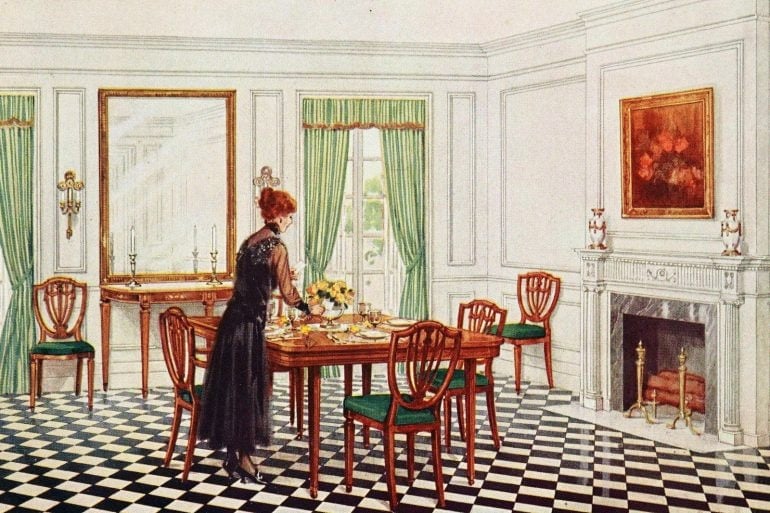
See how home cooks 100 years ago made easy meals from just 4 foods, creating 12 different dinner menus with classic recipes and smart planning.

The 1918-19 Spanish flu pandemic killed an estimated 50 million people – the majority of deaths from pneumonia following an attack of influenza.

In June 1919, a peace treaty with Germany was signed in France, and formally brought an end to the Great War, which we now call World War I.

Here are more 20 colorfully-illustrated vintage Memorial day postcards for the national American holiday originally known as Decoration Day. These patriotic antique cards are all from the early 1900s.

These wheat-free bread recipes come from 1918, during the height of World War 1, when the country was asked to save wheat for the troops.

What’s the history of Necco Wafers? Here’s a look back at how a company made the candy such a big hit that it would be on shelves for the next 100 years.

During World War I, patriotic citizens were asked to eat less of certain foods, and to avoid waste. See how WWI food rationing posters promoted these goals.

In October 1918, near the end of WWI, The New York Tribune and other newspapers nationwide carried the line at the top of the front page: AMERICA’S HISTORIC ANSWER: UNCONDITIONAL SURRENDER.

Keeping track of the eras, the ages, the generations and more can be confusing – especially when they overlap. Here’s a basic guide to some of the most important eras in American history.

The postcards below were published in Ladies’ Home Journal magazine back in 1918, at the height of World War I. There were four categories —

To help keep an eye on the war, during both WWI and WWII, the Navy asked to borrow binoculars from American citizens, paying them $1 per pair – which was much cheaper and simpler than buying new optics for the military.

In 1917, President Woodrow Wilson went before a joint session of Congress, and the United States formally declared war – The Great War, which became known as World War 1 – on April 6, 1917.

While his name might not be as well-known as others, Hudson Maxim was an important American inventor, chemist and author.

WAR DECLARED: See 31 consecutive front page headlines from DC from those tumultuous weeks leading to the outbreak of hostilities in WWI back in 1914.

This story appeared at the beginning of 1918, but by the time the year had closed out, Hobart “Hobie” Baker was dead — killed by

In 1915, an engineer in Arlington, Virginia, was heard in Paris and Hawaii. This was the first trans-continental message ever sent by wireless telephone tech.

President Benjamin Harrison on the obligations of wealth (1898) General Harrison addresses a large gathering at Chicago The Union League Club’s celebration in honor of

Here’s a look at a few of the wheat-free recipes created during WWI — classic recipes for cakes and cookies made with rice flour in place of wheat flour.

Amid the most dramatic scenes ever witnessed in Congress, the house early today passed the resolution which formally declared Germany as an enemy and launched the United States in the fight for the democracy of the world.

Telegram: Order to appear (1917) Received at SE Corner Pine & Montgomery Sts., San Francisco – Always open San Francisco, Calif – Aug 1 1917 Percy