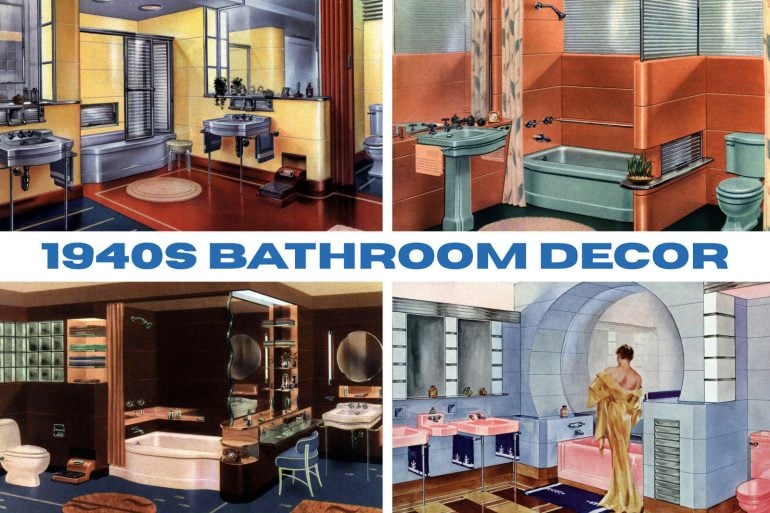
The bold 1940s bathrooms that set the stage for midcentury home style
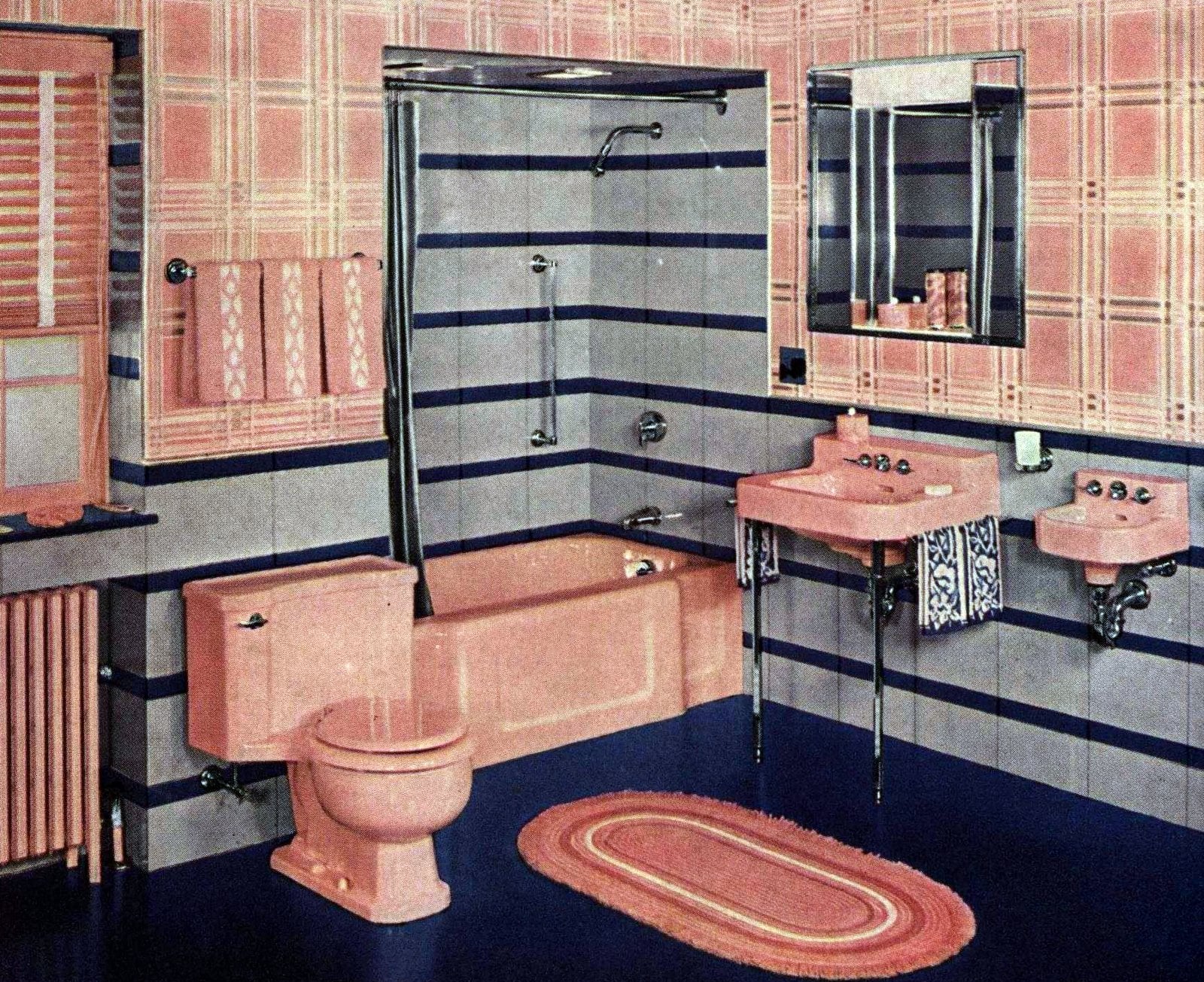
Before this era, the American bathroom was mostly functional and forgettable. White porcelain ruled, fixtures were sold individually, and the room ranked low on the list of home design priorities.
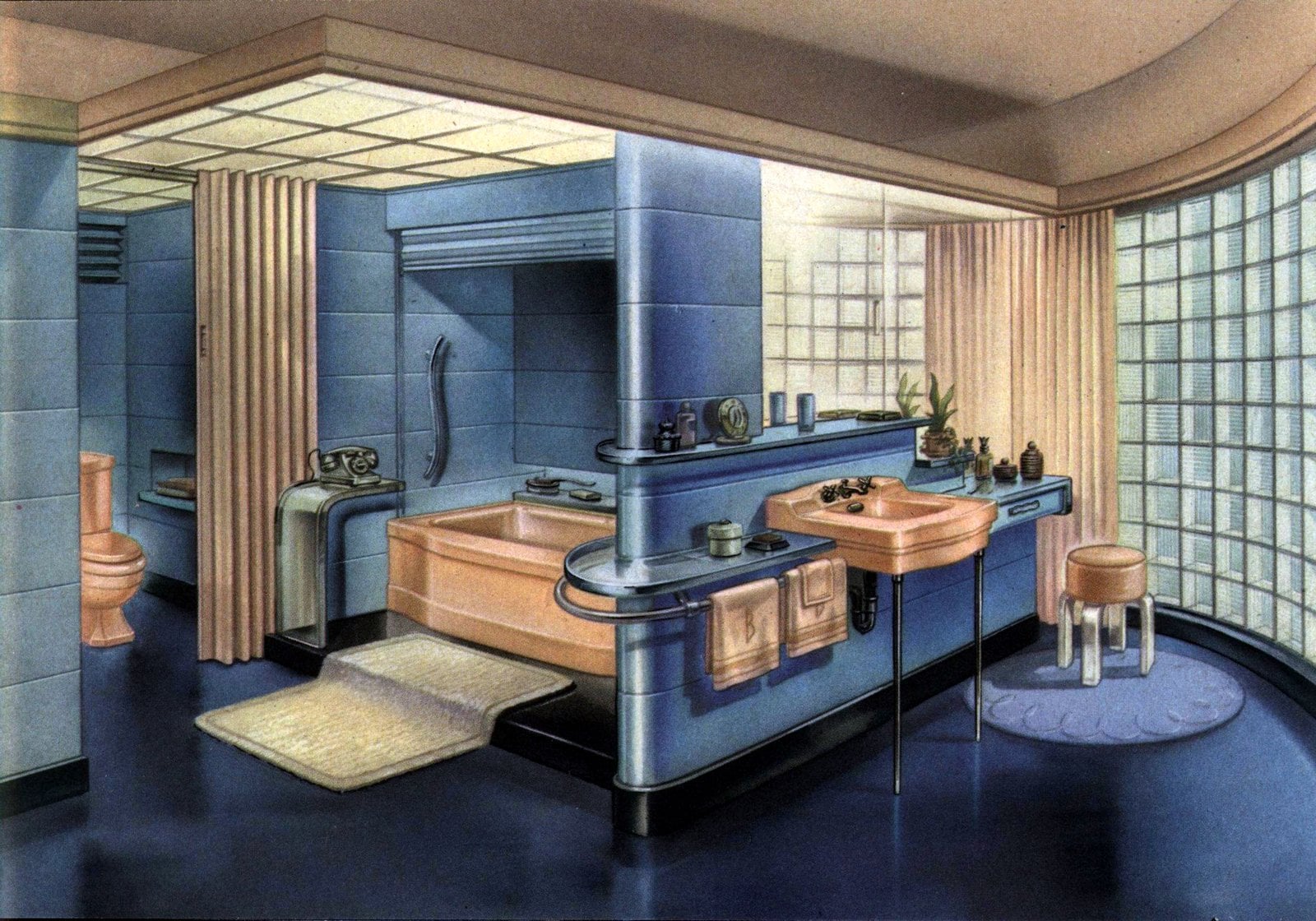
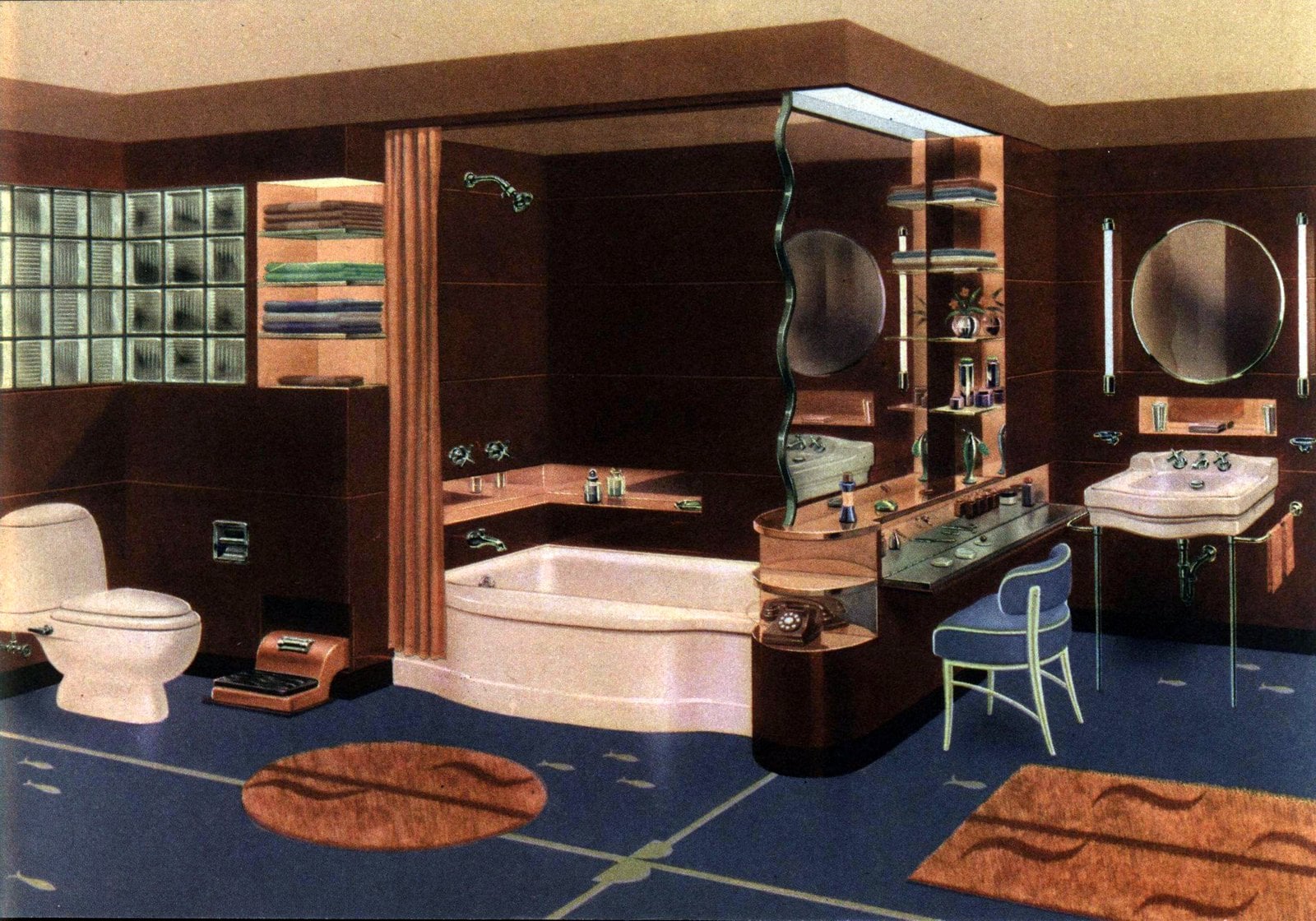
That started changing in the 1930s as manufacturers saw an opportunity to sell the bathroom as a designed space — but the shift really took hold by the late 1940s, when postwar housing construction surged and new homeowners had real input into what went into their homes.
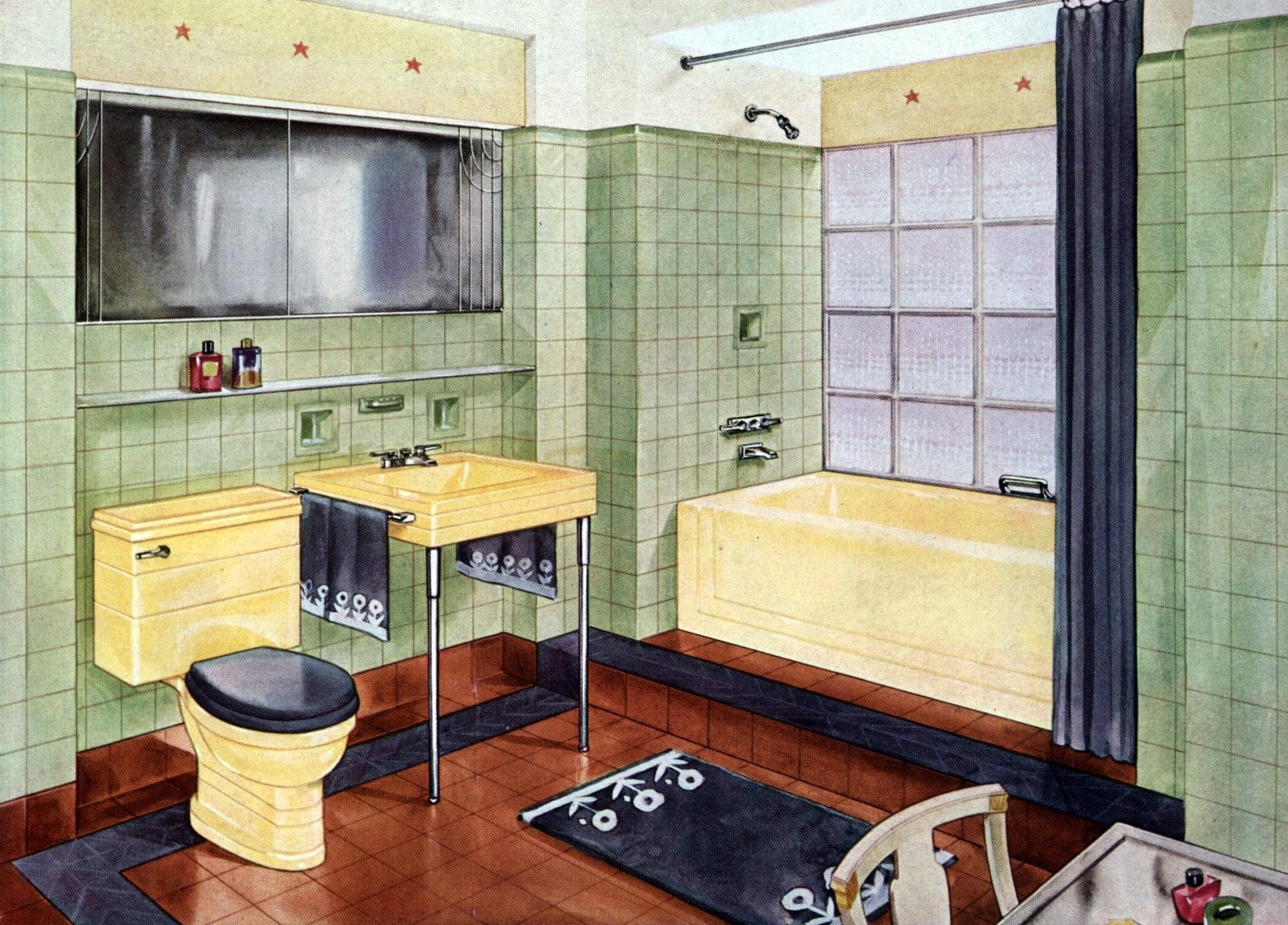
Major plumbing brands began marketing coordinated fixture groupings — each often had a name, a particular look, and a matching set of tub, lavatory and toilet — offered in colors well beyond standard white.
Color was a serious part of the pitch across the board. Fixture makers developed named palettes — soft blues, warm peach tones, greens ranging from cool forest shades to warmer mid-tones — and showed them off in fully styled room settings complete with coordinating tile, linoleum and cabinetry.
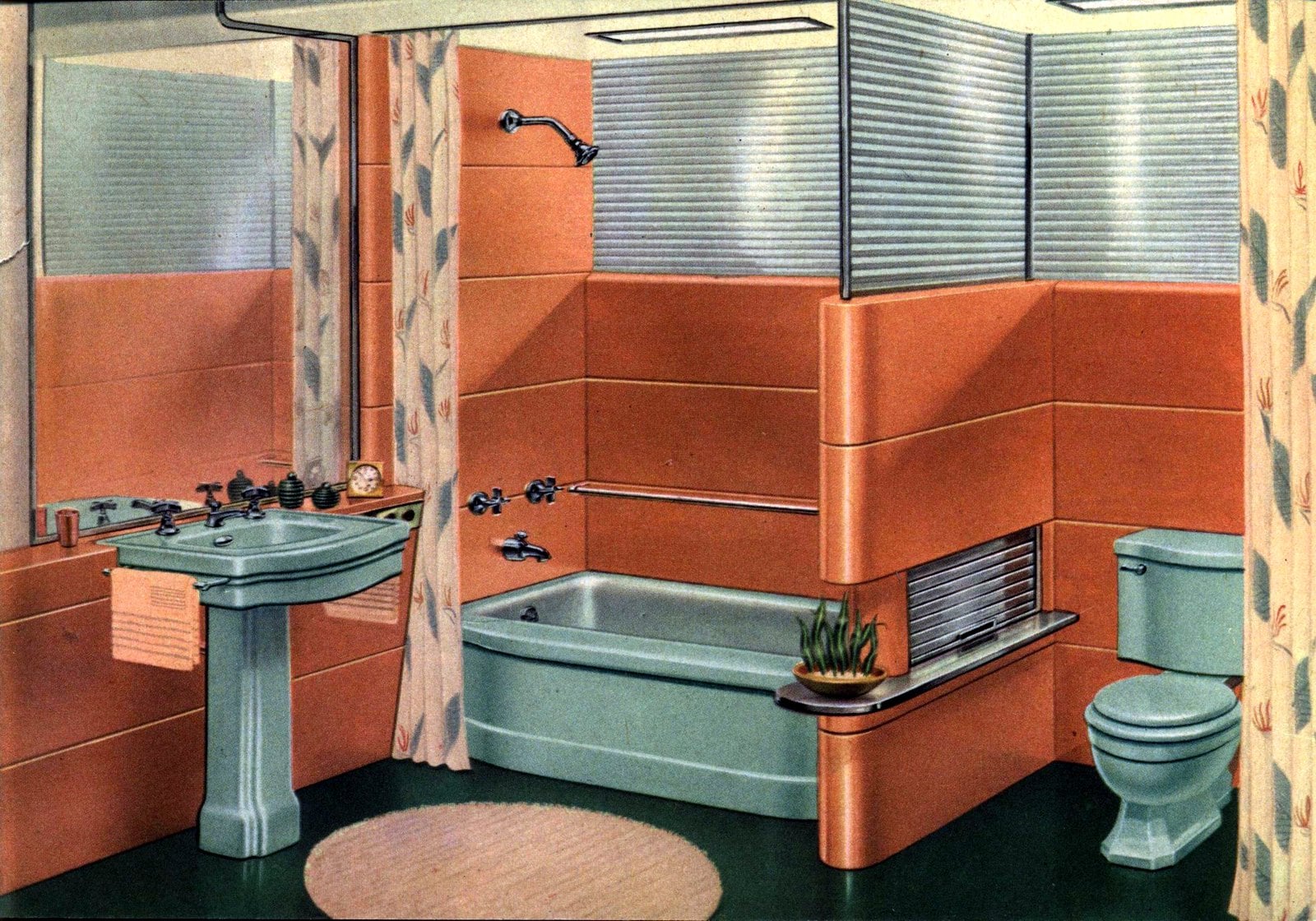
The idea was to help buyers picture a complete bathroom, not just a fixture sitting in a showroom. Room-planning became part of the product too — some ads included floor plan diagrams alongside the illustrations, making the case that how you arranged a bathroom was as important as what you put in it.
This was all part of a broader shift happening across the home goods industry. Tile companies, paint manufacturers, linoleum producers and towel makers were all making the same moves simultaneously, pushing the bathroom from afterthought to designed room.
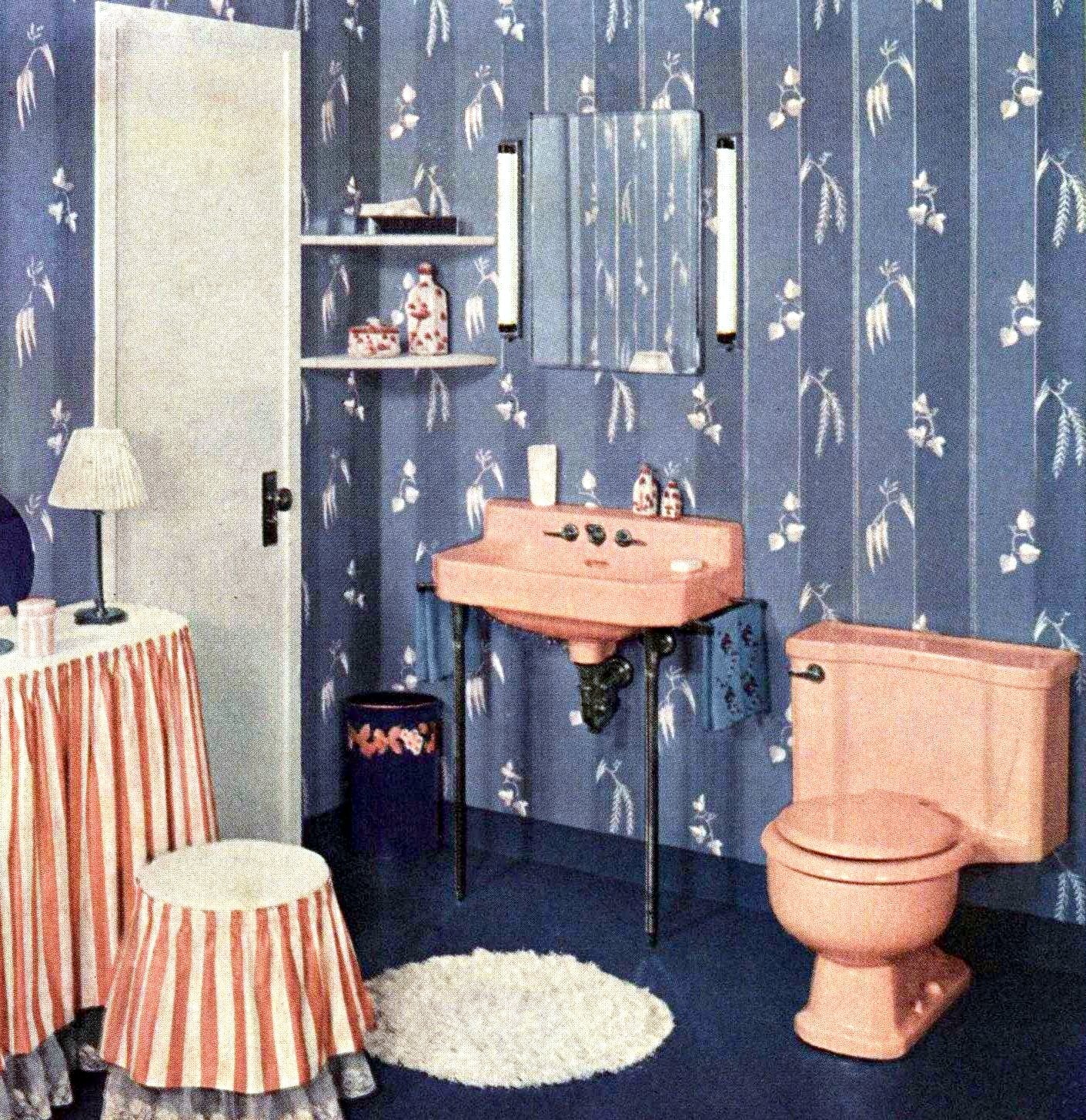
Built-in storage, dressing table lavatories, compact tubs engineered for smaller homes, chromium-plated trim — the 1940s bathroom added up to something more considered than anything the previous generation had lived with. The pink bathroom craze of the 1950s didn’t emerge from thin air. It grew directly from this decade, when picking a color for your bathroom first became a normal part of building or renovating a home.
Below, we’ve collected original ads and catalog pages from multiple fixture brands, including Kohler and Crane from the late 1940s, showing the full range of colors, styles and room layouts they promoted at the time. It’s a fascinating window into how the everyday 1940s bathroom got its first real design identity.
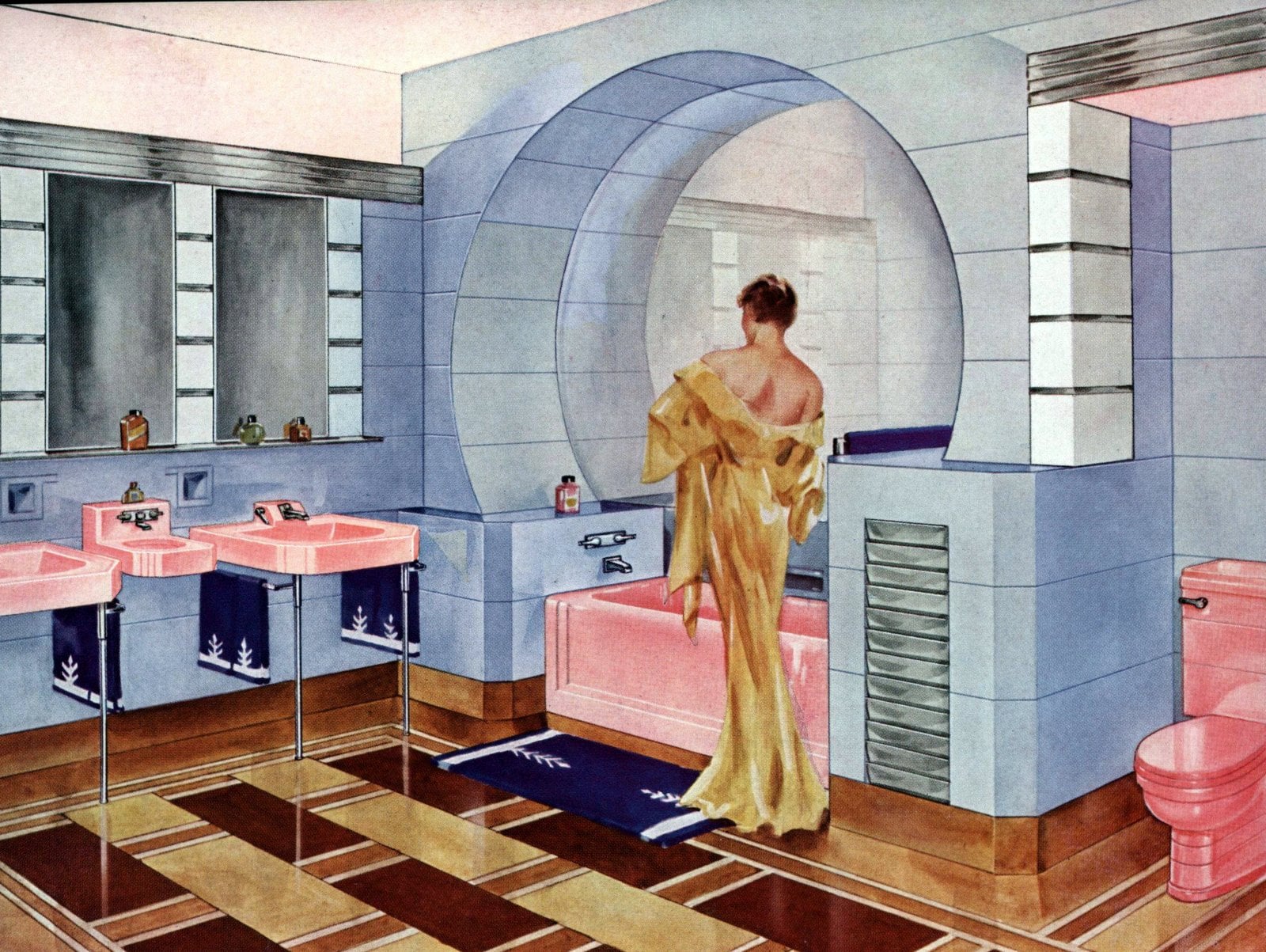
Colorful ’40s bathrooms & mid-century modern fixtures (1949)
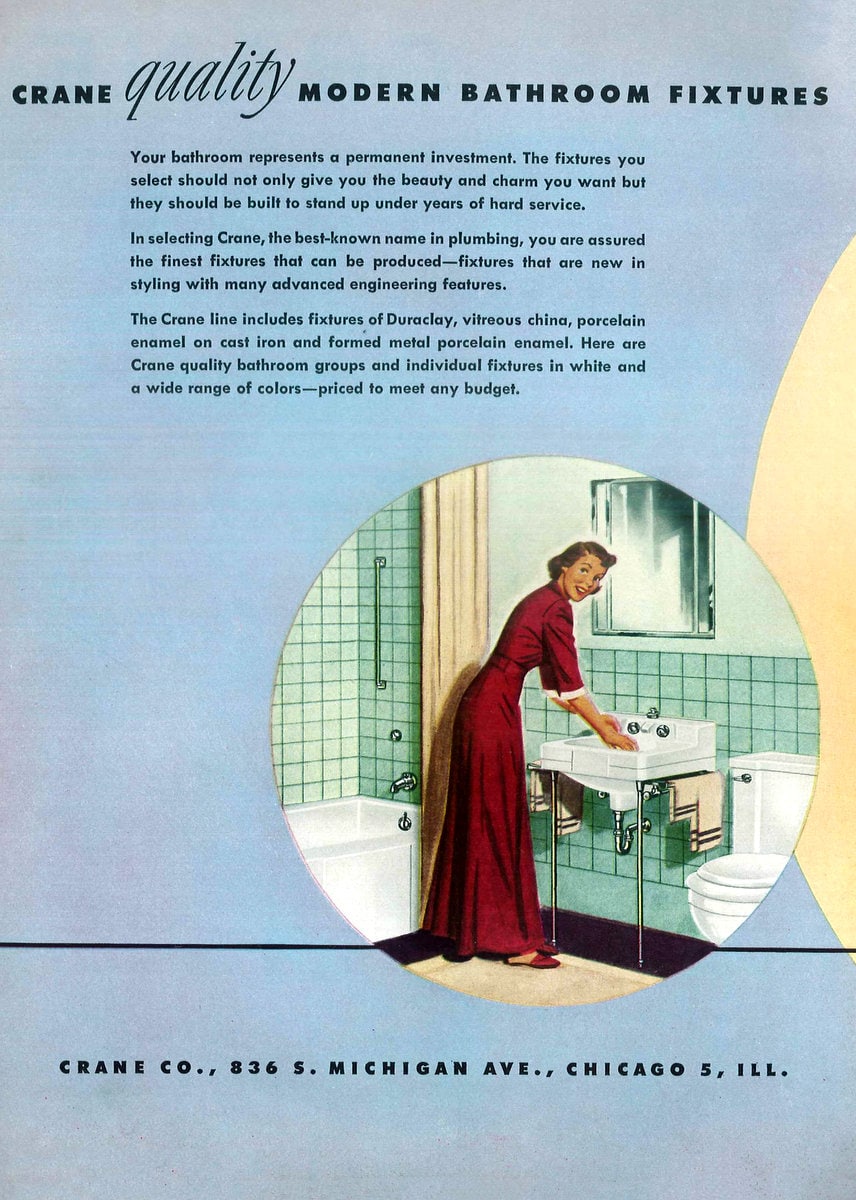
Your bathroom represents a permanent investment. The fixtures you select should not only give you the beauty and charm you want, but they should be built to stand up under years of hard service.
The Crane line includes fixtures of Duraclay, vitreous china, porcelain enamel on cast iron and formed metal porcelain enamel. Here are Crane quality bathroom groups and individual fixtures in white and a wide range of colors — priced to meet any budget.
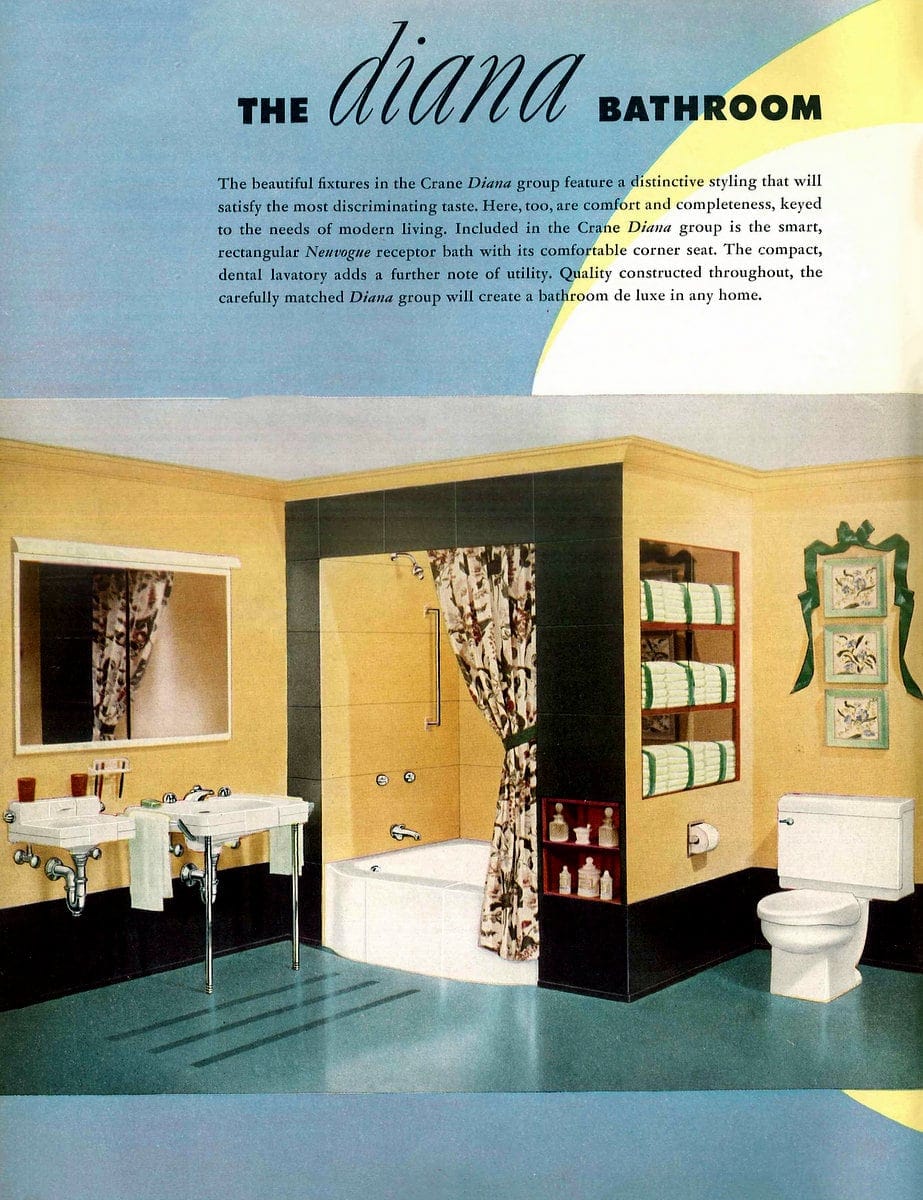
The Diana bathroom
The beautiful fixtures in the Crane Diana group feature a distinctive styling that will satisfy the most discriminating taste. Here, too, are comfort and completeness, keyed to the needs of modern living.
Included in the Crane Diana group is the smart, rectangular Neuvogue receptor bath with its comfortable corner seat. The compact, dental lavatory adds a further note a utility. Quality constructed throughout, the carefully matched Diana group will create a bathroom de luxe in any home.
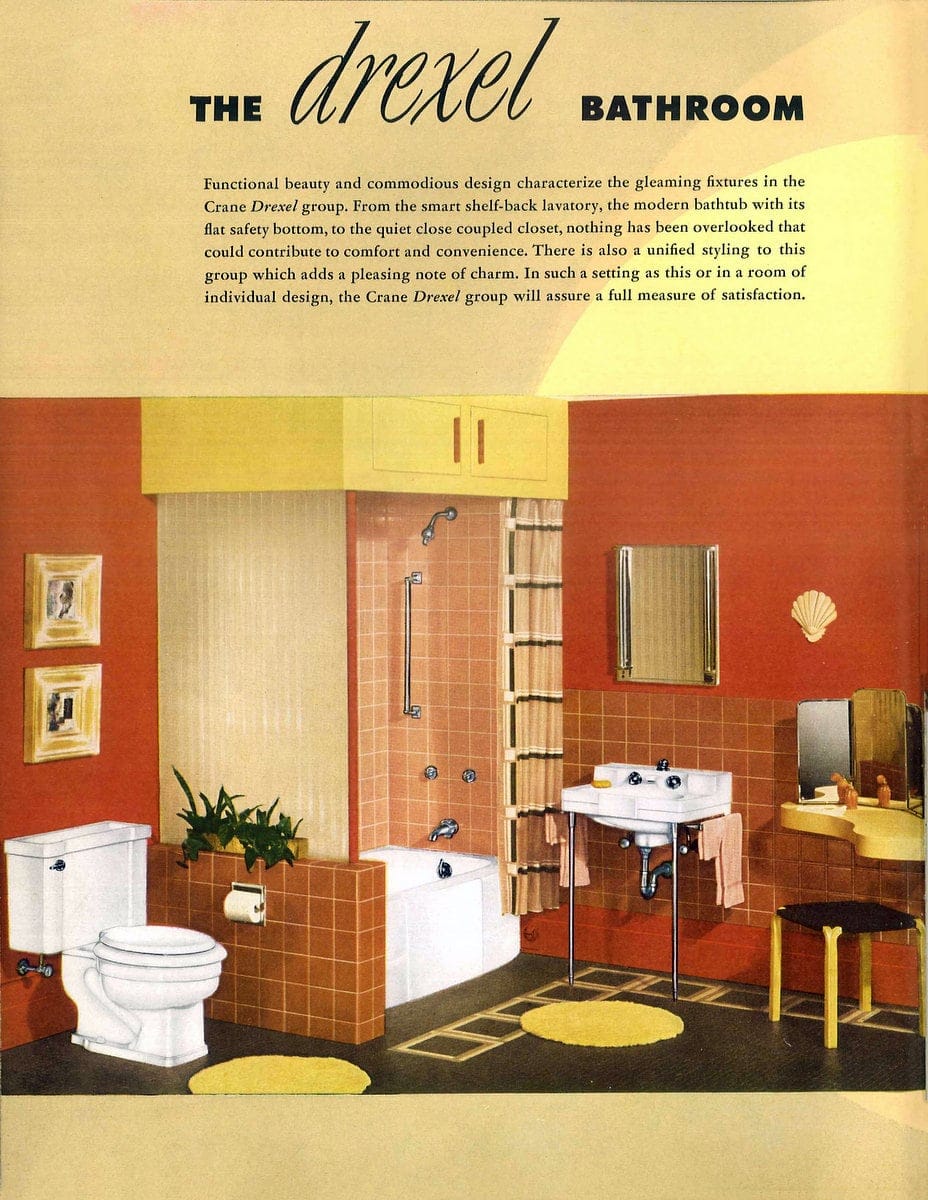
The Drexel bathroom
Functional beauty and commodious design characterize the gleaming fixtures in the Crane Drexel group. From the smart shelf-back lavatory, the modern bathtub with its flat safety bottom, to the quiet close coupled closet, nothing has been overlooked that could contribute to comfort and convenience.
There is also a unified styling to this group which adds a pleasing note of charm. In such a setting as this or in a room of individual design, the Crane Drexel group will assure a full measure a satisfaction.
MORE: 31 vintage pink bathrooms: See some wild bubblegum-era midcentury home decor of the 1950s & 1960s
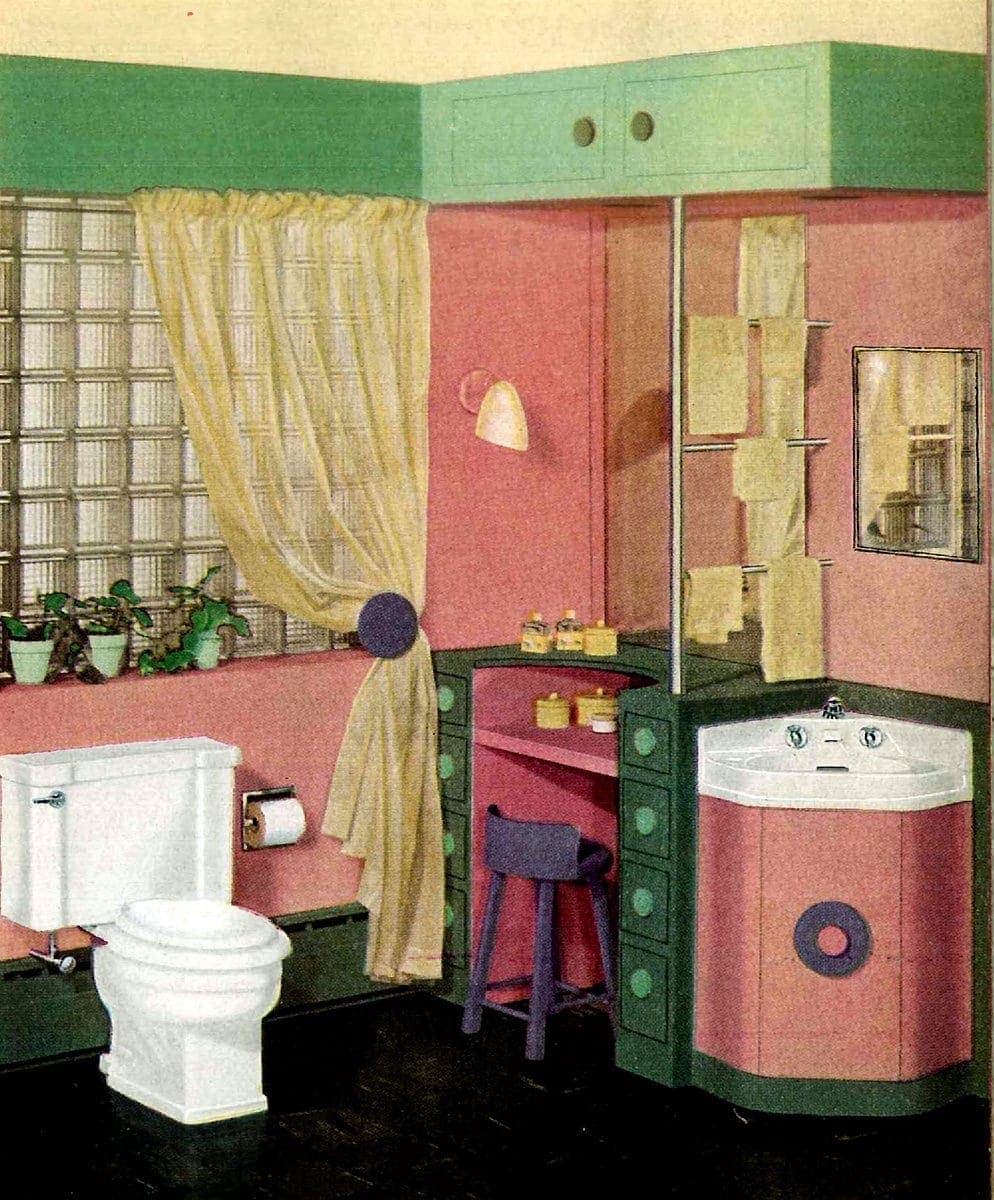
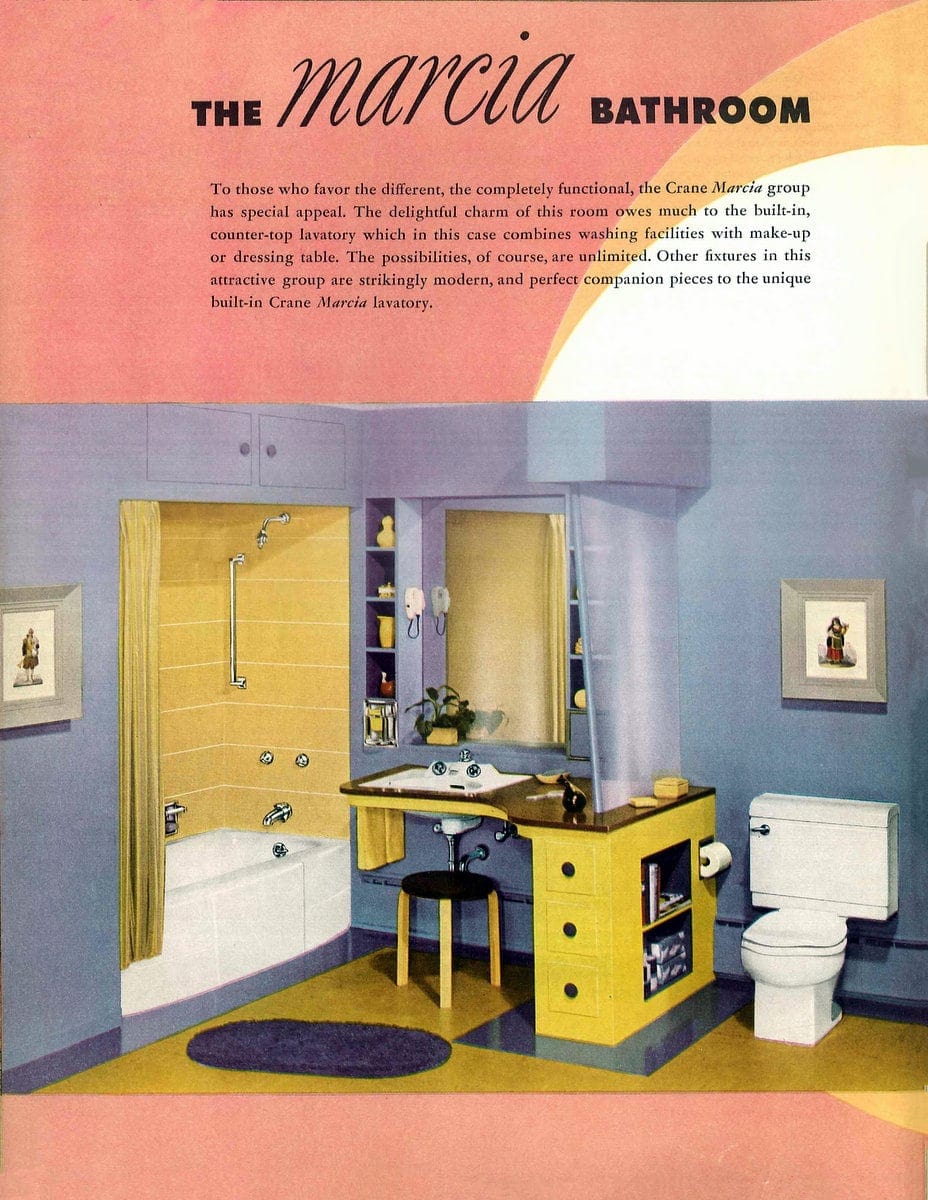
Colorful ’40s bathrooms: The Marcia
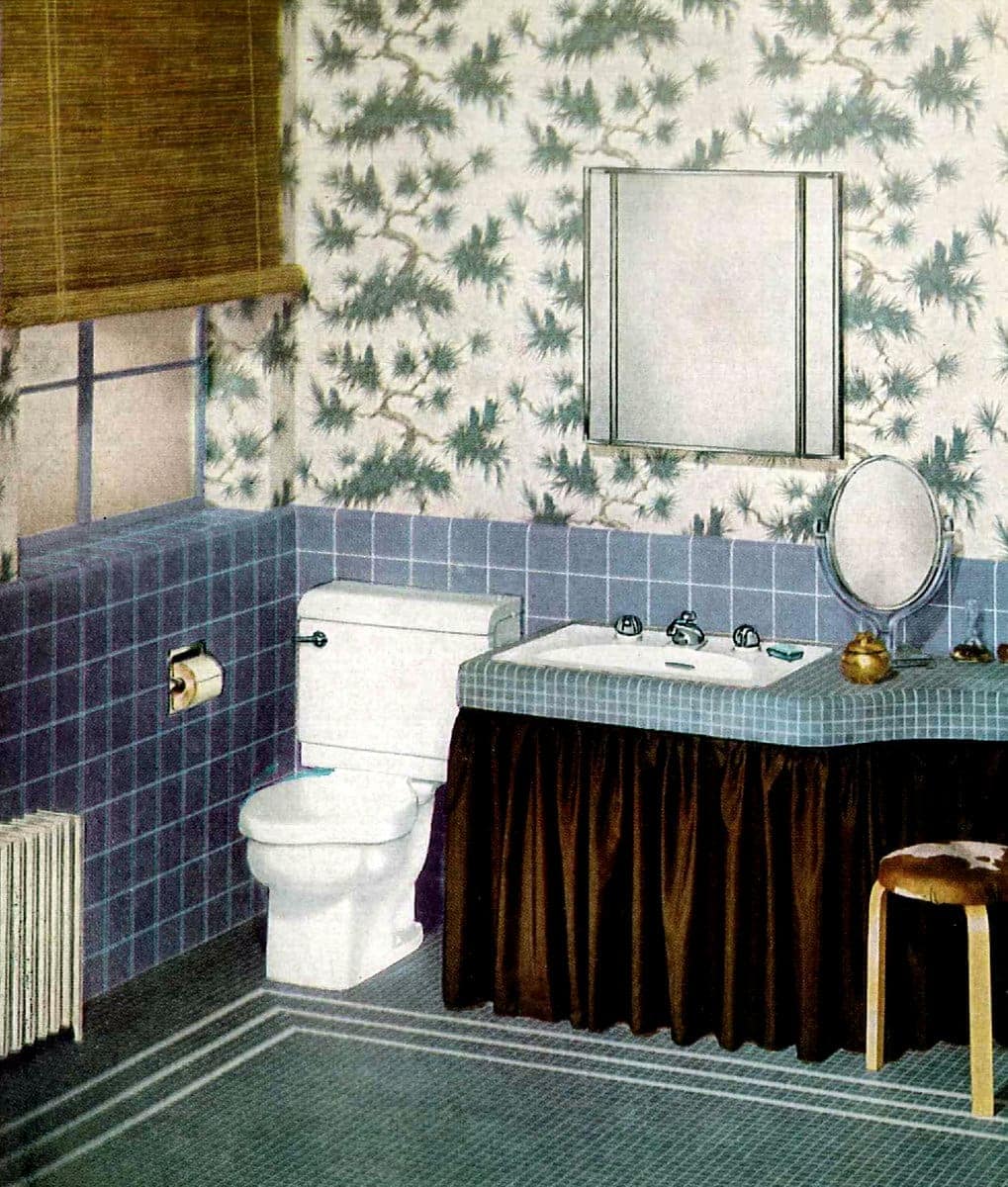
To those who favor the different, the completely functional, the Crane Marcia group has special appeal. The delightful charm of this room owes much to the built-in, counter-top lavatory which in this case combines washing facilities with make-up or dressing table. The possibilities, of course, are unlimited. Other fixtures in this attractive group are strikingly modern, and perfect companion pieces to the unique built-in Crane Marcia lavatory.
MORE: Remember retro toilet paper that had colors & patterns?
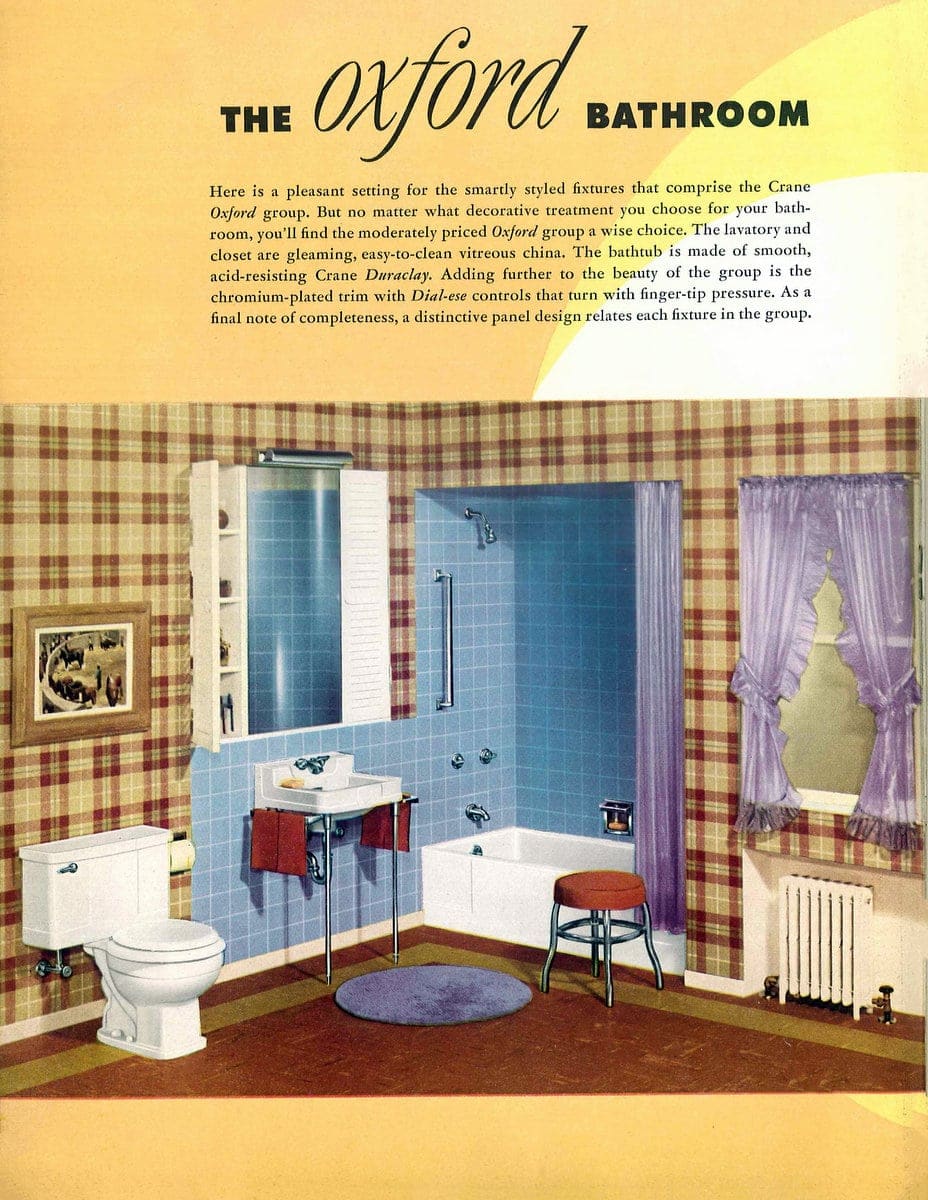
The Oxford bathroom
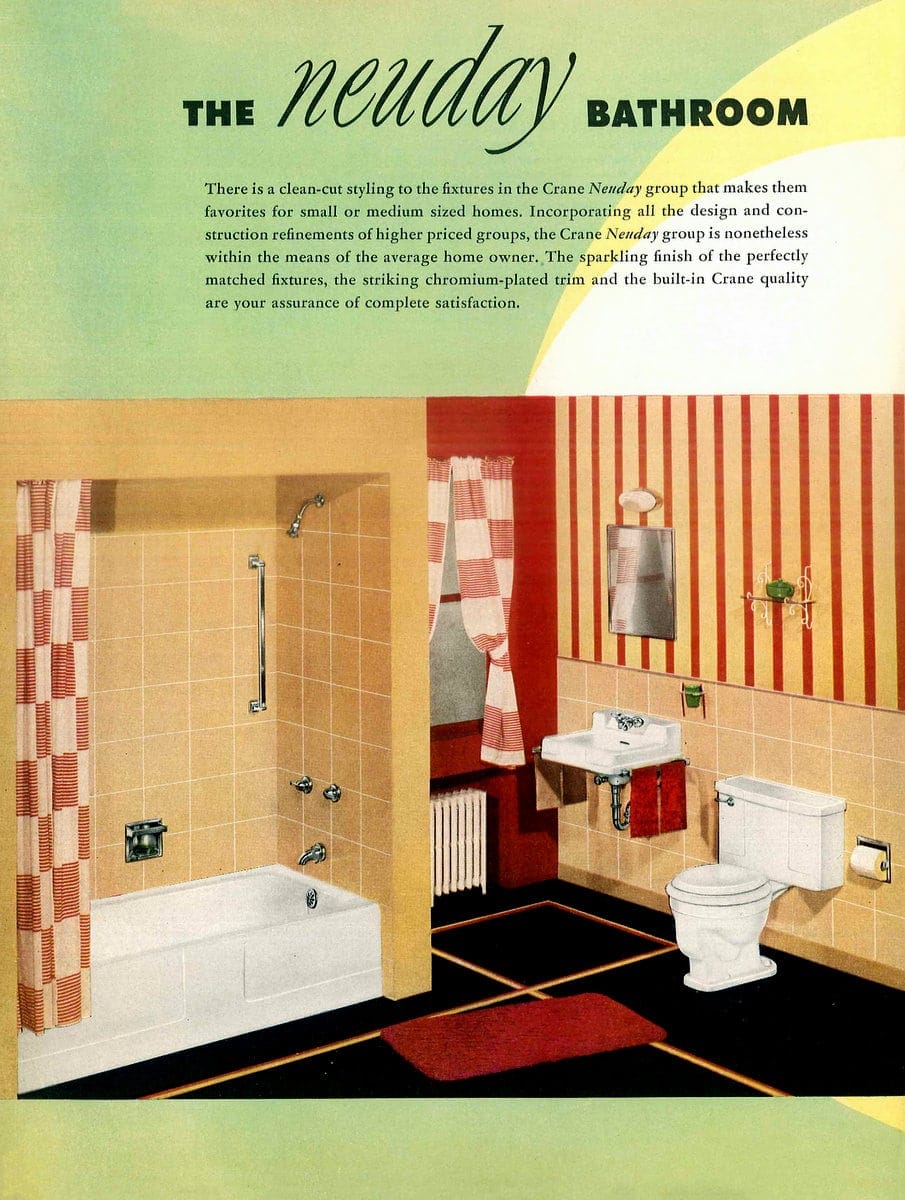
The Neuday bathroom
There is a clean-cut styling to the fixtures in the Crane Neuday group that makes them favorites for small or medium-sized homes. Incorporating all the design and construction refinements of higher priced groups, the Crane Neuday group is nonetheless within the means of the average home owner.
The sparkling finish of the perfectly matched fixture, the striking chromium-plated trim and the built-in Crane quality are your assurance of complete satisfaction.
MORE: See 50+ retro bath towels from the 1950s
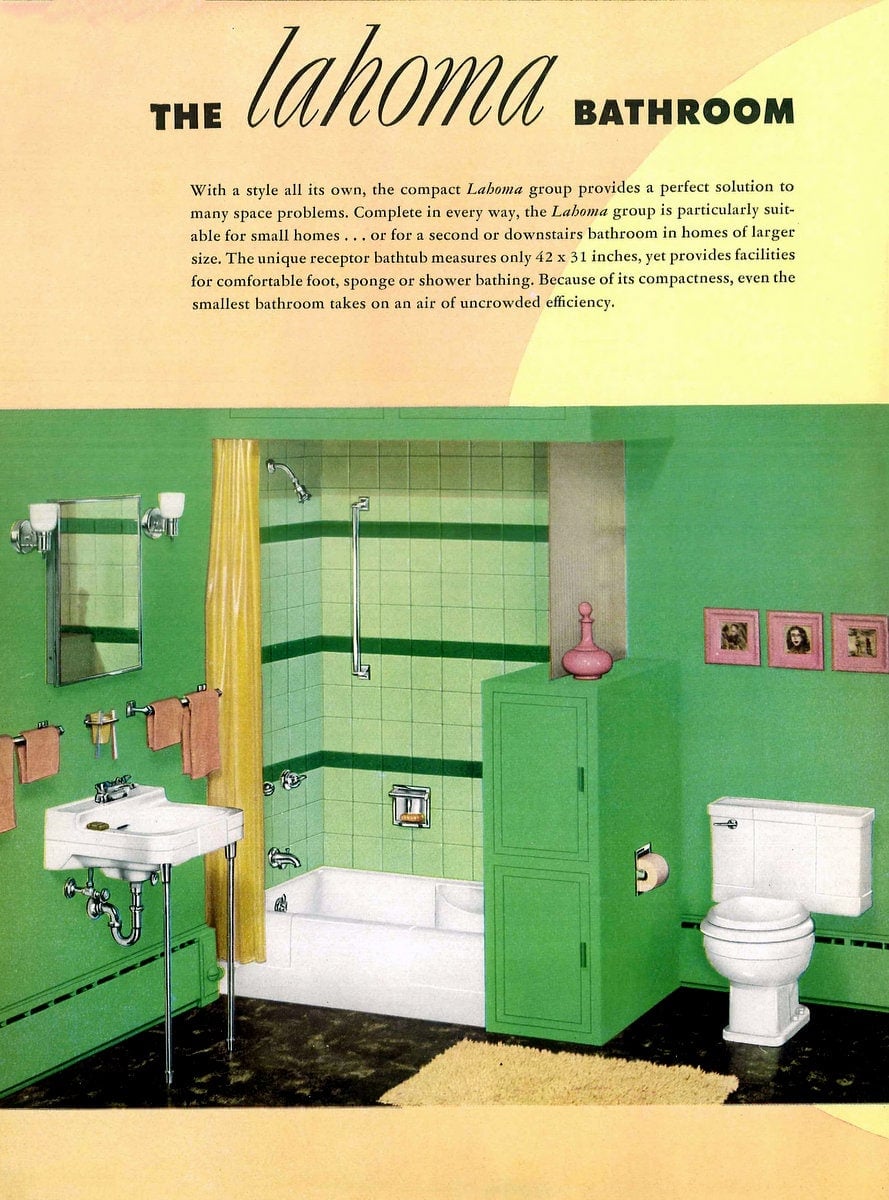
The Lahoma bathroom
With a style all its own, the compact Lahoma group provides a perfect solution to many space problems. Complete in every way, the Lahoma group is particularly suitable for small homes … or for a second or downstairs bathroom in homes of larger size.
The unique receptor bathtub measures only 42 x 31 inches, yet provides facilities for comfortable foot, sponge or shower bathing. Because of its compactness, even the smallest bathroom takes on an air of uncrowded efficiency.
Colorful ’40s bathrooms: The Elayne powder room
MORE: These popular 1950s bathroom color schemes are the epitome of mid-century suburban decor
Old-fashioned Kohler & Armstrong bathroom decor from 1941
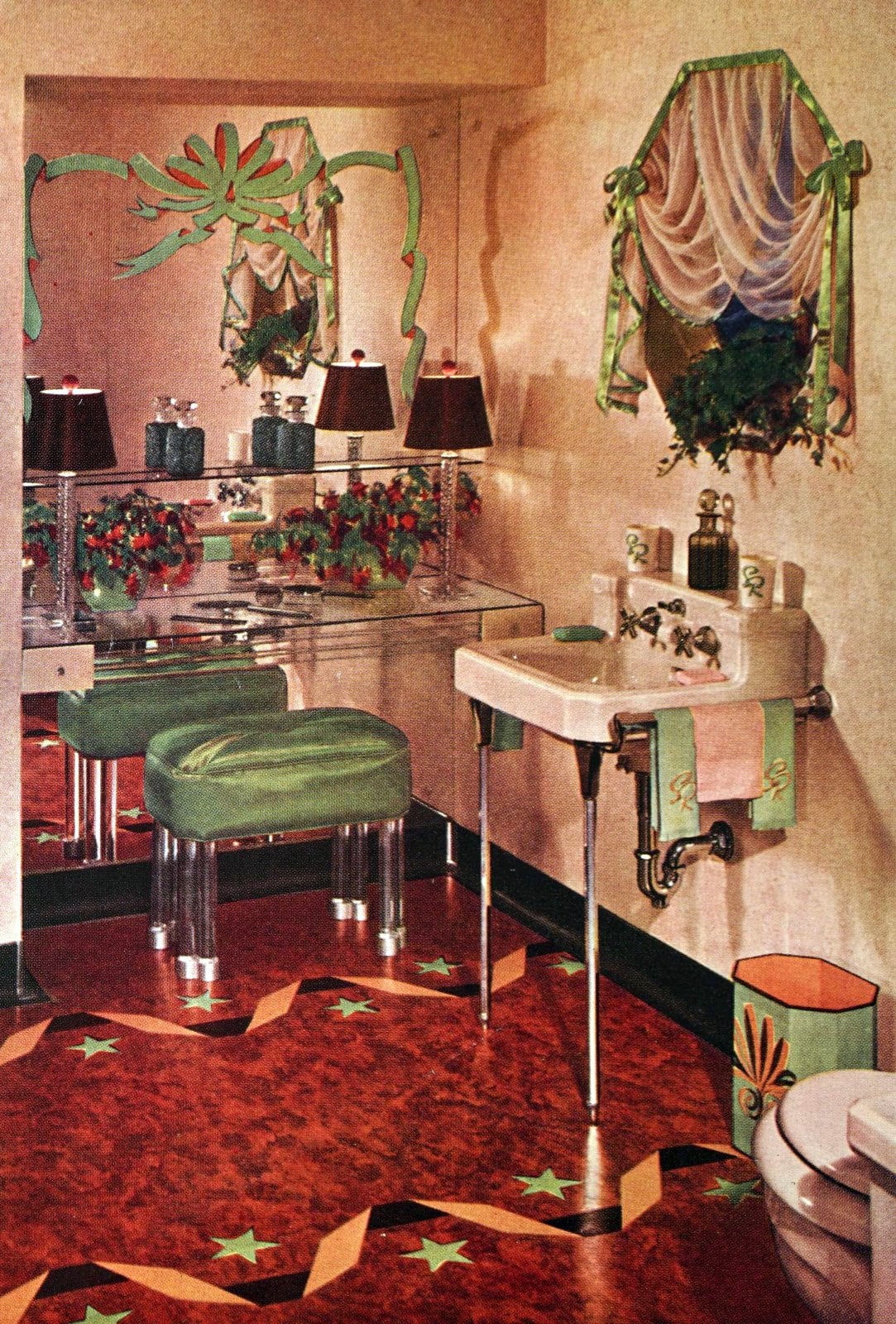
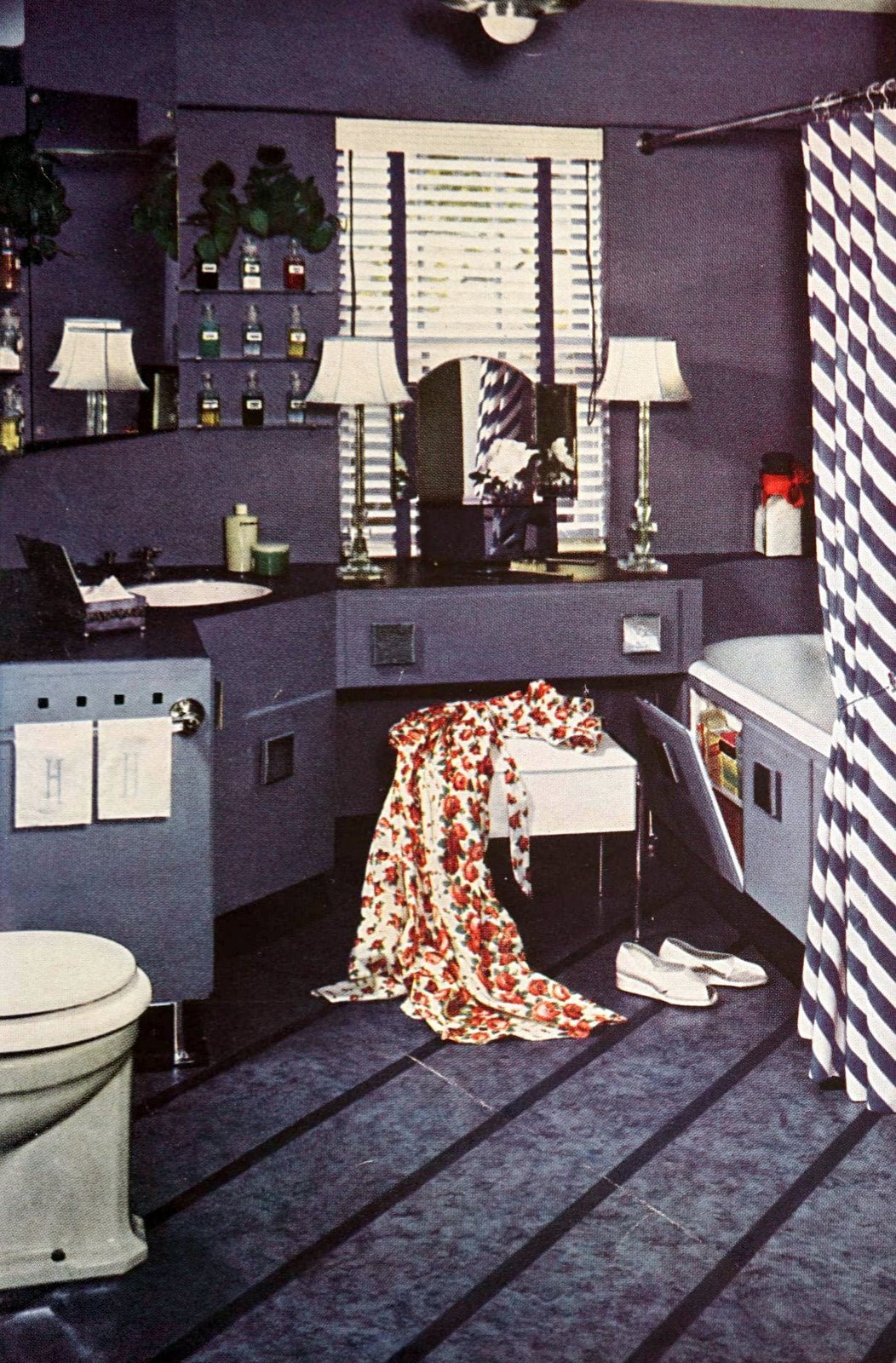
Vintage Kohler bathroom fixtures from 1948
Kohler designers have developed a palette of clean, clear colors which have depth and value, and which harmonize readily with other colors to form many desirable decorative effects. New is Spruce Green, named for the cool green of the forest. Peachblow, Cerulean Blue and Tuscan have proved their popularity over a period of years.
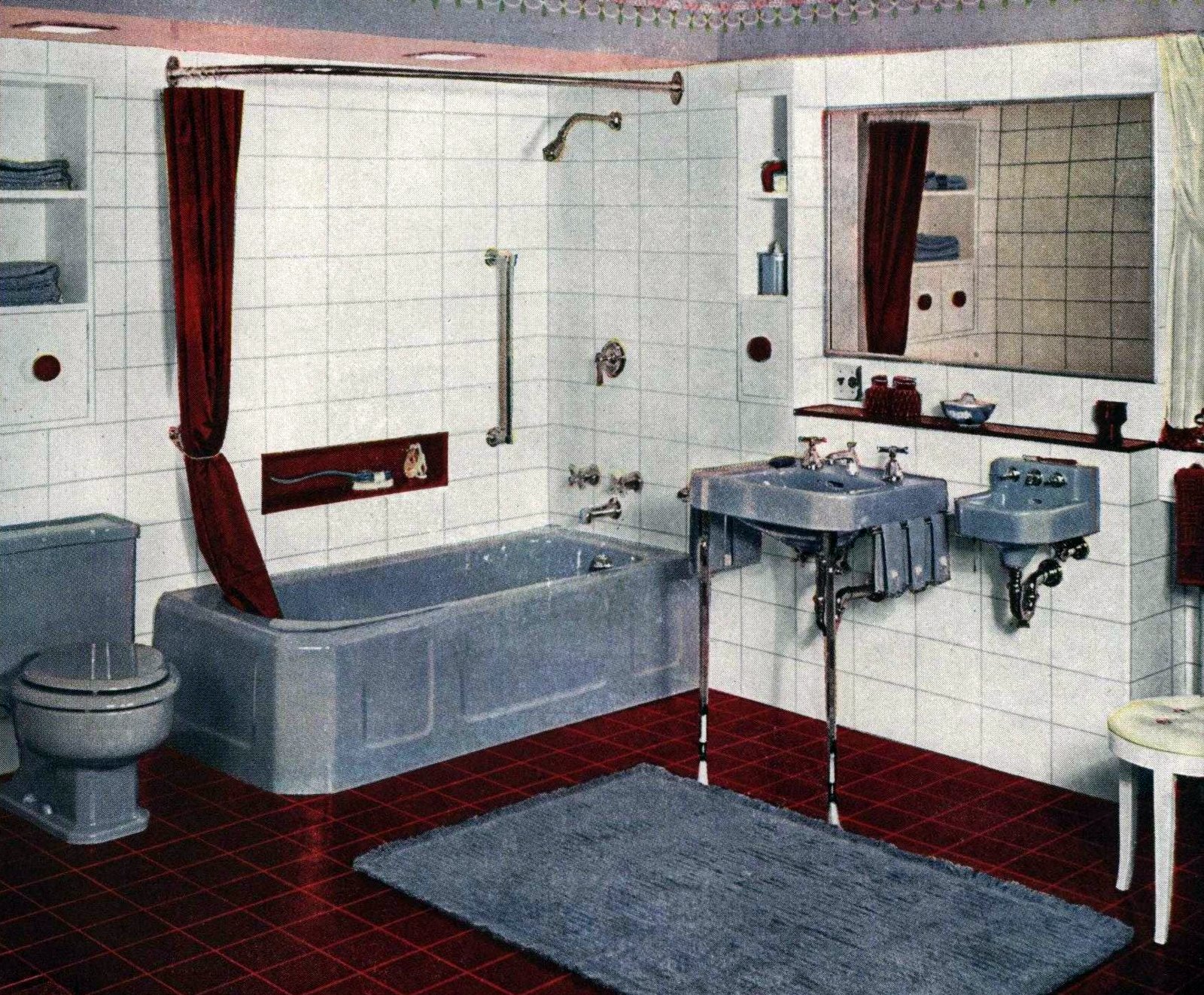
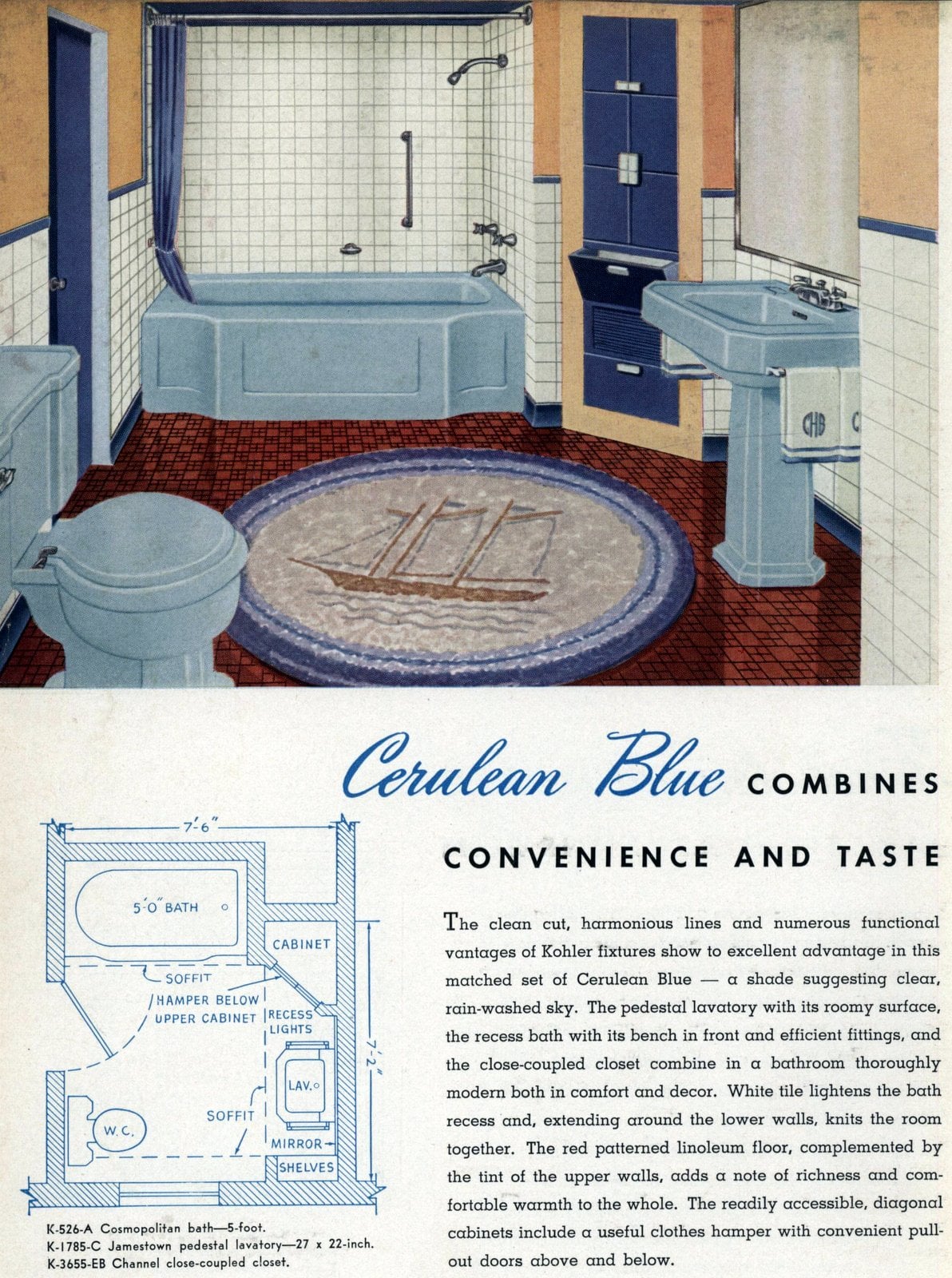
Cerulean Blue — Combines convenience and taste
The clean cut, harmonious lines and numerous functional advantages of Kohler fixtures show to excellent advantage in this matched set of Cerulean Blue — a shade suggesting clear, rain-washed sky. The pedestal lavatory with its roomy surface, the recess bath with its bench in front and efficient fittings, and the close-coupled closet combine in a bathroom thoroughly modern both in comfort and decor.
White tile lightens the bath recess and, extending around the lower walls, knits the room together. The red patterned linoleum floor, complemented by the tint of the upper walls, adds a note of richness and comfortable warmth to the whole. The readily accessible, diagonal cabinets include a useful clothes hamper with convenient pull-out doors above and below.
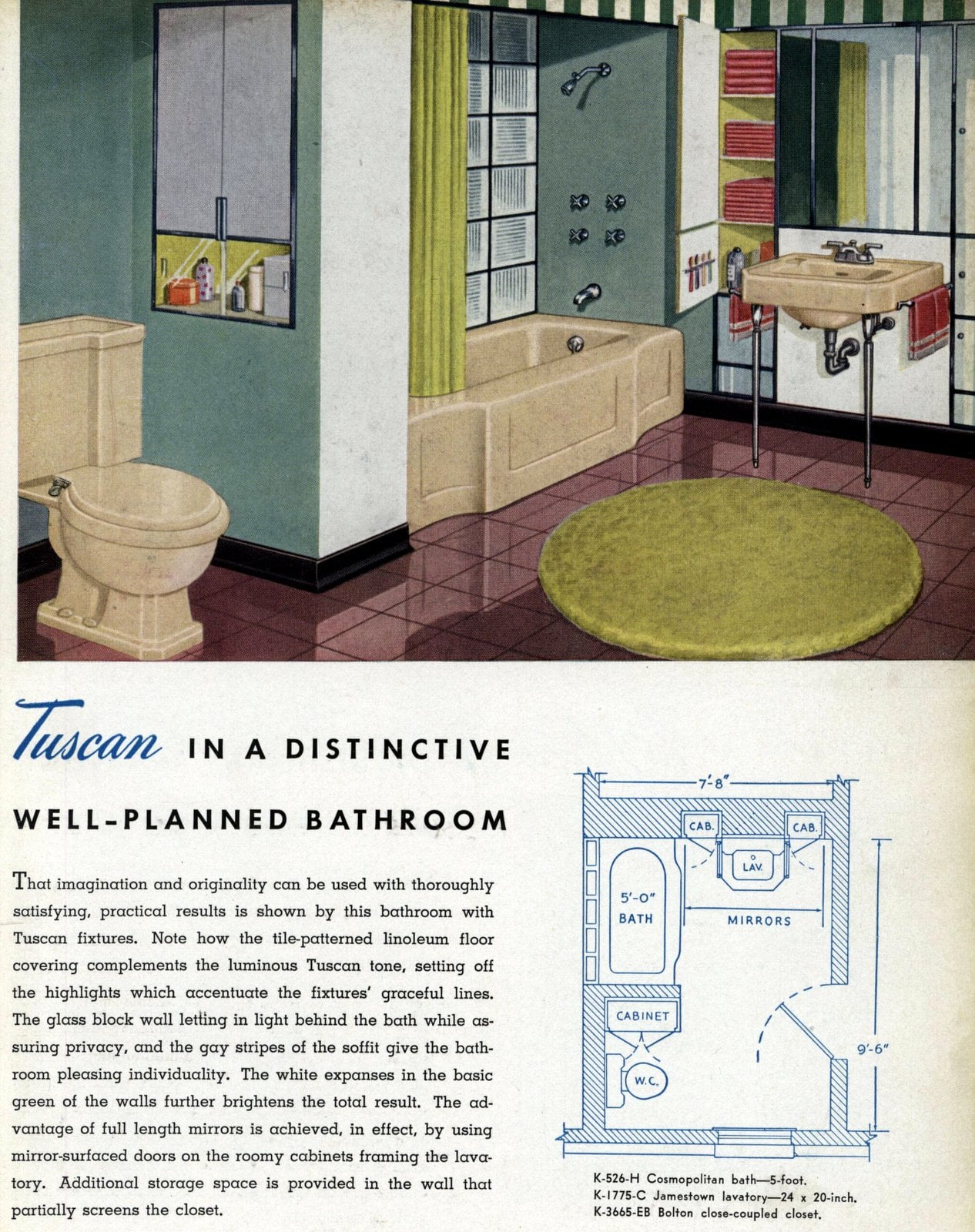
Tuscan — In a distinctive well-planned bathroom
That imagination and originality can be used with thoroughly-satisfying, practical results is shown by this bathroom with Tuscan fixtures. Note how the tile-patterned linoleum floor covering complements the luminous Tuscan tone, setting off the highlights which accentuate the fixtures’ graceful lines.
The glass block wall letting in light behind the bath while assuring privacy, and the gay stripes of the soffit give the bathroom pleasing individuality. The white expanses in the basic green of the walls further brightens the total result. The advantage of full length mirrors is achieved, in effect, by using mirror-surfaced doors on the roomy cabinets framing the lavatory. Additional storage space is provided in the wall that partially screens the closet.
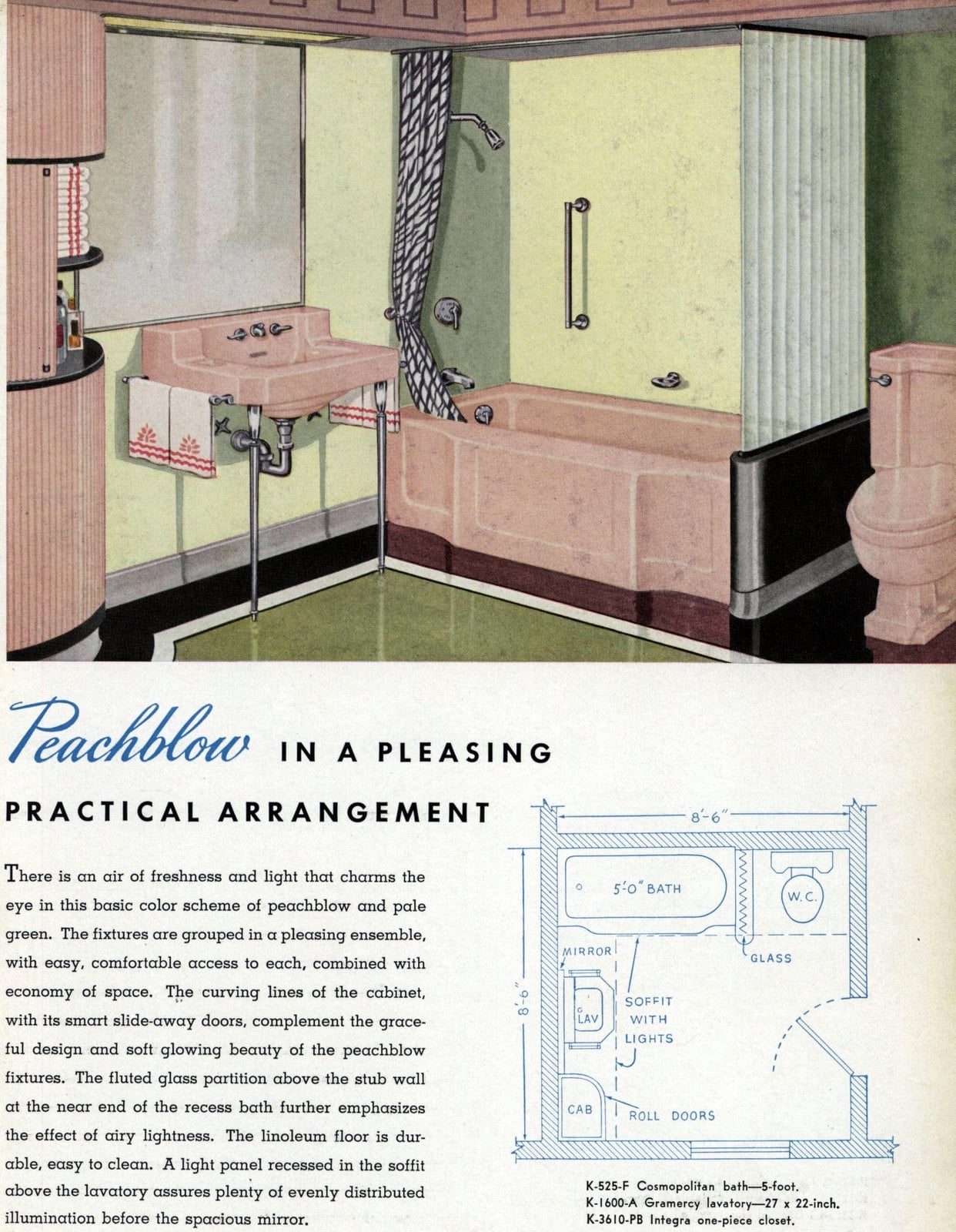
Peachblow — In a pleasing practical arrangement
There is an air of freshness and light that charms the eye in this basic color scheme of peachblow and pale green. The fixtures are grouped in a pleasing ensemble, with easy, comfortable access to each, combined with economy of space. The curving lines of the cabinet, with its smart slide-away doors, complement the graceful design and soft glowing beauty of the peachblow fixtures.
The fluted glass partition above the stub wall at the near end of the recess bath further emphasizes the effect of airy lightness. The linoleum floor is durable, easy to clean. A light panel recessed in the soffit above the lavatory assures plenty of evenly distributed illumination before the spacious mirror.
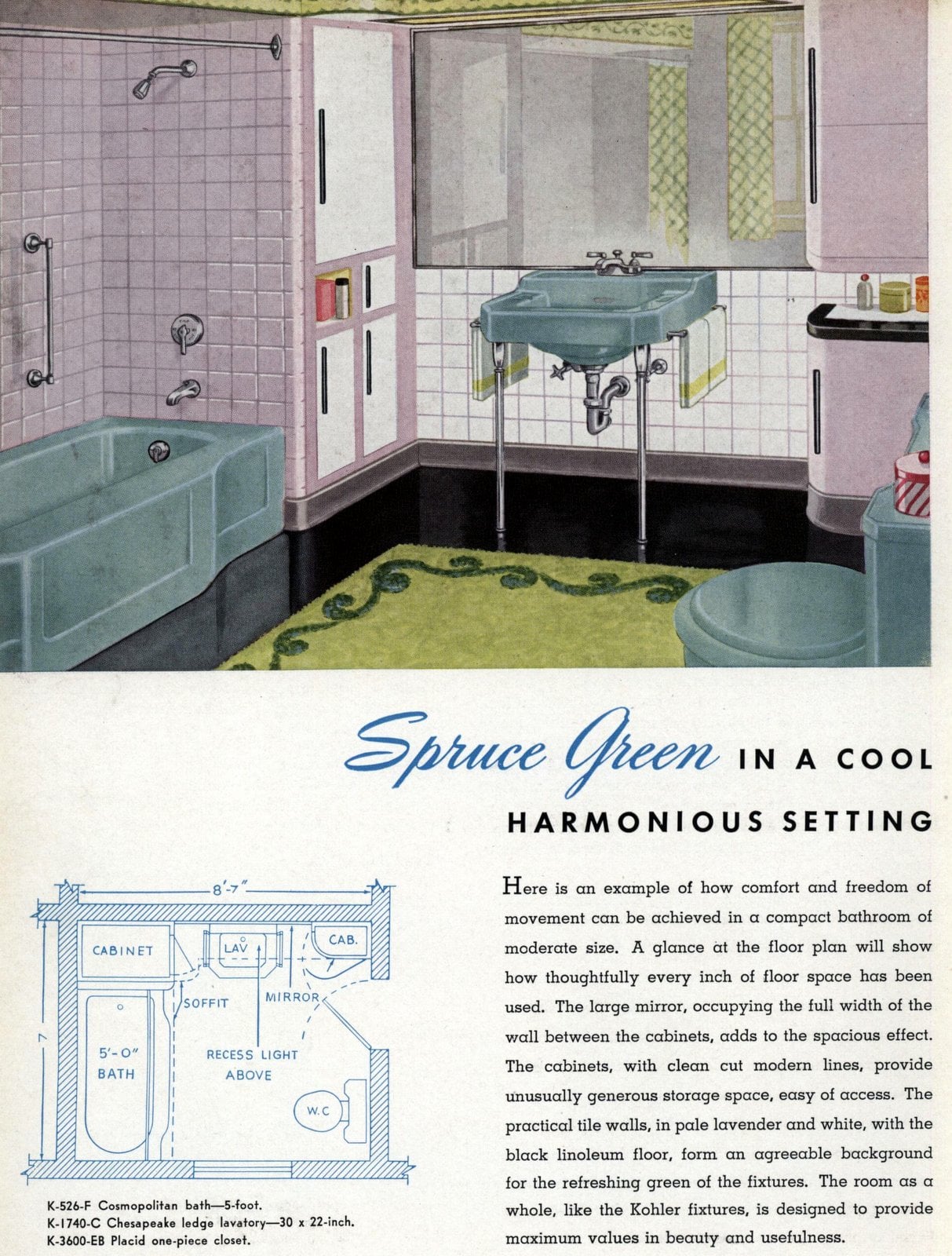
Spruce Green — In a cool, harmonious setting
Here is an example of how comfort and freedom of movement can be achieved in a compact bathroom of moderate size. A glance at the floor plan will show how thoughtfully every inch of floor space has been used. The large mirror, occupying the full width of the wall between the cabinets, adds to the spacious effect.
The cabinets, with clean cut modern lines, provide unusually generous storage space, easy of access. The practical tile walls, in pale lavender and white, with the black linoleum floor, form an agreeable background for the refreshing green of the fixtures. The room as a whole, like the Kohler fixtures, is designed to provide maximum values in beauty and usefulness.
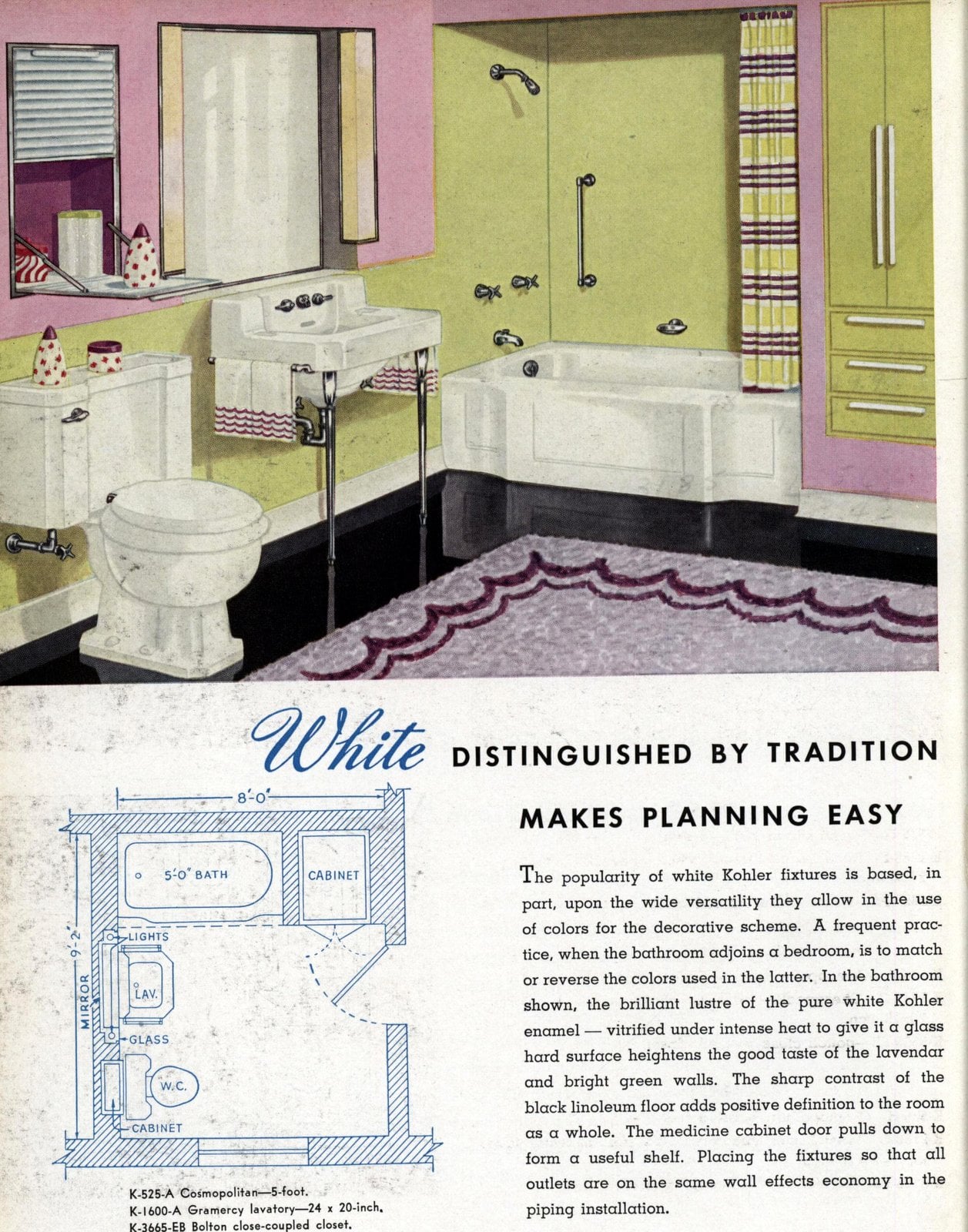
White — Distinguished by tradition, makes planning easy
The popularity of white Kohler fixtures is based, in part, upon the wide versatility they allow in the use of colors for the decorative scheme. A frequent practice, when the bathroom adjoins a bedroom, is to match or reverse the colors used in the latter.
In the bathroom shown, the brilliant lustre of the pure white Kohler enamel — vitrified under intense heat to give it a glass hard surface — heightens the good taste of the lavender and bright green walls. The sharp contrast of the black linoleum floor adds positive definition to the room as a whole. The medicine cabinet door pulls down to form a useful shelf. Placing the fixtures so that all outlets are on the same wall effects economy in the piping installation.
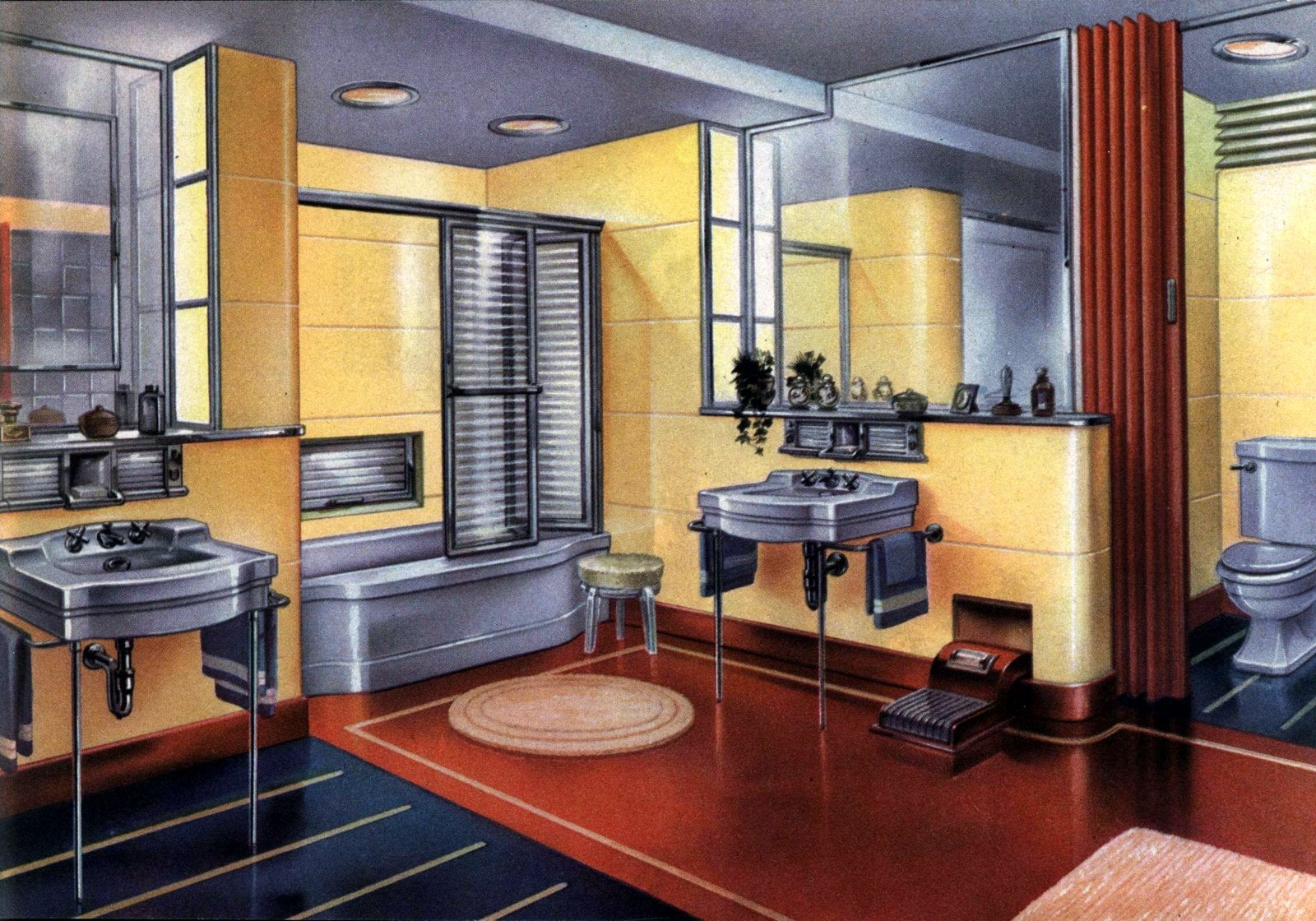
Colorful old Briggs 1948 bathroom fixtures
DON’T MISS: 36 vintage 1950s bathroom tile design ideas