Coburn had earned that travel by the late 1960s. He broke through playing the knife-throwing mercenary Britt in The Magnificent Seven in 1960, followed it with The Great Escape alongside Steve McQueen in 1963, and became a full-fledged star in 1966 as suave spy Derek Flint in Our Man Flint, a James Bond spoof successful enough to spawn a sequel. That run of films took him to locations across several continents, and the souvenirs came home with him.

The results filled the house room by room. Temple bells from Bangkok hung near the front door alongside a pair of guardian dog statues from the same city, and the family’s pet monkey had free run of a Persian pavilion, a lattice-work room with banquettes upholstered in Kelim rugs. The living room ceiling, once what Duquette called “very Spanish, very stark,” became a canopy of Indian fabric, gold paint and mother-of-pearl shells, with the Coburn family doing much of the hands-on work themselves.
Duquette sketched out the general plan for each room, then let the Coburns finish it, which is part of why the finished spaces read as personal rather than showroom-perfect. Mrs. Coburn stretched Indian fabric across the walls of a small closet to turn it into a bar and bordered a tiled doorway with black and white stenciling. A stairwell nook became a small music room done in six shades of turquoise, where the family and friends gathered to play flutes and drums. The guest bedroom went fully Far Eastern, with a fabric-paneled ceiling and a Chinese canopy bed.
Coburn’s career would take a very different turn over the following decades. Rheumatoid arthritis slowed him through much of the 1970s and 80s, before a health turnaround let him return to steady work in the 1990s, including an Academy Award for Affliction in 1998 and a voice role as Henry J. Waternoose in Pixar’s Monsters, Inc. in 2001. But in 1970, at the height of his Flint-era fame, his California house was less about celebrity and more about a couple who liked bringing the world home with them.
The photos and clippings collected on this page capture that house as it looked in 1970, room by room, down to the flowers the Coburns kept on hand to brighten the darker corners.
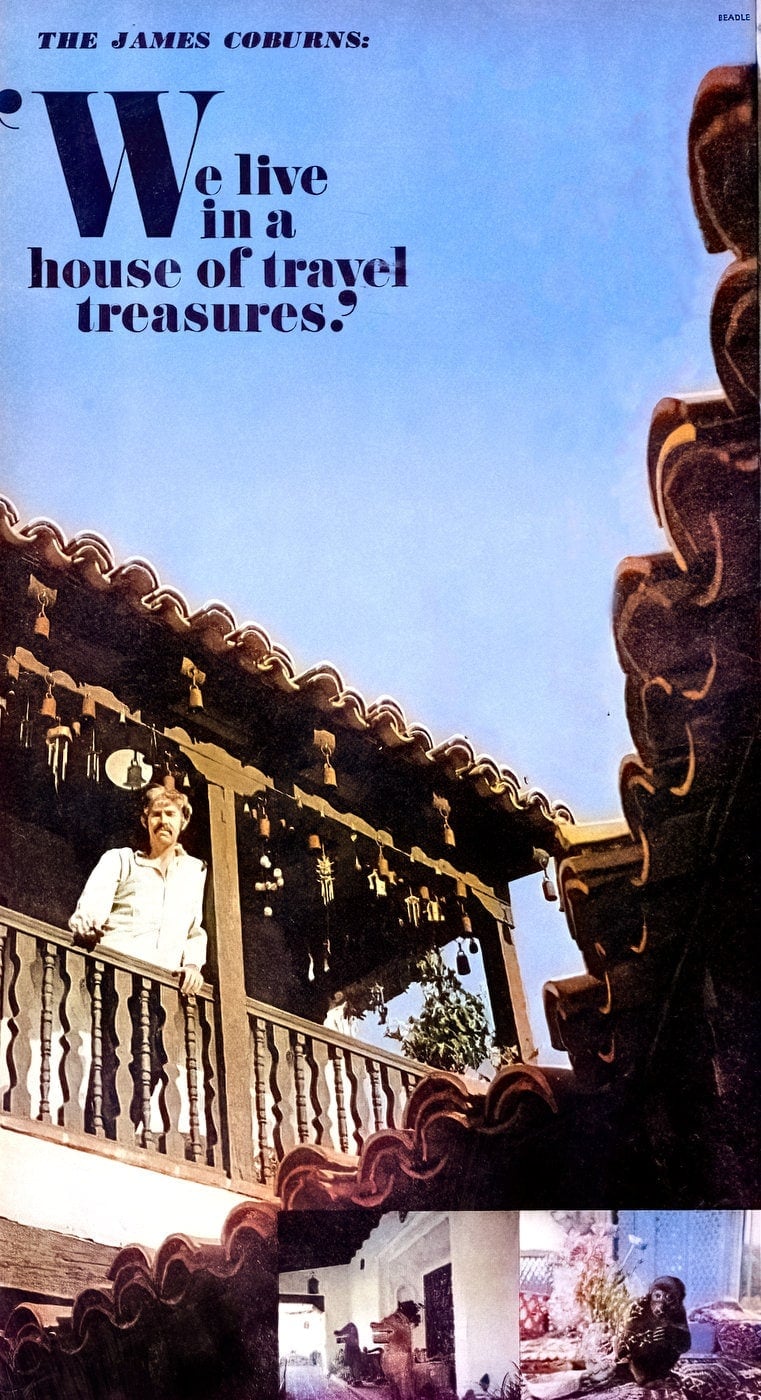
Inside James Coburn’s house: “We live in a house of travel treasures.”
If anyone ever lived with the things they love,” say actor James Coburn and his wife Beverly, “We do. We’ve toted all kinds of things back from trips and far-flung movie locations.”
Yet, with the help of interior designer Tony Duquette, the house is far more than a collector’s paradise. “For all its glitter and color and Moroccan patterns, it’s surprisingly serene.”
And completely exotic. The temple bells jangling over Mr. Coburn’s head came from Bangkok, as did the guardian dogs at the front door.
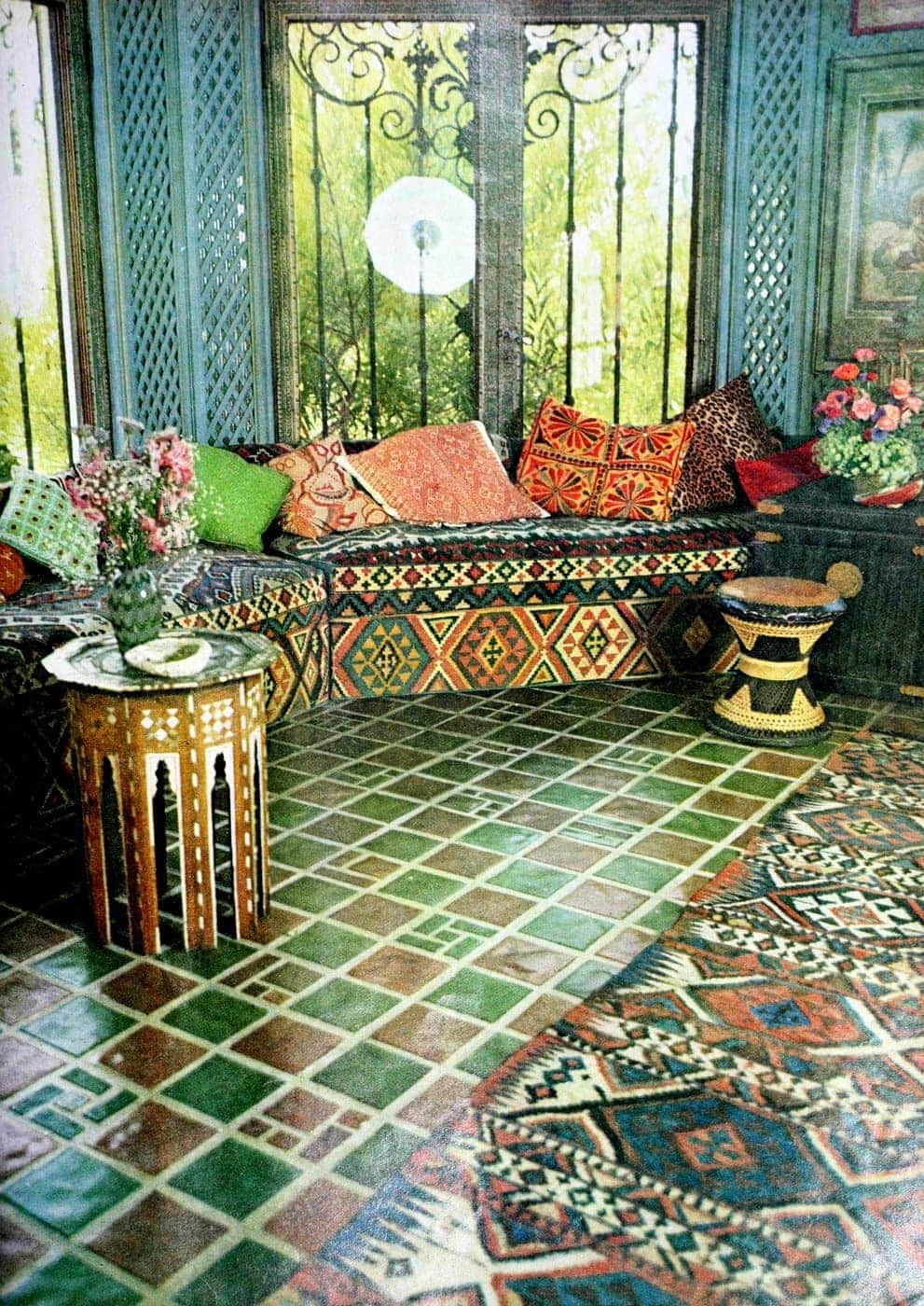
The Coburns’ pet monkey haunts the Persian pavilion — a lattice-work room with banquettes which are upholstered in Kelim rugs.
MORE: Get down with 70 groovy vintage vinyl floors from the ’70s & ’80s
“We are very happy living with all this vivid color and pattern.”
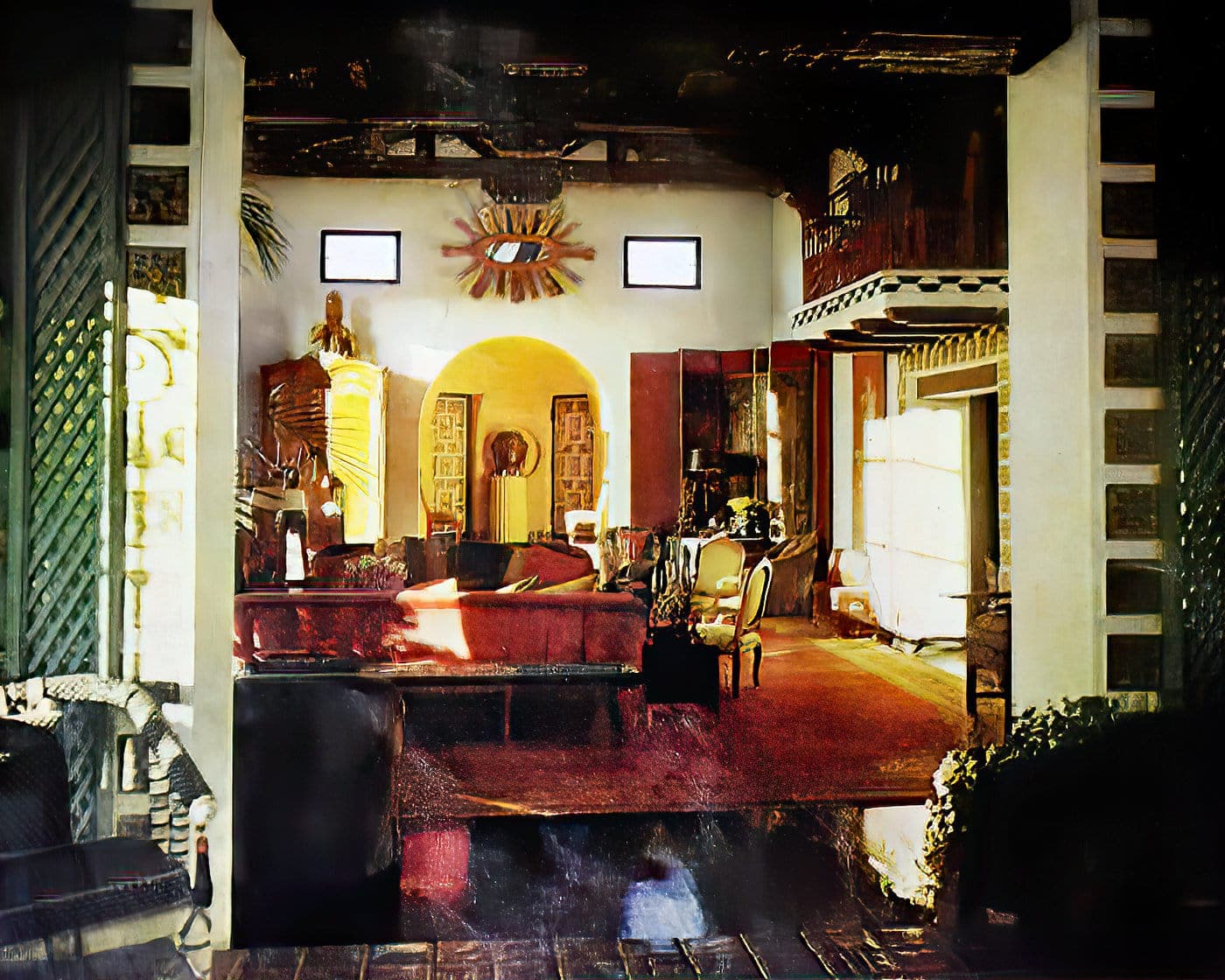
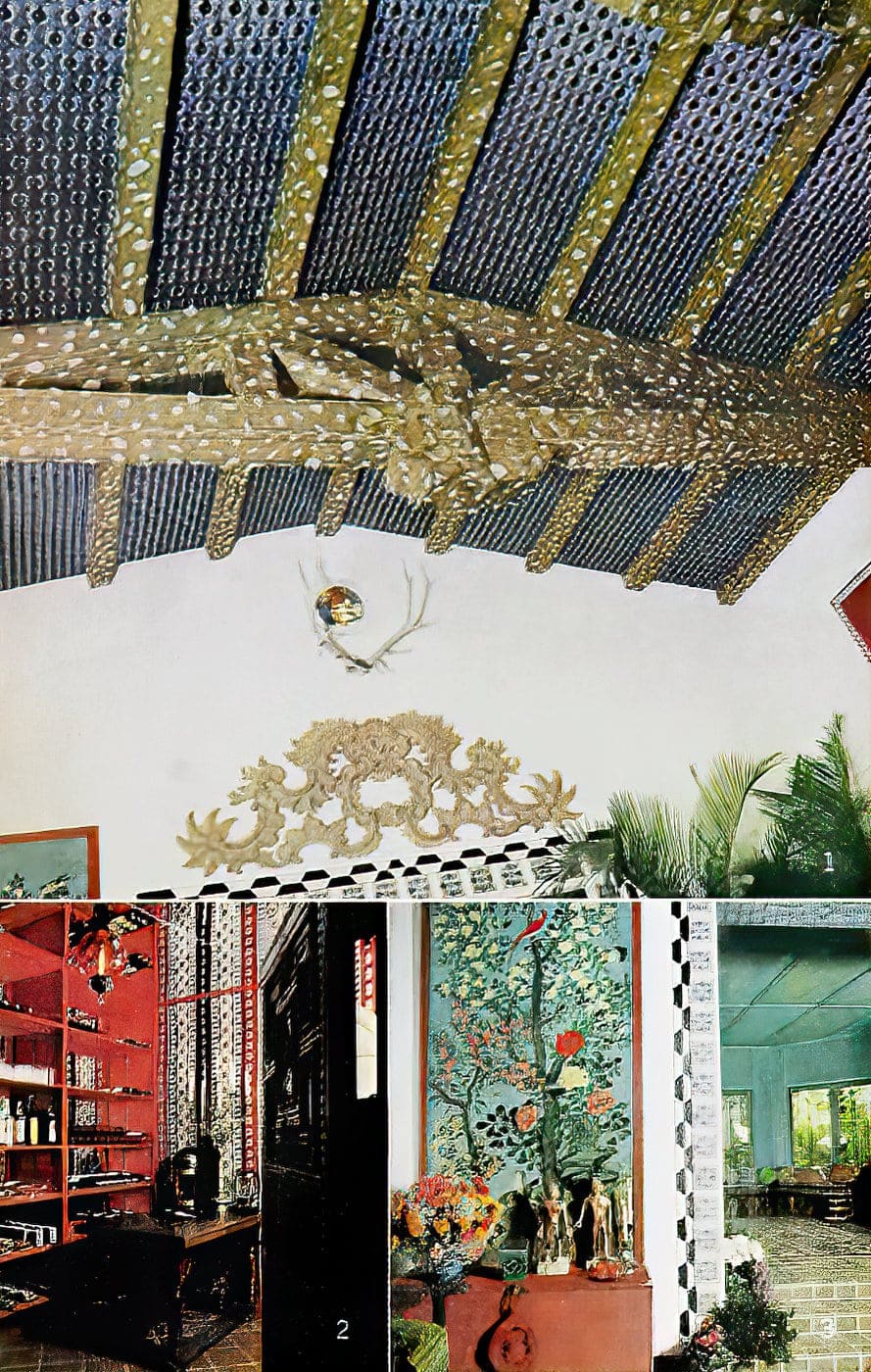
Kipling to the contrary, East and West blend beautifully in the Coburns’ living room. A beamed ceiling, that was “very Spanish, very stark.” became a fantasy canopy with Indian fabric, gold paint, mother-of-pearl shells.
“The whole family worked on it.” Designer Duquette outlined the general plan of the house, then let the Coburns execute much of the work. “In this way, the house really belongs to its owners.”
ALSO SEE: Michael Landon and his family at home (1975)
A rich Indian fabric stretched on the walls by Mrs. Coburn turned a small closet into a handsome bar. She also bordered a door framing of old tiles with black and white stenciling.
“We always keep the house loaded with flowers. They make the dark spots come alive.”
The warm, welcoming living room
By day, vivid yellows and oranges light up the once austere living room, and at night, the Coburns and daughter Lisa relax in the glow of candlelight. “Life in this house is as casual as we can make it.”
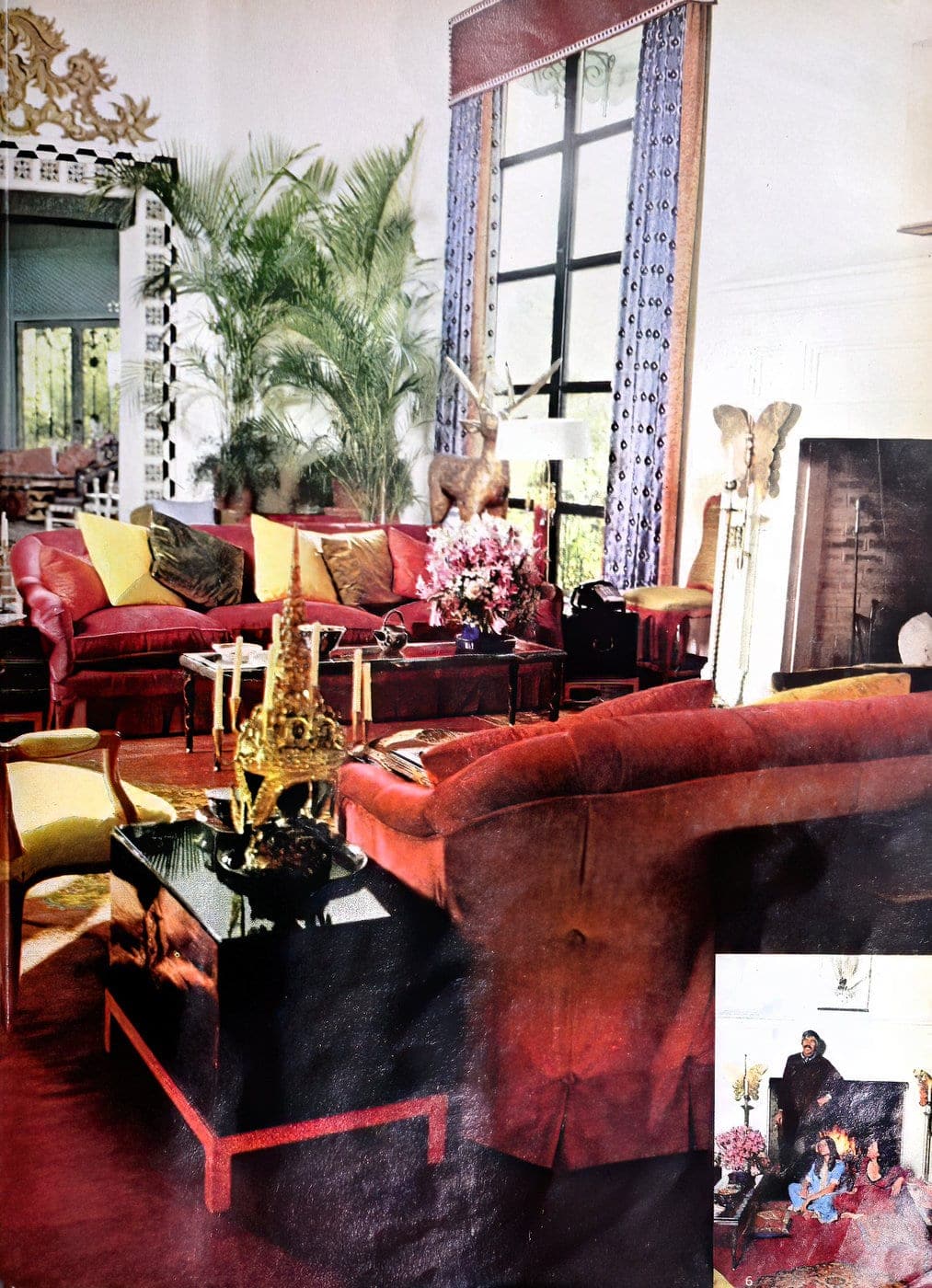
“We collect atmosphere as well as things.”
The Coburns house is like looking into a wonderful old chest — the more you look the more you discover.
Tucked into a stairwell, a little music room, is washed in six subtle shades of turquoise.
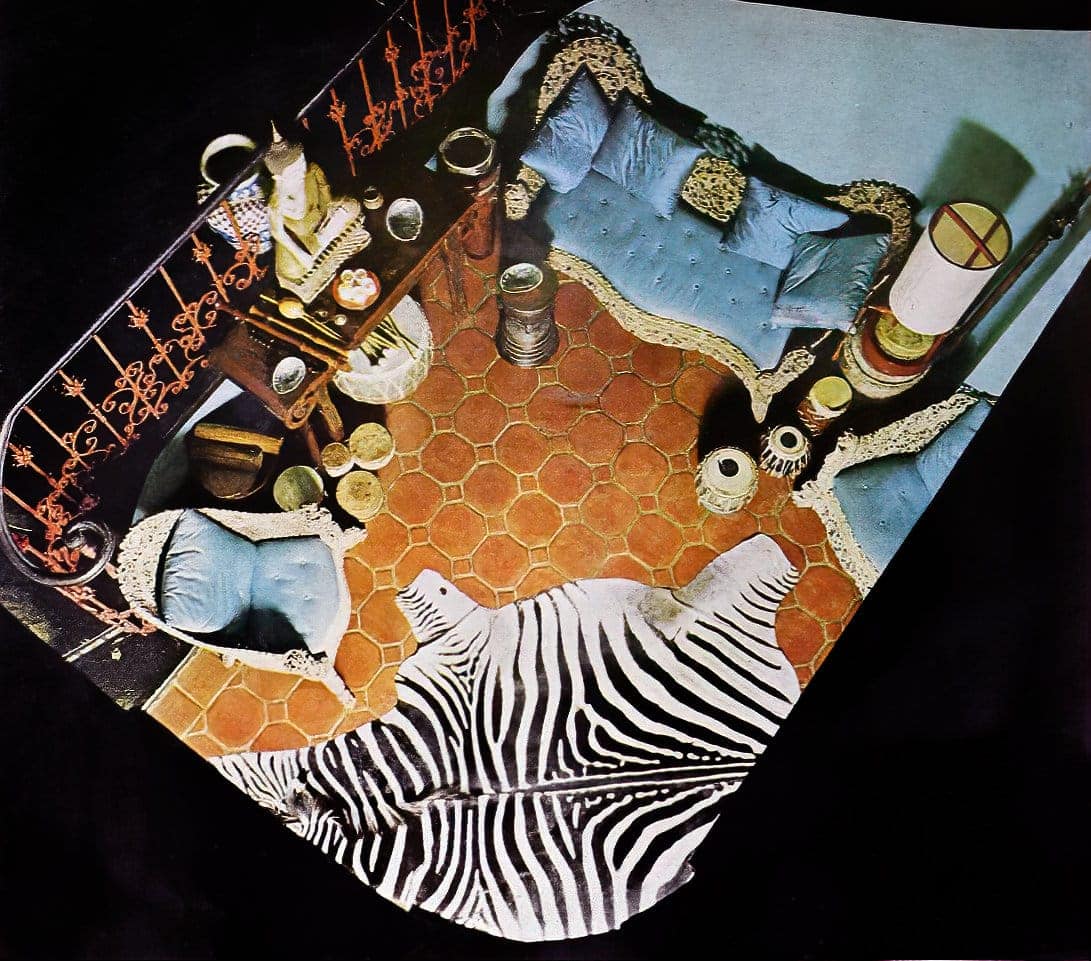
The collection of instruments is more than exotic decoration. “Many of our parties end up here, because we have a group of friends who play the flutes and drums. My husband, particularly, is a great drummer.”
As interesting as the instruments and painted Indian furniture are such imaginative touches as a tray of candles and a burst of flowers placed, votive-like, in a niche with an Oriental statue, a black and white border painted around a window hung with an Indian fabric.

Inside James Coburn’s home: The guest bedroom
The guest bedroom was gloriously Far Eastern with a fabric-paneled ceiling, colorful doors, and a magnificent Chinese canopy-style bed.

ALSO SEE: Charles Bronson at home (1975)