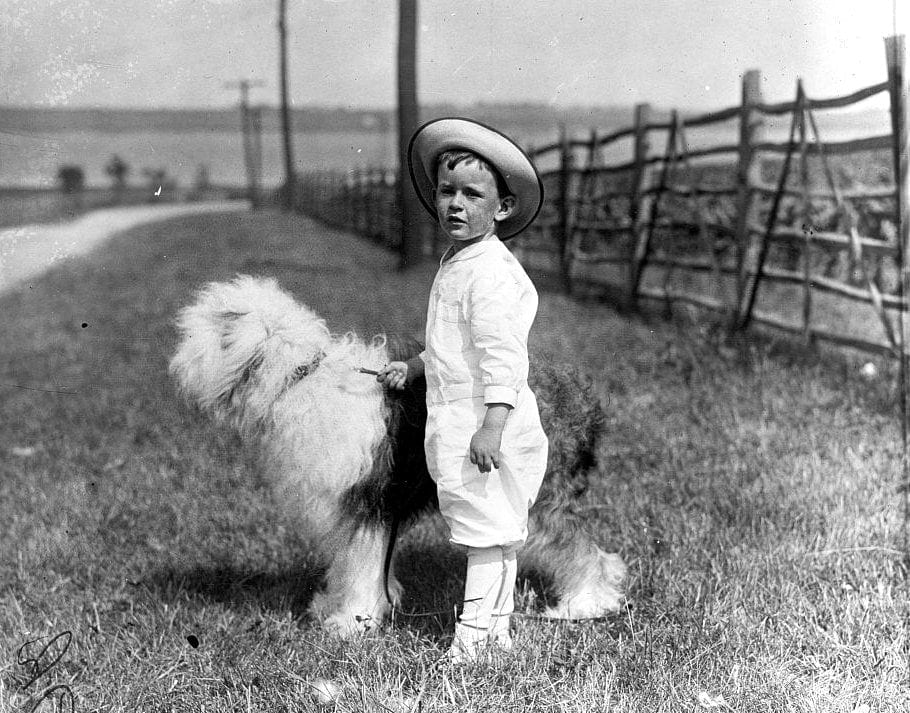
The article detailed the extraordinary efforts their families made to provide what they considered ideal conditions: multiple nurses, private doctors, carefully arranged nurseries and dedicated security. Vincent McLean, for example, was rarely out of sight of adults hired to protect and accompany him, while young John Jacob Astor’s living expenses were said to total $32,000 a year. Alfred Vanderbilt Jr. had inherited a share of a vast fortune and was surrounded by a full-time staff of caretakers. According to the original report, these arrangements were intended to ensure that these children had every advantage in health, safety and early development.

This contemporary look from 1915 offers a glimpse into the world of early 20th century American wealth through the lens of childhood. Below, we’ve shared excerpts and images from the original piece in The Day Book so you can see how newspapers portrayed the early lives of those born into the country’s most prominent families.
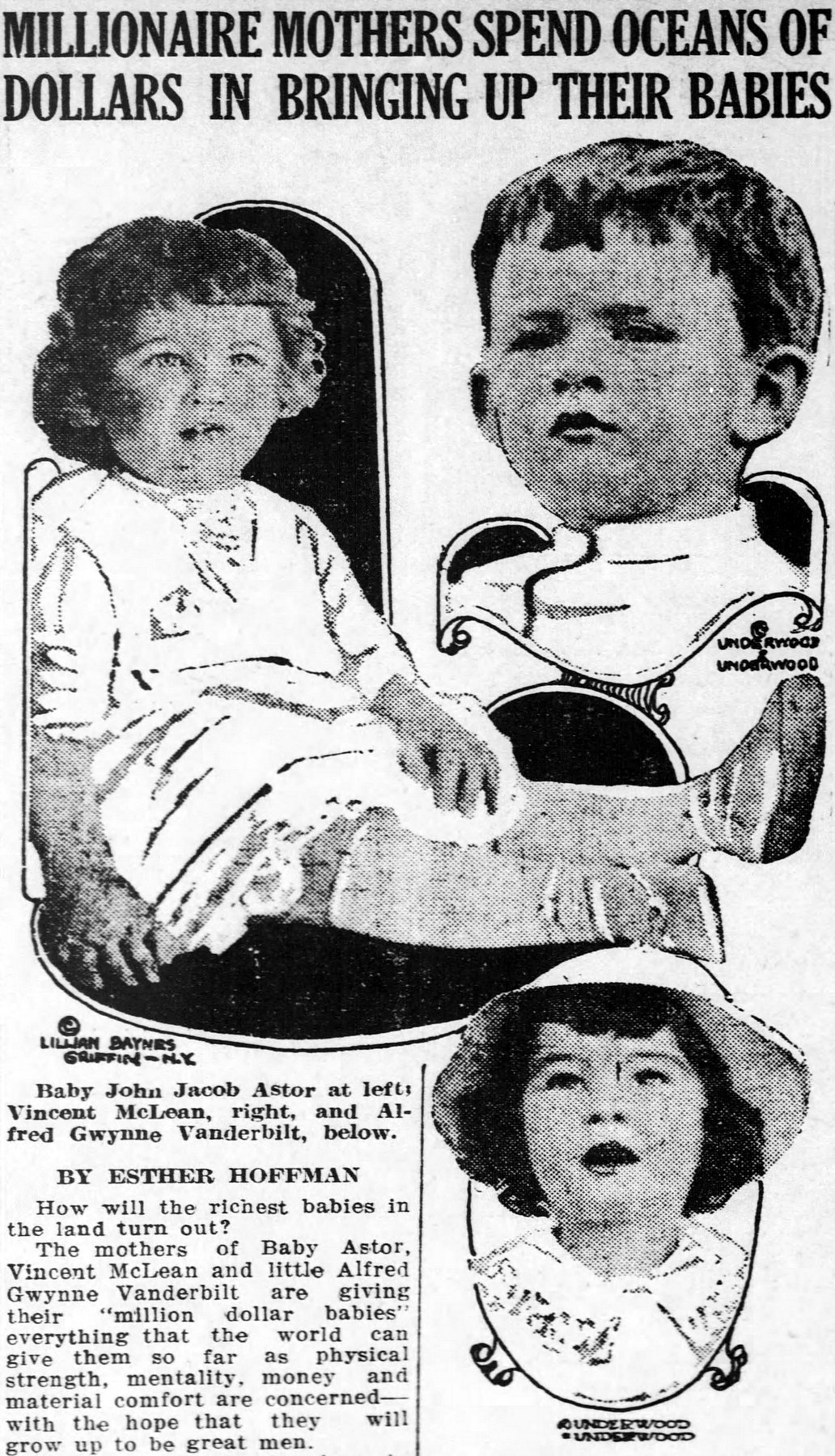
Million dollar babies: Millionaire mothers spend oceans of dollars in bringing up their babies
How will the richest babies in the land turn out?
The mothers of Baby Astor, Vincent McLean and little Alfred Gwynne Vanderbilt are giving their “million dollar babies” everything that the world can give them so far as physical strength, mentality, money and material comfort are concerned — with the hope that they will grow up to be great men.
The greatest care is given to their diet, the various apartments they occupy and they have different nurseries in which to play.
Vincent McLean, who will some day inherit $100,000,000, is never alone. He has three companions, two detectives and a little negro boy to play with and keep him from being lonesome. Since his birth, Vincent’s parents have been afraid that someone would kidnap him. Four men are employed to guard the grounds that no one may enter who looks suspicious.
It costs $32,000 a year to keep the Astor baby comfortable, buy his clothing, toys, fees for doctors and lawyers, etc. Little John Jacob Astor’s fortune will amount to more than $10,000,000 when he becomes of age.
Baby Alfred Vanderbilt, by the death of his father, will share the great fortune of between $50,000,000 and $70,000,000. He has a private doctor — two or three nurses and a companion, and a bodyguard of armed detectives.
Top photo, clockwise from upper left: Vincent McLean, the Vanderbilt children, John Jacob Astor, Astor, McLean. Below: Vincent McLean on a horse, and with a dog.